
Pool & Spa Inspection in Vista, CA
Vista sits in the seam between coast and backcountry, and its pools reflect that. The older ranch homes on the half-acre and acre lots off Foothill, Buena Vista, and the avocado-era streets above Bonsall came with plaster pools poured into hillsides decades ago, while the newer pebble-and-spa builds toward Shadowridge are a different animal. Marine air drifts up the valleys from the coast a few miles west, the summers run hot inland, and the soils shift parcel to parcel as you climb. A pool is the most expensive system in most Vista backyards, and it gets inherited far more often than it gets understood.
I'm Joseph Romeo. When I inspect a Vista pool and spa, I work the whole assembly by eye before you close: the shell and its finish, the deck and coping, the plumbing I can reach, the pump-filter-heater pad, the grounding and GFCI that keep the water from carrying a charge, and the fence, gates, and entrapment-rated drain covers standing between a child and a drowning. Leak-detection and chemistry belong to a pool specialist. What follows is the scope, the Vista conditions I weigh hardest, and the problems that keep turning up out here.
Call (619) 752-4399 Schedule an Inspection
What does a Vista pool and spa inspection cover?
I treat the pool as one connected system, because a tired finish, a corroded bond, and a heater on its last season usually tell the same story. On a Vista property I document the visible condition of:
- Shell and finish — the gunite structure for movement and cracks, and the plaster, pebble, or quartz surface for delamination, etching, hollow zones, and the mineral staining Vista's well-hardened water leaves
- Deck, coping, and tile — the slab read for cracks and settlement across these sloped lots, the coping cap for lifting and separation, and the waterline band for loose or drummy pieces
- Visible plumbing — skimmers, returns, and exposed pipe at the pad, watched for seepage, corrosion, and weak flow; I review what's accessible and do not pressurize anything buried
- Equipment — the pump, filter, heater, controller, valves, and salt cell if fitted, cycled where the panel allows and judged on age, corrosion, leakage, and wiring
- Bonding and ground-fault protection — the equipotential grid that binds the metal at a common potential, GFCI on the pump and light circuits, and the niche lights; this is where I take the most time
- Safety barriers and entrapment — the perimeter fence, self-closing and self-latching gates, door alarms, and federally mandated VGB anti-entrapment drain covers that older Vista pools so often still go without
Anything buried, locked away, or live beyond safe reach gets noted as a stated limitation rather than a guess.
How do Vista's terrain and climate affect a pool?
Vista's transition-zone setting is why a generic checklist falls short here. The west end catches marine moisture, the inland east bakes and dips toward freezing in the higher pockets, and the ground changes as you move across the city. These are the items I slow down on:
- Aging ranch-home plaster. The older pools on Vista's ranch and avocado-country lots have usually been resurfaced once, and many are due again. I read the finish for the etching, hollow plaster, and bleed-through that say the next resurface is coming.
- Varied soils and slope drainage. Vista's ground shifts parcel to parcel — expansive clay in spots, decomposed granite in others, fill on the graded hillside lots. That variability drives deck heaving, coping separation, and bond-beam cracking. On sloped lots I also weigh deck drainage and whether runoff is undermining the shell or the pad downhill.
- Hard well-influenced water. In the rural pockets the mineral-heavy supply scales tile lines, heaters, and salt cells. I check the waterline, the heat exchanger where visible, and the pad hardware for that buildup.
- Marine air west, freeze east. Coastal-side pools see salt-tinged humidity that corrodes equipment cabinets and bonding lugs; higher backcountry pools need exposed plumbing checked for freeze risk.
- HOA and shared pools. In the Shadowridge-area tracts a private pool may sit near a community one; I keep scope on the home you're buying and flag what belongs to the association.
Which findings repeat on Vista pools?
Across the ranch-home plaster pools, the newer pebble builds, and the spa combos here, the write-ups fall into a familiar pattern. Seeing it before you sign lets you price the risk in instead of meeting it after the keys change hands:
- Worn-out surface — finish peeling away, exposed pebble aggregate, and discoloration from relentless inland sun and mineral water on pools overdue for a resurface
- Drain covers that miss VGB — flat, cracked, or expired main-drain covers no longer meeting anti-entrapment rules, among the most hazardous things I turn up on an aging Vista pool
- Electrical safety gaps — a broken or corroded bond, pool circuits lacking ground-fault protection, and failing niche lights; these head the report, never the footnotes
- Tired equipment — heaters choked with scale, pumps cycling rapidly or grinding, and filters letting water bypass, frequently with zero service history from the seller
- Ground-driven cracking — lifted slabs, parted coping, and trip hazards that trace back to Vista's mixed soils and cut-and-fill grading
- Weak barriers — gates that fail to latch on their own, fences with footholds or gaps, and absent door alarms, weighed against California's drowning-prevention code
None of it automatically sinks a deal. By sorting the true safety concerns and costly repairs away from ordinary upkeep, the report gives you and your agent solid ground to ask for a fix or a credit.
How does the inspection run, and what report do you receive?
It starts with a call to (619) 752-4399 or an email with the address and a note on what's back there — in-ground gunite, an attached spa, or a community pool. Most often it runs the same visit as the home inspection. For full access the equipment should be powered and the pad reachable; if a gate code, a locked equipment room, or a safety cover is in the way, tell me ahead so nothing gets deferred.
Once I'm there, I run the equipment through a cycle, trace the full safety enclosure, and move methodically through the shell, deck, coping, and pad. Come walk it with me. Watching me point out calcium choking a heat exchanger, or a gate that swings shut but never catches, teaches more than a printed line item ever will.
Your deliverable is a photo-documented HomeGauge report that elevates the safety-critical findings — bonding, GFCI, drain covers, and the barrier — ahead of ordinary wear, and goes out same or next day in most cases. It's a condition assessment by eye, not a pressurized leak test or a chemistry panel, and it flags exactly where a specialist needs to take over.
Why do Vista buyers and agents have me read the pool?
The value of a pool inspection rides on how well the inspector understands the plumbing, the wiring, and the build behind it. I'm an InterNACHI Certified Professional Inspector (CPI) and a California CSLB General Contractor (#1113143). That construction license earns its keep at the pad and the bonding grid — having built and fixed this gear myself, I can put a realistic cost band on a finding, from a Saturday repair to a full resurface and re-equip running into the thousands.
- 20+ years and 10,000+ inspections across San Diego County, including Vista's older ranch-home pools and its newer master-planned builds
- 4.9 stars across 106 Google reviews
- Independent and conflict-free — I assess the pool's condition and don't bid or perform repairs, so nothing in the report is steered toward selling you work
For pressurized leak-detection, water chemistry, or a structural-shell engineering question, I refer the right licensed pro rather than pretend a visual walkthrough covers it. Reach me at joe@sandiegohomeinspection.com or the number above.
Which related inspections suit Vista homes with pools?
The pool work stops at the water and its equipment. Given the property, several of these often belong on the same trip:
- Full home inspection: the dwelling itself — roof through foundation, with its electrical, plumbing, and HVAC — typically handled alongside the pool; begin at the Vista home inspection hub
- Foundation and slab evaluation: worthwhile on the same shifting Vista ground and grading that fracture the deck and coping out back
- Sewer scope: a camera run through the lateral on older Vista properties, where aging clay pipe hides roots and offset joints
- Well and septic evaluation: arranged for the rural Vista and Bonsall-fringe parcels still beyond city utilities, where the pool leans on a private supply
Unsure what your particular address warrants? Pass it along and I'll flag what genuinely earns its place before your contingency lapses.
Vista Pool & Spa Inspection FAQs
What does a pool and spa inspection in Vista cost?
Do you test a Vista pool for leaks?
Why do you look so hard at the drain covers?
Will Vista's mixed soils show up in the pool inspection?
Can you inspect a community or HOA pool in Vista?
Should the equipment be running when you inspect?
Pools and equipment
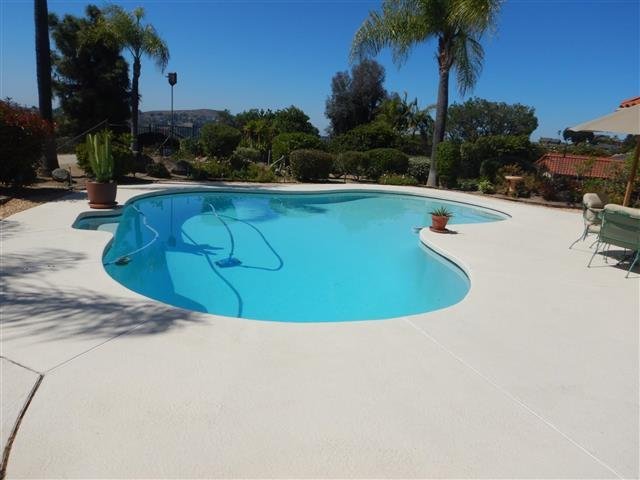
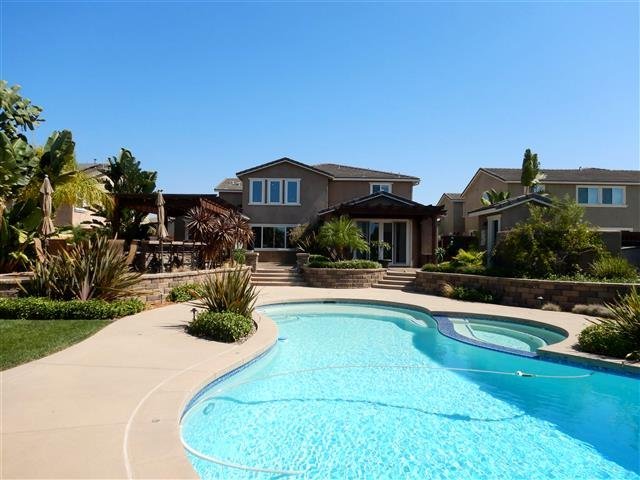
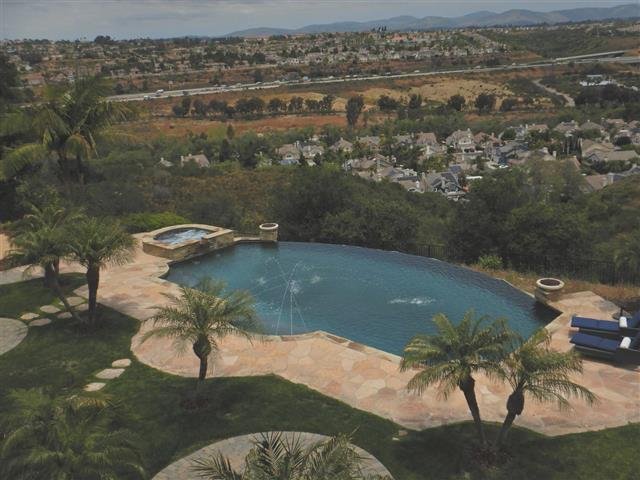
Pools, spas and equipment photographed during recent inspections.
More inspections in Vista
- Sewer scope inspection in Vista
- 4-point inspection in Vista
- Roof inspection in Vista
- Thermal imaging in Vista
- Home inspection in Vista
Nearby and countywide
Were You Happy With Your Inspection?
We are proud of our 4.9-star rating across 100+ Google reviews. If Joseph and the team did right by you, a quick Google review helps other San Diego County buyers and sellers find us.