The Real Estate Inspection Company logo
HOA & Condo Requirements

SB 326 Balcony Inspections

Schedule Online

SB 326 requires inspection of exterior elevated elements on condominium buildings (associations governed by the Davis-Stirling Act). Our licensed inspectors provide compliant inspections for HOAs and condo associations throughout San Diego County.

SB 326 Compliant Inspections
Licensed Inspector Certification
HOA & Condo Association Compliance
Exterior Elevated Element Assessment
Waterproofing & Drainage Review
Structural Integrity Evaluation
Association-Ready Reports
100+ 5-star reviews on Google & Yelp

Your home deserves the
best inspection

Book today and get a detailed report out to you at light speed.

What Is an SB-326 Balcony Inspection?

An SB-326 balcony inspection in San Diego is the mandatory, visual-and-invasive examination of exterior elevated elements (EEE) on condominium and homeowners association (HOA) buildings, required under California Civil Code section 5551, part of the Davis-Stirling Common Interest Development Act. SB-326 requires every community association with three or more multifamily dwelling units to inspect load-bearing balconies, decks, stairways, walkways, elevated entries, and their supporting waterproofing systems. The goal is simple: confirm that these structures are safe, watertight, and performing as the original building code intended. Across San Diego County, from the bayfront towers of downtown to the condo communities of La Jolla, Carlsbad, and Chula Vista, association boards are legally responsible for keeping these inspections current.

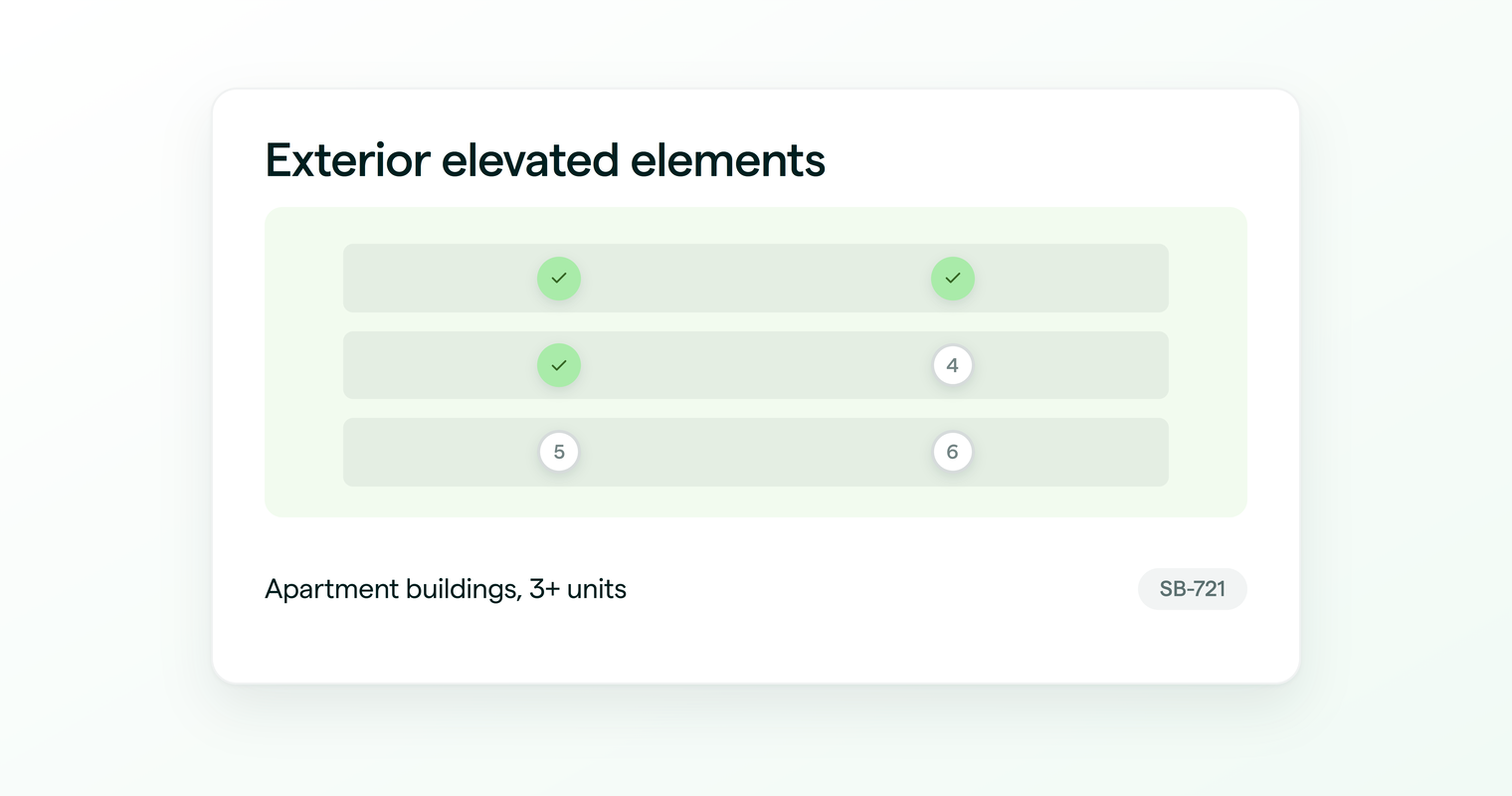
SB-326 differs from its sister law, SB-721, which covers privately owned apartment buildings. If you manage a condo or HOA-governed community, SB-326 is your statute. The first inspection deadline was January 1, 2025, and the law requires re-inspection of these elements every nine years thereafter, aligned with the association's reserve study cycle.

What's Included

  • Identification and inventory of all exterior elevated elements (EEE) with load-bearing components and waterproofing
  • Visual assessment of decks, balconies, stairways, landings, walkways, and elevated entries
  • Targeted, statistically significant sampling of structural framing and waterproofing per the statute
  • Inspection of load-bearing wood components for dry rot, decay, and fungal damage
  • Evaluation of flashing, membranes, coatings, drainage, and guardrail attachment
  • Assessment of water intrusion pathways at door thresholds, ledgers, and railing penetrations
  • Documentation of conditions affecting structural integrity or occupant safety
  • Photographs and findings compiled into a written report for the board and records
  • Recommendations distinguishing items needing emergency repair from future maintenance
  • A report retained in the association's records for a minimum of two inspection cycles and made available to the local code enforcement agency on request

Our Process

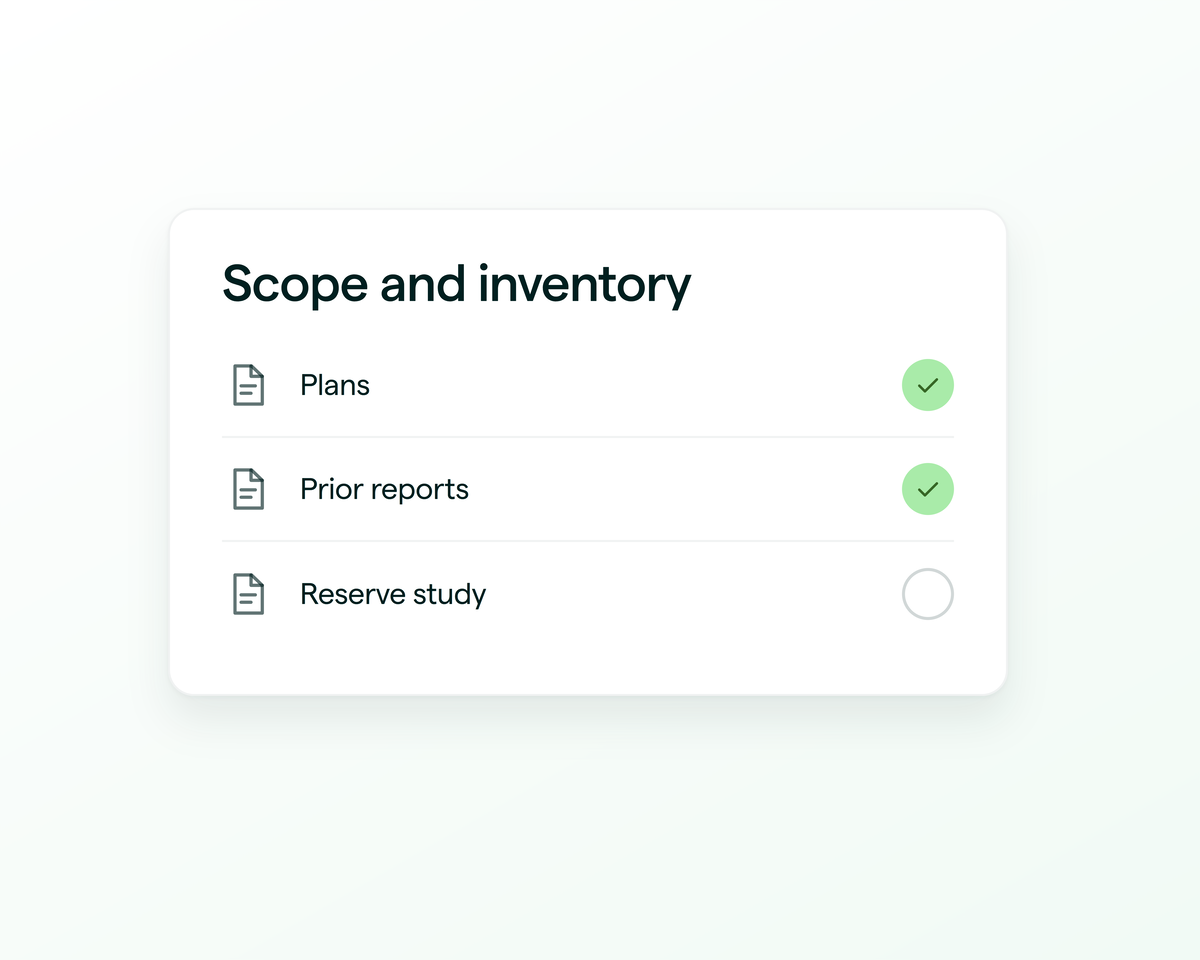
1. Scope and Inventory

We start by reviewing your community's plans, prior reports, and reserve study, then walk the property to inventory every load-bearing EEE and waterproofing system. For larger San Diego complexes, this establishes the sampling population the statute requires us to inspect.

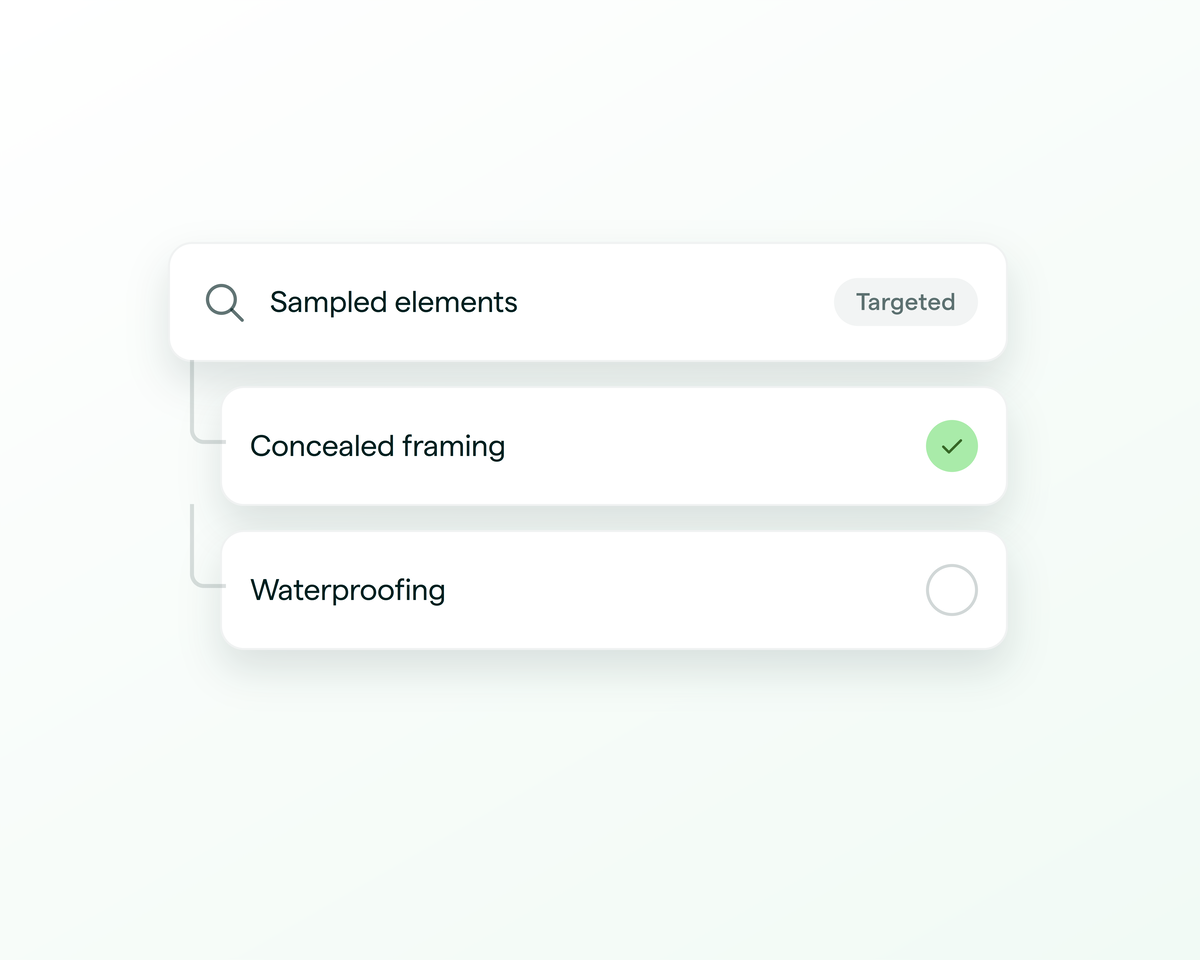
2. Inspection and Targeted Investigation

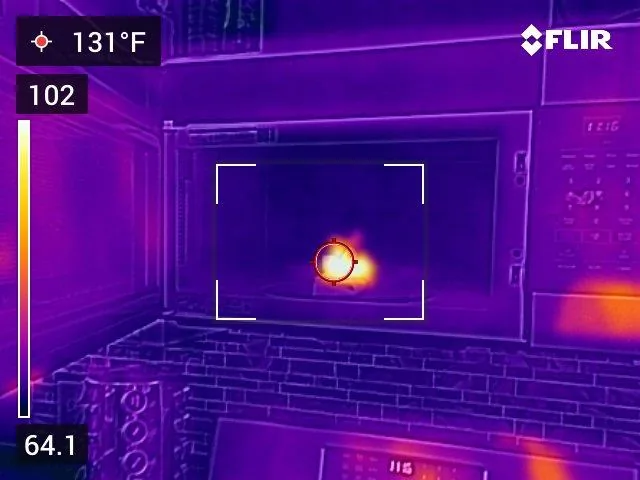
Our inspector evaluates the sampled elements, combining visual review with the limited invasive access needed to observe concealed framing and waterproofing. Where appropriate, we pair the work with non-destructive tools like thermal imaging to flag hidden moisture before opening finishes.

3. Reporting and Classification

You receive a clear written report that documents conditions, separates safety hazards from routine maintenance, and identifies any element posing an immediate threat. Same-day digital reports are typical for our inspections, and findings are organized so your board can act and document compliance.

4. Board Handoff and Records

We deliver the report in a format your board, manager, and reserve analyst can use directly, and we remain available to clarify findings so repairs and budgeting decisions move forward without delay.

Who Needs an SB-326 Balcony Inspection?

HOA boards and directors carry a fiduciary duty under Davis-Stirling to protect the common-interest community, and SB-326 makes balcony safety an explicit, non-delegable compliance obligation. Community managers coordinating multiple San Diego associations need a documented inspection on file to demonstrate the board met its statutory deadline. Reserve study preparers rely on current EEE condition data to fund future repairs accurately, since the law deliberately ties the nine-year inspection interval to the reserve cycle. Condo sellers and buyers in HOA buildings benefit too, because a current, clean SB-326 report signals a well-governed association and removes a common closing-table question. Any condominium or HOA-governed building with three or more units and exterior elevated elements falls under the law.

SB-326 Balcony Inspections in San Diego County

San Diego's coastline is beautiful and brutal on elevated structures. In La Jolla, Del Mar, Coronado, and Ocean Beach, salt-laden marine air accelerates corrosion of railing connectors, joist hangers, and fasteners, the exact hardware SB-326 asks us to scrutinize. Persistent marine-layer moisture keeps wood framing damp longer than inland, feeding the dry rot and fungal decay that hollow out a balcony ledger from the inside. Inland HOA communities in Escondido, San Marcos, Santee, and El Cajon face a different threat: expansive clay soils and slab movement can stress stairways and elevated walkways tied into the structure.

Our Mediterranean climate adds a deceptive twist. Because measurable rain is rare for much of the year, waterproofing failures stay hidden until a winter storm or a long marine-layer stretch exposes them, and by then concealed framing may already be compromised. Many older San Diego condo conversions also have aging coatings and original membranes well past their service life. Local SB-326 expertise means knowing where these regional failures hide. Our work is led by Joseph Romeo, an InterNACHI Certified Professional Inspector holding CSLB General Contractor License #1113143, which matters because SB-326 sets qualification standards for who may perform these inspections.

Pricing & Scheduling

SB-326 pricing depends on the number of units, the count and accessibility of exterior elevated elements, building height, and the sampling required, so every association quote is property-specific. Review our fee schedule for a starting framework, then request a quote with your unit count and address for an accurate proposal. To schedule your inspection or talk through your board's deadline and reserve-study timing, call us at (619) 752-4399. We coordinate access with managers and boards across San Diego County to minimize disruption to residents.

Frequently Asked Questions

What is the difference between SB-326 and SB-721?

SB-326 (Civil Code 5551) governs condominium and HOA-governed buildings and runs on a nine-year cycle. SB-721 (Health & Safety Code 17973) governs privately owned apartment and multifamily buildings of three or more units on a six-year cycle. If a balcony belongs to a community association, it is an SB-326 building. We also handle SB-721 apartment inspections if you own both property types.

When was the SB-326 deadline, and how often must we re-inspect?

The first SB-326 inspection deadline was January 1, 2025. After that, exterior elevated elements must be re-inspected every nine years, a cadence intended to align with your association's reserve study schedule.

Who is legally responsible for the inspection?

The HOA or community association board is responsible. Under the Davis-Stirling Act, directors have a fiduciary duty to maintain the common areas, and SB-326 makes commissioning and retaining the EEE inspection an explicit board obligation.

What happens if the inspector finds an immediate hazard?

If an element poses an immediate threat to occupant safety, the report flags it for emergency action. Boards are expected to address conditions documented in the report, and findings should feed directly into both repair planning and the reserve budget.

Can one inspection cover compliance and reserve planning?

Yes. Because the law ties the nine-year interval to the reserve study, the same condition data that documents SB-326 compliance also gives your reserve analyst current, defensible numbers for funding future balcony and walkway repairs.

Schedule Your San Diego SB-326 Balcony Inspection

Frequently Asked Questions

What is an SB-326 inspection?
An SB-326 inspection is a California-mandated safety check of a condominium or HOA building's Exterior Elevated Elements (EEEs) — balconies, decks, stairways, walkways, and railings with wood or wood-based supports. A qualified inspector evaluates their load-bearing components and waterproofing to confirm they are safe, then issues a written report to the association's board.
Who needs an SB-326 inspection and by when?
SB-326 applies to California condominium and HOA-governed buildings with three or more units that have wood-framed Exterior Elevated Elements. The first inspection was due by January 1, 2025, and you must re-inspect every nine years after that. Note SB-326 covers HOAs/condos; the related SB-721 law instead governs apartment and multifamily rentals.
What is checked during an SB-326 balcony inspection?
We visually assess load-bearing wood components and their associated waterproofing on balconies, decks, stairs, landings, and walkways — looking for dry rot, water intrusion, fastener corrosion, deflection, and failing flashing or sealant. The report documents each element's condition, whether it's safe, and any repairs needed. We coordinate specialized engineering or destructive testing through licensed partners when required.
How long does an SB-326 inspection take and what should our HOA expect?
Timing depends on the number of units, balconies, and building size, so a small condo project differs greatly from a large complex. Expect on-site access to a representative sample of elevated elements, photo documentation, and a written report for your board afterward. Contact Joseph Romeo at (619) 752-4399 for a quote and scheduling specific to your property.
What does an SB-326 inspection cost for a San Diego condo or HOA?
Cost depends on your building's size, age, number of balconies and elevated elements, and access. There's no flat rate because a small Coronado condo differs from a large multi-building complex. We provide a written quote after reviewing your property's scope. Call (619) 752-4399 or email joe@sandiegohomeinspection.com for pricing tailored to your association.
Why is SB-326 inspection especially important for coastal San Diego HOAs?
Coastal communities like La Jolla, Coronado, and Ocean Beach face constant salt-air corrosion and marine-layer moisture that accelerate hidden wood rot and fastener failure in balconies and walkways. Inland HOAs in El Cajon or Santee deal with heat and clay-soil movement. These local conditions make timely SB-326 inspections critical for catching deterioration before it becomes a safety hazard.
4.9 ★★★★★
Rated 4.9 across 106 Google reviews
“I’m a Realtor with approximately 20 years of experience. I’m always confident when my buyer clients select San Diego Home Inspection, Inc. to perform their home inspection.”
— Sharon Burskey · Google review
“He was attentive and thoughtful as we discussed the house. He then proceeded to exceed our expectations on everything he did as he went through the process.”
— Jonathan Dixon · Google review
Read our Google reviews