
Foundation & Slab Inspection in Rancho Santa Fe, CA
A Rancho Santa Fe estate is rarely one age of house sitting on one age of ground. A Covenant property can pair a 1930s Lilian Rice hacienda with a 1990s wing, a detached guest house, a stable, and a pool cabana — five structures, four eras of concrete, all spread across two to six acres of graded and re-graded land. Each was poured by a different crew under different code, and each settles on its own. Reading the foundation here means reading every one of those pieces and the soil under each, not glancing at a single slab and calling it done.
I'm Joseph Romeo. A foundation and slab inspection in Rancho Santa Fe is a deliberate visual read of how each structure meets its ground. I confirm the foundation system for every building on the lot — raised perimeter foundations over crawlspace on the older Covenant homes, conventional slab-on-grade on the mid-era builds, post-tension slabs on the newer custom estates — then I read each one for the marks soil leaves: slab and stem-wall cracking, floors out of level across long rooms, doors and windows that bind, drywall splitting at openings, every finding tied back to the grading, the well and septic, the irrigation, and the soil beneath the pad. I write down observed condition in plain English. When something reads as active structural movement, I refer a licensed structural engineer for certification or repair design instead of guessing. The rest of the property is covered through the Rancho Santa Fe home inspection hub.
Call (619) 752-4399 Schedule an Inspection
What does the foundation inspection cover on a Covenant estate?
This is a visual condition assessment, not engineering. I don't core slabs, dig test pits, or run load math. I identify the foundation system on each building, then read the home above it — and on a multi-acre Rancho Santa Fe property that means a lot more perimeter, a lot more floor, and usually several structures rather than one. The scope:
- Foundation type, confirmed per structure — raised perimeter over crawlspace on the early Covenant haciendas, conventional slab-on-grade on the mid-century and 1980s–90s homes, and post-tension slab on the newer custom builds. A main house, a remodeled wing, a casita, a stable, and a pool house can each sit on a different system and a different decade of code.
- Slab and stem-wall cracking — noted for width, direction, and whether it reads as ordinary curing shrinkage or movement still underway.
- Floor level across long rooms — the galleries, great rooms, and primary wings where a slow pitch or dip shows itself over distance long before anyone notices underfoot.
- Doors, windows, and drywall — arched hacienda openings, tall entry doors, wide garden sliders, and the diagonal cracks running off their corners that tell you the base under them is racking.
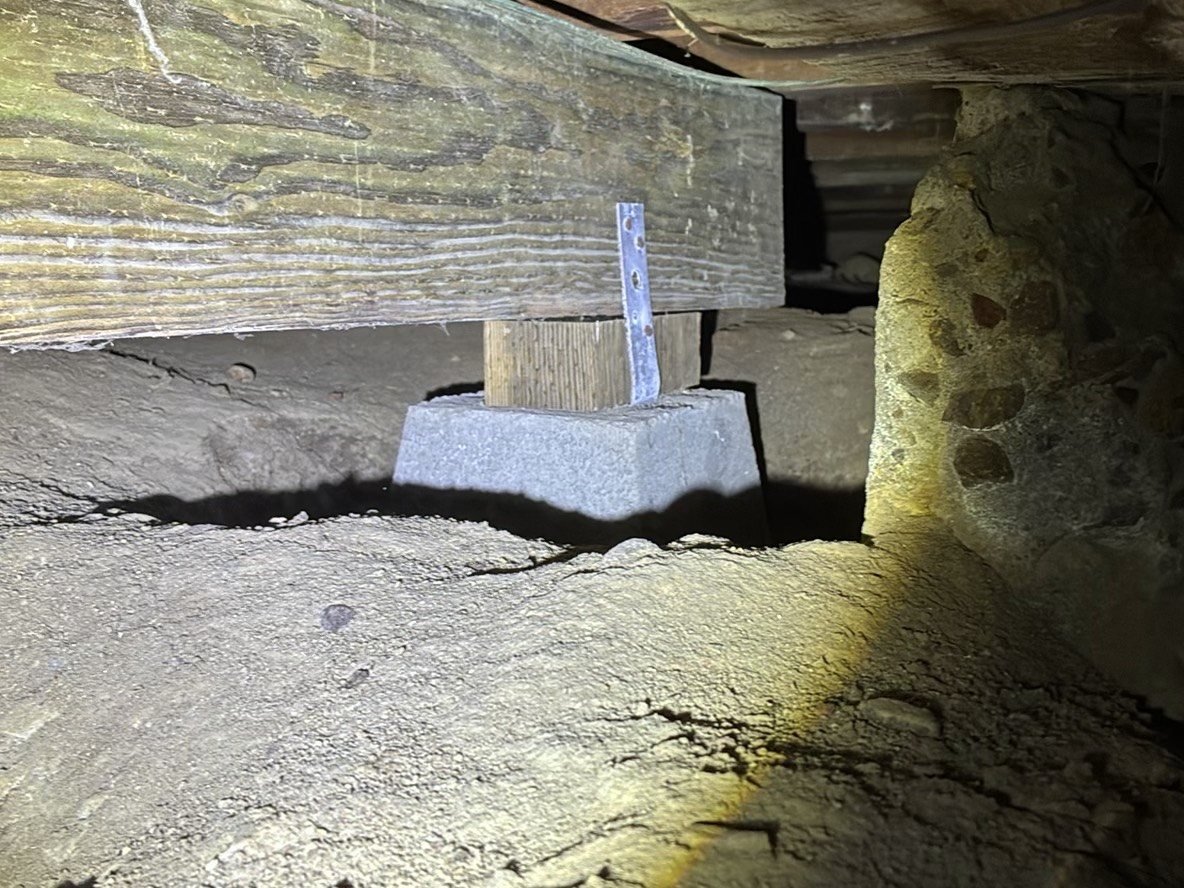
- Crawlspace structure — on the raised older estates I get under the home where access allows to read piers, posts, girders, and mudsill for movement, moisture, pier settlement, or earlier shoring.
- Grading, drainage, and site water — how water is meant to leave acreage, and where the well, septic leach field, heavy estate irrigation, and hardscape are actually steering it against a foundation.
I report what's visible and reachable. Where finished flooring, built-in cabinetry, wine storage, or a tight crawlspace blocks the view, I say so directly rather than imply I cleared ground I never got to.
Why does Rancho Santa Fe ground work a foundation hard?
The Covenant and the ranchland around it sit on the inland foothills and the upper San Dieguito drainage, on terrain that was terraced into estate pads, bridle trails, and groves generations ago. You can't read these homes without reading the ground they were cut and filled into:
- Expansive clay on the valley and bench soils. The clay-bearing inland ground swells when the wet season and year-round estate irrigation soak it, then shrinks hard through the dry summer. That seasonal heave-and-shrink is the leading cause of the drywall cracking and seasonally binding doors I document on Covenant homes.
- Decomposed granite and slope creep in the foothills. The estates climbing the hillsides and canyon rims sit on DG that drains fast but creeps slowly downhill, loading the uphill foundation and opening cracks on the downhill side across the decades.
- Old cut-and-fill from terraced pads. Many Covenant lots were graded long ago, so one end of a long house can rest on compacted fill and the other on cut native ground — and the two settle at different rates, which is the single biggest reason these estates earn a careful, type-aware read.
- Septic leach fields and private wells. Much of Rancho Santa Fe runs on septic and well water, not city utilities. A leach field, a well head, or an irrigation line wetting the soil near a footing keeps that ground saturated and on the move in a way municipal lots rarely see.
- Mature eucalyptus and specimen groves. The eucalyptus, pepper, and oak the area is known for pull moisture unevenly out of clay and push roots toward footings — a quiet local driver of the localized settlement and heave I find near old trees.
- Acreage irrigation held against the slab. Lawns, orchards, rose gardens, paddocks, and slope plantings mean a large volume of water sitting against a long perimeter, keeping the soil at the slab edge far wetter than nature intended.
What do I commonly turn up on Rancho Santa Fe foundations?
Read enough estates across the Covenant and the surrounding ranch lots and the findings fall into a pattern — most of them conditions to understand and watch, not automatic deal-breakers:
- Differential settlement across a long or multi-era house — one wing dropping where it sits over deeper fill or a remodel on a newer pad, shown by tapering door gaps and a crack pattern that points to the part of the structure on the move.
- Seams between original and added construction — cracking and floor-height steps at the joint where a later wing or remodel meets a 1930s–60s foundation and the two move independently.
- Crawlspace movement and moisture on the older haciendas — settled piers, damp soil, efflorescence, or earlier shoring under raised Covenant homes, often tied to septic, irrigation, or grade holding water under the floor.
- Diagonal drywall cracks off door and window corners — the signature of a slab or sill flexing on clay that swells and shrinks with the seasons and the irrigation.
- Floors out of level across the long spans — a slow pitch through a gallery or great room that distance makes visible, tracking settlement or heave rather than a framing fault.
- Curing and shrinkage cracks — thin, stable cracks normal to any pour as it cured and aged, which read as cosmetic and get labeled that way.
- Post-tension tendon cautions — on the newer custom estates I flag the cabled-slab warning so nobody cores, saw-cuts, or anchors into the slab — for flooring, a wine cellar, an elevator pit, or a patio tie-in — without first locating the tendons.
Most of it is age-normal shrinkage or a drainage correction waiting to happen, not a failing foundation. My job is to draw the line between cosmetic and the items that signal active movement, and to be straight about which is which on a home of this value.
How does the visit run and what report do you receive?
It starts with a call to (619) 752-4399 or an email with the Rancho Santa Fe address and a quick note on what's prompting the look — a crack that's been widening, a door that started catching, a wing or guest house you're unsure about, or a disclosure that mentioned settlement. On acreage I also want the full list of what's on the lot: a casita, a detached garage, a stable, a pool house, a barn, because each may sit on its own foundation worth reading.
On site I confirm the foundation type for each structure — treating a newer estate's pour as a tensioned slab until proven otherwise — then I work each building inside and out. Given the footprints, I budget real time for it: I walk every interior span for floor slope, crack patterns at walls and ceilings, and openings gone out of square; on the raised older homes I get into the accessible crawlspace to read piers, posts, girders, and mudsill. Outside I follow the full perimeter for stem-wall and slab-edge cracking, then read the grading, the downspouts, the hardscape, and where the well, the septic field, and the estate irrigation are putting water against the foundation — on these lots that's usually where the cause hides. Every finding is photographed as I go.
You receive a HomeGauge report with the foundation type stated for each structure, every condition described in plain language, and a clear call on what's cosmetic versus what suggests active structural movement, with a photo behind each item. In most cases it lands same day or next day, so an escrow contingency never stalls waiting on it. Where the evidence warrants it, I recommend a licensed structural engineer for certification or repair design. I assess and document observed condition — I don't certify the slab, design the fix, or bid the repair, which keeps the read independent of any work you'd later pay for. I also don't pressure-test plumbing for slab leaks or perform termite/WDO work; when those questions come up, I coordinate or refer the right licensed specialist.
Why do Rancho Santa Fe owners and buyers have me make the call?
On a multi-acre estate the foundation is the one call where judgment matters most. Tag a harmless shrinkage crack as structural failure and you torpedo a deal; wave off real differential movement under a long house on old cut-and-fill and it costs far more to chase later. Telling them apart takes experience, not a checklist. I'm an InterNACHI Certified Professional Inspector (CPI), and I hold a California CSLB General Contractor license (#1113143). That builder's background is exactly what counts on a foundation — I've worked concrete, footings, framing, and drainage, so when I tell you a stem-wall crack is settlement to monitor versus a structural problem to engineer, I'm reading it through hands-on work, not a template.
- 20+ years and 10,000+ inspections across San Diego County, including the multi-structure custom estates and mixed raised, slab, and post-tension foundations that define the Covenant and the surrounding ranch lots.
- 4.9 stars across 106 Google reviews from buyers, sellers, and agents.
- Independent and conflict-free — I don't sell foundation repair, underpinning, or drainage work, so nothing in the report is steered toward work I'd profit from; you get a straight read where the stakes are high.
Straight on credentials: I'm InterNACHI CPI and CSLB-licensed; I'm not an ASHI or CREIA member. And I don't post flat prices — a multi-structure estate with a long perimeter and acreage takes far longer to read than a single slab — so I point you to the fee schedule or confirm a quote before you book. For the engineering certification, repair design, or drainage correction a finding points to, I coordinate or refer the right licensed specialist. Reach me at joe@sandiegohomeinspection.com or the number above.
Which related inspections fit a Rancho Santa Fe property?
Foundation movement rarely travels alone — the same soil and water that stress a slab tend to mark other systems on an estate, and I can line these up around one Rancho Santa Fe visit:
- Full home inspection — the whole-house evaluation this foundation read folds into, covering the complex custom and well/septic systems these properties carry; start at the Rancho Santa Fe hub if you're buying.
- Sewer / septic-line scope — a long private lateral or septic line running across acreage can pull its joints apart as the ground settles, and a leak then feeds the very soil movement that cracks a slab — worth scoping on the same trip.
- Thermal / infrared imaging — picks up hidden moisture at the slab edge and along the perimeter that drainage, irrigation, and a nearby leach field leave behind.
- Roof inspection — tile and flat-roof runoff with no gutters, or downspouts dumping at the pad, is a leading cause of the soil-moisture swings I find, and a large estate roof sheds a lot of water.
- Pool and spa inspection — common on these lots, where a leaking pool, spa, or deck drain soaks the soil against a nearby foundation.
- Drainage and grading review — a closer look at how water moves across acreage, the fixable cause behind much of the cracking I document.
Not sure what your property needs? Send the address and I'll tell you what genuinely applies before you spend on any of it — see all inspection services we offer or get a quote through contact.
Rancho Santa Fe Foundation & Slab Inspection FAQs
Why does a Rancho Santa Fe estate need a closer foundation look?
Does being on a well and septic affect the foundation?
Are the cracks in my Rancho Santa Fe slab a serious problem?
We have an older hacienda with a remodeled wing. Should I worry about the seam?
Do you inspect post-tension slabs on newer Covenant homes?
Will you certify my foundation or tell me how to fix it?
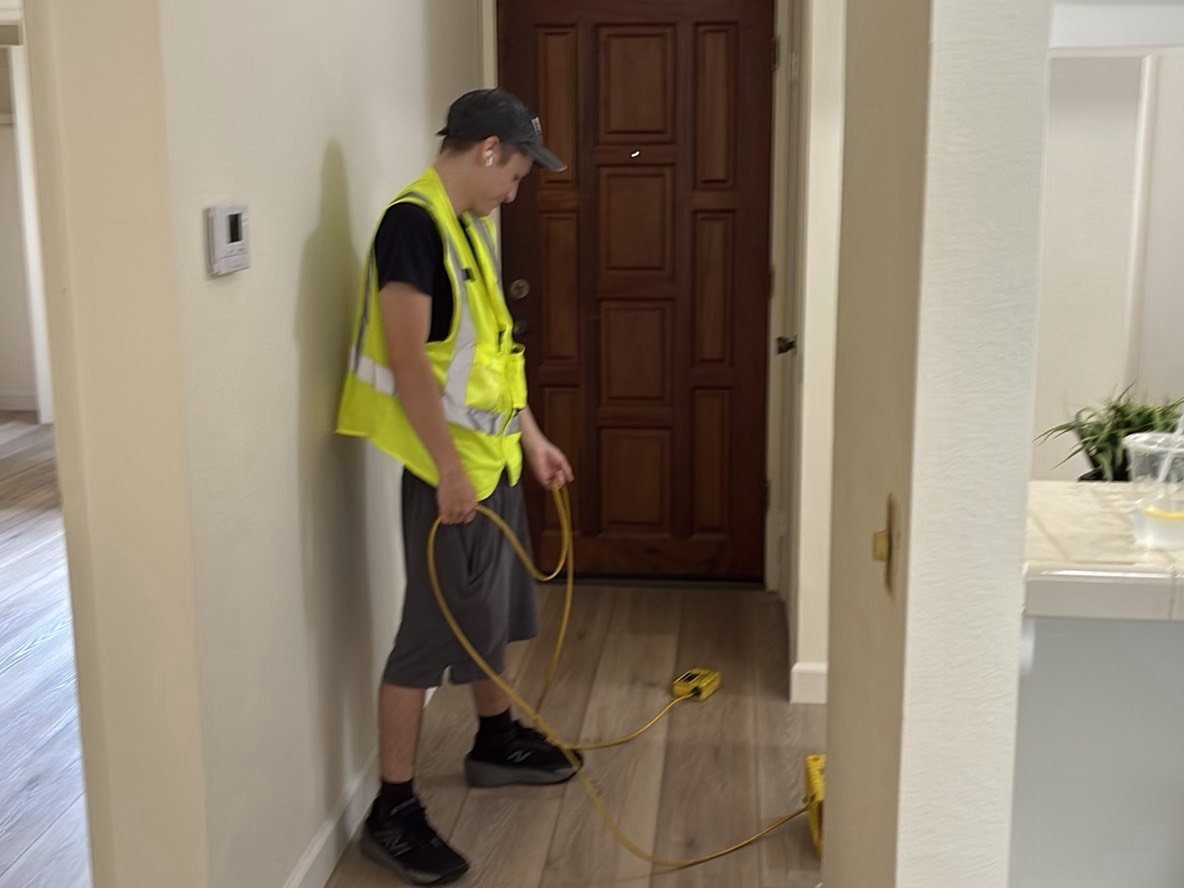
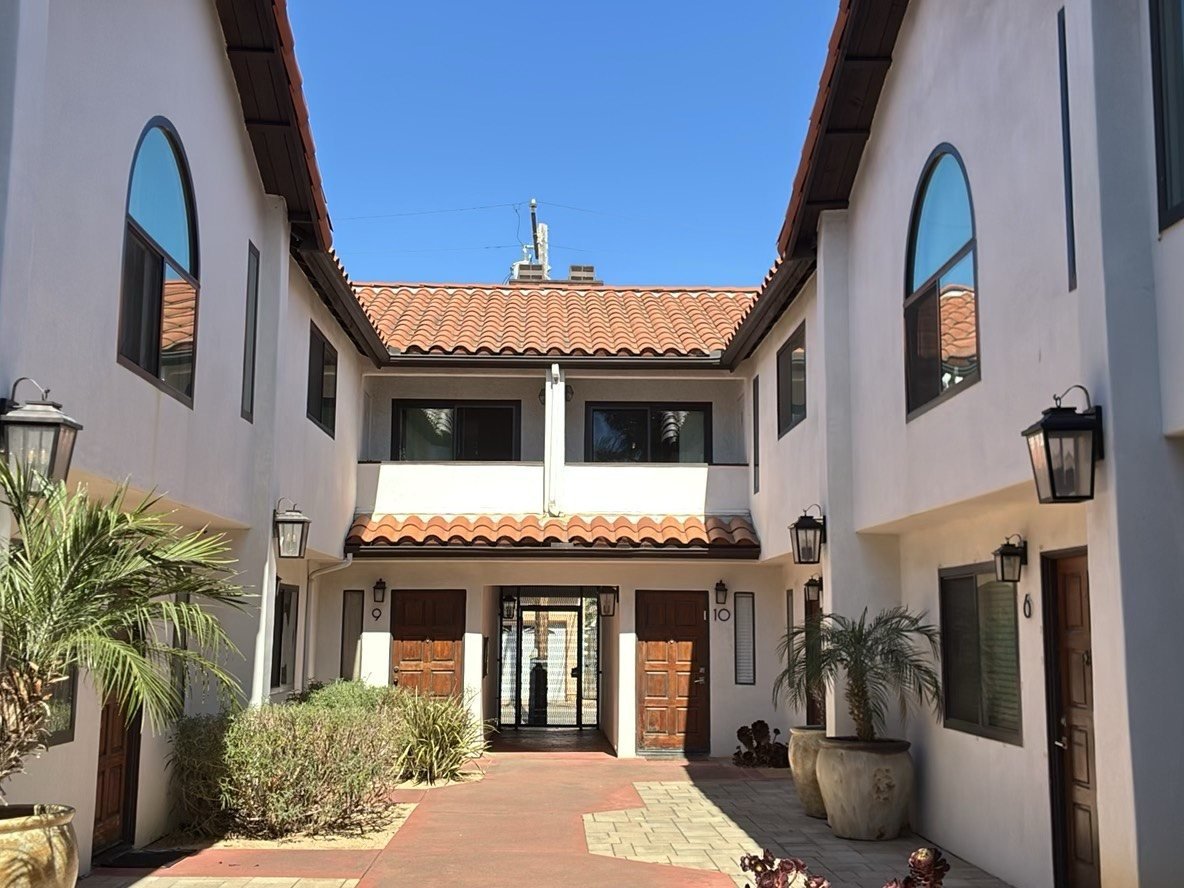
Slab surveys in action
ZipLevel altimeter measurements and foundation documentation from recent surveys.
More inspections in Rancho Santa Fe
- SB 721 exemption letter in Rancho Santa Fe
- Seller inspection in Rancho Santa Fe
- Warranty inspection in Rancho Santa Fe
- Commercial roof cleaning in Rancho Santa Fe
- Home inspection in Rancho Santa Fe
Nearby and countywide
Were You Happy With Your Inspection?
We are proud of our 4.9-star rating across 100+ Google reviews. If Joseph and the team did right by you, a quick Google review helps other San Diego County buyers and sellers find us.