
Pool & Spa Inspection in Rancho Santa Fe, CA
Rancho Santa Fe is acreage country. Inside the Covenant and out across Fairbanks Country Club and the eastern groves, a typical lot runs two to six acres of eucalyptus, citrus, and rolling grade, and the pool is one piece of a much larger property that also carries a well, a booster and pressure tank, and irrigation feeding an orchard. The pool itself is rarely a builder rectangle — it is a custom build with a spillover spa, a Baja shelf, sometimes a beam-and-grotto or a perimeter-overflow trough, and an equipment set sized for a half-acre of water and features. Buyers paying estate money want to know whether that custom hydraulic system was actually maintained, whether the well water feeding it has been chewing on the plaster and the heater, and whether every circuit and barrier meets code.
A pool and spa inspection here is a disciplined visual look at everything I can reach and safely run without opening the system up: the shell and its finish, the surrounding deck, coping, and tile, the circulation and feature plumbing I can see, the pump, filter, and heater package, the bonding and ground-fault protection that keep stray voltage out of the water, and the perimeter fencing, gates, and VGB-listed anti-entrapment drain covers that prevent a drowning. I record what I observe. Pressurized leak detection and chemistry balancing are not part of this; on a well-fed estate pool those belong to a pool specialist, and I name that in the report.
Call (619) 752-4399 Schedule an Inspection
What does a Rancho Santa Fe pool & spa inspection cover?
This is a look-and-operate evaluation aimed at buyers and agents under contract on a Covenant or country-club property, where the backyard is frequently the most complicated mechanical assembly on the parcel. On a typical Rancho Santa Fe walk I move through:
- Interior finish and the spa — the pebble, polished aggregate, or quartz surface and the raised or spillover spa, examined for cracks, hollow spots, etching, and the scaling that hard well water tends to leave.
- Perimeter overflow or beam features — where the build includes a knife edge, a slot trough, or a grotto, I look at the weir, the surge or catch reservoir, and its transfer pump as a system of their own.
- Decking, coping, and the tile band — the wide stone or paver surround, control and expansion joints, coping set, and waterline tile, on a pad cut into rolling estate grade.
- Plumbing I can see — skimmers, returns, reachable suction runs, valving, and the lines feeding spas, fountains, and fire features, all observed visually and never put under pressure.
- The equipment set — pumps, filter, heater or heat pump, any salt cell, the automation panel, and the spa blower, run to confirm the system primes, moves water, and answers commands.
- Bonding and ground-fault protection — the equipotential grid tying the metal together and the GFCI devices guarding pump, light, and feature circuits.
- Barriers and drain covers — fence height, self-closing and self-latching gates, any door or gate alarms, and federally compliant VGB main-drain covers on every body of water, the spa included.
Where a line is buried, a vault holds water, a sub-panel is locked, or a heater cannot be fired safely, I list it as not evaluated instead of pretending I confirmed it.
How do acreage and well water affect a Rancho Santa Fe pool?
The size of these lots, the inland climate, and the reliance on private wells all change what I dwell on. These are the items that earn extra minutes on a Rancho Santa Fe property:
- Well-fed fill water. Many estates here top off the pool from a private well rather than the meter, and Rancho Santa Fe groundwater often runs hard and mineral-heavy. That accelerates scaling on plaster and tile, fouls salt cells, and lays calcium inside a heater's exchanger, so I read the finish and heater for mineral damage the seller may have stopped noticing.
- Custom hydraulics, not a stock pool. A spillover spa, a perimeter trough, fire-and-water bowls, and a grotto each add pumps, valves, and runs of plumbing — and each junction is a spot where a custom installer could leave a bonding gap or a deferred repair. The more the builder added, the more there is to verify.
- Rolling acreage and engineered pads. These pools sit on graded pads carved into hillside above canyons and groves. I follow deck cracking, lifted coping, and shell movement for the directional patterns that point to soil creep or pad settlement rather than ordinary cure shrinkage.
- Maintained for looks, not for safety. An estate pool almost always rides a weekly service route, so the water is crystal on showing day. But that tech balances chemistry and skims — nobody on that route is verifying the bond, the GFCI, or the drain covers. A flawless-looking pool can still hide a shock or entrapment hazard.
What do I keep finding on Rancho Santa Fe pools & spas?
Walk enough estate pools across the Covenant and the country-club tracts and the same handful of items resurface. Most don't end a deal at this price, but on a feature-heavy system they stack up:
- Mineral damage from well fill. Calcium scale on tile and finish, etched or rough plaster, scaled heater exchangers, and salt cells worn early by hard, mineral-rich well water.
- Bond broken after feature work. The equipotential grid interrupted, corroded, or never reconnected following a heater swap, a salt-cell retrofit, or a water-feature addition — the more features in the yard, the more places the bond gets cut.
- Feature circuits without GFCI. Pumps, lights, fountains, and fire features powered or expanded without ground-fault protection, usually where something was added after the original build.
- Moisture in below-grade vaults. Standing water, efflorescence, and rusting gear and electrical in equipment vaults that never dry out fully.
- Overflow and spillover faults. A surge reservoir running low, a transfer pump short-cycling, or a weir gone out of level — the things that make a knife edge or spillover stop sheeting cleanly.
- Settlement cracking on graded pads. Deck and coping separation, and shell cracking, where the engineered hillside pad is still moving under the weight of water.
- Out-of-code barriers and covers. Fences below height, gates that won't self-close or self-latch, and flat or expired main-drain covers that fail the federal VGB standard — checked on every body of water in the yard.
I separate the safety items and big-ticket repairs from routine upkeep so your numbers reflect what truly drives cost.
How do I run the inspection and what report do you receive?
I set up access with the agent, owner, or estate manager so the system is powered and the vault is open, then run the pumps, filter, heater, spa, and feature equipment to confirm the system primes, circulates, and responds rather than judging it cold and off. I walk the deck, sound the shell and waterline, look at the spillover or overflow where the build has one, trace the visible bond and confirm GFCI across the feature circuits, and test every gate the way a curious child would. You're welcome to walk it with me — on a system this size, seeing the difference between a safety item and a maintenance item in person is the fastest way to understand the report.
What you get is a photo-documented HomeGauge report laid out by component, with the safety findings — bonding, GFCI, barriers, and anti-entrapment covers — pulled into a summary at the top. Turnaround is same day or next day, and I report observed condition only; I never bid or perform the repairs I flag, so nothing in the report is steered toward selling you work. Pressurized leak detection and chemistry correction fall outside this scope — when the visible evidence points to a leak in a feature line, or the well-fed chemistry needs work, I tell you plainly and refer a licensed pool specialist.
Why do Rancho Santa Fe buyers call Joseph Romeo?
An estate pool is a structural, mechanical, and electrical system rolled into one, and reading a custom one well rewards an inspector who understands how it was actually built. Your inspection is led by Joseph Romeo, an InterNACHI Certified Professional Inspector (CPI) who also carries a California CSLB General Contractor license (#1113143). On Rancho Santa Fe's feature-rich, well-fed pools, that contracting background is the difference: when I flag something, you know whether it's a weekend correction or a five-figure rebuild.
- 20+ years and more than 10,000 inspections across San Diego County, the gated estate communities of the north county inland included.
- 4.9 stars across 106 Google reviews from buyers, sellers, and agents.
- Independent and conflict-free — I assess condition and don't bid or perform the work, so nothing gets inflated to sell a repair.
- Straight talk — I tell you exactly what I'd want to know if my own family were swimming in it.
Reach me directly at joe@sandiegohomeinspection.com or (619) 752-4399.
Which related inspections fit a Rancho Santa Fe estate?
A pool seldom travels alone, and on a multi-acre Covenant property the rest of the place is just as involved. Most Rancho Santa Fe buyers pair the pool and spa inspection with the home itself, coordinated into a single visit:
- Full home inspection — the large custom house, its roof, electrical, plumbing, and structure, the backbone of the purchase that the pool findings round out. Begin at the Rancho Santa Fe home inspection hub.
- Well and equipment context — since the pool here is often fed by a private well, the same hard water shows up across the house plumbing and irrigation; I note what I observe and refer a well specialist for flow and potability testing.
- Thermal / infrared imaging — surfaces hidden moisture and overheating connections, useful around equipment vaults, feature plumbing, and the long electrical runs an estate carries.
- Sewer scope — a camera pass of the lateral or the septic line-up, worth it on large parcels with long runs and mature trees.
- Roof inspection — a focused read on the complex estate roof aging under the same inland heat that wears the pool equipment.
- Specialist coordination — for pressurized leak detection, geotechnical review, or a termite/WDO report, I refer the right licensed professional.
Send the address with a note on what's in the backyard and I'll tell you which of these genuinely apply before your contingency closes.
Rancho Santa Fe Pool & Spa Inspection FAQs
What does a pool & spa inspection cost in Rancho Santa Fe?
Does well water really affect an estate pool here?
Can you inspect a spillover spa and the feature equipment?
Do you pressure-test the plumbing or balance the chemistry?
The pool is on a weekly service route and looks perfect. Why inspect it?
Should the equipment and vault be accessible during the inspection?
Pools and equipment
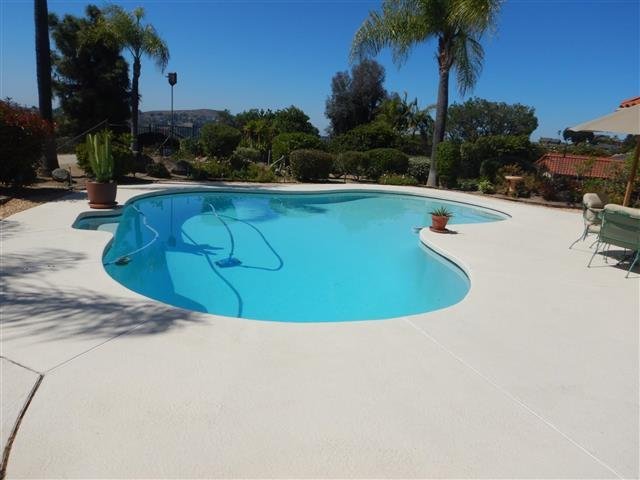
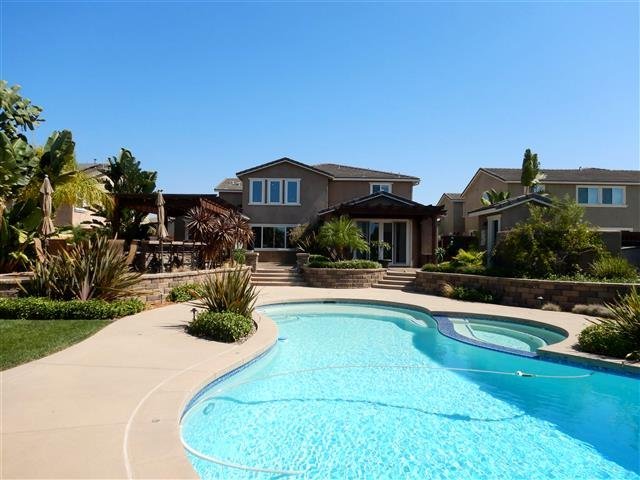
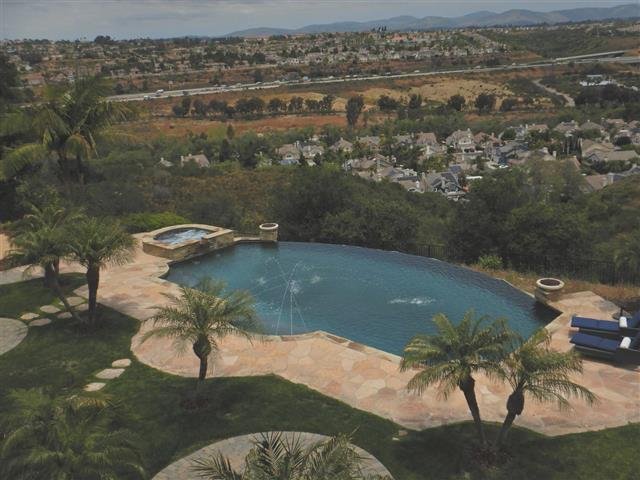
Pools, spas and equipment photographed during recent inspections.
More inspections in Rancho Santa Fe
- SB 326 balcony inspection in Rancho Santa Fe
- SB 721 exemption letter in Rancho Santa Fe
- Seller inspection in Rancho Santa Fe
- Warranty inspection in Rancho Santa Fe
- Home inspection in Rancho Santa Fe
Nearby and countywide
Were You Happy With Your Inspection?
We are proud of our 4.9-star rating across 100+ Google reviews. If Joseph and the team did right by you, a quick Google review helps other San Diego County buyers and sellers find us.