
4-Point Inspection in Rancho Santa Fe, CA
When an insurance carrier asks a Rancho Santa Fe owner for a 4-point, it rarely fits the picture underwriters carry of a tired bungalow needing the form. The Covenant runs to hacienda and ranch-style estates on one-to-several-acre parcels off Paseo Delicias, El Montevideo, and the bridle trails — many raised in the 1970s and '80s, some Lilian Rice originals far older, and a steady wave of new custom builds replacing them. That long-aging core of estate equipment now sits right where a carrier starts asking questions, and California's wildfire-squeezed market has insurers re-rating high-replacement homes in these inland canyons without waiting for a roof to look its age.
I'm Joseph Romeo, and a 4-point is a narrow, carrier-formatted read on the four systems behind the costliest claims — roof, electrical, plumbing, and HVAC. It captures how old each is, what it's built from, and the shape it's in today, and stops there. It is not a full home inspection and I won't dress it up as one. On a Rancho Santa Fe property that scope spreads wide: a single roof can span tile, slate, and flat sections across a rambling footprint; the electrical fans out to a main service plus subpanels for guest casitas, well pumps, barns, and pool equipment; and supply often runs on a private well rather than a meter. Below I lay out the scope, the Covenant-specific concerns, what I keep finding, how the report comes together, and where it ends.
Call (619) 752-4399 Schedule an Inspection
Which four systems do I read on a Covenant estate?
A 4-point answers the handful of questions an underwriter needs and leaves the rest of the house untouched — though on acreage this size, covering all four honestly means walking a great deal of ground. For each, I record and photograph age, material, and present condition:
- Roof — the covering an estate carries (clay or concrete tile on most Covenant homes, with slate and standing-seam metal on the higher-end customs, plus flat or low-slope stretches knitting the wings together), its age, the remaining service life a carrier will write against, and trouble at the long count of penetrations a sprawling roof holds — chimneys, skylights, solar standoffs, and every valley where two planes meet.
- Electrical — not one panel but a main service feeding a string of subpanels for guest houses, well and irrigation pumps, stables, shops, and pool equipment. I log manufacturer, amperage, branch-wiring type, and any decline-list condition at every panel on the parcel, not only the one at the meter.
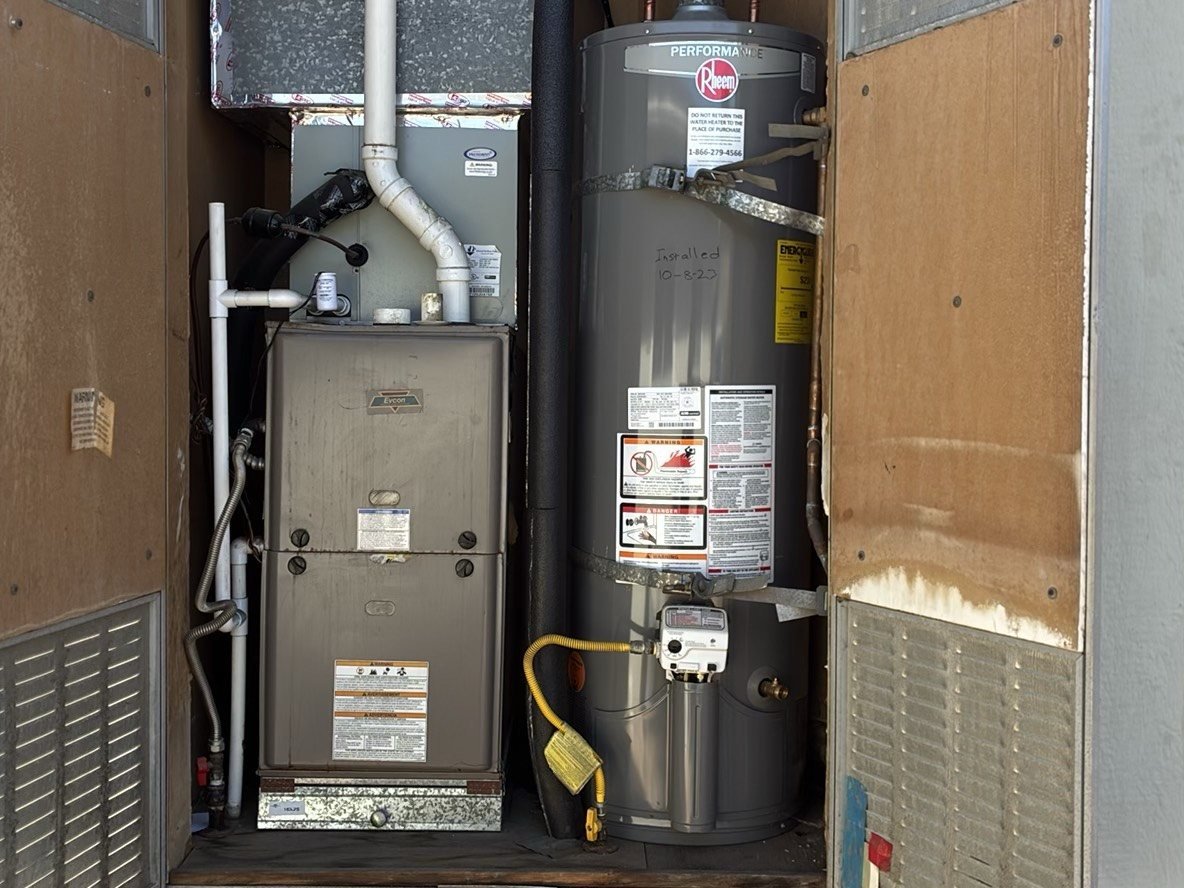
- Plumbing — supply material (copper on most '70s and '80s estate work, with polybutylene a live risk from that span), drain material, and the age and condition of water heaters, which on a property this size frequently means two, three, or more serving separate wings. Many Covenant homes draw from a private well, so I note the pressure tank and well-side fittings where they're accessible.
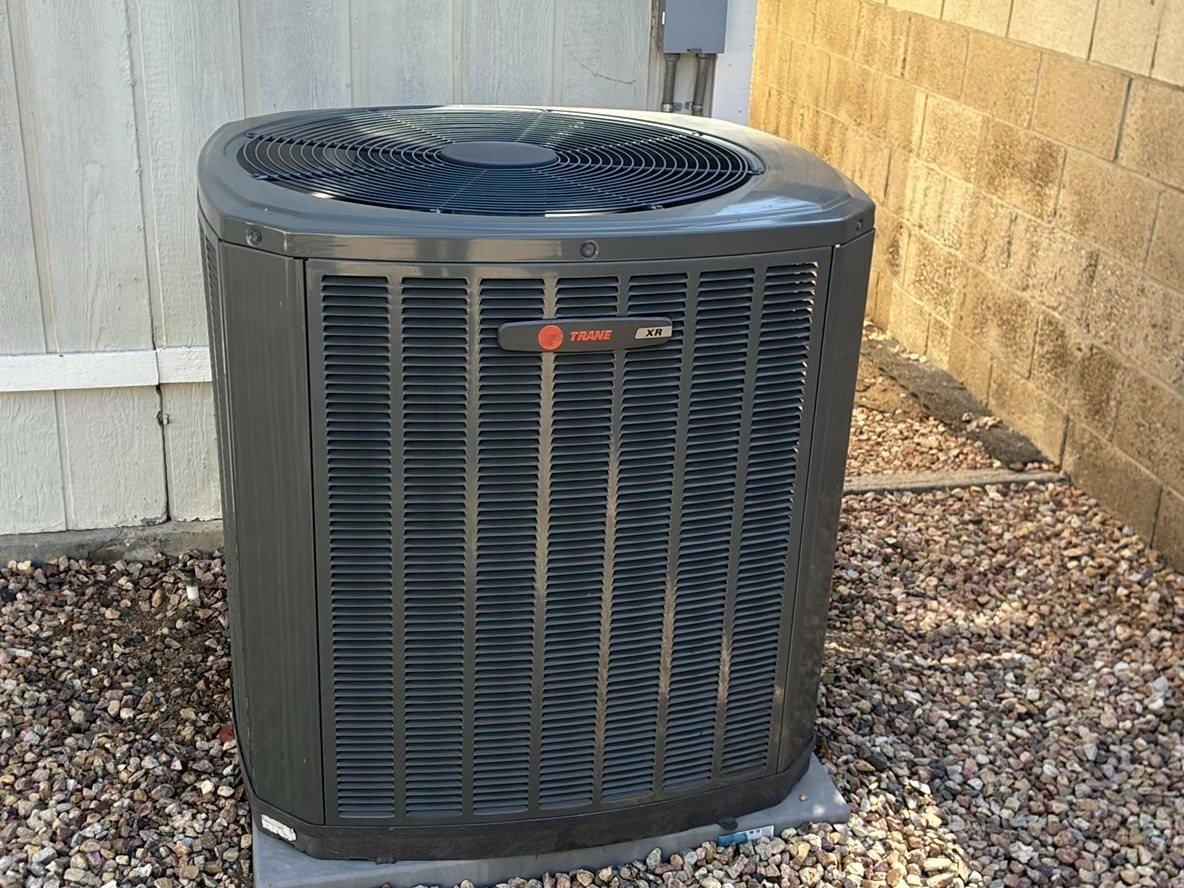
- HVAC — the several furnace and air-conditioning zones an estate runs, each unit's age, and whether it fires and cools — no small thing given how hard a Rancho Santa Fe inland summer leans on every condenser.
The output is a photo-backed summary built to sit on your insurer's 4-point form. Anything hidden behind finished plaster or unsafe to reach, I mark plainly rather than invent.
What puts a Rancho Santa Fe estate on a carrier's list?
The Covenant has nothing to do with the worn-cottage narrative behind most 4-points. What lands these estates in front of an underwriter is a different combination — enormous rebuild figures, where the land sits relative to the fire country, and original systems finally timing out:
- Wildland-interface fire exposure: Rancho Santa Fe sits inland among the canyons, eucalyptus groves, and open reserve of the San Dieguito watershed — deep in the high-fire territory carriers have been pulling back from. On a home this costly to rebuild, an insurer screens hard no matter how immaculate the upkeep, and the 4-point is the form they reach for.
- High replacement cost on custom construction: A bespoke estate carries a rebuild number no carrier takes on faith. Roof remaining life, panel condition, and supply material draw scrutiny precisely because the dollars riding behind them are large.
- 1970s–80s systems at the end of the runway: The first generation of Covenant estate equipment — tile underlayment, water heaters, compressors — is now forty-plus years on, well into remaining-life territory.
- Well and acreage infrastructure: Private wells, pressure tanks, and the pumps and panels that run irrigation across acres add equipment a tract home never has — and carriers want a current read on it.
- Decades of additions and remodels: Estates this age have grown — added wings, guest casitas, re-piped or re-paneled stretches — so an underwriter wants what's actually in the walls now, not the original 1978 permit.
What do I keep turning up on Covenant 4-points?
Because these estates share an era and a build tier, the findings tend to repeat — and they look nothing like what surfaces on small older-town homes. Catching them before a policy hinges on it lets you correct or disclose ahead of the underwriter:
- Tile and slate roofs over spent underlayment: the tile or slate still has years in it, but the felt beneath and the flashing through the many valleys and skylights are at the edge of what a carrier accepts — the most common flag on these long roofs.
- Polybutylene supply: a real hazard on '70s and '80s estate plumbing, and a finding carriers act on fast. A re-pipe across an estate this large is a serious undertaking, so pinning it down early matters.
- Back-of-house subpanels carriers question: a tidy main panel paired with older or overloaded subpanels feeding a guest house, well pump, or barn — sometimes a decline-list brand like Zinsco, Federal Pacific, or Sylvania still alive in an outbuilding the main upgrade skipped.
- Multiple aged water heaters and HVAC zones: one wing's unit replaced while another's original tank or condenser soldiers past its service life, often without the seismic strapping California requires.
- Well-system age: pressure tanks, pumps, and the panels serving them that have run for decades and rarely get a second look until a carrier asks.
- Flat-roof sections nearing failure: the built-up or low-slope runs tucked between an estate's planes, which pond and fatigue on their own clock and usually give out first.
I draw a clear line between a system that's merely aging but sound and one a carrier will reject, and I photograph each so the report stands on evidence, not impression.
How does the visit run and what does your carrier get?
It opens with a call to (619) 752-4399 or an email carrying the address, the home's age, and the carrier or exact form you're satisfying — some insurers want a specific 4-point layout, and knowing it up front spares a second trip. On an estate, flag the detached casitas, barns, pool houses, and whether the property runs on a private well, since their panels, pumps, and water heaters all fall inside the four systems.
Because so much of the Covenant sits behind gates and at the end of long private drives, we line up access through the owner, agent, or estate manager beforehand — so the gate, the scattered subpanels, the water heaters in separate wings, the well equipment, and the attic or mechanical rooms are all reachable before I arrive. On site I work the four systems head-on: open every panel and subpanel to read manufacturer and amperage, identify supply material at accessible points, check each water heater's age and condition, confirm every HVAC zone runs, and read the whole roof for covering, age, underlayment, and remaining life across all its planes.
The deliverable is a HomeGauge report documenting each point with photos, the age and material of every system, and condition spelled out in the plain language an underwriter expects. It typically arrives same day or next day, so a renewal deadline or an escrow clock doesn't run out on you. I report observed condition only — I don't bid or perform repairs, swap a panel, or re-roof. Where a finding calls for a specialist, such as a leak pressure-test or a structural opinion, I say so plainly and coordinate or refer the right licensed pro.
Why do Covenant owners and agents have me write it?
A 4-point on an estate is worth only as much as the judgment behind what gets flagged, and reading a home with several panels, zoned HVAC, well equipment, and a complex roof takes someone who understands how these systems go together. I'm an InterNACHI Certified Professional Inspector (CPI) and I also hold a California CSLB General Contractor license (#1113143). That contracting background is exactly what these four systems ask for — when I write that an underlayment is spent or that a barn subpanel is a decline-list brand, I know what the repair genuinely involves and can tell you straight, not just that something's wrong.
- 20+ years and more than 10,000 inspections across San Diego County, from the older inland towns to the large custom estates of Rancho Santa Fe, Fairbanks Ranch, and the surrounding river-valley country.
- 4.9 stars across 106 Google reviews from buyers, sellers, and agents.
- Independent and conflict-free — I document the four systems for your carrier and don't sell the re-roof, the re-pipe, or the panel upgrade, so nothing in the report bends toward work I'd profit from.
For the roof underlayment, re-pipe, or electrical work a report points to, I coordinate or refer the right licensed contractor rather than pretend the 4-point covers it. I'm InterNACHI CPI and CSLB-licensed; not an ASHI or CREIA member, and I don't post flat prices — the fee tracks the property. Reach me at joe@sandiegohomeinspection.com or the number above.
Which related inspections fit a Rancho Santa Fe estate?
The 4-point settles your insurer's narrow question. If you're buying, or you want a fuller read on a Covenant estate, several companion inspections fold into the same visit — and on acreage this size, they're often where the real surprises hide:
- Full home inspection — the entire estate, structure included, when you need a buyer's-grade report rather than just the carrier's four points. On a home this large, the 4-point's narrow scope was never meant to stand in for it.
- Roof inspection — a deeper standalone look when the 4-point shows tile or slate underlayment, or flat-roof runs, near the end of their life and you want the remaining years detailed across each plane.
- Sewer scope — a camera down the main lateral, which on an estate can run a long way to the street or out to a septic system, with mature landscaping over it; root intrusion and bellied lines surface and aren't part of a 4-point.
- Pool & spa inspection — equipment, bonding, and safety for the pools and spas standard on these lots, separate from the insurance four points.
- Thermal / infrared imaging — for concealed moisture and electrical hot spots across a large footprint the eye misses, useful when a remote subpanel or a flat-roof section raises a flag.
Send me the address, the home's age, and what your carrier is asking for, and I'll tell you which of these genuinely apply before you spend on any of them.
Rancho Santa Fe 4-Point Inspection FAQs
Why would a high-value Rancho Santa Fe estate need a 4-point inspection?
Is a 4-point inspection the same as a full home inspection?
My estate is on a private well. Does that change the 4-point?
How do you handle an estate with several panels and HVAC zones?
What gets a Covenant estate flagged on a 4-point?
How fast can I get the report for my carrier?
Roof, electrical, plumbing and HVAC
Documentation from recent 4-point inspections across San Diego County.
More inspections in Rancho Santa Fe
- Seller inspection in Rancho Santa Fe
- Warranty inspection in Rancho Santa Fe
- Commercial roof cleaning in Rancho Santa Fe
- Commercial inspection in Rancho Santa Fe
- Home inspection in Rancho Santa Fe
Nearby and countywide
Were You Happy With Your Inspection?
We are proud of our 4.9-star rating across 100+ Google reviews. If Joseph and the team did right by you, a quick Google review helps other San Diego County buyers and sellers find us.