
Thermal Imaging Inspection in Rancho Santa Fe, CA
A Rancho Santa Fe estate is built to be quiet about its faults. Three-coat plaster, deep covered loggias, multiple HVAC zones, well and pump equipment off in an outbuilding, and acres of finished floor mean a problem can run for a season before anyone in the house notices a thing. That spread is exactly what an infrared camera is good at narrowing down: on a Covenant property measured in acres rather than feet, there is more roof, more glass, more buried supply line, and more electrical load than any walk-through with a flashlight can honestly cover end to end. A scan reads the one variable a custom finish can't mask — surface temperature.
I'm Joseph Romeo, and the infrared pass I run during the inspection turns those sprawling surfaces into a heat map, so the trouble an estate this size tends to swallow — a damp band behind cement plaster, a warm terminal buried in a 400-amp service, a guest casita the ducts never fully reach — reads on the screen instead of arriving as a five-figure surprise later. It's non-invasive and runs alongside the Rancho Santa Fe home inspection — nothing opened, nothing drilled. And the limit gets said plainly: infrared flags thermal anomalies that deserve a second look. It is not an x-ray, and it does not certify what hides inside a sealed cavity. Below is what the scan covers on an acreage estate, the Rancho Santa Fe conditions that justify it, and the patterns I keep seeing.
Call (619) 752-4399 Schedule an Inspection
What does an infrared scan cover on an acreage property?
An infrared camera turns surface temperature into a picture. Where a wall, ceiling, floor slab, or electrical panel should read uniform, a cool shadow, a hot joint, or a damp stripe steers me toward what's going on just under the finish — and on a property this large, that pointing is most of the value. Built into the standard inspection on a Rancho Santa Fe estate, the pass takes in:
- Hidden moisture behind custom finishes — evaporative cooling drops a wet area below the temperature of the dry material beside it, so water working past a window head, a loggia connection, or a roof penetration appears as a thermal pattern long before it bleeds through plaster or millwork.
- Insulation shortfalls across a wide envelope — thinned, sagging, or omitted batts read as temperature banding, the reason a far wing of a single-level estate drifts warmer than the core on a hot inland day.
- Electrical heat in a large service — a tired breaker, a loose lug, or a strained connection running hotter than its neighbors inside the oversized mains and sub-panels these homes carry for wells, pools, barns, and EV charging.
- HVAC delivery problems in zoned systems — detached attic ducts, registers pushing little conditioned air, and zones that lag behind, common where several units and long trunk runs feed one broad floor plan.
- Under-slab supply anomalies — warm trails where a pressurized line weeps beneath the slab, an early signature that beats any spike on a metered or well-fed water system.
Two honest caveats ride with every pass: the camera sees the surface, not literally into the cavity, and a flag is a prompt to investigate, not a settled defect. When something lights up I document it, confirm it with a moisture meter wherever the spot is reachable, and spell out the specific next step — instead of calling a repair off a colorful frame alone.
Why does the scan pay off on a Rancho Santa Fe estate?
The assumption on a luxury custom home is that the craftsmanship makes infrared redundant. It runs the other way: acreage, custom systems, and rural infrastructure hand the camera more to find. The conditions specific to Rancho Santa Fe that earn the scan:
- Acreage means more to cover. A Covenant estate spreads across far more wall, roof, and window assembly than a suburban home, often with detached guest quarters and outbuildings. A slow leak in a seldom-used wing can sit unseen for months; the camera sweeps that ground methodically rather than by random spot-check.
- Well and pump systems. Many properties out here run on private wells, pressure tanks, and booster pumps wired into the electrical service. Those motor loads and their connections are extra points where a thermal anomaly develops — and they sit in equipment rooms or outbuildings that a quick visual pass tends to shortchange.
- Inland marine moisture on broad glass. Morning fog drifts up the San Dieguito drainage and lingers on plaster and the wide window-and-door walls these estates favor. Years of that quietly loads moisture into heads, sills, and penetrations — which the camera reads behind the finish before a stain ever shows.
- Slab-on-grade over expansive clay. The clay soils on these rolling estate lots swell and shrink with the seasons and put stress on copper supply lines run beneath the pour. A pinhole under-slab leak surfaces as a warm path crossing the floor well before anyone connects it to a problem.
- Decades-old custom builds. Much of the Ranch went up across the mid-century through the 1990s, so original wiring, panels, and waterproofing details are now aged. Humid inland air works on terminals over time, and infrared catches the warm connection that slow corrosion is cooking.
What does the camera commonly turn up out here?
Scan enough estates in the Ranch and the results start to repeat. Knowing the recurring patterns helps you judge whether a flag is routine or worth running down before the contingency window closes on a major purchase:
- Detached or leaking attic ducts — a supply run dumping conditioned air into a long attic so a distant bedroom, library, or guest suite never holds temperature, a frequent miss where extended duct runs serve a wide footprint.
- Insulation voids over rooms and additions — thermal bands where batts were skipped or settled, often at a remodel seam or an added wing that never matched the original envelope.
- Damp window heads and loggia connections — cool evaporative shadows where marine humidity or winter rain slipped past aging sealant on broad glass and covered-patio tie-ins.
- Warm floor trails from an under-slab leak — a heat path tracking across the slab where a pressurized line weeps below, the higher-stakes find on these expansive-soil lots.
- Hot terminals in oversized panels and pump circuits — a breaker, lug, or motor connection reading warmer than the rest, often at a sub-panel feeding a well pump, pool, barn, or EV charger.
- Seepage at wet bars, multiple baths, and water heaters — slow drips behind a wall or under a cabinet in homes that simply carry more plumbing fixtures to begin with.
None of these is automatically a deal-killer. The value is catching them early: the report separates a minor insulation gap you'd just monitor from an active under-slab leak that reshapes your numbers, so you negotiate on what's verifiable rather than on a hunch.
How does the sweep run and what does your report include?
It begins with a call to (619) 752-4399 or an email with the Rancho Santa Fe address and a note that you want infrared added. On a property this size the scan does its best work inside the standard inspection rather than as a blind standalone pass — the camera tells me where to concentrate across all that acreage, and the hands-on checks confirm what it surfaced.
A good read depends on contrast: the camera needs a temperature difference between inside and outside for anomalies to stand out, so I time the pass to the cleanest read of the visit, with the HVAC zones cycling and the water on so the systems are genuinely working when I look. On these estates I give added attention to window and door heads, loggia undersides, every panel and sub-panel, the well and pump equipment, and any slab below a wet room — that's where moisture and electrical heat tend to gather out here. You're welcome to watch the screen as a cool bloom spreads across a wall or a lug glows hotter than the breakers around it.
It all lands in a HomeGauge report with the infrared images paired to standard photos, every anomaly described in plain language, the confirming meter reading where I took one, and a clear next step for anything that warrants it. Most reports go out same day or the next day, so the contingency clock on a major purchase never waits on me. I report what the camera and meter observed — I don't open walls, run leak pressure-tests, or perform the repairs.
Who reads the thermal scan in Rancho Santa Fe?
Owning the camera is the easy part; interpreting it is the work, and on a complex custom estate the room for a misread is wide. A cool spot can be active intrusion, a draft, or a cold-water line behaving exactly as designed — telling those apart is judgment, not hardware. I'm an InterNACHI Certified Professional Inspector (CPI) and I hold a California CSLB General Contractor license (#1113143). That construction background is what lets me weigh a thermal anomaly against how these estates were actually framed, wired, plumbed, and finished — whether a cool plume under a window is real water or a shaded wall, whether a warm patch at a sub-panel is a failing connection or a well pump under load.
- 20+ years and 10,000+ inspections across San Diego County, including Rancho Santa Fe and the neighboring Fairbanks Ranch and San Dieguito estate areas.
- 4.9 stars across 106 Google reviews.
- Independent and conflict-free — I scan and report what the camera shows; I don't sell repairs, restoration, or electrical work, so no flag ever points toward a job I'd profit from.
When an anomaly needs more than a camera — a confirmed slab leak, a panel concern, a moisture question — I coordinate or refer the right licensed specialist and hand over the imagery so they start from evidence instead of a guess. Reach me at joe@sandiegohomeinspection.com or the number above.
Which inspections pair with a Rancho Santa Fe thermal scan?
Infrared sharpens an inspection; it doesn't replace one. On a Rancho Santa Fe estate these companion services pair naturally with the scan and book on a single trip:
- Full home inspection: the complete buyer's-grade evaluation the thermal pass layers onto — start at the Rancho Santa Fe home inspection hub.
- Sewer scope: when the camera flags floor moisture, a camera down the lateral confirms whether a leaking line is the cause — worth it on the long laterals and septic runs these acreage lots carry.
- Roof inspection: when infrared catches a cool ceiling plume, a roof read traces the intrusion to its source above, important across the broad tile and flat-roof sections these custom homes mix.
- Pool and spa inspection: all but expected on Ranch estates, and easily added to the same visit alongside the equipment the camera already passes over.
- 4-point inspection: the insurance-focused read on roof, electrical, plumbing, and HVAC that older estates often call for, complementing what the thermal scan suggests about those same systems.
Not sure what your address needs? Send it over and I'll tell you whether infrared is worth adding — see all inspection services we offer or get a quote through contact.
Rancho Santa Fe Thermal Imaging Inspection FAQs
Is thermal imaging worth it on a large Rancho Santa Fe estate?
Can infrared find an under-slab leak at my Rancho Santa Fe home?
Does the scan cover well and pump equipment out here?
Does thermal imaging see inside the walls of my estate?
Does the inland marine layer create moisture infrared can detect?
What does adding thermal imaging cost in Rancho Santa Fe?
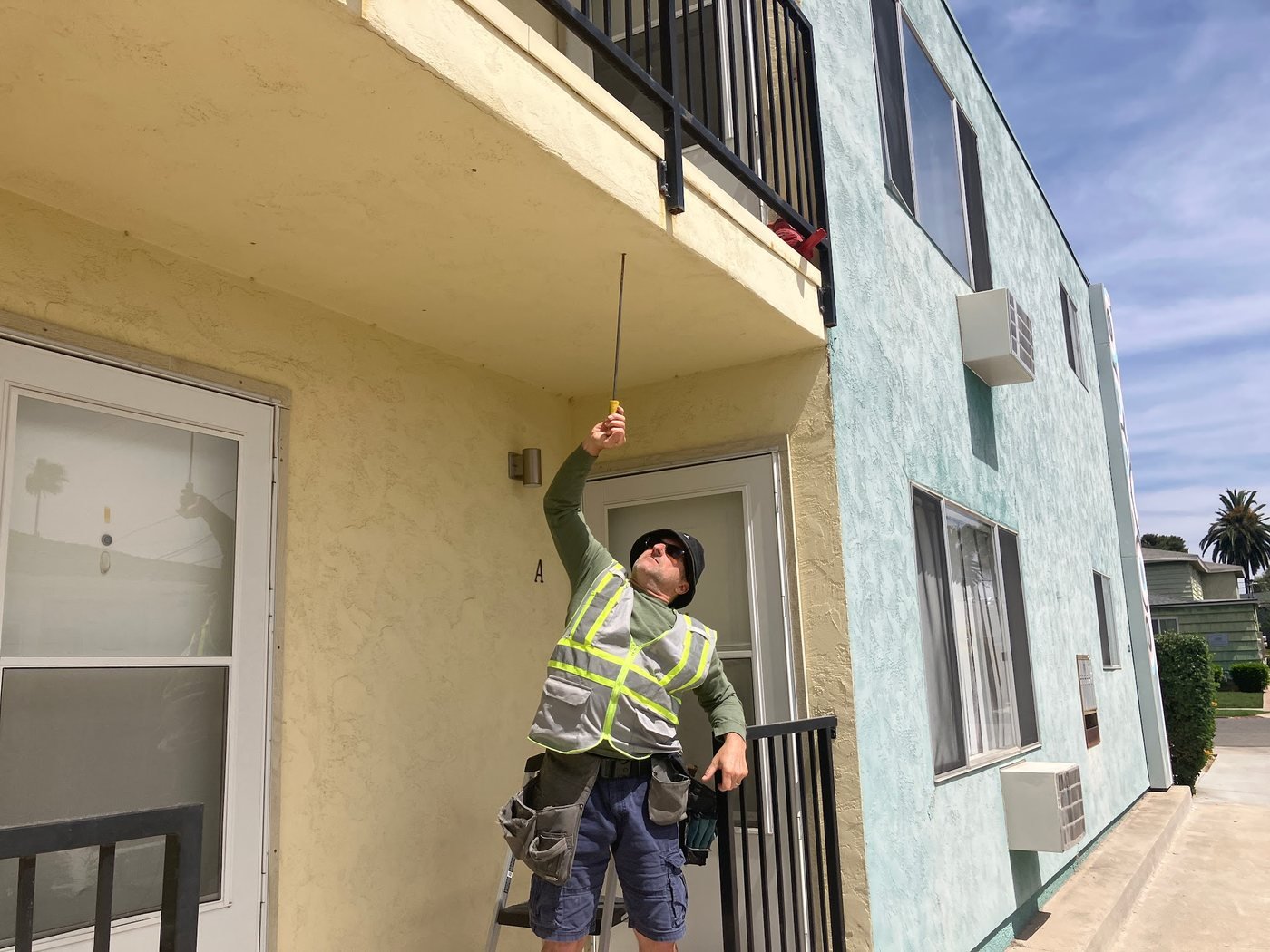
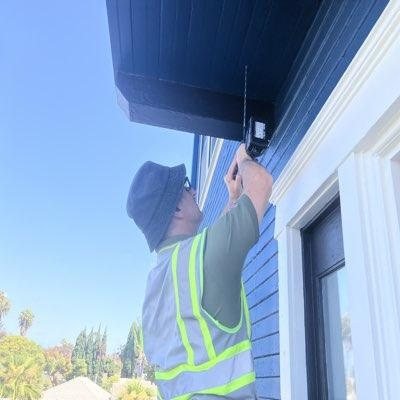
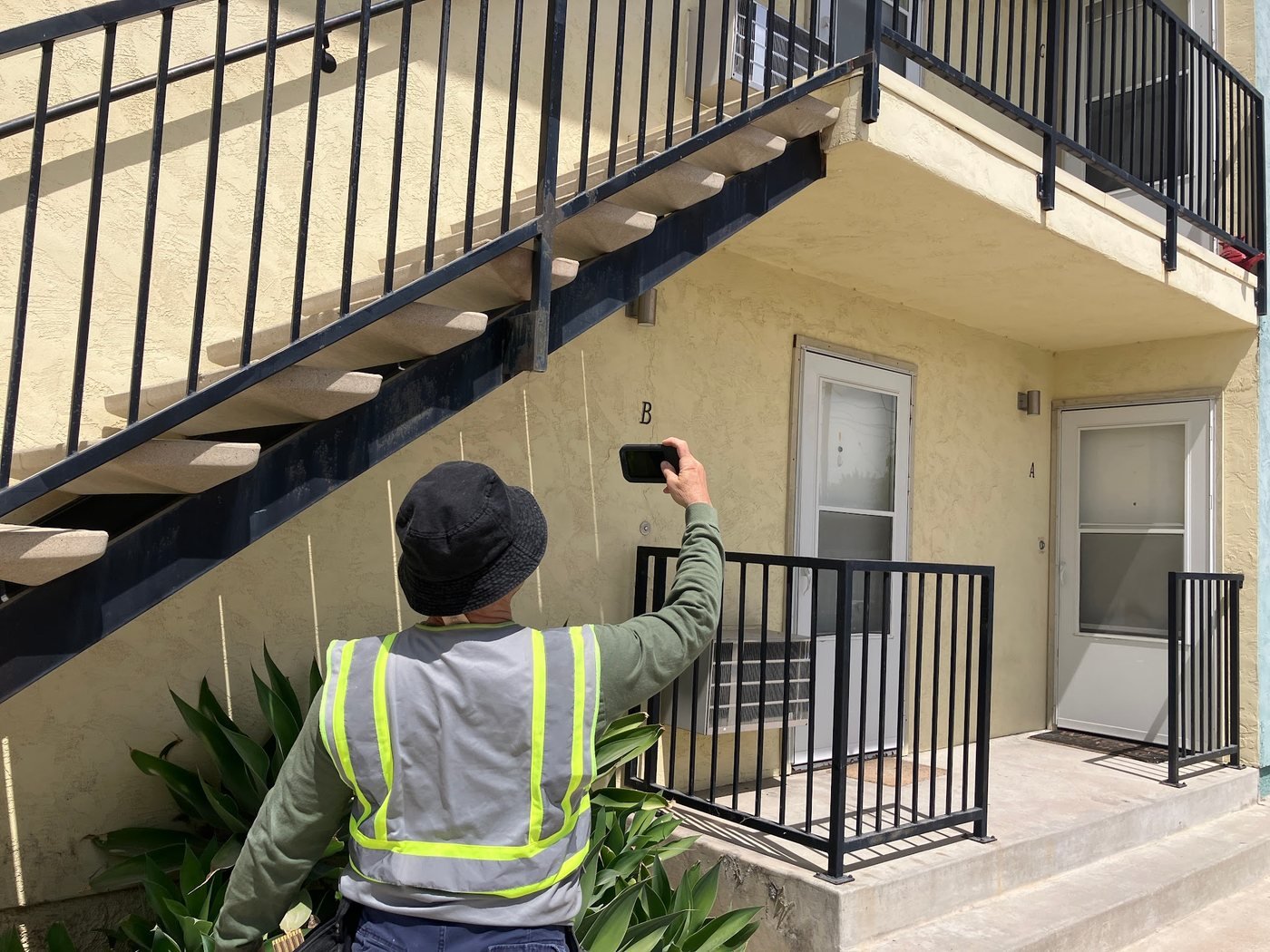
Thermal scanning in action
Our inspectors use FLIR thermal cameras to find moisture and heat issues hidden in walls and soffits.
More inspections in Rancho Santa Fe
- Pool and spa inspection in Rancho Santa Fe
- Sewer scope inspection in Rancho Santa Fe
- 4-point inspection in Rancho Santa Fe
- Roof inspection in Rancho Santa Fe
- Home inspection in Rancho Santa Fe
Nearby and countywide
Were You Happy With Your Inspection?
We are proud of our 4.9-star rating across 100+ Google reviews. If Joseph and the team did right by you, a quick Google review helps other San Diego County buyers and sellers find us.