
Roof Inspection in Rancho Santa Fe, CA
The roof on a Rancho Santa Fe estate is rarely one roof. A Covenant home set on two or five acres off Linea del Cielo, El Montevideo, or La Granada usually carries clay tile over the main residence, a flat foam section above a loggia or garage wing, and a separate covering on a detached guest house, pool cabana, or barn — each aging on its own clock, each two or three stories up over rooms you can't see into from the motor court. The original Lilian Rice-era Spanish Colonial homes from the 1920s and '30s wear clay barrel tile that has outlived several underlayments; the custom builds that followed each set their own rooflines wandering across courtyards and towers. A leak over a back wing here can run for a season before it ever marks a ceiling.
I'm Joseph Romeo, and a roof inspection is a documented visual read of the covering and everything that keeps water out of it: flashing, valleys, penetrations, vents, skylights, gutters, and drainage, plus the visible signs of leakage, aging, and storm damage, and the attic moisture and ventilation wherever I can reach it. On a multi-structure Covenant property that's a methodical walk across separate roofs, not a glance from the driveway. I report condition and remaining-life indicators and point you to a licensed roofer for any repair or certification — I don't certify roofs and I don't do the work, which keeps the findings clean. The Rancho Santa Fe home inspection hub covers the rest of the estate.
Call (619) 752-4399 Schedule an Inspection
What does a Rancho Santa Fe estate roof inspection cover?
The job is to read a full roofing system — often spread across the main house plus one or more outbuildings — and to catch the small connections that fail long before the open field of tile does. On a Covenant property I evaluate and photograph:
- The roof covering — predominantly concrete or clay barrel tile on these Spanish Colonial and Mediterranean estates, with flat foam (SPF) or modified-bitumen over loggias, garage wings, and additions, and asphalt shingle or standing-seam metal on some guest houses and barns. I note material, apparent age, layering, and how much serviceable life each separate section appears to have left.
- Flashing and the many transitions — metal at chimneys, parapets, sidewalls, valleys, and the roof-to-wall joints that multiply every time a courtyard, tower, or stepped wing breaks the roofline. On a rambling estate roof these transitions leak first, not the tile field.
- Penetrations and rooftop equipment — plumbing vents, several furnace and water-heater flues, solar arrays, and the curbs for the multiple HVAC units a large estate runs, each a deliberate hole relying on intact flashing and boots.
- Skylights and light wells — frequent on these custom homes and a recurring leak point at the curb and glazing.
- Gutters, scuppers, and drainage — how a large volume of roof water gets carried clear of the foundation and down the graded estate pad and decomposed-granite hillside.
- Attic and underside, where accessible — staining, active moisture, daylight at penetrations, and ventilation across the several separate attic spaces a sprawling floor plan and detached structures create.
You get a documented read on condition and remaining-life indicators per structure. I don't issue a roof certification or quote the repair — that's a licensed roofer's call, and I'll tell you when one is warranted.
How does the Covenant's setting age a roof?
Rancho Santa Fe sits inland in north county, away from the heaviest marine layer but exposed to its own mix of heat, fire risk, and vintage-estate quirks — and the acreage and architecture compound all of it:
- Inland heat aging the covering. The Covenant runs hot through summer afternoons, well east of the coastal fog. That sun bakes the oils from any shingle, chalks and splits the coating on flat foam wings, and slow-cooks the underlayment beneath tile. Remaining life out here often reads shorter than the build date alone would suggest.
- Vintage tile over underlayment that's long expired. The clay barrel tile on a 1920s or '30s Lilian Rice estate can pass a century while the felt beneath it — the layer that actually sheds water — turns brittle and fails at thirty. On the older Covenant homes that underlayment has been replaced once or twice, or never, and a lift-and-relay can be a major undertaking under irreplaceable original tile.
- Wildfire ember exposure in the WUI. Much of the Covenant backs onto the San Dieguito River corridor, the canyons, and open grove land, putting it squarely in the wildland-urban interface. Here ember defense sits alongside waterproofing: unscreened attic and gable vents, open eave gaps, and valleys packed with eucalyptus, oak, and grove litter are all ember-entry points I flag.
- Scale and outbuildings hiding leaks. A roof spread across wings, courtyards, and a detached guest house, cabana, or barn has far more valleys and transitions than a tract roof, and the secondary structures are exactly where nobody notices a stain. The more roofs and the more complex each one, the more places a small failure stays invisible.
- Foot-traffic damage from estate systems. Decades of roofers, solar installers, and AV and HVAC technicians walking steep tile to service the equipment these homes carry leaves cracked and slipped tile concentrated around every array, curb, and antenna mount.
What do I commonly find on Covenant roofs?
Inspect enough estate roofs across the Covenant and the same findings recur, sorted by the home's age, its covering, and how many separate structures share the property. Knowing them before an offer or a listing separates routine upkeep from a six-figure re-roof on the horizon:
- Brittle underlayment under sound tile. The most consequential find out here — serviceable-looking clay or concrete tile over felt at or past the end of its life, pointing toward a lift-and-relay or tear-off a roofer should scope on a roof this size, with extra care where original barrel tile must be salvaged and reset.
- Cracked and slipped tile around equipment. Breakage clustered at solar mounts, HVAC curbs, and service walk-paths from years of technician traffic, leaving gaps over exposed underlayment.
- Failed flashing at the many transitions. Corroded, loose, or poorly sealed metal at chimneys, parapets, sidewalls, and the wing-to-wing valleys a complex roofline multiplies — the most frequent active leak source on these homes.
- Chalked and ponding foam on flat wings. UV-spent coating, blistering, and standing water on the flat foam and modified-bitumen over loggias, garages, and flat-roofed additions.
- Dried-out pipe boots and sealant. Cracked neoprene boots at plumbing vents and split sealant at skylight curbs and penetrations — small failures that admit water long before the covering itself wears out.
- Neglected outbuilding roofs. The guest house, cabana, or barn covering that hasn't been touched in years while the main residence got attention — often the worst roof on the property and the easiest to overlook.
- Ember-vulnerable vents and litter-loaded valleys. Older unscreened venting and debris-packed valleys on the grove-backing and canyon-edge parcels where ember defense matters.
- Attic staining in the back wings. Old and active moisture at penetrations and valleys in the seldom-entered attic spaces over guest wings — frequently the first hard proof of a leak the surface hasn't yet betrayed.
When I find a leak indicator I trace it as far as safe access allows — from the attic stain back toward the failed flashing above — so a roofer knows where to start instead of guessing across a large roof.
How does the inspection run and what report do you get?
It starts with a call to (619) 752-4399 or an email with the Covenant address. I'll ask about the covering types, the home's age, and whether the property has detached structures with their own roofs, and whether this is a standalone roof look or part of a fuller estate inspection — on a purchase the roof usually folds into the whole-house visit. Behind-the-gate access takes coordination, so I arrange entry with the listing agent or owner ahead of time rather than improvise on the day. A large multi-structure roof takes real time, and I plan for it.
On site I inspect each roof the way conditions allow. I walk the low-slope and walkable sections where it's safe, and on the steep barrel-tile pitches and fragile foam decks that dominate these estates I work from ladders, the eaves, and the attic — protecting the roof I'm there to evaluate beats a better camera angle, and cracking irreplaceable original tile for a photo helps no one. I move through each structure's covering, then the flashing and valleys, the penetrations, vents, and skylights, then the gutters and drainage, and I get into the accessible attic spaces to read moisture and ventilation. Every finding gets a photo and a location, which matters when a roof has a dozen valleys that all look alike in a report.
Your deliverable is a photo-documented HomeGauge report that names the covering on each section and structure, locates every defect, and gives my read on condition and remaining-life indicators — the difference between re-flashing one chimney and an underlayment near the end of its run across the whole estate. I turn it around same day or next day in most cases, so an escrow contingency on a Rancho Santa Fe purchase doesn't stall on me. One boundary I'm upfront about: I assess and document, I don't certify or repair, and I never bid the work — so nothing in the report is steered toward a job someone's selling.
Why do Rancho Santa Fe owners and agents call Joseph Romeo?
Reading an estate roof is judgment as much as observation — telling tile with twenty years left from underlayment that's already failed, separating a cosmetic crack from a leak in the making, and knowing whether the fix is a spot repair or a relay across several wings and an outbuilding. Your inspection is led by me, Joseph Romeo, an InterNACHI Certified Professional Inspector (CPI) who also holds a California CSLB General Contractor license (#1113143). That builder's background is what lets me tell you whether a flagged section means re-flashing one transition or relaying barrel tile over an entire estate — and roughly what that path involves — before you ever call a roofer, which on a multi-million-dollar Covenant home is the difference between an informed negotiation and a worst-case guess.
- 20+ years and more than 10,000 inspections across San Diego County, including the tile-roofed estates and grove-backing parcels of inland north county.
- 4.9 stars across 106 Google reviews from buyers, sellers, and agents.
- Independent and conflict-free — I document the roof and report what's there; I don't sell roofing or certifications, so nothing in the report points toward work you don't need.
I'm InterNACHI CPI and CSLB-licensed; I'm not an ASHI or CREIA member, and I don't post flat prices — the fee tracks the roof's size, pitch, access, and how many structures share the lot, which on a sprawling estate is a real variable, so I point you to the fee schedule or confirm a quote before you book. Reach me at joe@sandiegohomeinspection.com or the number above.
Which inspections pair with a Rancho Santa Fe roof check?
The roof is one system, and on a Covenant estate this size it rarely makes sense to look at it alone. I can coordinate these around a single behind-the-gate visit:
- Full home inspection — the whole-house evaluation a buyer needs, with the roof folded in; start at the Rancho Santa Fe hub if you're purchasing rather than just checking the roof.
- Thermal / infrared imaging — reveals hidden moisture behind ceilings and walls from a roof leak the surface hasn't yet shown, a real payoff on a big roof where leaks run unseen in back wings and outbuildings.
- 4-point inspection — the roof-electrical-plumbing-HVAC summary insurers increasingly ask for on these older Covenant estates at renewal.
- Sewer scope — a camera down the long private lateral, which on these grove-covered acreage lots running to septic is well worth pairing with the roof.
- Pool & spa inspection — equipment, bonding, and safety on the resort-style backyards standard on these estate lots.
Not sure what your address needs? Send it over and I'll tell you what's worth doing — see all inspection services or get a quote through contact.
Rancho Santa Fe Roof Inspection FAQs
Do you walk the roof on a Rancho Santa Fe estate, or inspect from the ground?
My Covenant home has clay tile that looks flawless. Why inspect it?
Do you inspect the guest house and other outbuildings too?
Does the inspection cover wildfire ember risk on grove-backing lots?
Can you certify my Rancho Santa Fe roof for a sale or insurer?
What does a roof inspection in Rancho Santa Fe cost?
Roofs we document
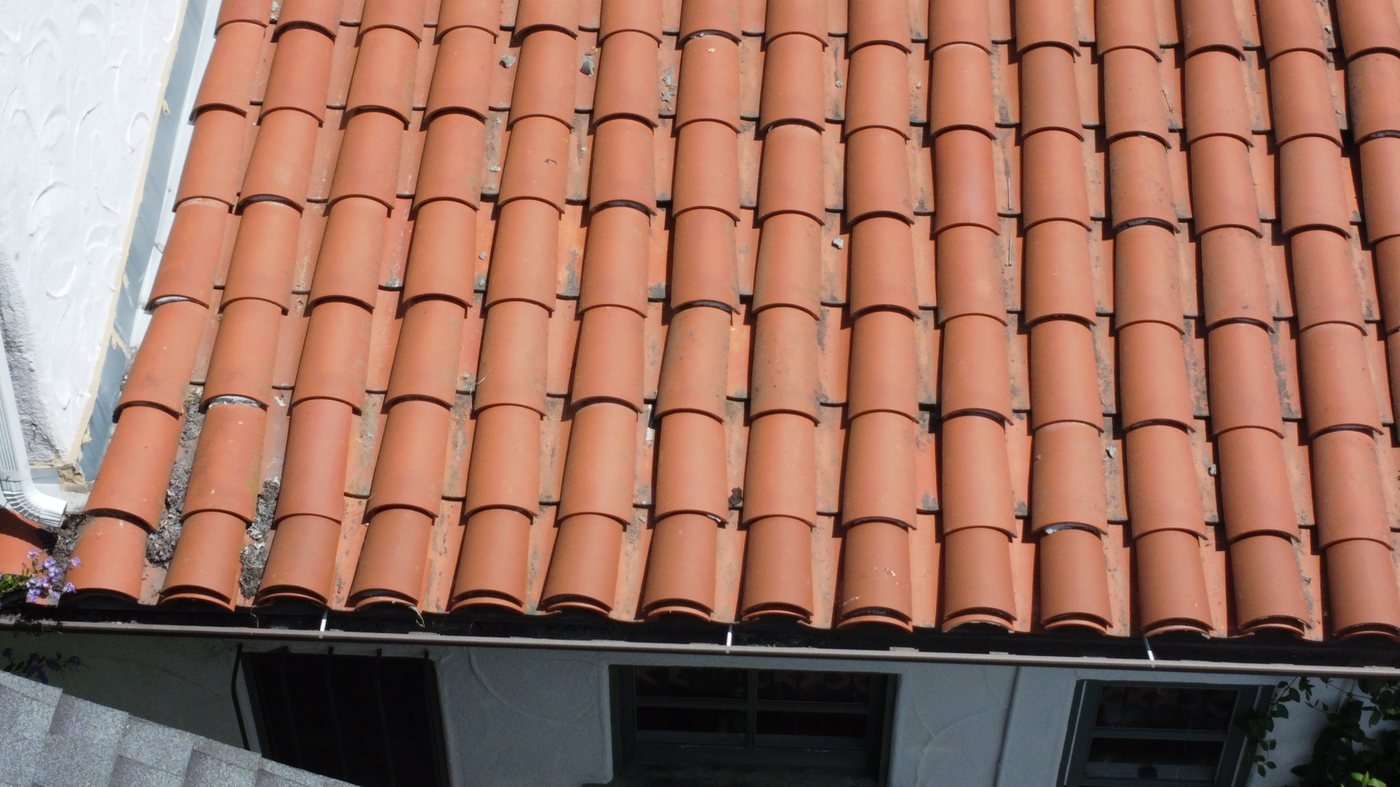
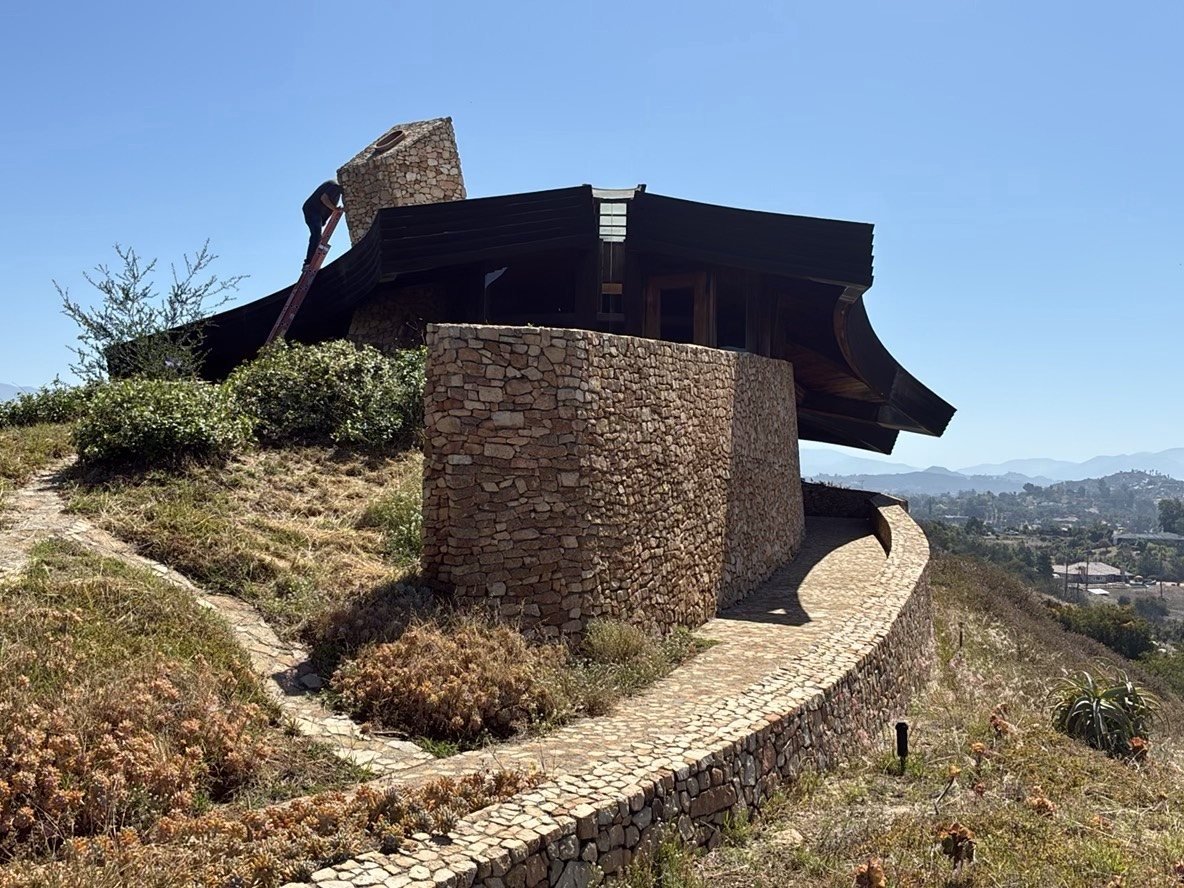
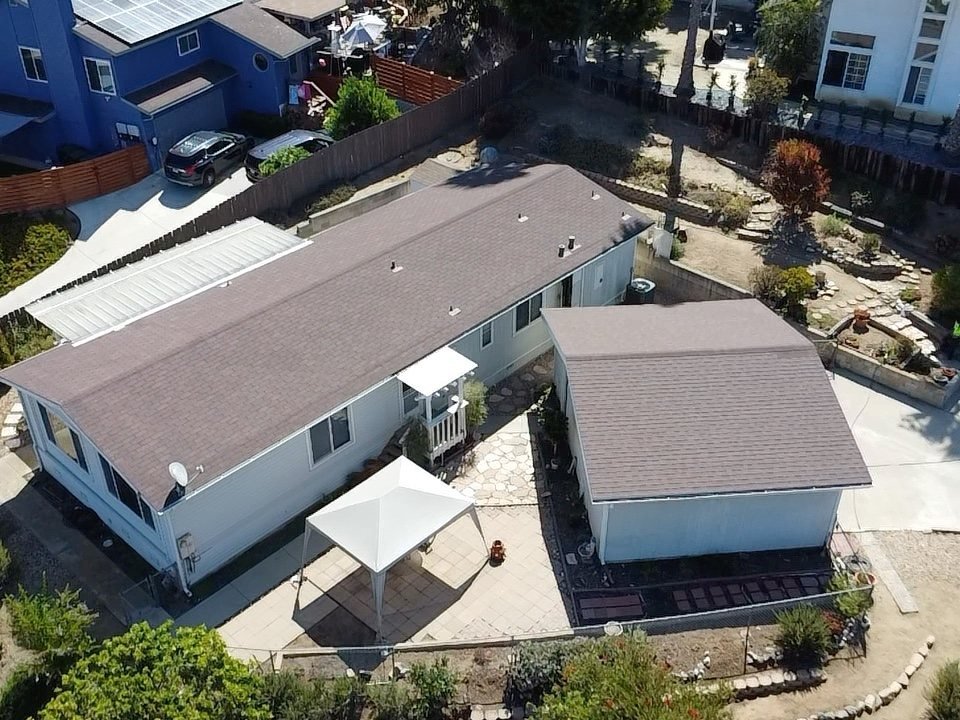
Aerial and on-roof photos from recent San Diego County roof inspections.
More inspections in Rancho Santa Fe
- Foundation slab survey in Rancho Santa Fe
- SB 721 balcony inspection in Rancho Santa Fe
- SB 326 balcony inspection in Rancho Santa Fe
- SB 721 exemption letter in Rancho Santa Fe
- Home inspection in Rancho Santa Fe
Nearby and countywide
Were You Happy With Your Inspection?
We are proud of our 4.9-star rating across 100+ Google reviews. If Joseph and the team did right by you, a quick Google review helps other San Diego County buyers and sellers find us.