
Foundation & Slab Inspection in Point Loma, CA
Point Loma is a peninsula that tilts — the ridge runs down the spine of the neighborhood and the streets fall away toward the ocean on one side, the bay on the other. A foundation feels that geography long before the owner does. The first hint is usually small: a Sunset Cliffs bungalow door planed twice that still drags, a hairline stepping across a Roseville garage wall, a Loma Portal floor running quietly downhill. A foundation & slab inspection pulls those scattered hints into one story.
Think of it as a documented read on how the house is sitting today, not an engineer's stamp. We identify the foundation underneath — a poured slab on grade, a raised perimeter wall over a crawlspace, or a tensioned slab on a rebuild — then catalog the symptoms: cracked slab and stem walls, floors off level, binding doors and windows, and the drainage and soil pushing the whole thing. The findings come back in plain words. If a symptom looks like live or structural movement, we name it and hand the property to a licensed structural engineer for certification or repair design. That work, and any repair pricing, sits outside what we do.
Call (619) 752-4399 Schedule an Inspection
What's included in a Point Loma foundation & slab inspection?
The visit is a close, hands-on look at the foundation and at every clue the house gives up about how it has moved. On a Point Loma property we record:
- Which foundation you have — a slab poured on grade, a perimeter footing carrying a crawlspace (common under older peninsula homes), or a tensioned slab on a rebuilt lot. That single fact resets what counts as normal and how any problem gets fixed.
- Cracking in slab and stem walls — we trace each crack, logging width, angle, and whether it reads as curing shrinkage or a line still opening.
- How level the floors sit — dips, slopes, and spring underfoot that flag settlement, heave, or a tired crawlspace frame.
- Doors, windows, and wall finishes — binding or racked openings and the diagonal cracks running off their corners, evidence a frame is leaning over a shifting base.
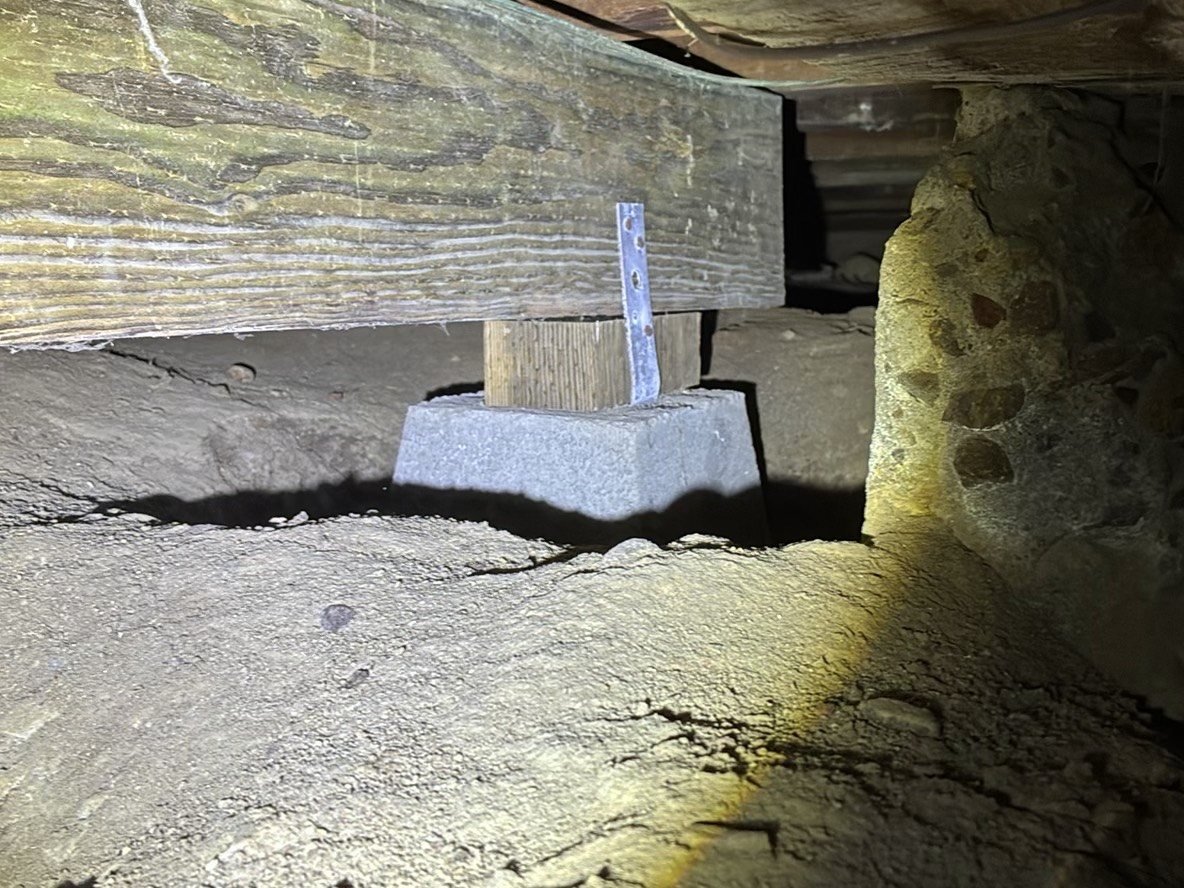
- The crawlspace structure — under raised homes, the posts, piers, girders, joists, and mudsills, plus moisture, rot, and any earlier shoring.
- Grading, drainage, and soil — where roof water goes, whether the dirt slopes back toward the walls, and the conditions that set the peninsula in motion.
We document what is open to view and reachable. Where wall and floor finishes, stored boxes, or a tight crawlspace block the view, that limitation goes in the report — we never sign off on a foundation we could not actually see.
How do the peninsula's slope and salt air work on a foundation?
Point Loma is not one ground type but a sequence of them, shifting as you move from the ocean bluffs down to the bayside flats — and each band loads a foundation differently:
- Hillside slopes, creep, and cut-and-fill pads. Homes stepping down toward Sunset Cliffs and the bay-facing grades sit on inclined ground that inches downhill over the years — the usual author of uphill stair-step cracking. Many of those lots were leveled by cutting native dirt on one side and packing fill on the other, and the two halves settle at their own pace, surfacing as a crack run or a floor tilting across the rooms.
- Severe ocean-side salt exposure. Near the cliffs and open-water blocks, airborne salt corrodes exposed rebar, anchor bolts, and hold-downs; the steel rusts, swells, and pops the concrete face off the stem wall, so we read those surfaces for rust bleed.
- High water table on the bayside flats. In the low La Playa and Roseville flats, groundwater sits near the surface, keeping crawlspaces damp and softening the bearing under slabs on fill.
- 1920s-through-1950s housing stock. La Playa, Roseville, and Loma Portal are full of pre-1960 homes on raised perimeter foundations — lightly reinforced concrete, period cripple framing, and decades of additions tied into the original build. Scrape-and-rebuild lots, by contrast, often land on post-tension slabs you never core casually.
Which conditions keep turning up under Point Loma homes?
Crawl enough foundations between the cliffs and the bay and the same findings keep repeating — mostly conditions to grasp and watch, not reasons to walk:
- Stair-step cracking and out-of-level floors — angled cracks climbing the stem and garage walls and fanning from window and door openings on the uphill end of a sloped lot, usually with floors tipping downhill and a door planed again and again to keep latching — the fingerprint of creep and uneven settlement.
- Corroded steel and damp crawlspaces — rust-stained anchor bolts and spalled concrete on the ocean-facing blocks, plus wet soil and decayed posts, girders, and mudsills under raised flats-area homes the water table keeps soaked.
- Slab cracking on grade — cosmetic curing cracks weighed against wider, offset, or live ones pointing to moving soil.
- A history of past repairs — piers, sistered joists, epoxy-filled cracks, or partial underpinning showing earlier work, often with drainage graded back toward the house.
When a crack looks live or a floor has clearly dropped, we neither brush it off nor blow it up — we describe what is there and note whether an engineer should weigh in.
How do we run the visit and what lands in your report?
We start at the exterior, walking the footing line for the foundation type, the stem walls, the grade, and the path rainwater takes off a sloping peninsula lot — on Point Loma that drainage path is half the diagnosis. Indoors, we check floors for slope and bounce, work the doors and windows, and chase cracks across the drywall. Under a raised home we enter the reachable crawlspace for posts, piers, girders, mudsills, moisture, and the rust salt air leaves on the hardware. You are welcome to come along — standing at a stair-step crack makes a finding stick in a way no paragraph manages.
Your deliverable is a photo-backed HomeGauge report: it states the foundation type, locates the cracks, the slope, and any corrosion, and tells you in everyday language whether the picture is normal for the home's age and ground or a sign of movement still in progress. It lands same day or next day, so your contingency clock keeps ticking.
And the boundary we name plainly: our job is to observe and document condition — not to certify a structure, run engineering math, or bid the work. When something reads as a real structural concern, we hand it to a licensed engineer for that call. Because we have no fix to sell, the report carries no hidden agenda.
Why do Point Loma buyers bring in Joseph Romeo?
Judging a foundation comes down to two skills — reading what a crack is telling you, and understanding what fixing it would actually involve. Your inspection is led by Joseph Romeo, an InterNACHI Certified Professional Inspector (CPI) who also carries a California CSLB General Contractor license (#1113143). On a sloped pre-war Point Loma home that builder's perspective earns its keep — he can tell whether a stair-step crack is long-settled or one an engineer should see before you close.
- 20-plus years and more than 10,000 inspections across San Diego County's coastal slopes and inland tracts.
- InterNACHI CPI and CSLB credentials; we are not ASHI or CREIA members.
- 4.9 stars from 106 Google reviews left by buyers, sellers, and repeat agents.
- Plain talk — what we would want to know if we were buying the place ourselves, with no fear-mongering and no nudge toward repairs.
- Genuine familiarity with peninsula construction, from raised 1920s cottages in Roseville to post-tension slabs on rebuilt Sunset Cliffs lots.
Findings arrive in a clean HomeGauge report you, your agent, and an engineer can each read without a translator.
Which inspections do Point Loma buyers run alongside this one?
On a Point Loma property — especially an older one set on a grade — the foundation check is rarely the only thing worth doing. Buyers here commonly add:
- Full home inspection — roof, electrical, plumbing, and the balance of the house; the visit the foundation work usually rides along with.
- Roof inspection — the salt-worn flashing and coverings that wear out fast near the water.
- Thermal/infrared imaging — reveals concealed moisture where a shallow water table is working on a crawlspace foundation.
- Sewer scope inspection — smart on older peninsula homes, where a failing lateral can saturate the dirt next to the footing.
- Specialist coordination — for a structural certification, a repair design, or a termite/WDO look at crawlspace damage, we hand you to the correct licensed professional instead of overstepping.
Our usual recommendation: run the foundation assessment with a full home inspection so the whole property gets covered in one trip.
Point Loma Foundation & Slab Inspection FAQs
What does a foundation & slab inspection in Point Loma cost?
Why do Point Loma foundations move at all?
Is a slab or wall crack on my Point Loma home a sign of failure?
Does salt air really hurt foundations near Sunset Cliffs?
Can you inspect a post-tension slab on a newer Point Loma rebuild?
Can you inspect the foundation and the whole house in one visit?
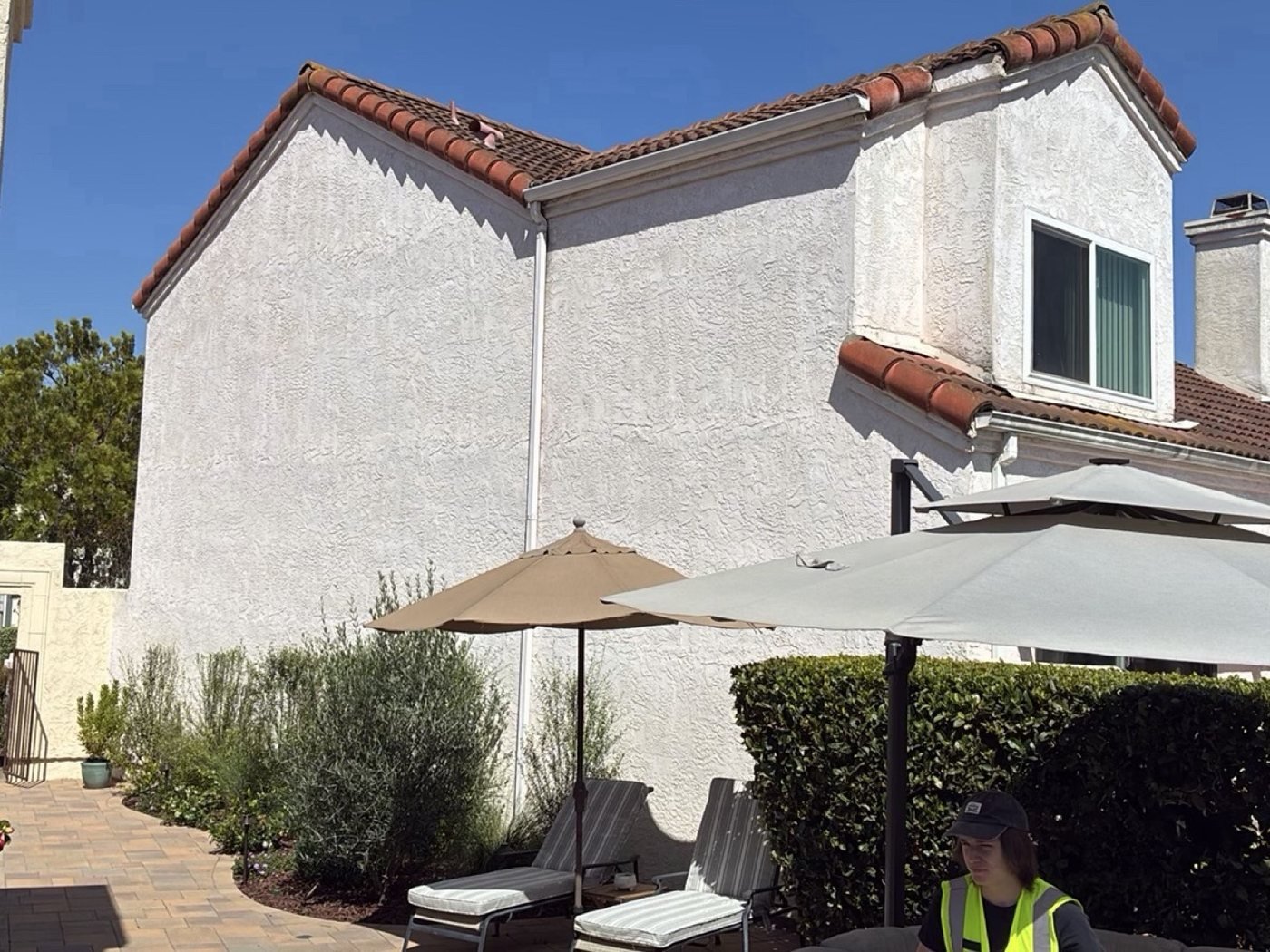
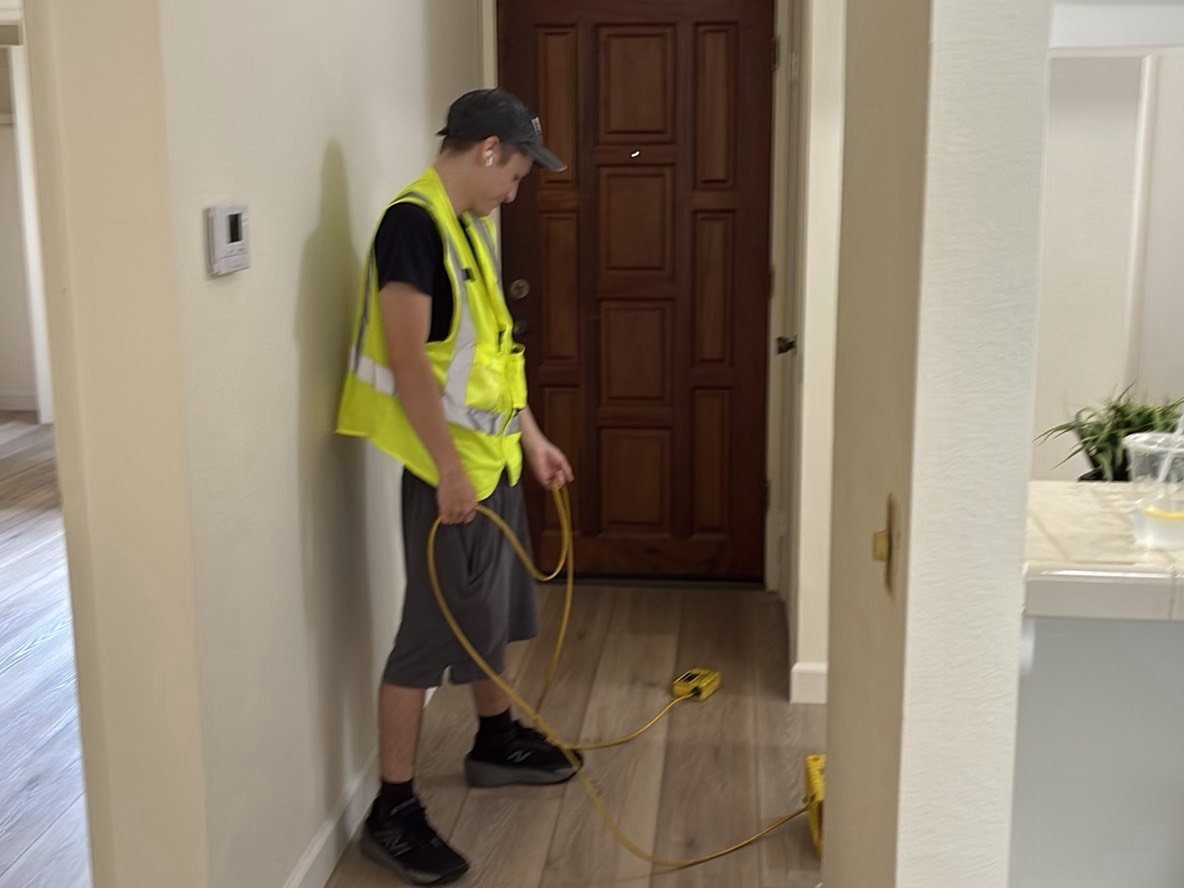
Slab surveys in action
ZipLevel altimeter measurements and foundation documentation from recent surveys.
More inspections in Point Loma
- Commercial roof cleaning in Point Loma
- Commercial inspection in Point Loma
- Pool and spa inspection in Point Loma
- Sewer scope inspection in Point Loma
- Home inspection in Point Loma
Nearby and countywide
Were You Happy With Your Inspection?
We are proud of our 4.9-star rating across 100+ Google reviews. If Joseph and the team did right by you, a quick Google review helps other San Diego County buyers and sellers find us.