
Foundation & Slab Inspection in Ocean Beach, CA
Ocean Beach wears its age on purpose. The craftsman bungalows packed along Niagara, Santa Monica, and the numbered avenues mostly went up between 1910 and the 1940s, and a lot of them have never been straightened in the eighty-some years since. They sit close together on small lots, many backing to OB's narrow alleys, a handful perched out at the Point Loma edge where the peninsula starts to climb. A foundation that old, that close to the surf, has a story written into it — and a foundation & slab inspection is how that story gets read instead of guessed at.
What we deliver is a documented read on how the house is sitting right now, not an engineer's seal. We figure out what's holding the place up — a slab poured directly on the dirt, an old cottage raised on a perimeter wall over a crawlspace, or a tensioned slab on a lot that got scraped and rebuilt — then we inventory the tells: split slabs and stem walls, floors that have gone out of true, doors and windows that fight you, cracked plaster tracking off the corners, and the grading and soil underneath it all. You get it back in language a normal person can use. If a symptom looks like the house is still moving, we flag it and send you to a licensed structural engineer for the certification or repair design. We don't do that scope, and we never put a price on the fix.
Call (619) 752-4399 Schedule an Inspection
What does an Ocean Beach foundation and slab inspection cover?
We spend the visit getting eyes and hands on the foundation itself and on every signal the house throws off about how it has shifted. On an OB property the things we capture are:
- The kind of foundation under you — a slab cast on grade, a raised bungalow sitting on a perimeter footing above a crawlspace (the default on OB's pre-war blocks), or a tensioned slab where an old lot got rebuilt. Get that wrong and everything else gets misread.
- Splits in the slab and the stem walls — we run each one down by hand and write up how wide it is, which way it travels, and whether it's old shrinkage gone quiet or a line that's still pulling apart.
- Whether the floors lie true — the sags, the runs downhill, the give underfoot that point to settlement or a crawlspace frame that's tiring out.
- How the openings behave — doors and windows that jam or sit out of square, and the plaster cracks angling off their upper corners, the frame ratting out a base that's drifted.
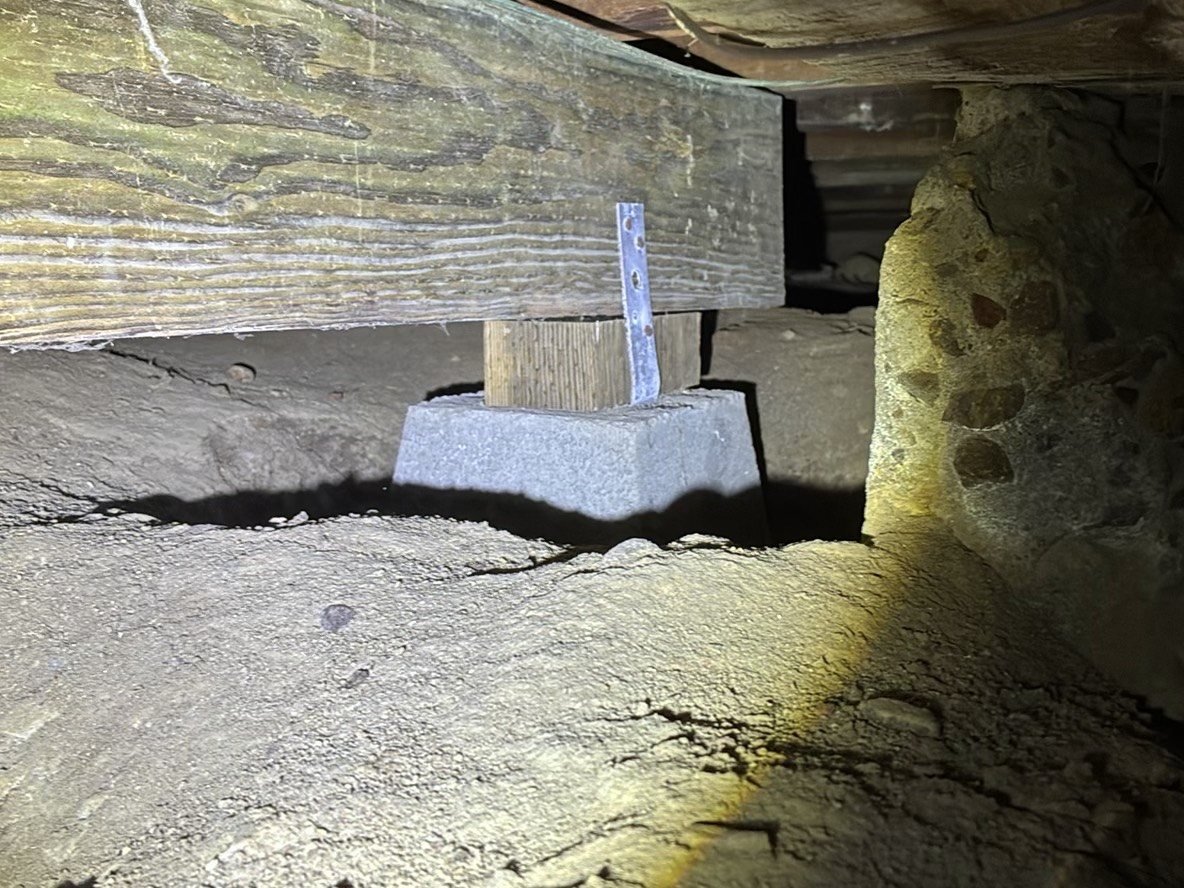
- The understructure on raised cottages — posts, piers, girders, joists, and sill plates, plus standing damp, decay, and any shoring a prior owner already bolted in.
- Grade, drainage, and dirt — where the downspouts let go, whether the ground leans back at the walls, and the salty, near-surface conditions that nudge OB foundations along.
We write up what's open to view and what we can actually get to. When finished plaster, a packed crawlspace, or a wall of stored surfboards blocks the line of sight, that constraint lands in the report — we won't clear a foundation we never laid eyes on.
How do the cliffs, salt, and old cottages affect OB foundations?
Ocean Beach is a small footprint with a lot going on underneath it — cliff-edge lots, low blocks near the river mouth, and a housing stock that mostly predates modern footing codes. Each piece works on a foundation in its own way:
- Brutal salt exposure right at the water. The cottages stacked above the OB cliffs and along the Sunset Cliffs Boulevard frontage catch raw marine air off the surf, and that salt chews through any steel it can reach — rebar, anchor bolts, hold-downs. The metal rusts, bloats, and shoulders the concrete face right off a stem wall, so we read those surfaces for the rust stains that give it away.
- Cliff-edge and peninsula-toe lots. Out where OB meets the rising Point Loma peninsula and the bluffs above the tide pools, parcels sit on grades and on old cut-and-fill pads that ease seaward over the decades, the usual source of stair-step cracks climbing the uphill walls.
- Low ground near the river and the bay flats. Down toward the San Diego River channel and the lower avenues, groundwater rides close to the surface, holding crawlspaces damp and softening the bearing under a slab dropped on fill.
- 1910s-to-1940s craftsman cottages. Block after block of OB is pre-war bungalow on a raised perimeter foundation — thin, lightly reinforced concrete, original cripple framing, and the knob-and-tube wiring and galvanized supply lines that come with houses this old. Layer on decades of garage conversions and tacked-on rooms and you've got pours of every vintage tied into one structure.
Which conditions do we keep finding under Ocean Beach homes?
Get under enough OB cottages between the cliffs and Voltaire Street and the same short list of findings comes around again — mostly things to understand and keep watching, not reasons to bail:
- Leaning floors and cracks fanning off the openings — floors that run downhill toward the seaward wall and plaster splitting from door and window corners, usually paired with a door that's been trimmed twice and still won't catch — the signature of an old cottage that settled or crept years back.
- Salt-eaten hardware and wet crawlspaces — rust-bled anchor bolts and flaked-off concrete on the cliff-facing blocks, plus soggy soil and rotted posts, girders, and sill plates beneath the lower-lying cottages the shallow water table keeps damp.
- Slab cracking on grade — the harmless curing kind weighed against the wider, stepped, or still-active kind that says the dirt below is on the move.
- Garage-conversion and add-on seams — cold joints and cracking where an old single-car garage became a studio or an alley granny flat got grafted on, the separate pours settling at their own pace.
- Patchwork from earlier fixes — piers, sistered joists, epoxied cracks, or partial underpinning showing the place has been worked on before, often with the grade still tipped back toward the house.
When a crack looks live or a floor has plainly dropped, we don't shrug it off and we don't make a horror movie out of it — we describe exactly what's there and note whether an engineer ought to weigh in.
How does the visit run and what does your report tell you?
We open outside, walking the footing line to read the foundation type, the stem walls, the grade, and the route water is supposed to take off a tight OB lot — on these small, salt-soaked parcels that water path is half the answer. Inside, we put a level on the floors, work every door and window, and chase the plaster cracks back to their corners. Under a raised cottage we go into whatever crawlspace we can reach for the posts, piers, girders, sill plates, the damp, and the rust the ocean air leaves on the steel. Tag along if you like — standing at a stair-step crack while we point out what it means sticks with you far better than any write-up.
What you get back is a photo-loaded HomeGauge report. It names the foundation type, pins the cracks, the slope, and any corrosion, and tells you in plain words whether what we found is ordinary for a cottage this old on ground this close to the water, or a sign the house is still working. It arrives same day or next day, so your contingency clock doesn't stall waiting on us.
Here's the boundary, stated flat out: we observe and we document — we don't certify a structure, run the engineering numbers, or bid the work. When something reads as a true structural problem, we hand it to a licensed engineer to make that call, and our notes give them a head start. We've got no repair to sell you, so nothing in the report is steering you anywhere.
Why do OB buyers call Joseph Romeo for the foundation?
Sizing up a foundation takes two things at once — reading what a crack is actually saying, and knowing what it would take to put it right. Your inspection is run by Joseph Romeo, an InterNACHI Certified Professional Inspector (CPI) who also holds a California CSLB General Contractor license (#1113143). On a salt-worn, century-old OB cottage that contractor's eye pays off — he can tell you whether a leaning floor settled decades ago or whether an engineer needs to see it before you sign.
- 20-plus years and north of 10,000 inspections across San Diego County, from beach-town cottages to inland tract slabs.
- InterNACHI CPI and CSLB credentials — and to be clear, we don't belong to ASHI or CREIA.
- 4.9 stars across 106 Google reviews from buyers, sellers, and agents who keep coming back.
- Straight talk — what we'd want spelled out if it were our own purchase, with zero scare tactics and zero push toward a repair.
- Real fluency in OB construction, from raised 1910s craftsman cottages to the post-tension slabs on scrape-and-rebuild lots near the cliffs.
It all comes back in a clean HomeGauge report you, your agent, and an engineer can each read without anyone translating it.
Which other inspections do OB buyers pair with this one?
On an Ocean Beach place — especially a pre-war cottage near the water — the foundation check is seldom the whole job. Buyers here often add:
- Full home inspection — roof, electrical, plumbing, and the rest of the house; the visit the foundation work usually piggybacks on, and the one that flags any knob-and-tube or galvanized lurking in an old OB cottage.
- Roof inspection — the salt-beaten flashing and coverings that give out fast this near the surf.
- Thermal/infrared imaging — surfaces hidden moisture where a shallow water table is working on a crawlspace foundation.
- Sewer scope inspection — a smart move on older OB homes, where a cracked clay lateral can soak the dirt right alongside the footing.
- Specialist coordination — for a structural certification, a repair design, or a termite/WDO look at crawlspace damage, we point you to the right licensed pro instead of pretending it's our lane.
The combination we recommend most: run the foundation assessment alongside a full home inspection so the entire property gets covered in one trip.
Ocean Beach Foundation & Slab Inspection FAQs
What does a foundation & slab inspection in Ocean Beach cost?
Why do Ocean Beach cottages end up with leaning floors?
Does a crack in my OB slab or wall mean the foundation is failing?
How badly does the salt air off the OB cliffs hurt a foundation?
Can you inspect a post-tension slab on a rebuilt OB lot?
Can you inspect the foundation and the whole cottage in one visit?
Slab surveys in action
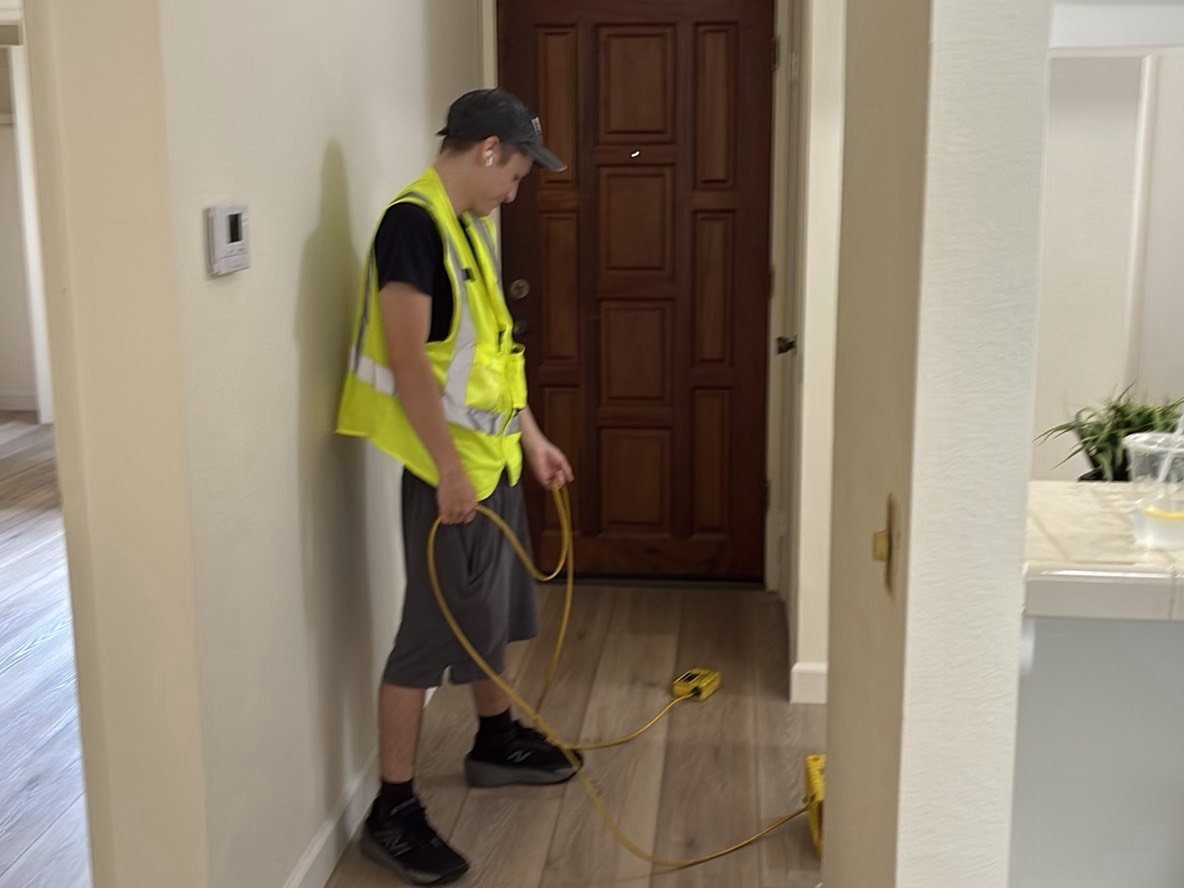
ZipLevel altimeter measurements and foundation documentation from recent surveys.
More inspections in Ocean Beach
- SB 721 exemption letter in Ocean Beach
- Seller inspection in Ocean Beach
- Warranty inspection in Ocean Beach
- Commercial roof cleaning in Ocean Beach
- Home inspection in Ocean Beach
Nearby and countywide
Were You Happy With Your Inspection?
We are proud of our 4.9-star rating across 100+ Google reviews. If Joseph and the team did right by you, a quick Google review helps other San Diego County buyers and sellers find us.