
Thermal Imaging Inspection in Ocean Beach, CA
Ocean Beach sits at the windward lip of the Point Loma peninsula, and its housing stock — rows of 1910s-through-1940s craftsman cottages, a few bungalow courts, and the odd surf shack that never quite got permitted — has been soaking in salt fog for the better part of a century. An infrared camera adds a sense the naked eye lacks: it registers the heat radiating off a surface, and on a wall that has cycled wet and dry through decades of marine layer, those small temperature differences are usually the earliest honest signal that something behind the plaster has gone wrong. A swollen window casing on a Sunset Cliffs Boulevard cottage reads cool where the framing has stayed damp. A cloth-wrapped junction in a knob-and-tube circuit reads warm where a connection is heating up. The scan turns those hidden shifts into an image you and I can look at together.
We build the infrared work into the regular inspection — no second appointment, no separate trip charge. While I move through the house I pass the camera over ceilings, exterior walls, the perimeter of every window and door, the service panel, and the HVAC registers, watching for the heat anomalies a sharp eye and a strong flashlight still slide past. OB homes range more than people expect — beach cottages near the pier, 1920s Spanish-tile builds up the hill toward Point Loma, mid-century stucco off Voltaire, the occasional gut-renovated flip — and each era hides its weak spots somewhere different. The straight talk up front: infrared is not an x-ray and not a guarantee. It points me toward areas worth a closer look; it cannot see inside a sealed pipe or declare a house defect-free. I verify what I can with a moisture meter and bring in a licensed specialist when a finding needs invasive proof.
Call (619) 752-4399 Schedule an Inspection
What does an infrared scan examine in an OB cottage?
Nothing gets opened and nothing gets bored into — the scan is entirely non-invasive. The camera records surface temperature, and the patterns those readings draw let me reason about what is most likely going on beneath the finish. On a typical Ocean Beach property I sweep and document:
- Concealed moisture and live water tracks. The cool, evaporative shapes across ceilings, walls, and around openings that give away water moving where you cannot see it — the most valuable thing the camera turns up in a town this close to the surf.
- Leak paths at windows, doors, and flashing. The sills, jambs, and head flashings where corroded single-pane frames and chalky old caulk let the prevailing onshore wind drive water in, worst on the seaward elevations.
- Insulation that is missing, matted, or wet. The cold streaks and thermal bridging on ceilings and exterior walls that are routine in cottages built before anyone insulated a beach house properly.
- Electrical heat at the panel and in old wiring. Breakers, lugs, and splices reading abnormally warm — a fire-risk pattern the eye never sees, and one that turns up fast in OB's surviving knob-and-tube and early galvanized-era circuits.
- HVAC and heater distribution faults. Registers throwing the wrong temperature, wall heaters and ducts left bare or pulled loose, and rooms that never come up to temperature in a cottage that was never built for central air.
- Slab and supply-line signatures. Warm or cool lines crossing slab floors on the flatter lots back from the cliffs, where a hot-water line stressed by shifting soil can leave a thermal trail before a drip is ever audible.
When something narrows what the camera can read — a long dry spell that keeps a dormant leak quiet, a west wall baked by afternoon sun, a bookcase pinned against the drywall — I tell you so directly instead of pretending every square foot got a clean read.
Why does Ocean Beach reward an infrared scan?
Ocean Beach hands a building a punishing combination, and most of it lands squarely in the territory infrared is meant to expose. A few reasons the scan tends to earn its keep here:
- The marine layer never lets a wall fully dry. OB sits in the fog belt at the open end of the peninsula, so a slow leak that would dry out and disappear in El Cajon stays wet here long enough to soften framing and feed mold. The camera reads that lingering damp first.
- Salt corrosion opens the door before water walks through it. Decades of airborne salt pit window frames, eat fasteners and flashing, and corrode pipe fittings — quietly creating the gaps moisture exploits. The camera sees the wet behind those gaps before any stain bleeds through.
- The oldest cottages still run knob-and-tube and galvanized. Plenty of pre-1940 OB homes were never fully rewired or repiped. Brittle cloth insulation and corroded connections build heat; galvanized supply lines rust shut and weep. Both leave thermal signatures worth catching before they fail.
- Cliff-edge wind drives rain sideways. Out near Sunset Cliffs, weather doesn't fall on a house so much as it gets pushed through it. Wind-driven rain finds tired seals and flashing, and the scan shows where it landed inside the wall.
- Beach-town turnover hides quick patches. Cottages flip, get carved into rentals, and get painted between tenants rather than truly repaired. Infrared reads through a fresh coat to the moisture still sitting behind it.
Which thermal signatures keep turning up in Ocean Beach?
Scan enough OB homes — the pier-adjacent cottages, the bungalows off Newport and Bacon, the hillside Spanish builds climbing toward Point Loma, the flips on the numbered streets — and certain heat patterns repeat. Few are deal-killers on their own; each is an anomaly I flag for a closer look, and where I can reach the spot, I confirm it with a moisture meter on the spot:
- Damp signatures framing windows and doors. The single most common find here, where salt-corroded frames and failed seals on original cottages let onshore weather slip past.
- Cool blooms on ceilings beneath roof penetrations. Around skylights, plumbing vents, and valleys where a slow roof leak has wet the drywall but hasn't yet shown itself as a brown ring.
- Gapped or slumped insulation. Cold bands across ceilings and outside walls in the older cottages, marking holes in an envelope that a flat mild-winter bill never explains.
- Hot connections in aging panels and legacy wiring. Warm breakers, lugs, and knob-and-tube splices in homes pushing century-old circuits past their limit — flagged for a licensed electrician before they cook.
- Ground-moisture bands low on walls. Cool patterns rising at the base of crawlspace and slab-edge walls where coastal damp and hillside runoff work up from underneath.
- Uneven HVAC and wall-heater output. Registers and heaters delivering the wrong temperature, and bare ducts that leave a back bedroom cold while the system labors.
Anything the camera catches live gets logged with its exact location and, where I could take one, the moisture-meter number — so whoever follows me starts at the problem instead of hunting for it.
How do I run the sweep and what ends up in your report?
The infrared sweep rides inside the standard inspection — one visit, not two. Working room by room, I glide the camera across ceilings, exterior walls, the edge of every window and door, the panel, and the supply registers, timing each read for when it actually means something. The camera needs a temperature difference between inside and out, plus surfaces that aren't soaked, to draw usable contrast — so on a gray OB morning with the marine layer hanging on, I factor that in rather than over-call a wall the fog left damp.
A thermal image alone proves nothing, so I corroborate it. When the camera shows a moisture-shaped anomaly, I confirm it with a moisture meter on surfaces I can reach before it goes into the report — a cool streak can come from a draft or a shaded wall just as easily as from water. You're welcome to watch the live screen while I work; seeing the cool band spread under your own window tends to make the finding land.
What you receive is a photo-documented HomeGauge report that pairs the thermal images with plain-English notes on where each anomaly sits, what it most likely means, and the next move — watch it, repair it, or refer it out — delivered same day or next day so a tight OB escrow never waits on me. The boundary I hold to: infrared reveals anomalies; it does not certify their cause. I don't pressure-test plumbing, open walls, or issue leak or mold certifications. When a scan points to moisture that needs invasive verification, I coordinate the right licensed specialist and hand over my images so nobody starts the investigation from zero.
Why do OB buyers want Joseph Romeo reading the camera?
An infrared camera is only as useful as the person interpreting it. The same warm patch can be a genuine defect or just a wall holding the day's heat, and on a hundred-year-old salt-worn cottage, telling those two apart takes someone who understands how these buildings were assembled. Your scan is led by Joseph Romeo, an InterNACHI Certified Professional Inspector (CPI) who also holds a California CSLB General Contractor license (#1113143). That contractor's eye matters the instant the camera lights up — he can tell you whether a cool streak under a craftsman window points to a tired seal or to wet framing behind the plaster, so you negotiate from knowledge instead of guesswork.
- 20-plus years and more than 10,000 inspections across San Diego County's coastal, hillside, and older-cottage neighborhoods.
- 4.9 stars from 106 Google reviews left by buyers, sellers, and the agents who keep sending clients back.
- Every moisture flag confirmed with a meter where it counts, so you leave with a finding that has a next step — not just a dramatic picture.
- Plain talk — I tell you what I'd want to know if I were buying the cottage myself, and I won't blow a harmless cool spot into a crisis.
For anything beyond the scan — a plumber's leak test, a roofer on a confirmed wet ceiling, an electrician on a hot knob-and-tube splice — I coordinate the right licensed pro so each piece comes from the correct trade, with my findings in hand.
Which inspections are worth pairing with your OB scan?
Thermal imaging is an add-on that sharpens a broader look at the property; it isn't a standalone service. Depending on the home's age and where it sits in Ocean Beach, buyers here often combine it with:
- Full home inspection — the core review of roof, structure, electrical, plumbing, and HVAC that the infrared scan rides inside, and the visit it runs alongside.
- Roof inspection — when the camera flags a damp ceiling, a closer look at the covering and salt-eaten flashing overhead shows where the water is actually getting in.
- Sewer scope inspection — the buried lateral on the older OB lots, where decades-old clay and cast-iron lines run unseen beneath mature trees and shifting fill.
- Four-point inspection — a focused read on roof, electrical, plumbing, and HVAC that insurers frequently ask for on OB's century-old cottages.
- Specialist coordination — for an active plumbing leak, a mold assessment, or a termite/WDO report, I refer the right licensed professional rather than step past my scope.
The pairing I recommend most is the infrared scan alongside a full home inspection — one coordinated read in a single visit. I suggest what suits the property rather than push a fixed bundle; what earns its keep on a 1920s pier-adjacent cottage isn't what a renovated hillside flip needs.
Ocean Beach Thermal Imaging Inspection FAQs
Does thermal imaging see through the walls of my Ocean Beach home?
Why does infrared matter so much in Ocean Beach specifically?
Can the scan help with knob-and-tube or old galvanized wiring in OB?
Should I scan an Ocean Beach cottage that's been flipped or rented?
Is the infrared scan a separate appointment in Ocean Beach?
If the scan finds moisture, do you fix it or certify the cause?
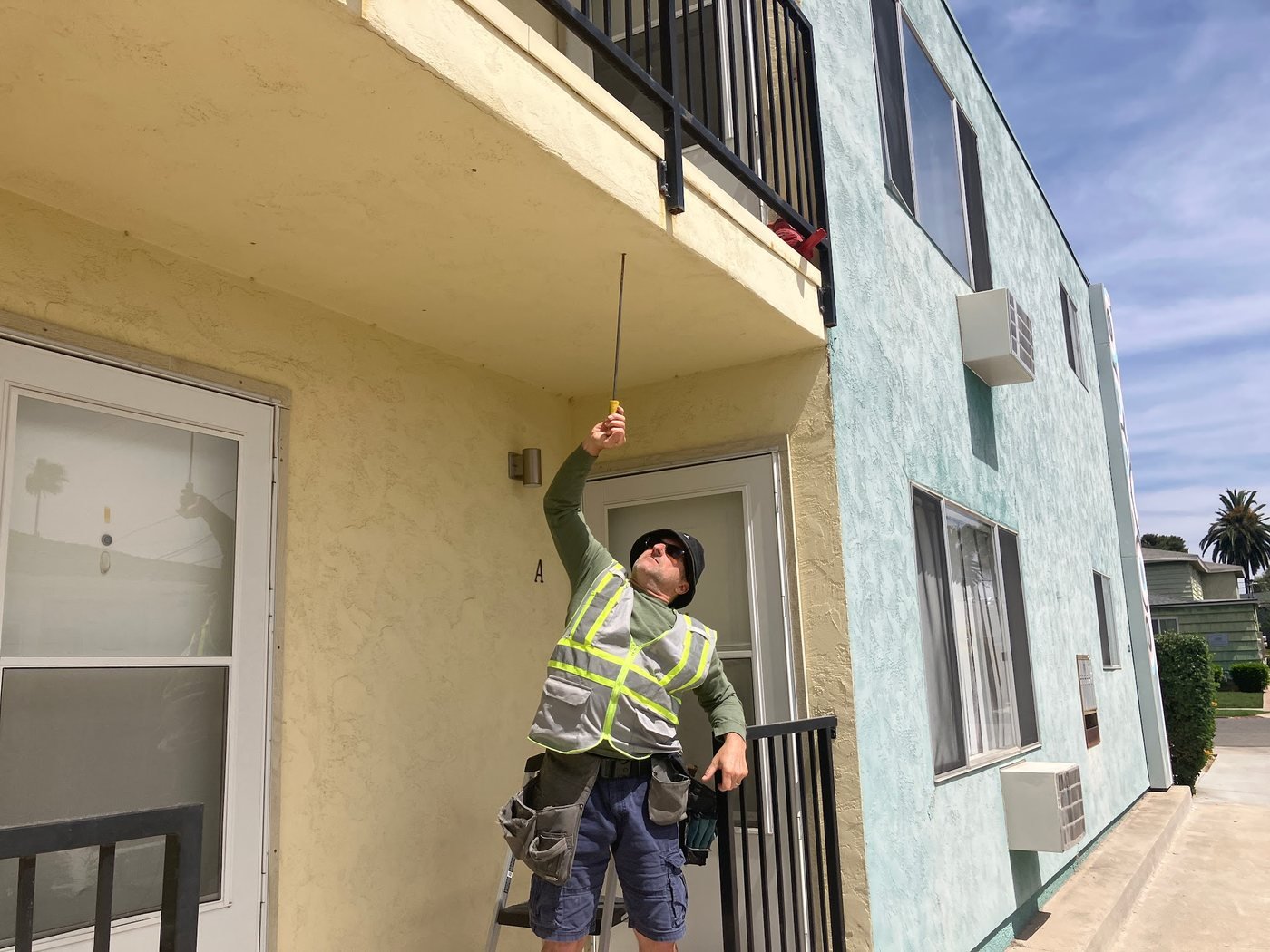
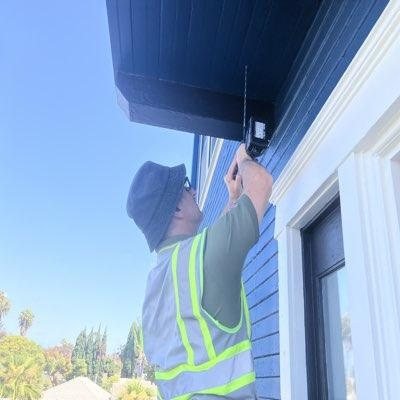
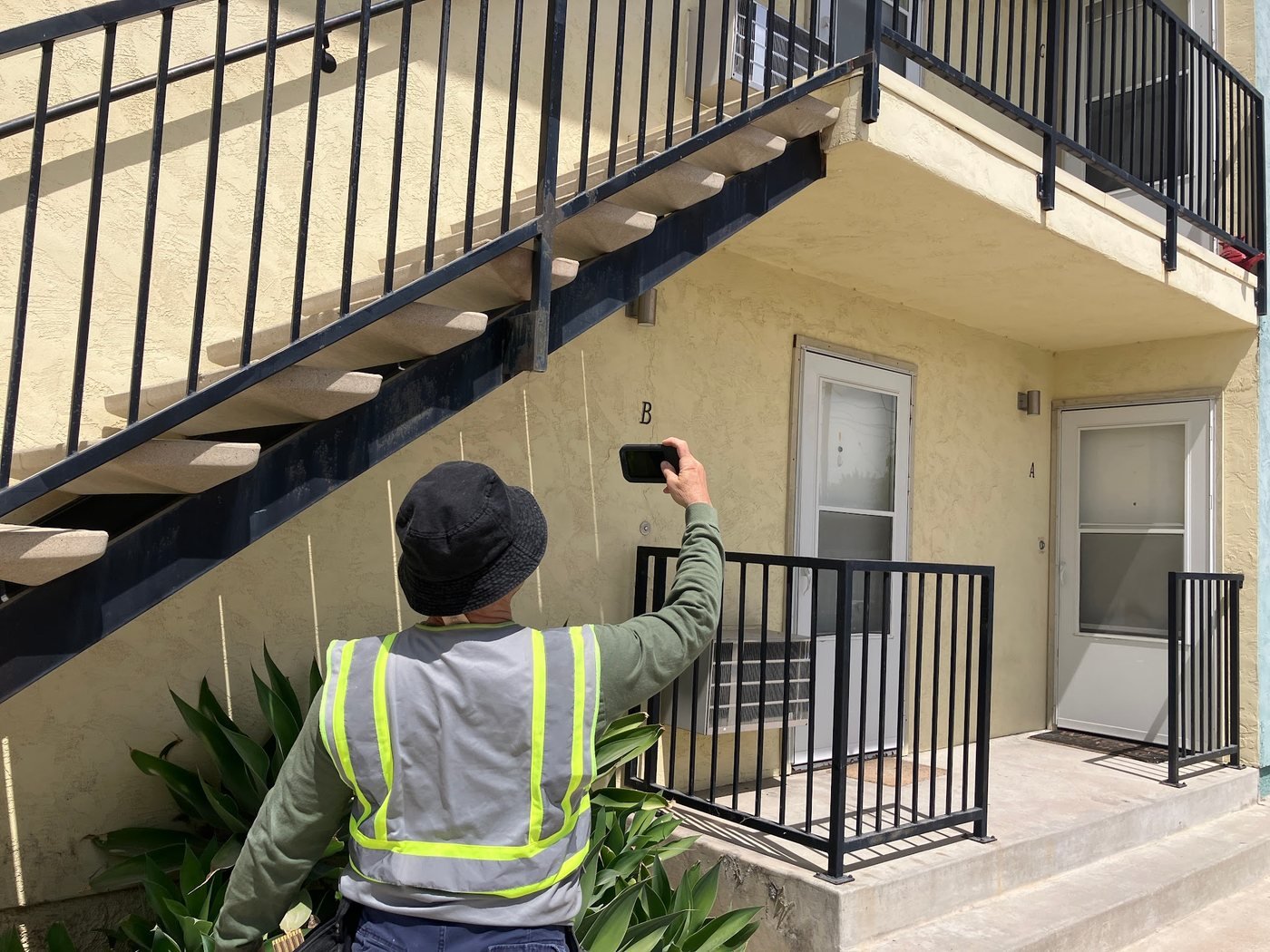
Thermal scanning in action
Our inspectors use FLIR thermal cameras to find moisture and heat issues hidden in walls and soffits.
More inspections in Ocean Beach
- Pool and spa inspection in Ocean Beach
- Sewer scope inspection in Ocean Beach
- 4-point inspection in Ocean Beach
- Roof inspection in Ocean Beach
- Home inspection in Ocean Beach
Nearby and countywide
Were You Happy With Your Inspection?
We are proud of our 4.9-star rating across 100+ Google reviews. If Joseph and the team did right by you, a quick Google review helps other San Diego County buyers and sellers find us.