
Commercial Roof Cleaning in Ocean Beach, CA
Ocean Beach is a small, dense pocket of commercial buildings sitting right where the San Diego River jetty meets the open surf at the foot of the Point Loma peninsula. The flat roofs over Newport Avenue's bars, surf shops, antique stores, and taco joints — plus the mixed-use cottages tucked behind them on Bacon and Cable — live in some of the harshest marine air in the county. Spray rolls straight off the OB Pier and the jetty, fog hangs over the blocks most mornings, and the eclectic stock of 1910s-through-1940s craftsman buildings rarely had its drainage designed for the leaf load and salt grit that pile up now. On a TPO, modified-bitumen, BUR, or foam membrane, that combination grows biological film, packs the outlets, and parks water where it ought to be running off. Routine roof cleaning is what keeps that quiet decay from showing up as a brown ring on a tenant's ceiling.
Our crew shows up to haul the debris and salt-laden grit off the membrane, clear every drain and scupper so the roof actually empties, and photograph what sits beneath the mess before it turns into a claim. Cleaning is the whole job here — it is not a foot in the door for a recoat we are angling to sell. If clearing the field exposes an open seam, a chewed-up foam patch, or edge metal the jetty air has rusted through, you get the pictures and a blunt assessment. That keeps the read on your building separate from anyone writing up a repair quote.
Call (619) 752-4399 Schedule an Inspection
What does an Ocean Beach commercial roof cleaning cover?
The goal stays plain: lift the weight, water, and growth off the membrane so an OB roof drains freely and reaches the service life it was rated for. Across the flat-roof systems found on Ocean Beach commercial and mixed-use buildings, the work spans:
- Clearing the field — palm fronds, eucalyptus seed, wind-carried sand off the OB beach and dog-beach flats, and loose trash pulled off the deck and out from behind parapets, gravel stops, and equipment curbs on TPO, modified-bitumen, built-up (BUR), and sprayed-foam (SPF) membranes.
- Opening drains and scuppers — digging the packed sludge out of roof drains, through-wall scuppers, and overflow outlets so a foggy June morning or a winter storm runs off the building instead of stacking behind a plugged outlet.
- Stripping biological growth — lifting algae, mildew, and the salt-damp film OB's near-constant humidity grows in shaded valleys and behind rooftop units, using an approach keyed to the membrane underneath.
- Inspecting coastal metalwork — brushing grit off drain bowls, termination bars, and counterflashing so the corrosion that jetty and surf spray drive into the metal becomes visible before it dams the roof.
- Logging condition — a dated photo set of the field, seams, flashings, penetrations, and outlets, giving you maintenance evidence for the warranty file and a concise punch list to hand a roofer.
Cleaning and documentation are where we stop. Recoats, seam repair, and tear-offs belong to a licensed roofing contractor, and holding that boundary is precisely what keeps a condition report trustworthy rather than a lead-in to a bid.
Why do the jetty, pier, and old OB stock punish flat roofs?
Ocean Beach crams a lot of aging commercial square footage onto a few blocks pinned between the river mouth, the jetty, and the open Pacific — about as rough an address as a low-slope roof gets. The standard cleaning scope earns its keep in OB for reasons rooted in this neighborhood:
- Severe salt corrosion off the water: Spray driving in off the jetty, the OB Pier, and the Sunset Cliffs edge of the peninsula loads salt onto drain bowls, scupper boxes, termination bars, and flashing. We routinely find the field membrane still intact while the drainage metal beneath it is rusting toward failure.
- Eclectic early-century stock: OB's 1910s-through-1940s craftsman commercial buildings and converted cottages along Newport, Bacon, and Cable often wear low-slope roofs added or swapped over the decades, with shallow settled pitch and tall street-front parapets that bury debris and hide bad drainage.
- Jetty-mouth grit and sand: Wind off the river mouth and the wide OB beach drops fine sand into the low spots, where it mixes with leaf drop and packs the few outlets these tight-lot buildings rely on.
- Fog that never fully burns off: The peninsula edge holds marine layer over OB longer than inland blocks, keeping membranes damp and feeding the growth that traps moisture against the surface.
- Aging utilities under the roof: In OB's oldest buildings you still meet knob-and-tube and galvanized lines, a sign the roof and its details may be just as dated — worth knowing before a small leak finds vulnerable wiring or pipe below.
What do we typically uncover on OB commercial roofs?
Because the same early-century building types and the same jetty-driven salt air repeat across Ocean Beach, a familiar slate of findings surfaces when we clear and document a roof here:
- Sand-and-frond plugged outlets: Roof drains and through-wall scuppers jammed with beach sand, palm fronds, and grit on Newport Avenue mixed-use roofs, framed by the tide-line staining that marks standing water.
- Jetty-corroded metal: Rust eating through drain bowls, scupper boxes, and edge metal — the river-mouth and surf air taking the metal long before the membrane lets go.
- Shaded growth colonies: Algae and mildew spread across north slopes and the shadow lines behind rooftop units on the foggiest blocks, where the surface never dries out.
- Ponding fingerprints: Dirt rings, blistering, and spongy low spots on BUR and modified-bitumen roofs where settled pitch and a sluggish outlet let water sit.
- Spent foam topcoats: Chalking and pinholing on west-facing sprayed-foam sections where the coat has quit shedding the UV and salt spray off the open water.
- Debris dammed at penetrations: Frond mats and grit wedged against HVAC curbs, skylights, and pipe boots — the seams a backed-up flow reaches first.
How does the cleaning process work and what does the report hand you?
We schedule around your tenants and the building's access — roof hatch, ladder, or whatever the structure allows behind those Newport-front parapets — and cross the roof in a fixed sequence. We clear the field and valleys, open every drain, scupper, and overflow, and lift biological growth with a membrane-appropriate method that won't drive water into a TPO seam or wear down a foam coat. Along the way we photograph the field, seams, flashings, penetrations, outlets, and any salt corrosion or standing-water evidence we find.
Your results arrive in a clear, photo-documented HomeGauge report, usually delivered the same day or the next. It records what we cleared, the condition of the membrane and the details zone by zone, and a flagged list for your roofer — a rusted drain bowl, a strained seam, a soft foam patch, a recurring ponding low spot. The report does two jobs at once: dated maintenance proof for warranty compliance, and a clean handoff for whatever repair follows.
We report observed condition only. We do not recoat, patch, re-roof, or run leak pressure-tests, and we do not bid the work. When a finding calls for a licensed roofer, we say so and refer you to the right specialist — which keeps our read on your roof independent of whoever ends up selling the fix.
Who stands behind an OB roof cleaning, and what are the credentials?
Your roof is cleaned and documented under Joseph Romeo, an InterNACHI Certified Professional Inspector (CPI) who also holds a California CSLB General Contractor license (#1113143). That builder's eye changes what a cleaning is worth on an OB roof: he reads how a scupper and overflow were detailed, whether a foam coat has held against the jetty salt, and where a low-slope membrane is beginning to give — not merely whether the surface looks swept once the debris is gone.
- 20+ years and 10,000+ inspections across San Diego County's coast, including the tight commercial blocks of Newport, Bacon, and Cable in Ocean Beach.
- 4.9 stars across 106 Google reviews from owners, property managers, and agents who wanted a straight answer about a roof.
- Same- or next-day HomeGauge reports built so you and your roofer can move on the list without a second climb up.
- Honest condition calls — we document what we would want to know if the building were ours, under this same peninsula salt and fog.
We are InterNACHI CPI and CSLB-licensed; we are not ASHI or CREIA members, and we do not post flat prices — roof scope changes with size, parapet access, membrane type, and how much salt-fed growth and debris are up there, so we point you to the fee schedule or confirm a quote before you book.
Which Ocean Beach inspections are worth pairing?
A roof rarely tells its full story alone, and most owners pair the cleaning with other systems on one visit. We cover the complete range in OB:
- Roof inspection — a deeper read on the membrane's condition and remaining life, the flashing, and the penetrations, for when a cleaning turns up wear you want fully assessed.
- Commercial building inspection — the wider look at structure, electrical, plumbing, and mechanical systems, the right call before buying or leasing one of OB's older Newport Avenue buildings rather than chasing a single roof concern.
- Thermal/infrared imaging — finds hidden moisture in the deck and under the ceiling beneath a suspect flat roof, a real asset on blocks this fog-damp and this close to the water.
- Full property inspection — for OB's early-century mixed-use cottages, the complete read of every accessible system, including the knob-and-tube and galvanized you still meet in the oldest stock.
- Sewer scope — a camera run down the lateral, a smart add on the aging lines beneath OB's 1910s-40s commercial blocks.
If you manage a Newport Avenue storefront or a stack of cottage units off Cable, pairing the cleaning with a thermal scan in one trip answers the surface question and the hidden-moisture question while we are already up top — and keeps the warranty file current.
Ocean Beach Commercial Roof Cleaning FAQs
How often should an Ocean Beach commercial roof be cleaned?
How bad is the salt corrosion on OB roofs near the jetty?
Do you repair the roof or just clean and document it?
Why does sand end up in my Ocean Beach roof drains?
Will cleaning damage my TPO or foam roof?
What does commercial roof cleaning cost in Ocean Beach?
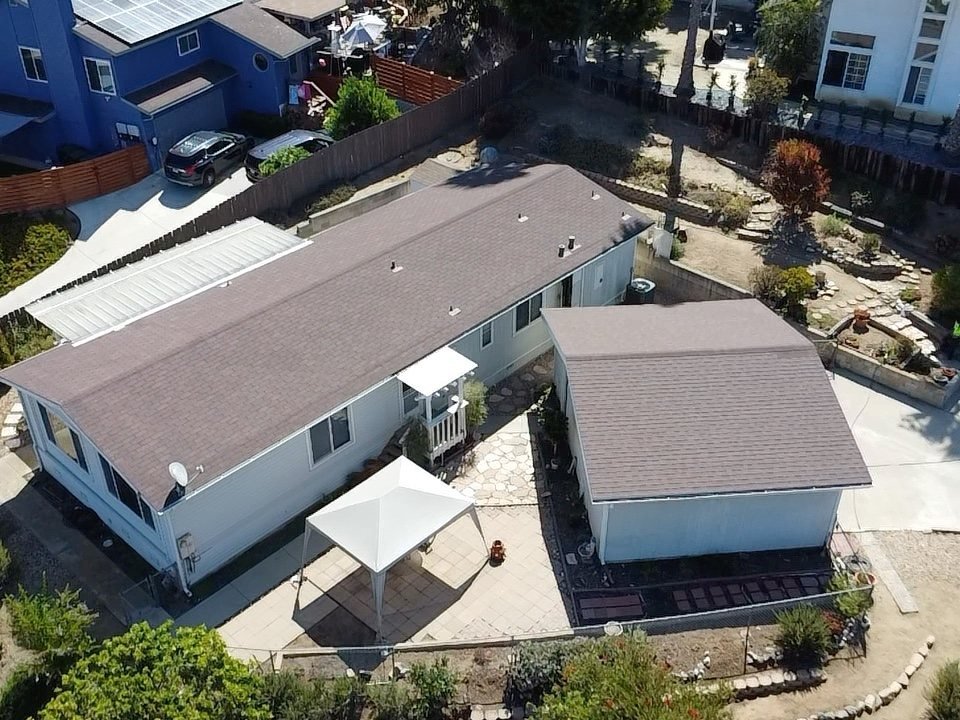
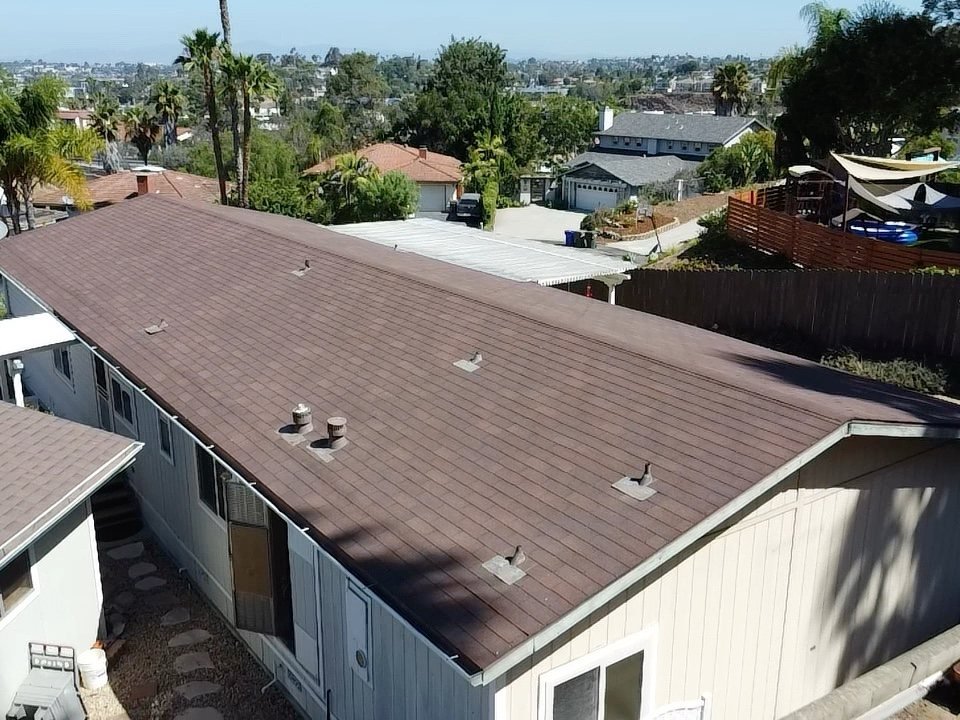
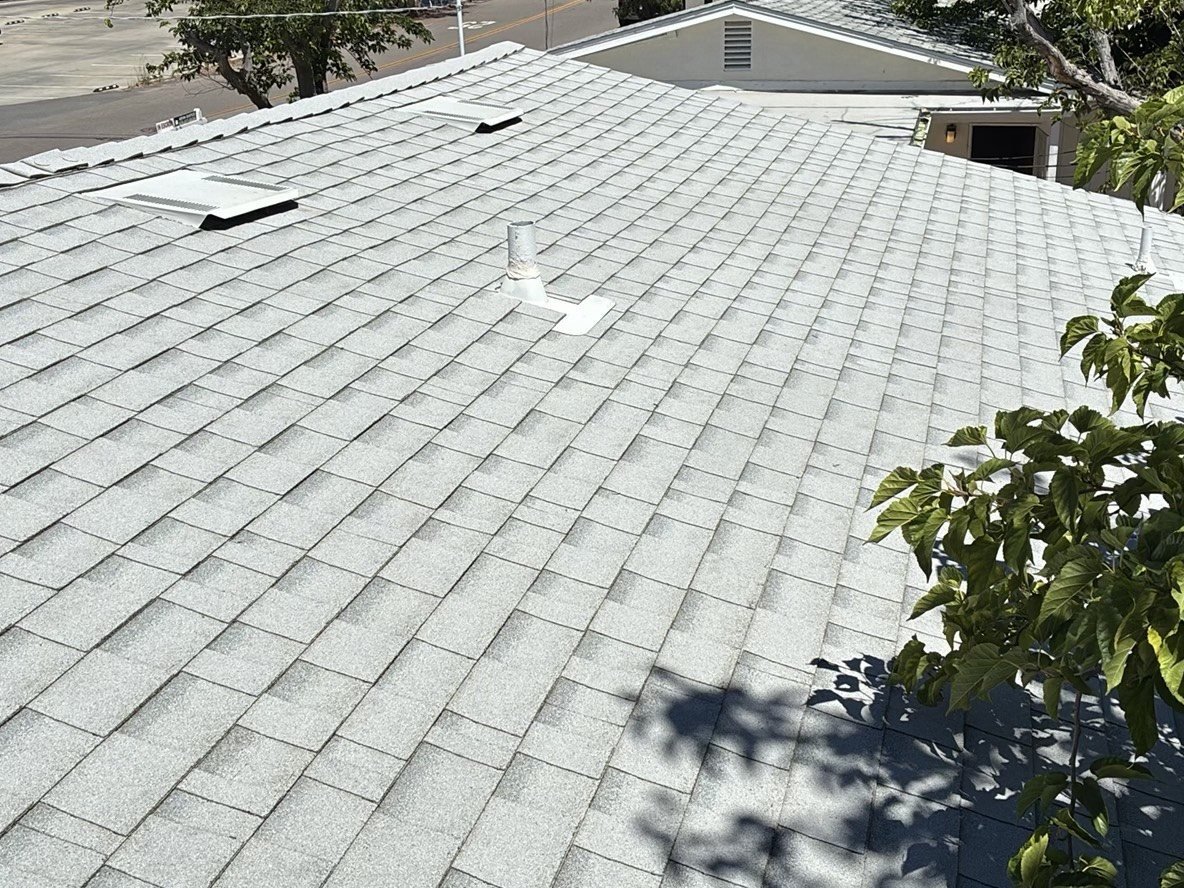
Large rooftops, handled
Flat and low-slope commercial roofs we access, document and maintain.
More inspections in Ocean Beach
- Foundation slab survey in Ocean Beach
- SB 721 balcony inspection in Ocean Beach
- SB 326 balcony inspection in Ocean Beach
- SB 721 exemption letter in Ocean Beach
- Home inspection in Ocean Beach
Nearby and countywide
Were You Happy With Your Inspection?
We are proud of our 4.9-star rating across 100+ Google reviews. If Joseph and the team did right by you, a quick Google review helps other San Diego County buyers and sellers find us.