
SB-326 Balcony Inspection in Nestor, CA
Nestor occupies the flat coastal plain of south San Diego, tucked between Imperial Beach and the Tijuana River valley, a postwar grid where most of the housing went up between the 1950s and 1970s. A lot of that stock is single-story tract on slab, but the apartment-to-condo conversions and the small two-story complexes scattered along Hollister Street, Coronado Avenue, and Saturn Boulevard carry exactly what SB-326 was written to regulate. The law sits inside the Davis-Stirling Act, and it tells every condominium and common-interest development the same thing: at least once in any nine-year span, a qualified professional has to assess the building's load-bearing exterior elevated elements and the waterproofing tied to them, then deliver a written report. The first compliance window closed on January 1, 2025, so a good number of Nestor boards are now finishing their opening round or learning they are already late.
SB-326 is the condominium-and-HOA version of the rule; SB-721 is the apartment version covering the identical decks and stairs. Under SB-326 the association is the client, and the document we produce is built to feed the board's reserve study and capital plan. We size and pull a random representative sample of the qualifying elements, rate and photograph each one, and hand over a report the board can adopt and budget against. We assess and report condition; the corrective work belongs to a licensed contractor, never to us.
Call (619) 752-4399 Schedule an Inspection
What EEE does SB-326 cover on a Nestor condo project?
SB-326 draws a narrow boundary. It governs the wood-framed surfaces residents stand on above grade and the moisture barrier protecting that framing — nothing more, nothing less. The category carries the formal name exterior elevated elements (EEE), and on a Nestor association the qualifying pieces usually sort out like this:
- Second-story balconies and decks on the two-story complexes off Hollister and Saturn — the joists, the wall-mounted ledger, and the walking surface over its membrane.
- Exterior stair flights and their mid-run landings serving upper units on the corridor-style and stacked-flat buildings common to the area's conversions.
- Raised walkways and breezeways threading the larger garden-apartment-turned-condo projects near Coronado Avenue.
- Guardrails and handrails on every sampled element, checked for firm anchorage, corrosion at the attachment, and give under a lateral push.
- The full weather envelope — deck coatings, counterflashing, sealant joints, and the drainage path — because a breached barrier feeds nearly every rot condition the statute is chasing.
The piece that separates SB-326 from a routine walkthrough is the random representative sample. We do not open every balcony; we examine enough of each element type that the findings stand in for the whole association with statistical confidence. The work is visual first, advancing to sounding and probing wherever a surface clue points to concealed decay, and the law permits a measured intrusive opening to confirm framing behind a suspect connection. Each sampled element gets a condition determination written so a reserve analyst and a board can act on it directly.
How does Nestor's river-valley setting shape the risk?
Nestor sits low on the coastal flat where the Tijuana River valley opens toward the ocean, a short hop inland from Imperial Beach. That position, paired with housing built mostly before modern deck-flashing practice, decides where SB-326 problems concentrate here:
- Postwar tract framing past its detailing era. The bulk of Nestor went up in the 50s through 70s, when ledger flashing and deck waterproofing were poorly understood. The two-story units and later conversions inherited tie-in details that were never built to manage standing water.
- Valley-edge humidity and a shallow water table. Properties near the Tijuana River valley sit on damp, low ground where groundwater rides close to the surface, keeping the air around lower framing humid and slowing any chance for wet wood to dry.
- Coastal marine layer with little drying wind. Morning fog rolls in off the nearby coast and lingers over the flat, so shaded, north-facing decks stay damp long after the sun is up — framing on those elevations holds moisture far longer than anything set back inland.
- Salt carried inland from the IB shoreline. Nestor is close enough to the surf that chloride-laden air still reaches its exterior hardware, quietly corroding joist hangers, ledger bolts, and rail fasteners behind stucco that reads sound.
- Conversion-era added decks. Many Nestor complexes were apartments first and condos later, and the balconies and second-floor decks bolted on over the decades often carry tie-ins that were never detailed for this damp, low-lying exposure.
Which conditions recur on Nestor EEE samples?
Enough years working south-county associations and the same short list surfaces on Nestor decks, stairs, and walkways. Most are ordinary reserve items rather than emergencies, but each one earns a line in the report so the board and its reserve study reflect the building's true state:
- Spent deck membranes — coatings cracked, chalked, or curling at the edges that no longer turn water off the framing below.
- Failed or back-pitched flashing at the wall joint — the missing detail where a balcony meets the building, the most direct route moisture takes into the structure on this older stock.
- Rot-softened framing at deck perimeters, ledger connections, and stair-stringer bases, confirmed by probing once a coating has let go and the valley damp has done its work.
- Corroded and backed-out connectors — joist-hanger nails, lag bolts, and post anchors weakened by inland salt and worked loose over decades.
- Loose guardrails and posts that flex at the base because the anchorage or the deck beneath it has lost strength — a recurring safety call on multi-unit Nestor buildings.
- Ponding on flat landings and walkways where settlement on the soft coastal soil flattened the drainage slope and water lingers after rain.
- Seal-and-cover patching from earlier upkeep that trapped moisture inside the assembly rather than letting it drain.
We separate cosmetic age from anything touching load capacity, so when an element is marked deficient it reflects a real structural or safety concern the board can act on — photographed and written in terms a reserve analyst and the city building department expect.
How does the inspection run and what does the board receive?
It opens on paper. We work through the association's building plans, the inventory of elevated elements by type, and any prior EEE assessment or repair history, then size and draw the random sample SB-326 requires. Access gets arranged with the board or the management company — on Nestor's converted garden complexes and tenant-occupied units, that usually means scheduling around residents and the tight parking off Hollister and Coronado. On site, Joseph Romeo takes each sampled balcony, deck, stair, and walkway one at a time: reading the wall tie-in and framing, sounding and probing the coating wherever damp or a soft spot hints at hidden rot, and checking the rails, drainage, and waterproofing. Where the surface raises a real doubt, we note where a controlled intrusive opening should go before any repair is designed — on this low, damp plain a clean coating is no proof of clean wood beneath.
The board walks away with an SB-326 report built to the statute's content requirements: the elements inspected, a condition rating for each, the photographs backing it, the remaining useful life the reserve study depends on, a clear callout for any element posing an immediate hazard, and the next inspection date set nine years out. It is laid out so the board can adopt it, fold it into reserve planning, and defend it in front of owners. Most reports arrive through HomeGauge the same day or the next morning, and we hold a copy toward the nine-year record an association is expected to keep.
One line stays fixed: we assess and report observed condition — we don't design repairs, perform them, or issue structural or engineering certifications. When we flag a rotted ledger or a failed membrane, the repair design and the corrective work move to a licensed contractor or engineer we coordinate, and we'll point your board to a capable one. Termite and WDO work also sits outside our scope; where wood-destroying organisms enter the picture, we bring in a licensed pest specialist. That separation keeps the report independent of any repair we'd profit from.
Why do Nestor boards bring in Joseph Romeo?
SB-326 limits who may legally perform the inspection — licensed architects, structural engineers, and qualified inspectors working to that standard — and hands-on framing knowledge is what makes the report worth acting on. Yours is led by Joseph Romeo, an InterNACHI Certified Professional Inspector (CPI) who also holds a California CSLB General Contractor license (#1113143). He has built and rebuilt the ledger details, deck coatings, and stair assemblies he's evaluating, so when he flags an element he already knows whether it's a coating refresh or a framing repair an engineer has to stamp — the exact distinction that drives a reserve contribution.
- 20-plus years and more than 10,000 inspections across San Diego County, with steady work on the far south end of the South Bay.
- 4.9 stars across 106 Google reviews from owners, boards, managers, and agents.
- Independent of the repair — he documents condition and refers the structural design out without bidding the work, so nothing in the report steers the association toward buying anything.
- Real familiarity with Nestor's postwar tract and conversion stock off Hollister, Saturn, and Coronado.
For the record: we're InterNACHI CPI and CSLB-licensed, not ASHI or CREIA members, and we don't post flat prices, because the fee tracks how large the community is and how many elements the random sample has to reach — the fee schedule explains how that works. Reach Joseph at (619) 752-4399 or joe@sandiegohomeinspection.com and he'll get the property sampled and the report turned around quickly.
Which inspections do Nestor associations pair with SB-326?
An SB-326 inspection settles one defined duty on your elevated elements, but a Nestor association's list usually runs longer. Depending on the property, boards here frequently pair it with or move on to:
- SB-721 balcony inspection — the parallel EEE law for rental apartment buildings of three or more units; if any part of your holdings is rental rather than a common-interest development, that statute governs there, common given how much of Nestor began as apartments.
- Roof inspection — the roof membrane and flashing tie into the same waterproofing protecting upper walkways and balconies, and they often age on the same nine-year clock.
- Thermal and infrared imaging — traces concealed moisture inside walls and deck assemblies without cutting them open, a genuine edge in Nestor's fog and valley-edge humidity.
- Common-element condition assessment — a broader read of shared structures and systems when the board is refreshing its reserve study beyond the EEE work.
- Sewer scope — worth running on Nestor's older condo parcels where original clay laterals may hide root intrusion and offsets.
- Specialist coordination — for a stamped repair design, a deck re-coat, or a termite/WDO report, we refer the right licensed engineer, contractor, or pest specialist rather than reach past our scope.
Not sure which apply to your project? Send the association name, address, and elevated-element count and we'll tell you whether a standard SB-326 sample covers it. Browse all inspection services or start a request through our contact page.
Nestor SB-326 Balcony Inspection FAQs
Does my Nestor condo association need an SB-326 inspection?
When was the SB-326 deadline, and how often does it repeat?
Why does the inspection cover only some of our balconies?
Does Nestor's location near the river valley really affect balconies?
How does the report support our reserve study?
Do you handle the repairs you flag for our board?
HOA properties we inspect
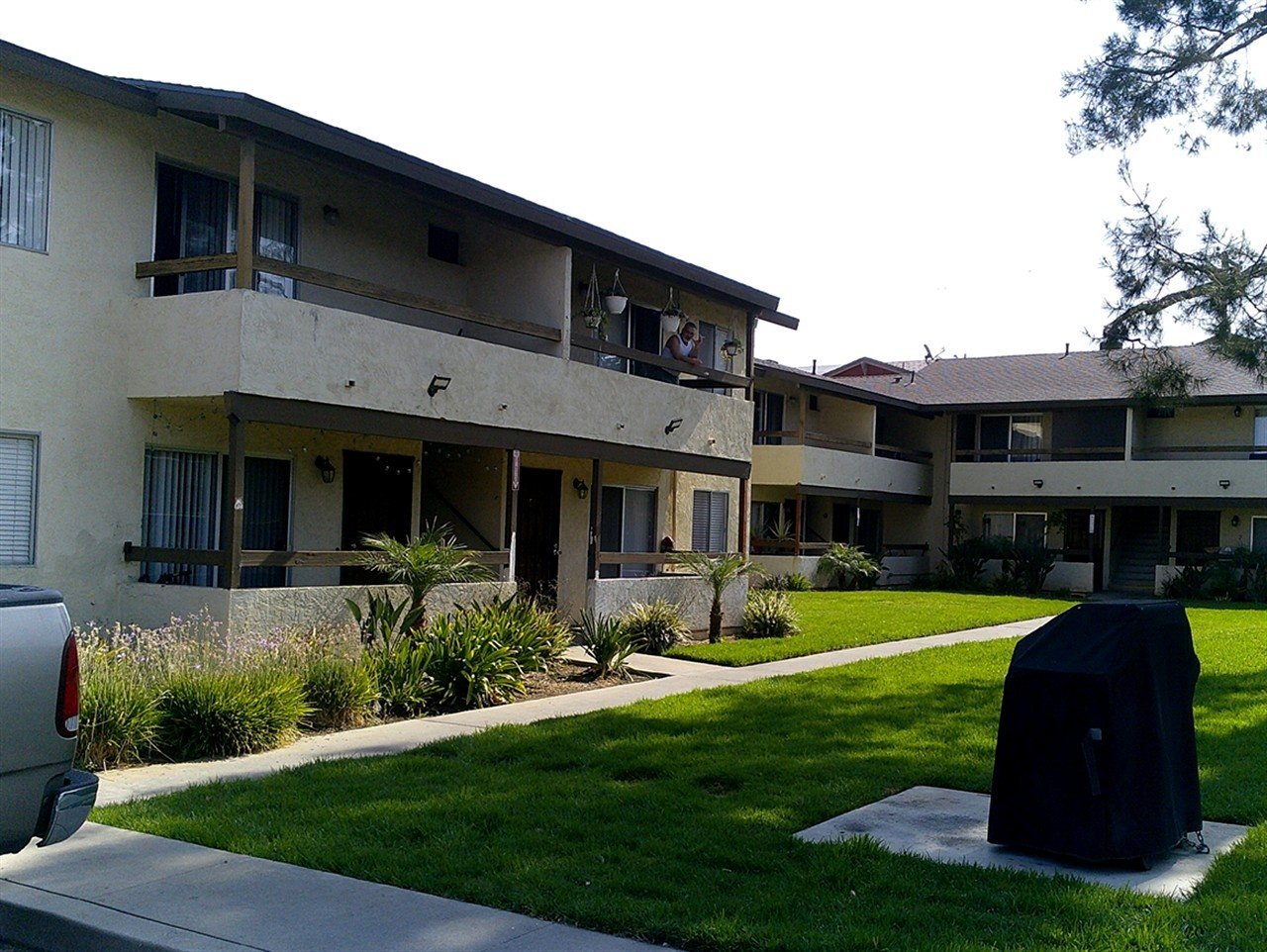
Condominium properties documented for SB 326 balcony compliance across San Diego County.
More inspections in Nestor
- Pool and spa inspection in Nestor
- Sewer scope inspection in Nestor
- 4-point inspection in Nestor
- Roof inspection in Nestor
- Home inspection in Nestor
Nearby and countywide
Were You Happy With Your Inspection?
We are proud of our 4.9-star rating across 100+ Google reviews. If Joseph and the team did right by you, a quick Google review helps other San Diego County buyers and sellers find us.