
Roof Inspection in Nestor, San Diego, CA
Nestor sits in the flat southwest corner of San Diego, a grid of postwar tract homes between Imperial Beach and the Tijuana River valley, a couple of miles back from the open ocean but still inside reach of the marine air that rolls up the river plain most mornings. The roofs here tell a consistent story: low-pitch composition shingle and a fair share of flat or near-flat decks, much of it original to homes built between the 1950s and the 1970s. A roof inspection in this pocket is an up-close read of that whole assembly — ordered before you buy a slab-on-grade tract house off Coronado Avenue, before you list, or after a ceiling stain shows up and the source isn't obvious from inside.
We look at the covering — aging asphalt shingle on the single-story stock, plus the flat foam (SPF) and modified-bitumen decks on the low-slope additions and converted carports common here — along with the flashing, valleys, penetrations, vents, skylights, gutters, and the drainage that has to move water off a roof on a dead-flat lot. Where the attic is reachable, we read the underside for dampness, staining, and ventilation. You get a straight call on condition and remaining-life indicators, every finding photographed. We don't certify roofs and we don't repair them; when a repair or certification is called for, we hand you off to a licensed roofer with our notes in hand.
Call (619) 752-4399 Schedule an Inspection
What does a Nestor roof inspection actually cover?
This is a condition assessment of the entire roofing system, not a glance from the curb. On a Nestor home we examine and photograph everything we can safely reach:
- The covering — asphalt composition shingle on most of the single-story tract houses, plus flat foam and modified-bitumen membranes on the low-slope additions, patios, and carport conversions everywhere here. We note material, apparent age, and how much serviceable life the surface looks to have left.
- Flashing and transitions — the metal at walls, chimneys, valleys, and roof-to-wall joints, where tired sealant and marine air drifting up the river valley let water in long before the field of the roof gives out.
- Penetrations and rooftop equipment — plumbing vents, swamp-cooler and HVAC curbs, solar mounts, and skylights, each a deliberate hole that lives or dies on its boot and flashing.
- Gutters and drainage — how water gets off the roof and away from the slab, which matters more than usual on Nestor's dead-flat lots where nothing runs off on its own.
- Valleys and low-slope sections — where runoff concentrates, sits, and hunts for the smallest opening.
- Attic and underside, where accessible — staining, active moisture, daylight at the deck, and ventilation, which on these low-pitch roofs decides whether trapped heat and damp cook the shingle from below.
We report only what we can safely access and see ourselves. On a soft foam deck or a brittle, sun-baked older surface we can't walk without doing damage, we work from ladders, the eaves, the attic, and binoculars — and we tell you plainly what was viewable and what wasn't.
How does Nestor's setting shape what we find on a roof?
This corner of the South Bay puts a particular set of stresses on a roof, and they stack on top of each other:
- Inland-coastal mix. Nestor sits back from the surf but on the flat plain that funnels marine air up the Tijuana River valley. Roofs get salt and humidity off that air without the steady ocean breeze that dries a beachfront roof — flashing and fasteners corrode, and shaded slopes stay damp.
- Original mid-century roofs. Much of the housing went up between the 1950s and the 1970s as single-story tract homes. Plenty carry coverings near or past service life, sometimes a second layer laid over the first, which hides what sits beneath.
- Low pitch and flat decks. The era's shallow slopes, plus the additions, patio covers, and carport conversions added later, mean a lot of flat foam and modified bitumen. Those depend entirely on their top coat, and once UV chalks and cracks it, water starts ponding.
- Dead-flat lots, slow drainage. Nestor sits low on the coastal plain at the edge of the river valley, so water doesn't leave a flat roof or yard on its own. Clogged gutters and ponding decks turn into interior problems faster here than on a sloped inland lot.
- Heat aging. The inland exposure runs hotter than the beach blocks a couple of miles west, baking granules off asphalt shingle and aging foam coatings — sun damage alongside the coastal corrosion.
Which defects do we commonly turn up on Nestor roofs?
Inspect enough roofs across these tract blocks and the same handful of problems keep surfacing. Most aren't reasons to walk away — they're items to understand, price with a roofer, and weigh before you close:
- Worn, end-of-life shingle. Granule loss, curling, and brittleness on asphalt coverings that are original or close to it, sped along by inland heat on these low-pitch roofs.
- Corroded or lifting flashing. Rusted, loose, or poorly sealed metal at walls, chimneys, valleys, and skylights, helped along by the marine air working up the river valley.
- Tired flat-foam coatings. Chalked, cracked, blistered, or ponding SPF and modified-bitumen on additions and carport conversions where the protective coat has worn through.
- Failed vent boots and penetrations. Cracked rubber collars and dried-out sealant around plumbing vents, cooler curbs, and rooftop equipment — a quiet but frequent leak source.
- Layered and patched older roofs. A covering laid over an older one, aged flashing, and prior patch repairs that mask the roof's real age on the mid-century stock.
- Drainage that backs up. Clogged or undersized gutters and ponding on low-slope sections, sharper here because the lots are flat and water has nowhere to go.
When we spot a leak indicator, we trace it as far as safe access allows — from the attic stain back toward the corroded flashing or failed boot above it — so a roofer starts with a location instead of a guess.
How does the inspection run and what does the report deliver?
We start from the ground and the eaves, then get up onto the roof itself whenever pitch, covering, and safety allow — a walkable shingle or sound low-slope deck earns a hands-on, close look. On a soft foam deck where walking would puncture the membrane, or a brittle sun-baked surface, we inspect from ladders, the perimeter, the attic, and binoculars, because protecting the roof we're evaluating beats a better photo angle. Where the attic is reachable, we go inside to read the underside for moisture, staining, and ventilation — which matters on these low-pitch Nestor roofs where heat and damp get trapped. You're welcome to have us walk you through what we found, and on a major system like a roof we encourage it.
Your deliverable is a photo-documented HomeGauge report that names the covering, pins each defect to its location, and gives our read on condition and remaining-life indicators — the difference between re-flashing one chimney and a covering that's near the end of its run. We turn findings around same day or next day, so your inspection contingency never stalls waiting on us.
One boundary we state plainly: we report observed condition, we don't certify or repair. We don't issue roof certifications, run leak pressure-tests, seal flashing, or re-coat foam, and we never bid the work we find — so nothing in the report carries a conflict of interest. When the roof needs repair or a formal certification a buyer or lender wants, we point you to a licensed roofer and hand over our photos and notes to give them a running start.
Why do Nestor buyers and owners call Joseph Romeo?
Reading a tract roof well is part knowing the material and part knowing what the repair actually involves. Your inspection is led by Joseph Romeo, an InterNACHI Certified Professional Inspector (CPI) who also holds a California CSLB General Contractor license (#1113143). That building background pays off on a Nestor roof — he can tell you whether the surface means a single re-flash or re-roofing the whole house, so you head into negotiation knowing the difference.
- 20+ years and more than 10,000 inspections across San Diego County, including the South Bay and these South San Diego neighborhoods.
- 4.9 stars across 106 Google reviews from buyers, sellers, and agents who wanted a straight answer on a roof.
- Plain talk — we tell you what we'd want to know buying the home ourselves, with no scare tactics and no nudge toward repairs we don't perform.
- Real familiarity with Nestor's roofing mix, from end-of-life shingle on the mid-century tract homes to flat foam decks on the additions and carport conversions.
We are InterNACHI CPI and CSLB-licensed — not ASHI or CREIA members — and we don't post flat prices, since roof scope shifts with size, pitch, and covering. See the fee schedule for how pricing works. Findings arrive in a clear, photo-documented HomeGauge report you, your agent, and your roofer can read without translation.
Which related inspections suit Nestor buyers?
A roof inspection is usually one part of a fuller look at a Nestor property. Buyers here commonly pair it with:
- Full home inspection — the house, roof, electrical, plumbing, and structure together, the backbone of any purchase here and the visit we most often assess the roof within.
- Thermal/infrared imaging — reads hidden moisture behind ceilings and walls, a real payoff on low-pitch roofs where a slow leak wets framing before it stains.
- 4-point inspection — the insurer-focused report on roof, electrical, plumbing, and HVAC, common on the older tract homes at renewal.
- Sewer scope inspection — a camera down the buried lateral, worth it on the mid-century homes where original clay pipe and slow drainage both matter.
- Specialist coordination — for a roof certification, repair, or a structural or termite/WDO report, we refer the right licensed professional rather than stretch past our scope.
The pairing we suggest most often is the roof inspection alongside a full home inspection, for one coordinated read on the whole property in a single visit.
Nestor Roof Inspection FAQs
Is a Nestor roof really exposed to coastal corrosion this far from the beach?
Why do so many Nestor roofs have shallow slopes or flat sections?
Does Nestor's flat terrain affect the roof inspection?
Do you walk the roof or inspect it from the ground?
Will you certify the roof or repair what you find?
Can you inspect the roof and the whole house in one visit?
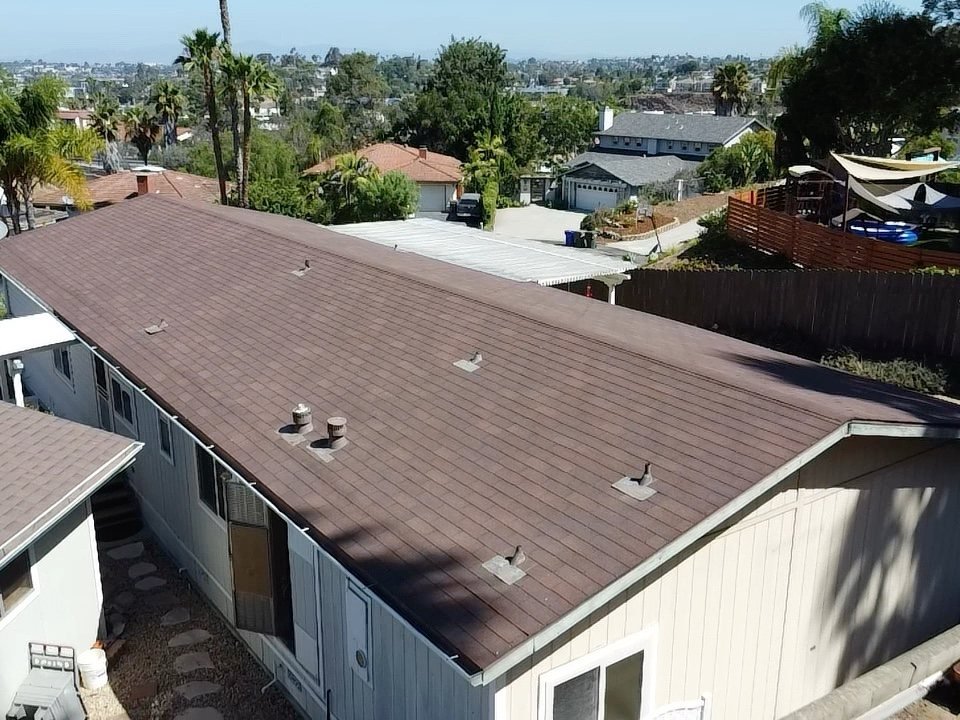
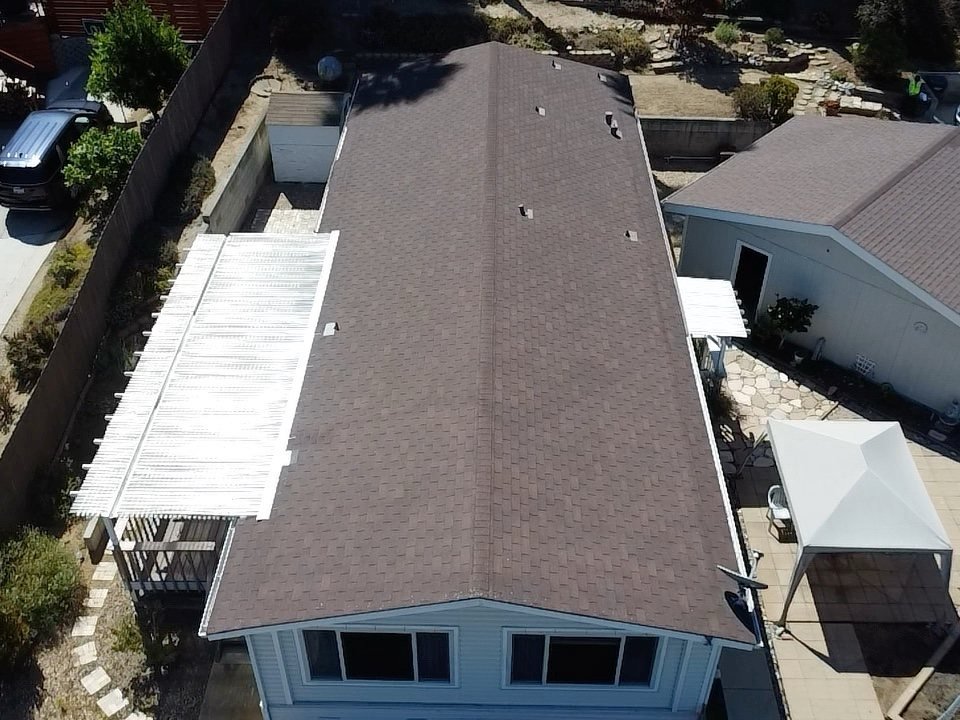
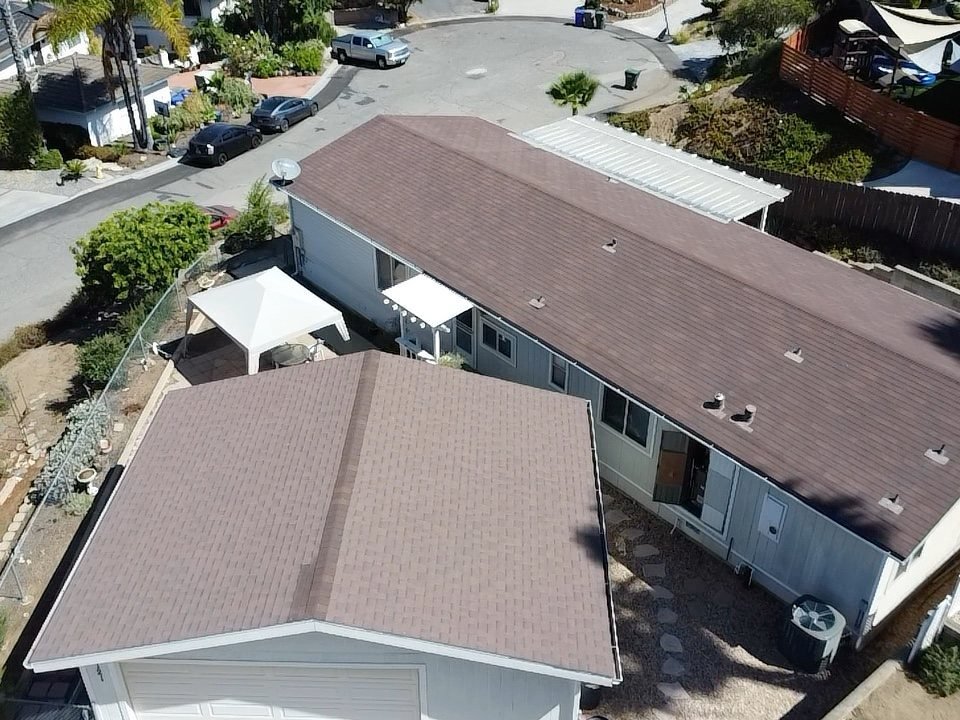
Roofs we document
Aerial and on-roof photos from recent San Diego County roof inspections.
More inspections in Nestor
- Sewer scope inspection in Nestor
- 4-point inspection in Nestor
- Thermal imaging in Nestor
- Foundation slab survey in Nestor
- Home inspection in Nestor
Nearby and countywide
Were You Happy With Your Inspection?
We are proud of our 4.9-star rating across 100+ Google reviews. If Joseph and the team did right by you, a quick Google review helps other San Diego County buyers and sellers find us.