
Thermal Imaging Inspection in Mission Valley
Mission Valley is the one San Diego market where my first question is rarely the age of the house — it's which floor you're buying on. The valley floor along the San Diego River holds almost no detached homes. It's condominiums, townhomes, mid-rise stacks along Friars Road, and newer master-planned blocks at Civita and Fenton Parkway — roughly split between the 1970s–80s building boom and construction young enough to still smell of paint. The river that carved the valley also left it a high water table and a long flood history; wet winters routinely put parking lots, trolley tracks, and the odd ground-floor storage room under water.
An infrared camera earns its keep in exactly this environment. Wet drywall sheds heat differently than dry, a strained breaker glows against its neighbors, and a duct dumping conditioned air above a ceiling paints a stripe no eye would catch. The scan is a non-invasive add-on to the standard inspection — not an x-ray, never a guarantee — but in a stacked building over a floodplain, it answers questions nothing else can without opening walls.
Call (619) 752-4399 Schedule an Inspection
What does the camera read inside a stacked Mission Valley building?
In a condo or townhome, the universe of things that can leak onto you is bigger than your own unit, and the infrared pass is planned around that fact:
- Moisture from above. The single most valuable image in a stacked building is the ceiling under a neighbor's bathroom or laundry. A failing shower pan or a weeping supply line upstairs cools the drywall below it well before a stain forms, and the camera isolates that patch precisely.
- Your own plumbing. Washer connections, the water-heater closet, angle stops under sinks, and the riser walls that 1970s buildings share between units all get a deliberate look for the thermal fingerprint of slow leakage.
- Envelope and energy performance. Top-floor units reveal whether the attic or roof assembly above them actually carries insulation; west-facing sliders and window walls show where conditioned air escapes and where weather gets in.
- Electrical heat under load. Panels and subpanels from the valley's first condo wave were sized for a different era. The lens reads which breakers and connections run hot while circuits are working.
- HVAC delivery. Closet air handlers, wall units, and newer heat-pump systems get register-by-register comparison to expose leaking ducts or rooms the system never reaches.
Where an HOA owns the envelope, I image your unit plus the accessible common surfaces that affect it, and the report distinguishes the two — useful when a finding lands on the association's desk.
How does a floodplain address change what I hunt for?
Mission Valley sits on river alluvium with groundwater close beneath it, and that geology drives the scan's priorities.
Ground floors fight moisture from below. Slabs poured over a high water table wick dampness upward, and below-grade parking garages telegraph it as efflorescence on their walls. In ground-level units I run the camera low along exterior walls and across flooring near the garage side, looking for the cool, spreading signature of moisture that never fully dries.
The marine layer rides the river corridor inland. Morning gray pushes up the valley most of the year, keeping humidity elevated and slowing the drying of whatever winter rain touched. Slider thresholds and window tracks on weather-facing elevations stay on my list months after the last storm.
The 1970s buildings are aging in predictable ways. Copper risers and branch lines from that boom era have reached pinhole age, and they run through party walls shared by multiple owners. Panels of the same vintage — some carrying brands electricians now treat with suspicion — deserve imaging under load before anyone closes escrow.
The new construction isn't exempt. Civita rose on a former quarry, and young buildings settle, flex, and reveal their flashing mistakes in the first few wet seasons. A thermal pass before a builder-warranty deadline expires has caught duct disconnections and window-corner leaks that would otherwise have become the owner's problem on day 366.
Which images recur from Friars Road to Civita?
Enough appointments in the valley's complexes produce a recognizable catalog:
- A cool disc on a ceiling directly below an upstairs bathroom — the classic stacked-unit shower-pan or supply-line failure, found before the drywall ever sags
- A damp horizontal band at the base of a ground-floor wall backing onto a parking structure or facing the river side of the property
- One breaker glowing against the rest of a 1970s panel that now feeds an in-unit laundry, an EV charger, and a kitchen remodel it never anticipated
- Heat pouring through the ceiling of a top-floor unit where roof-assembly insulation is thin, compressed, or missing over part of the footprint
- Moisture tracking from a slider corner on a west-facing elevation, where marine-layer damp and winter wind-driven rain work on aging weatherstripping
- A new-construction duct dumping supply air above a bedroom ceiling — invisible at the register, obvious on the thermal display
None of these is exotic, and almost all are negotiable while a contingency or warranty window remains open — the scan's job is turning each from rumor into documented evidence in time to use it.
How do you schedule around an HOA, and what's in the report?
Ask for the infrared add-on when you book — (619) 752-4399 or joe@sandiegohomeinspection.com with the unit address. In managed buildings, access takes a little coordination: the listing agent or HOA may need to open garage levels, utility rooms, or roof access, and the scan needs live utilities so the panel, water heater, and HVAC can be observed working.
The imaging happens during the inspection itself, working unit interiors methodically and concentrating where Mission Valley buildings warrant it: ceilings below upstairs wet areas, riser and party walls, ground-floor perimeters, the panel under load, every supply register. Interpretation is the real skill — sun-soaked stucco, a warm refrigerant line, and a recessed light can each impersonate a defect, and I'd rather discard a false positive on site than put one in writing.
The deliverable is a HomeGauge report, typically same day or next, pairing each significant infrared frame with a standard photo of the same spot and a clear statement of what it means and what to do next. When a finding needs a specialist — leak isolation, panel evaluation, waterproofing for an HOA conversation — I refer the licensed trade. I don't pressure-test plumbing, perform or bid repairs, or certify structures; the report documents observed conditions and stays independent.
Who interprets the camera, and why does it matter?
Infrared hardware is easy to buy. Knowing how a 1978 Friars Road condo conversion was plumbed, what its panel was originally asked to feed, and how a podium-built Civita tower handles water is what separates a useful scan from a folder of colorful pictures.
I'm Joseph Romeo, owner and lead inspector of The Real Estate Inspection Company. I hold the InterNACHI Certified Professional Inspector (CPI) credential and a California general contractor license, CSLB #1113143 — and the contractor's background matters most in multifamily work, where reading an anomaly correctly depends on knowing how the assembly behind it was built. Over 20-plus years and 10,000-plus inspections in San Diego County, a steady share in the valley's condo stock, clients have left 106 Google reviews averaging 4.9 stars.
There's no repair company attached to this inspection. A scary image can't sell me a repipe job, so an anomaly reaches your report for one reason: the evidence held up.
What should you bundle with an infrared scan in Mission Valley?
The camera extends the inspection it accompanies; these pair naturally on the same visit:
- The standard home inspection itself — full coverage of the unit's systems and accessible common elements; start with the Mission Valley home inspection hub
- Condo and townhome inspections tuned to HOA boundaries, so the report separates what you'd own from what the association maintains
- New-construction and warranty-period inspections — for Civita and Fenton-area buyers, a documented scan before the builder's one-year deadline converts hidden defects into warranty claims
- Pre-listing inspection — sellers in the valley's brisk condo market avoid mid-escrow renegotiation by surfacing moisture and electrical findings first
- Sewer scope — mainly for townhomes with private laterals; in most condo buildings the mains belong to the HOA, and I'll tell you which applies before you pay for it
Termite and wood-destroying-organism evaluations are licensed pest-operator territory; when conditions suggest one, I coordinate the referral. The services page lists everything offered, pricing structure lives on the fee schedule, and the contact page is the quickest path to a quote.
Mission Valley Thermal Imaging Inspection FAQs
Can thermal imaging tell if a leak is coming from the condo above mine?
Is an infrared scan useful on a brand-new Civita condo?
Will the camera find moisture problems in a ground-floor unit on the valley floor?
Can you scan the electrical panel in my 1970s Mission Valley condo?
How much does thermal imaging add to the inspection cost?
If the scan comes back clean, does that mean the unit has no hidden defects?
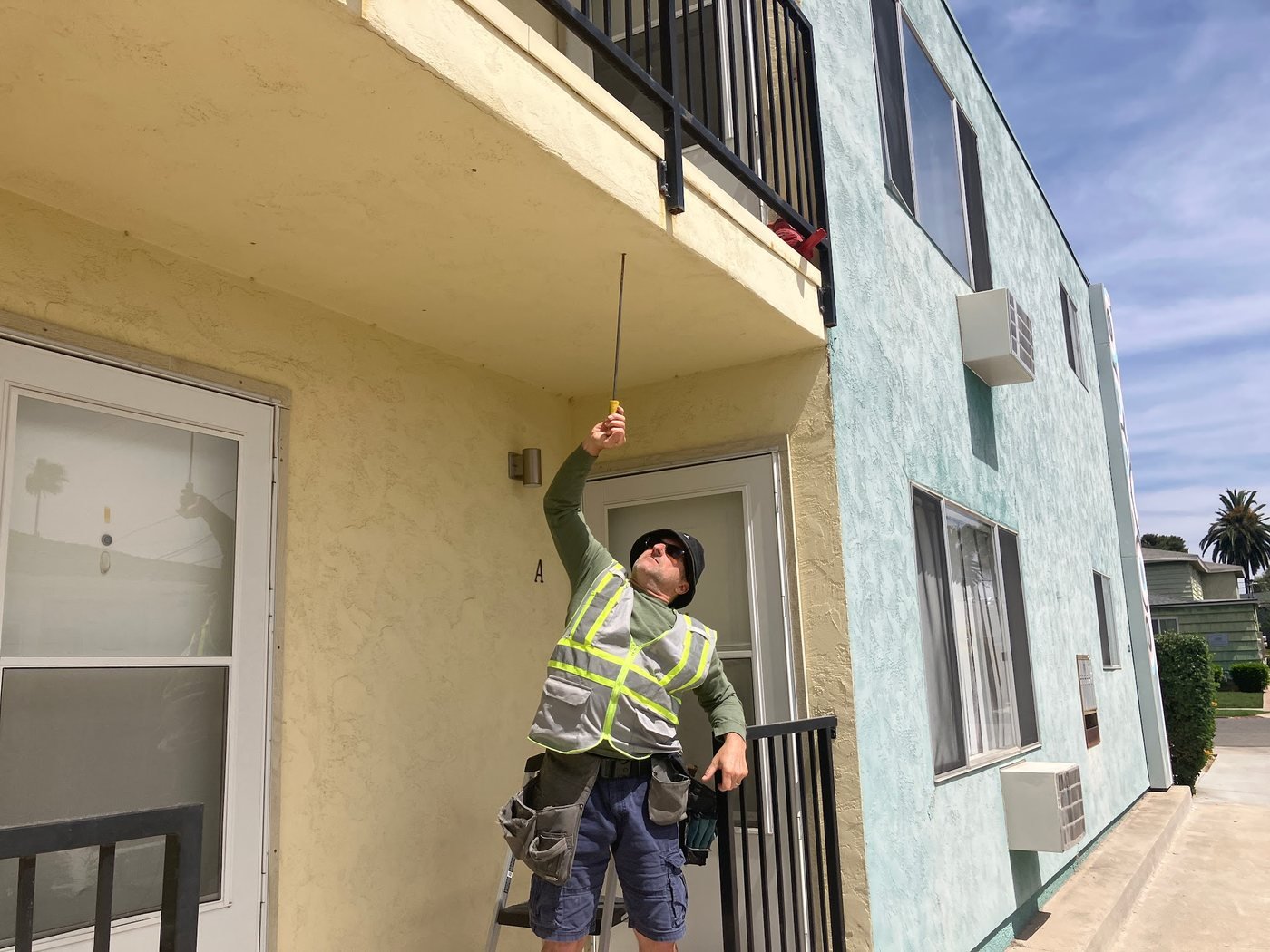
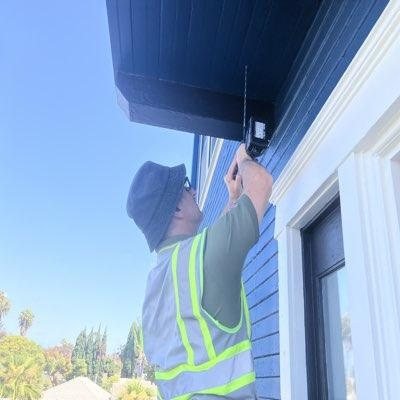
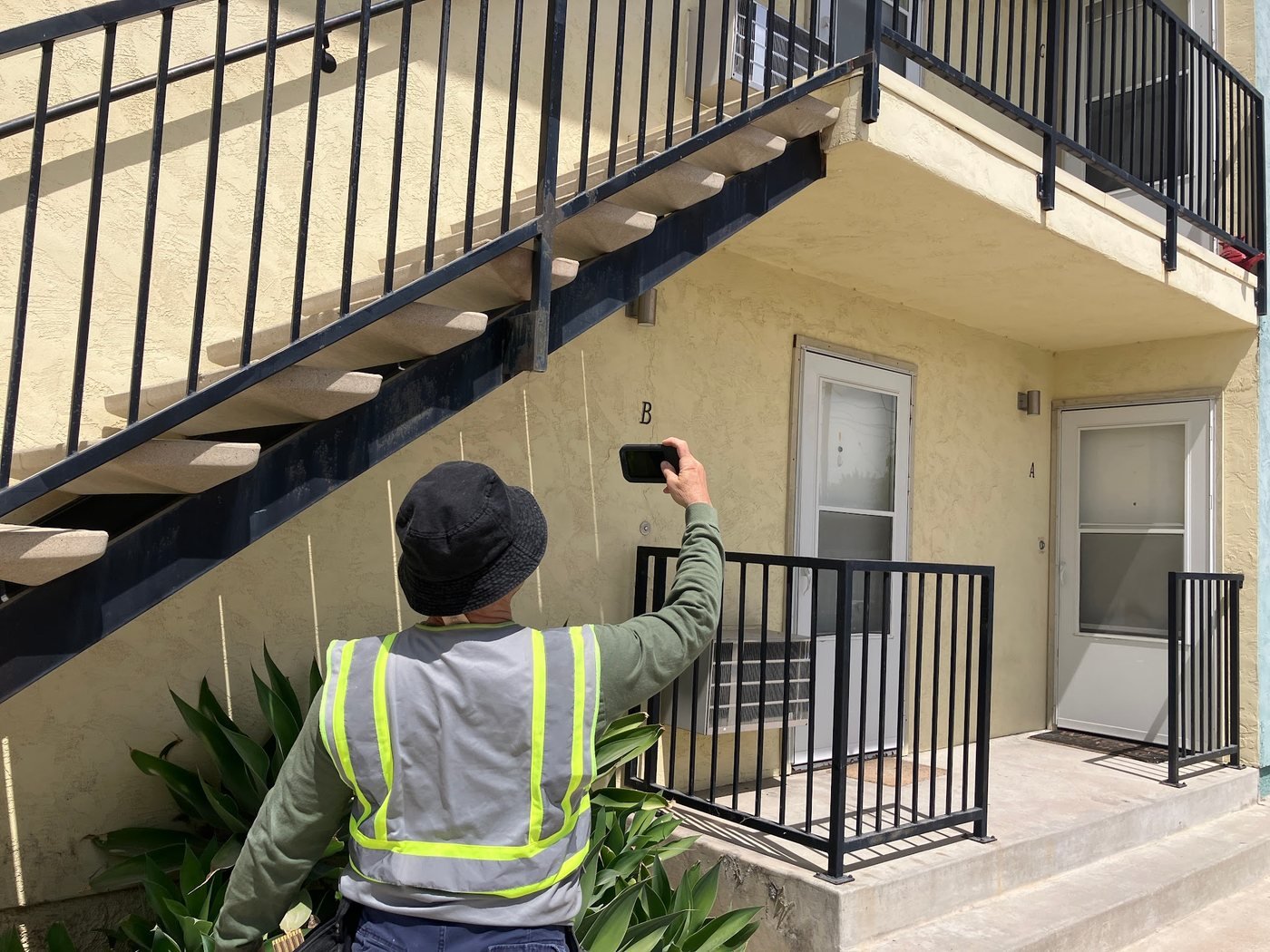
Thermal scanning in action
Our inspectors use FLIR thermal cameras to find moisture and heat issues hidden in walls and soffits.
More inspections in Mission Valley
- Roof inspection in Mission Valley
- Foundation slab survey in Mission Valley
- SB 721 balcony inspection in Mission Valley
- SB 326 balcony inspection in Mission Valley
- Home inspection in Mission Valley
Nearby and countywide
Were You Happy With Your Inspection?
We are proud of our 4.9-star rating across 100+ Google reviews. If Joseph and the team did right by you, a quick Google review helps other San Diego County buyers and sellers find us.