
Sewer Scope Inspection in Mission Valley, San Diego, CA
Mission Valley is the one San Diego neighborhood built almost entirely on a river bottom. The San Diego River runs the valley's full length, groundwater beneath Friars Road and Camino del Rio sits close to the surface, and nearly everything standing here — the condo complexes of the 1970s and 80s, the Hotel Circle corridor, the new towers and rowhomes at Civita and Riverwalk — rests on alluvial soil that was dairy farmland within living memory. Soft, wet, slowly settling ground is precisely the environment that bends, separates, and drowns buried drain pipe.
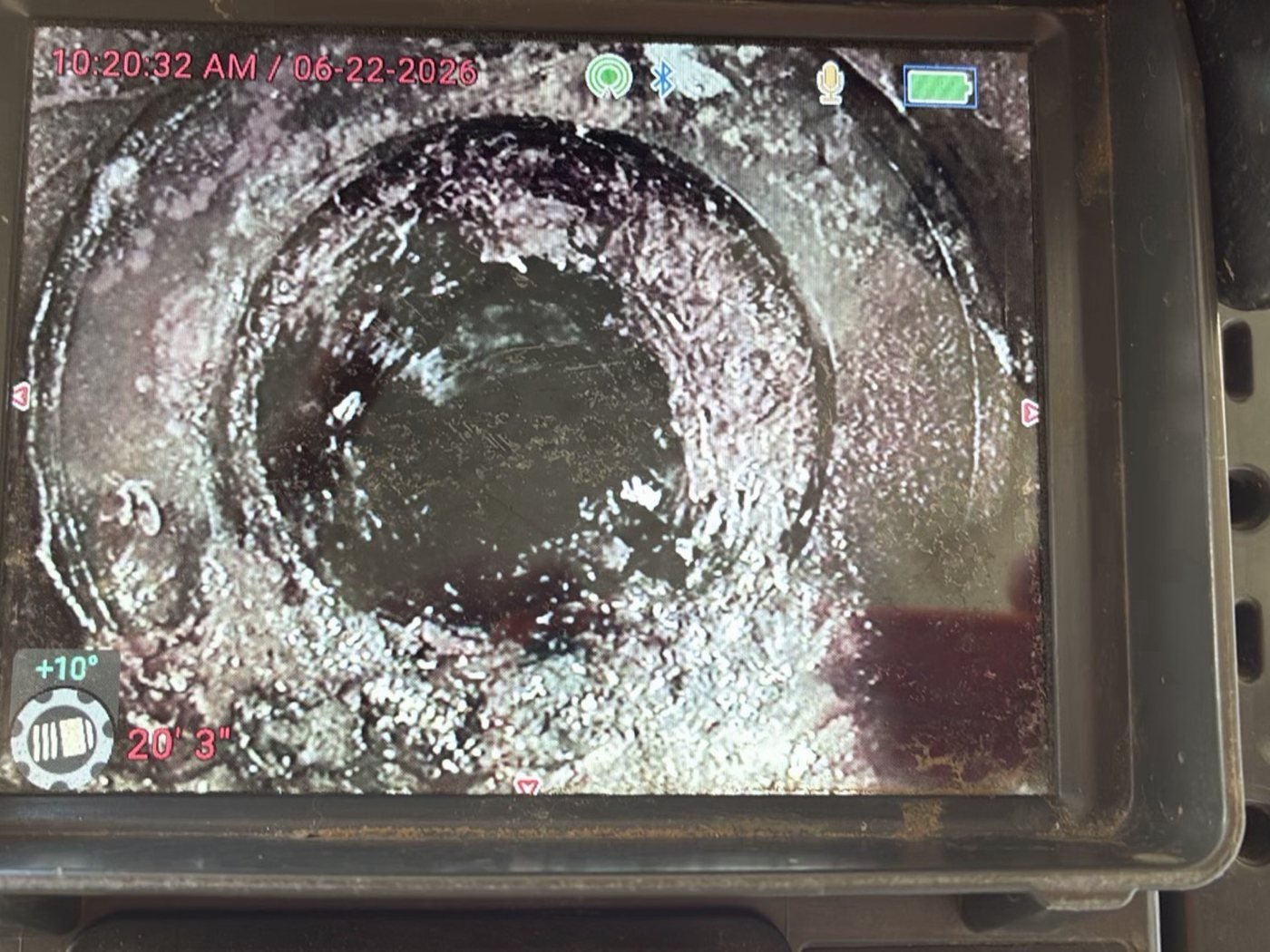
A sewer scope inspection puts a recording camera inside that pipe. From a cleanout or other access point, the lens follows the drain line downstream toward the city connection or the complex's shared main, capturing pipe material, alignment, and every defect alongside a distance readout. I'm Joseph Romeo, owner of The Real Estate Inspection Company, and on Mission Valley properties the question is rarely whether the soil has moved the pipe. It's how far — and whose responsibility the damaged stretch turns out to be.
Call (619) 752-4399 Schedule an Inspection
What does the camera actually examine in Mission Valley?
Most purchases in this zip code are condos and townhomes, which changes the geometry of a scope. Instead of one private lateral running to a street main, your unit's drains feed branch piping that joins a building drain, which may join an HOA-owned main before anything reaches the city system. I scope from the best available opening as far downstream as the configuration allows, and the video establishes:
- What the pipe is made of — cast iron and ABS dominate the 70s and 80s complexes, PVC the newer construction, with clay surviving on some of the valley's older parcels.
- Where settlement has deformed the run — low spots, backfall, and joints pulled out of alignment by compacting river-bottom fill.
- Corrosion inside aging metal pipe, from light scale to a wasted pipe floor.
- Root entry beneath the mature ficus and eucalyptus in common-area landscaping.
- Water that shouldn't be there — both standing waste in a sag and clear groundwater seeping inward at a bad joint.
- Repairs nobody mentioned — liners and spliced sections that mark a prior failure.
My deliverable is recorded evidence and interpretation. Jetting, lining, and excavation are a plumbing contractor's trade; I'll refer one and hand over footage detailed enough to bid from.
Why do floodplain soil and high groundwater wreck old pipe?
Four conditions make this valley's drain lines age differently than pipe on the mesas above it:
- Alluvial settlement never really finishes. Much of Mission Valley was graded and filled in a hurry during the 60s and 70s building rush. Pipe bedded in that fill keeps moving with it, which is why bellies and offset joints are the valley's signature defects.
- The water table is close. In parts of the floodplain, buried laterals spend their lives in saturated soil. That attacks cast iron from the outside while waste chemistry works on it from within, and once a joint opens, groundwater pushes in — infiltration that quietly loads the line and the sewer system beyond it.
- The condo stock is hitting the wrong birthday. Complexes along Friars Road, Rancho Mission Road, and Camino del Rio went up fast in the 1970s and 80s. Their original cast iron is now at or past fifty years — the age window where scale becomes channeling and channeling becomes holes.
- The river floods. The storms of January 2024 put streets and garages along the valley floor underwater. Surcharged sewers drive silt, sand, and debris back into private lines, and a lateral that took on floodwater deserves a camera before anyone assumes it came through clean.
Add the ownership wrinkle: in many HOAs, the association maintains the shared main while the branch serving your unit is yours. Knowing which side of that boundary a defect sits on is worth as much as finding the defect.
Which findings repeat on Mission Valley sewer scopes?
Certain pictures come up again and again on monitors in this valley:
- Channeled cast iron under 70s buildings — the pipe floor worn into a rough gutter that snags paper and slows flow, the most consequential finding in the older complexes.
- Bellies holding water mid-run, the lens submerging and re-emerging where fill settled beneath the pipe. On floodplain soil these tend to deepen with time rather than stabilize.
- Groundwater infiltration — a steady trickle entering at a joint during bone-dry weather, the high water table announcing itself on camera.
- Silt and sand deposits in lines that surcharged during past flood events.
- Construction leftovers in new buildings — mortar droppings, a forgotten test cap, or backfall from rushed grading at Civita-era construction. New pipe is not the same thing as correct pipe.
- Grease accumulation in branch lines serving stacked units, where one neighbor's kitchen habits become everyone's problem.
- Abrupt material transitions where a partial repipe tied new plastic into surviving metal — the seam where trouble concentrates.
Timing decides what each finding costs you. Documented inside your contingency window, it's negotiating material — a repair demand, a credit, or a question put to the HOA in writing. Surfacing six months after closing, it's simply a bill.
How does the appointment run and what do you receive?
Booking starts with a phone call to (619) 752-4399 or a note to joe@sandiegohomeinspection.com. For condos, two questions to your agent or the HOA ahead of time make the visit smoother: where the accessible cleanout is, and where the association's maintenance responsibility begins. Most clients pair the scope with their full property inspection so one appointment covers everything.
During the scope I narrate the run as it records — the material at each stretch, each defect, and the footage counter when something matters. Buyers who attend get the live version; watching groundwater bead through a joint on screen makes the issue concrete in a way no summary paragraph can.
Afterward your HomeGauge report arrives the same day or the next: complete video of the run, still frames at every defect, pipe materials identified segment by segment, and distances noted so a plumber can open the right square of ground without re-scoping. The professional boundary holds throughout — I document observed condition and explain what it means; the licensed plumbing contractor we refer prices and performs any correction.
What qualifications stand behind the assessment?
A sewer video without interpretation is just murky footage. Whether scale in old iron is routine aging or the start of a failure, whether a shallow sag is tolerable or a re-grade waiting to happen — those judgments are the actual product, and mine rest on verifiable credentials:
- InterNACHI Certified Professional Inspector (CPI), the standard governing how findings get evaluated and reported.
- CSLB General Contractor license #1113143, which means I understand from the construction side what correcting each defect involves — spot repair, liner, added cleanout, or open trench — and can frame findings in those terms without ever bidding the work myself.
Twenty-plus years in this county and more than 10,000 inspections sit behind that, a meaningful share of them in Mission Valley's condo complexes and newer infill. Clients have left 106 Google reviews averaging 4.9 stars. And the incentive structure stays clean: no repair division, no kickbacks, nothing on my side that earns more when your pipe looks worse.
Which other inspections pair well with a sewer scope?
Drain pipe is one system among many, and valley-floor properties carry their own checklist:
- The full home or condo inspection — structure, roof, electrical, plumbing fixtures, and the unit-versus-association boundary questions that matter in HOA buildings. The Mission Valley home inspection hub covers the details.
- Thermal imaging — useful here specifically because of the water table; infrared can flag slab and lower-wall moisture patterns worth weighing against whatever the sewer camera shows below.
- Pre-listing scope — sellers in older complexes can run the camera before listing and handle or disclose findings on their own schedule rather than under a contingency deadline.
- Coordinated specialists — termite and wood-destroying organism inspections and structural engineering evaluations are outside our scope; we coordinate or refer licensed specialists for both.
The complete service lineup is on our services page, current pricing on the fee schedule, and the contact page reaches us fastest for scheduling.
Mission Valley Sewer Scope Inspection FAQs
Does a Mission Valley condo need its own sewer scope?
Is a scope worth it on new construction at Civita or Riverwalk?
How much does a Mission Valley sewer scope cost?
Can the valley's high water table really damage a sewer line?
If you find a break or root mass, do you repair it?
How fast do I get the footage and report?
What the camera sees
Sewer scope documentation from recent San Diego County inspections.
More inspections in Mission Valley
- Warranty inspection in Mission Valley
- Commercial roof cleaning in Mission Valley
- Commercial inspection in Mission Valley
- Pool and spa inspection in Mission Valley
- Home inspection in Mission Valley
Nearby and countywide
Were You Happy With Your Inspection?
We are proud of our 4.9-star rating across 100+ Google reviews. If Joseph and the team did right by you, a quick Google review helps other San Diego County buyers and sellers find us.