
4-Point Inspection in Mission Valley, San Diego, CA
For most of the last century, Mission Valley was dairy pasture and gravel pits on the San Diego River's floodplain. Then the 1970s and '80s filled the valley floor with something the rest of the county didn't have much of yet: condominiums and townhomes, thousands of them, stacked along Friars Road, Camino de la Reina, and the slopes behind Hotel Circle. Those buildings are now 40 to 50 years old, and California carriers no longer assume a half-century-old panel or supply line is fine.
That assumption gets replaced by a 4-point inspection — a tightly scoped, photo-documented report on the four systems an underwriter prices: the roof, the electrical service, the plumbing, and the heating and cooling. We perform them valley-wide on houses, townhomes, and condo units alike. If what you actually need is the full buyer's evaluation, start at our Mission Valley home inspection hub instead — the 4-point is deliberately narrower.
Call (619) 752-4399 Schedule an Inspection
How does 4-point scope shift across Mission Valley housing types?
In Mission Valley the property is as likely a third-floor unit off Rancho Mission Road as a detached house, so the report adapts to what you actually own:
- Roof. On a detached home or a townhome with a private roof, we get on it — covering material, layers, flashing, and a realistic remaining-life estimate. On a condo, the association typically owns the roof; the report documents what's observable, states the maintenance responsibility, and fills the carrier's roof fields accordingly so the form doesn't bounce.
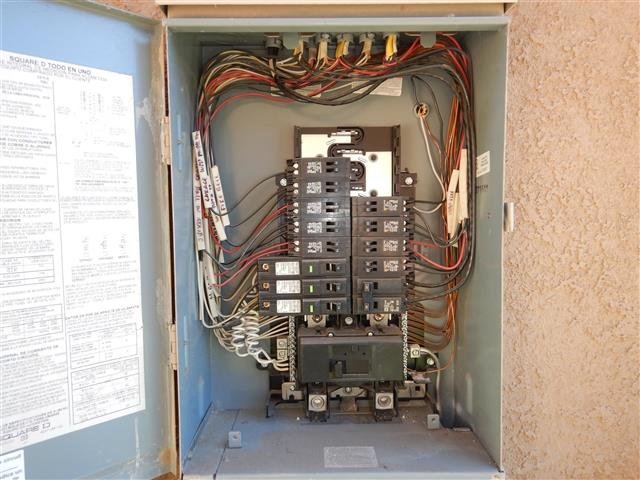
- Electrical. The unit's panel or subpanel gets opened and read off the label: manufacturer, amperage, breaker condition, visible branch wiring, grounding. Valley buildings from the early '70s frequently carry Zinsco gear, and the report names it when we see it.
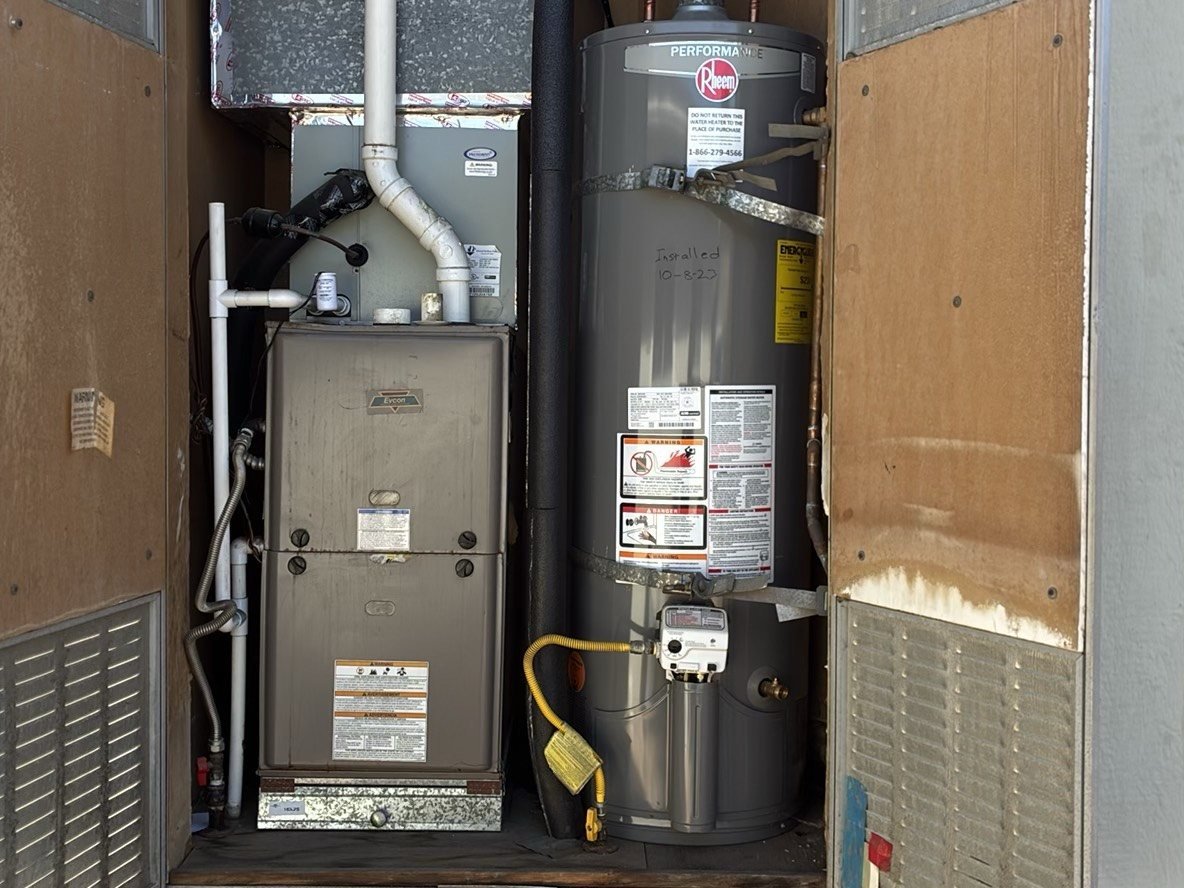
- Plumbing. Supply material at angle stops and the water heater, drain material at accessible stacks and cleanouts, the water heater's age, strapping, and pan. In mid-'80s buildings we specifically look for gray polybutylene.
- HVAC. Forced-air units in hall closets, through-wall heat pumps, rooftop package equipment — whatever serves the unit gets typed, dated, and cycled at the thermostat.
Everything else — windows, framing, drainage, the garage — belongs to a complete inspection and is intentionally left out here.
Why do valley-floor addresses keep getting the carrier letter?
Underwriting software doesn't know Mission Valley by reputation; it knows year built, construction type, and flood mapping. All three work against the older valley stock:
- The condo boom hit its age threshold. The great wave of Mission Valley construction ran roughly 1972 through 1989. Carriers commonly demand system documentation somewhere past the 25-to-40-year mark, which now captures nearly every pre-1990 complex in the valley — including units on HO-6 "walls-in" policies, since the panel, supply lines, water heater, and unit HVAC are still the owner's risk.
- The river is not theoretical. Camino de la Reina and the Fashion Valley lots still go under water in a serious storm. Flood is insured separately, but a mapped-floodplain address draws closer underwriting attention across the whole file — a clean 4-point is the cheapest answer.
- A high water table works on metal. Moisture in the soil under these slabs accelerates corrosion on original cast-iron drains and any galvanized supply that survived from the Hotel Circle era, so plumbing vintage matters more here than the same pipe would two hundred feet up the mesa.
- The contrast with new construction is stark. The high-rises and master-planned blocks that have gone up along Friars Road in the last decade almost never trigger the request. A 1978 townhome across the street almost always does. The year on the deed decides it.
What do we photograph over and over in pre-1990 valley buildings?
Inspect enough units between Qualcomm Way and Fashion Valley Road and the same short list keeps filling the camera roll:
- Zinsco and Sylvania-Zinsco unit panels, plus the occasional Federal Pacific — standard equipment when these complexes were built, and gear most carriers now want replaced before they'll bind. In a condo this is usually the single finding that decides the policy.
- Aluminum branch wiring in early-'70s buildings, flagged wherever the terminations were never retrofitted with approved connectors.
- Polybutylene supply lines in mid-'80s townhomes — the gray plastic pipe with acetal fittings that insurers refuse on sight. We identify it at angle stops and the water heater and photograph the markings.
- Cast-iron drain stacks scaling from the inside, hurried along by the damp soil beneath the valley's slabs, with original galvanized supply still serving the oldest buildings near Hotel Circle.
- Water heaters in interior closets above finished space — often past design life, unstrapped, or sitting in a pan with no drain — the leak geometry behind the multi-unit claims carriers remember.
- Through-wall heat pumps and closet furnaces decades old, still running but flagged on age alone.
None of this condemns a unit. The report's job is to sort what your carrier will accept from what it won't, and to back every call with a dated photograph instead of an adjective.
How does the appointment run and how fast is the report?
To get on the calendar, call (619) 752-4399 or write joe@sandiegohomeinspection.com with the address, the year built, and whatever paperwork your insurer sent — many carriers insist on their own 4-point template, and starting on the correct form keeps a renewal deadline intact. On condo appointments, one extra step pays off: if panel rooms or roof hatches sit behind HOA locks, a word with your property manager beforehand keeps "inaccessible" out of the report.
Joseph Romeo handles the visit personally — roof or roof documentation first, then the panel interior, then every reachable run of supply and drain plus the water heater, then the heating and cooling cycled from the controls. Because the scope stops at four systems, the appointment is short; the evidence isn't.
The finished report ships through HomeGauge the same day or the next, formatted so your agent can forward it straight to underwriting — or written directly onto your carrier's form when one was supplied. You'll never find a repair bid in it. We document what we observed and nothing more — the entire reason an underwriter trusts the document. Current pricing stays posted on the fee schedule.
Who signs your Mission Valley 4-point report?
An insurance company reading a report about a 1976 building wants to know whose judgment it's buying. Every Mission Valley 4-point we issue is signed by Joseph Romeo — owner, InterNACHI Certified Professional Inspector (CPI), and a licensed California General Contractor, CSLB #1113143. On condo work that contractor's background matters in a particular way: when the report flags a Zinsco panel or a polybutylene run, Joseph can tell you whether the fix is an electrician's morning inside your unit or a project that touches association property — before you and your agent commit to a path.
- Over 20 years and more than 10,000 inspections across San Diego County, the valley's condo corridors included
- 4.9 stars across 106 Google reviews
- No stake in the repairs. We never perform or bid the corrective work, so a finding earns us nothing — which is precisely why it's believable
Where a flagged system has to be corrected before binding, we refer the right licensed trade and handle any re-inspection the carrier requests afterward.
What do Mission Valley owners add to the same visit?
A 4-point answers your insurer and nobody else. Valley buyers and owners regularly bolt on services that answer their own questions while we're there:
- Complete home or condo inspection — the full evaluation a purchase calls for, described at the Mission Valley hub
- Sewer scope — a camera through the lateral on detached homes and townhomes; in many complexes the line past the stack is the HOA's, and we'll say so when the scope isn't yours to order
- Thermal imaging — particularly useful over valley slabs, where the high water table makes hidden moisture and slab-leak signatures worth ruling out
- Roof evaluation — the deeper look when a townhome's low-slope covering grades out near the end of its service life
One boundary worth stating: termite/WDO reporting takes a structural pest license we don't hold, so when escrow or a carrier requires it, we line up a licensed operator rather than guess at it. The rest of the menu lives on our services page, and the contact page is the quickest route to a confirmed slot.
Mission Valley 4-Point Inspection FAQs
Do Mission Valley condos really get asked for 4-point inspections?
The HOA owns my roof. How does that section of the report get filled out?
My 1985 townhome has gray plastic supply pipe. Is that a problem?
Mission Valley floods. Does a 4-point cover that risk?
My renewal lapses soon. How fast can you turn this around?
What does a 4-point cost in Mission Valley?
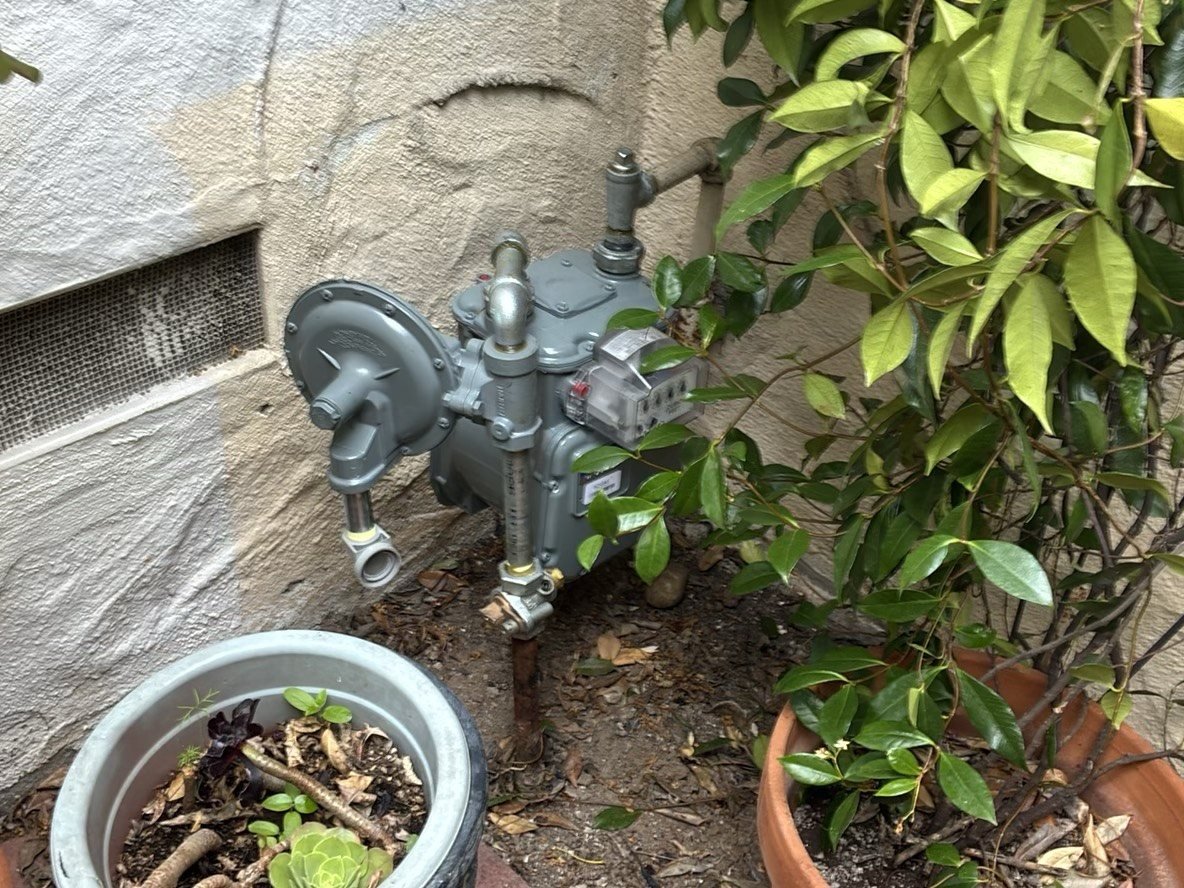
Roof, electrical, plumbing and HVAC
Documentation from recent 4-point inspections across San Diego County.
More inspections in Mission Valley
- Warranty inspection in Mission Valley
- Commercial roof cleaning in Mission Valley
- Commercial inspection in Mission Valley
- Pool and spa inspection in Mission Valley
- Home inspection in Mission Valley
Nearby and countywide
Were You Happy With Your Inspection?
We are proud of our 4.9-star rating across 100+ Google reviews. If Joseph and the team did right by you, a quick Google review helps other San Diego County buyers and sellers find us.