
Commercial Roof Cleaning in Mission Valley, CA
Mission Valley is the flattest stretch of commercial real estate in San Diego, and nearly all of it is roofed flat too. The San Diego River runs the valley floor end to end, with Hotel Circle's 1960s and 70s hospitality stock along one side and an unbroken run of malls, dealership rows, mid-rise offices, condo towers, and new podium construction — Civita, the stadium district — filling the rest. Those rooftops share a workload most of the county doesn't: overnight fog that pools in the valley and feeds algae, river-corridor trees and ornamental palms shedding into the drainage, and summer sun cooking whatever stayed damp through spring.
I'm Joseph Romeo, owner of The Real Estate Inspection Company. On these buildings I handle the unglamorous half of roof asset management — strip the organic load off the field, prove the drainage actually works, and record the roof's condition with dated photos. Repairs and recoats belong to a licensed roofer. Everything below the parapet starts at the Mission Valley home inspection hub.
Call (619) 752-4399 Schedule an Inspection
What does a commercial roof cleaning cover on the valley floor?
Mission Valley's low-slope systems span six decades of roofing practice: single-ply TPO over the re-roofed retail boxes and the new podium decks, modified bitumen and gravel built-up roofing surviving on Hotel Circle originals and 70s office buildings, sprayed foam on a share of the flex and medical stock along Camino del Rio. The service adapts to each, but the checklist holds steady:
- Field clearing — cottonwood and sycamore litter drifting up from the river park, palm fronds from Hotel Circle landscaping, and the wind-trapped packaging that collects against parapet walls and equipment curbs
- Interior drain systems — on the big retail footprints, water leaves through roof drains and internal leaders, not edge scuppers; each strainer basket and sump gets dug out and flow-checked
- Scuppers and overflow ports — cleared to full throat on the smaller parcels, because the overflow is the one outlet nobody looks at until the primary clogs
- Growth removal — the algae and lichen films that colonize fog-shaded zones, lifted with methods matched to the membrane rather than blasted off
- Condition photography — laps, flashings, penetrations, ponding evidence, and equipment surrounds, all dated and located
Grease extraction around restaurant hoods is a kitchen-exhaust contractor's specialty, and anything cut into or under the membrane is a roofer's. The report routes both accurately.
Why is a river valley hard duty for a flat roof?
Most of San Diego's inland flat roofs fight sun and dust. Mission Valley's fight those plus moisture, because the valley floor behaves like a basin. The marine layer slides up the river corridor at night and settles; mornings here stay gray and damp after the surrounding mesas have burned off. That persistent wet keeps biological growth active on north-facing parapet shade and behind rooftop equipment in a way you'd expect at the coast, not four miles inland.
Then the basin flips. Afternoon heat builds over the valley's freeway interchanges and parking fields, and the UV load oxidizes built-up flood coats and chalks single-ply at full inland intensity. A membrane here cycles damp-cold to baked-hot daily for much of the year, which ages laps and flashing sealants faster than either condition alone.
Drainage is the third front. Anyone who watched the January 2024 storm put the valley floor underwater understands how this watershed concentrates runoff. Roofs don't flood from the river, but the same cloudbursts that swamp Camino de la Reina land on roof fields whose drains have collected a full dry season of litter. On a big-box roof where one interior drain serves thousands of square feet, a single packed strainer ponds a small lake over the deck — and the valley's high water table means the site below sheds water slowly too, so overflow capacity is not a theoretical detail here.
What do I find between Hotel Circle and the stadium district?
The valley's building generations each leave their own evidence once the surface is clean:
- Hotel roofs: exhaust residue from kitchens and laundry stacks staining the surrounding membrane, plus fifty years of equipment swap-outs — every replaced chiller and package unit left a curb, and not every curb got a proper flashing detail on its way out
- Palm fronds in the outlets: Hotel Circle's landscaping sheds fronds that ride the wind onto roofs and wedge across scuppers like dam timbers; one frond can hold back surprising water
- Mid-field ponding on retail boxes: silt deltas fanned around interior drains and brown rings far from any roof edge, marking sumps that have been running half-choked through multiple seasons
- 1970s office relics: abandoned sign frames, antenna mounts, and conduit stubs from tenants three leases gone, each one a penetration with sealant nobody renews
- New podium construction: fasteners, mortar droppings, and trade debris left from the build itself, and amenity-deck drains sized tight against the litter residents generate
- Fog-line algae: a green-black film tracking exactly where morning shade lingers, slick underfoot and moisture-holding against the membrane below
Most items are maintenance; some are early warnings. The report draws that line with photographs so the owner spends repair money only where it's earned.
How do scheduling, access, and the report work?
Start with a call to (619) 752-4399 or an email to joe@sandiegohomeinspection.com — address, roof system if you know it, and what's prompting the visit, whether seasonal maintenance, a warranty file, or due diligence on a purchase or lease. Access in Mission Valley takes more coordination than most areas: hotel engineering departments, retail center operations and security, and the HOA or property managers who control roof access on the valley's mixed-use podium buildings. I handle that legwork as part of booking.
On the roof, photography brackets the work — arrival condition first, cleared condition after. Methods follow the system: no aggressive pressure washing that scours BUR surfacing or drives water into single-ply laps, no abrading foam coatings. Every drain, scupper, and overflow gets verified passing water before I leave, and debris leaves the site with me.
The HomeGauge report arrives the same or next day: photos organized by roof area, the drainage work logged, and any condition that needs a roofer, an exhaust contractor, or an engineer flagged in plain language. I don't perform leak pressure-tests or issue structural certifications — where one is warranted, I say so and coordinate the right specialist.
Who cleans and reads your roof?
A cleaning crew moves debris. An inspector who cleans roofs reads them while the debris moves. I'm an InterNACHI Certified Professional Inspector (CPI) and a California General Contractor, CSLB #1113143, with more than 20 years and 10,000+ inspections across San Diego County — including plenty of time on the hospitality, retail, and office stock that fills this valley. Owners and property managers have left 106 Google reviews averaging 4.9 stars.
The contractor's license matters at the parapet for a practical reason: when I flag a failing pitch pocket or a separated lap, I can describe the repair in terms a roofer prices accurately from the report, often without a second site visit. And because the company performs no roofing repairs, the findings carry no sales agenda — a distinction that matters when the report lands in a lease negotiation or an HOA board packet. Our credentials are the InterNACHI CPI and the CSLB license, not ASHI or CREIA membership. Pricing depends on size, system, access, and debris load, so rather than quote blind, the fee schedule is the place to start.
What related inspections pair with a roof cleaning?
A rooftop visit in this valley usually connects to a bigger decision — a purchase, a lease, a reserve study — and the rest of the building deserves the same documented look:
- Commercial property inspection — structure, electrical, plumbing, and HVAC evaluated together before committing to a Hotel Circle or Camino del Rio building
- Condo and HOA work — the valley holds one of the county's largest concentrations of condos and townhomes, and boards use condition documentation for budgeting and dispute resolution
- Roof condition assessment — remaining-life evaluation when the cleaning exposes wear that needs quantifying for capital planning
- Thermal imaging — tracing moisture already inside a deck or the ceilings below a suspect ponding zone
- Sewer scope referrals — valley-floor laterals contend with the high water table and decades of settlement; a camera answers questions excavation guesses at
The services page carries the full lineup, and the contact page is the fastest way to compare dates. Neighborhood-wide details live on the Mission Valley hub.
Mission Valley Commercial Roof Cleaning FAQs
How often should a Mission Valley commercial roof be cleaned?
Can you handle mall-scale and big-box roofs with interior drains?
Our building is a mixed-use podium with an HOA. How does that work?
Will the report satisfy a membrane warranty's maintenance clause?
If you find damage, do you repair it?
What does commercial roof cleaning cost in Mission Valley?
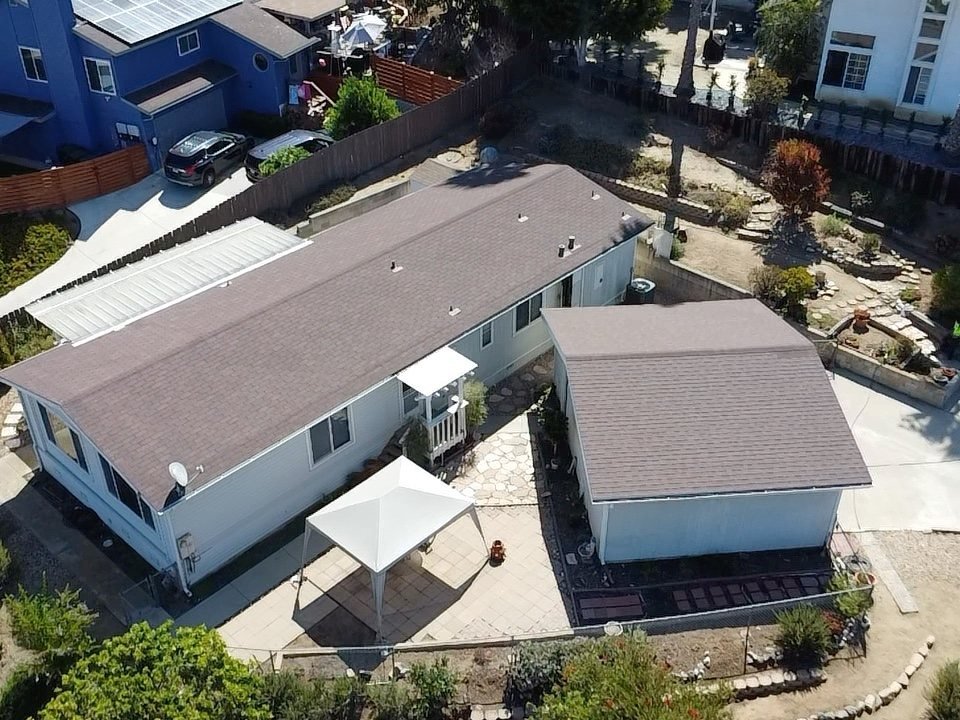
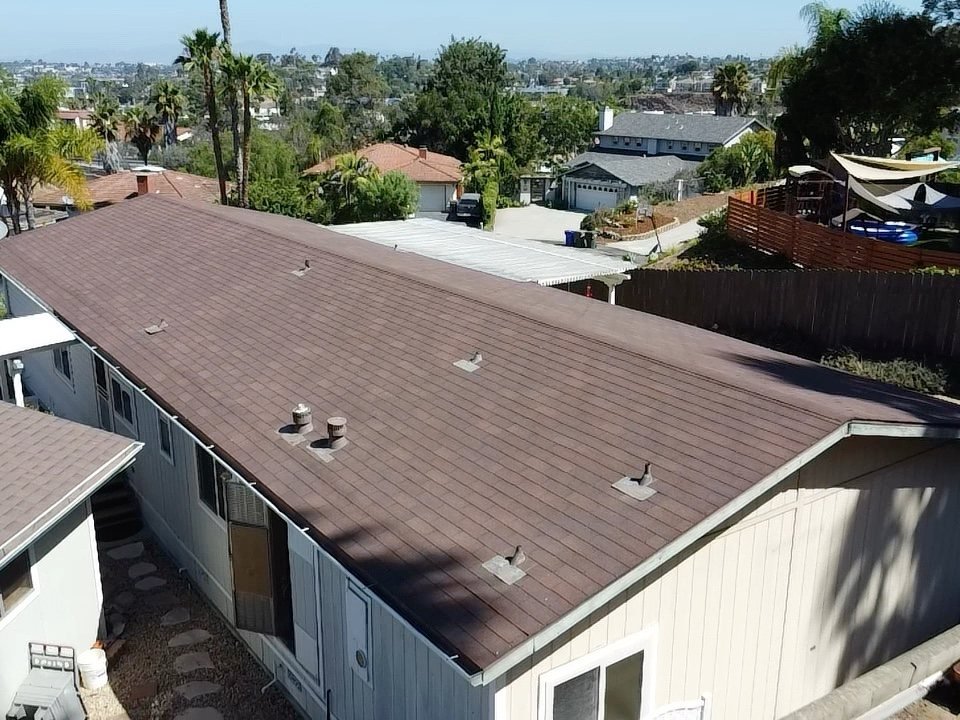
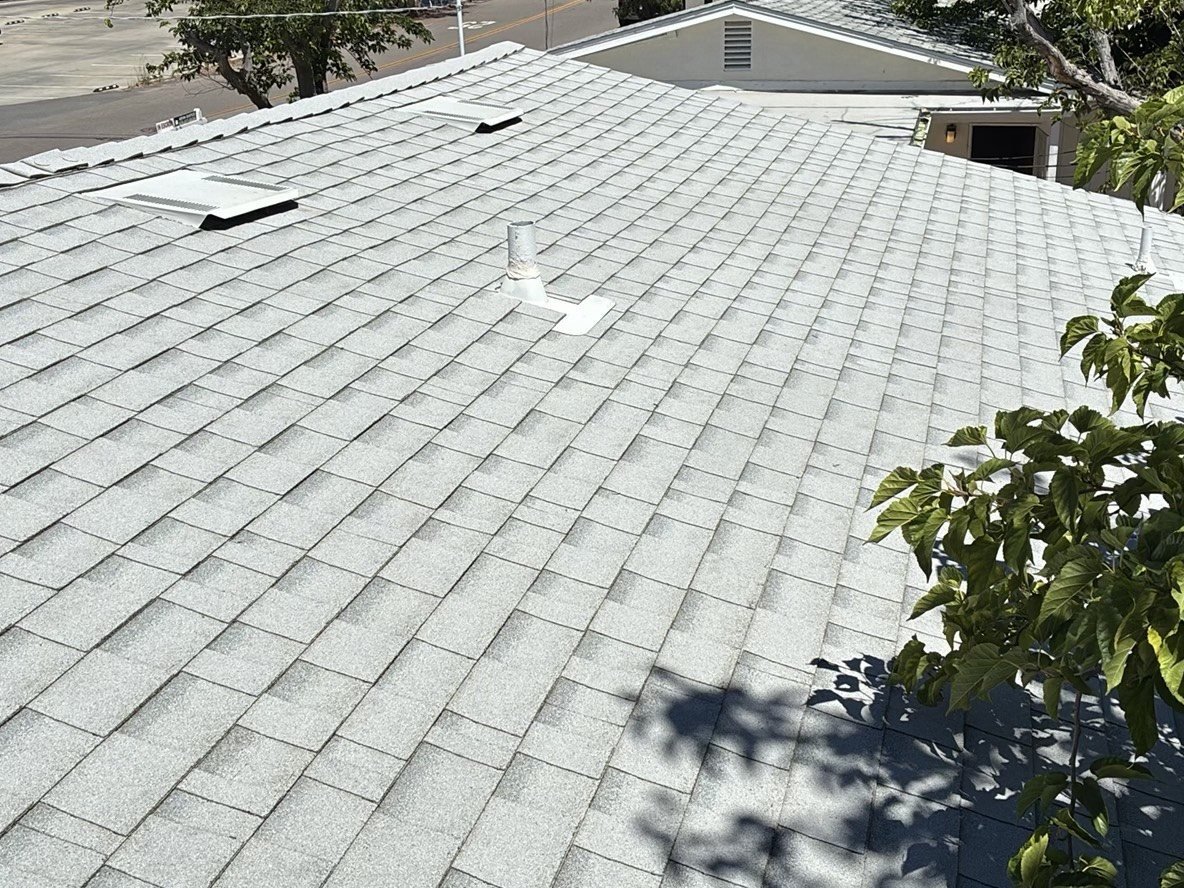
Large rooftops, handled
Flat and low-slope commercial roofs we access, document and maintain.
More inspections in Mission Valley
- Commercial inspection in Mission Valley
- Pool and spa inspection in Mission Valley
- Sewer scope inspection in Mission Valley
- 4-point inspection in Mission Valley
- Home inspection in Mission Valley
Nearby and countywide
Were You Happy With Your Inspection?
We are proud of our 4.9-star rating across 100+ Google reviews. If Joseph and the team did right by you, a quick Google review helps other San Diego County buyers and sellers find us.