
College Area Thermal Imaging Inspection (Infrared Add-On)
Most of the College Area went up in one postwar push: slab-on-grade ranches and low split-levels filling the mesa between El Cajon Boulevard and the canyon edges above Alvarado Road, almost all of it dated 1948 to 1965. Then San Diego State's growth converted much of that stock into student rentals, and decades of tenants, garage conversions, and fast turnovers left a history you can't see from the curb. An infrared camera recovers part of it. The lens only measures surface temperature, but that's enough: a quietly wet bathroom wall sheds heat through evaporation and reads cool; a circuit feeding four window AC units runs warm at the breaker; a supply line failing beneath a 1955 slab traces a faint warm path across the floor.
I fold the scan into the standard inspection — one visit, nothing opened, nothing drilled. Fair framing: infrared flags anomalies for follow-up evaluation; it isn't an x-ray and can't promise a defect-free house.
Call (619) 752-4399 Schedule an Inspection
What does the infrared pass cover in a College Area house?
I sweep the camera across every interior surface that can betray a hidden condition, with extra time on what these homes abuse hardest:
- Wet-wall plumbing and ceilings below bathrooms — rental baths take heavy use and decades of caulk-and-paint fixes; concealed moisture prints cool evaporation patterns
- Panels and subpanels under load — breakers, lugs, and splices running hotter than their neighbors, common where a 1950s service now carries a houseful of electronics
- Slab floors along plumbing routes — temperature trails that suggest a pressurized line losing water beneath the concrete
- Attic insulation and converted rooms — coverage gaps over original ceilings and over garages or dens reframed as extra bedrooms
- Duct runs with the HVAC operating — conditioned air escaping into the attic before it reaches the far end of the floor plan
Anything suspicious gets a second test — usually a moisture meter — before it's documented. I record surfaces and patterns, not guesses about a closed cavity's contents.
Why does infrared pull extra weight near SDSU?
Mini-dorms, mid-century slabs, and canyon rims are why: three local realities make the add-on pull extra weight here.
The student-rental economy. Blocks within walking distance of Montezuma Road and the SDSU trolley stop hold one of the county's densest concentrations of converted houses — garages framed into bedrooms, dens split in two, six tenants where the builder planned four. Mixed-quality conversions and electrical systems pushed past their original design load are exactly what infrared exposes: bare new walls, rooms no duct serves, warm breakers feeding daisy-chained power strips.
Original plumbing under shifting slabs. These tracts were poured on grade with copper — galvanized in the earliest phases — run beneath the concrete. Lots along the canyon rims sit on soil that swells and shrinks seasonally, working those lines until a pinhole opens. An under-slab leak announces itself thermally long before the floor feels damp.
Sixty-year-old services. Plenty of homes here still run panel brands electricians now routinely flag, layered with generations of amateur circuit additions made to serve rental occupancy. Heat at a connection is the earliest visible symptom, and the camera picks it up before anyone pulls a screw on the dead front.
What keeps showing up between the Boulevard and the canyons?
Patterns repeat across these tracts:
- Cool evaporation marks on shared bathroom walls in rental conversions, behind tile that looked freshly grouted
- One breaker in an original panel reading well above the rest of the bus under ordinary household load
- Warm streaks in the slab tracking the hot-water line from the water heater toward the hall bath
- Moisture at sliders and west-facing frames where irrigation spray or winter rain found a failed seal
None of it means walking away. It means knowing — a buyer negotiates, an investor budgets, and a parent buying near campus learns what the house needs before anyone signs a lease.
How does scan day, verification, and the report work?
I run plumbing fixtures and start the heating or cooling early, giving an active leak time to wet a surface while the indoor-outdoor spread widens. The camera reads best with strong contrast, and College Area's inland afternoons usually supply plenty. Tenant-occupied houses are routine here; I coordinate access through the agent and work around occupants without shortcutting the sweep.
Findings are verified before they're written — sun-heated stucco, a chimney chase, and a draft can each mimic a defect, so every flagged area gets checked physically and only confirmed observations make the report. Your HomeGauge report, delivered same-day or next-day, pairs each infrared frame with a standard photo of the identical spot and states plainly what the pattern suggests and which trade, if any, should evaluate further. Suspected under-slab leaks go to a licensed leak-detection company for pinpointing and pressure testing — work outside a home inspection's scope.
Why hire us for infrared near SDSU?
Thermal cameras are cheap now; interpretation is the product. I'm Joseph Romeo — InterNACHI Certified Professional Inspector and a licensed California general contractor (CSLB #1113143). The contractor's background matters most in a neighborhood full of unpermitted conversions: I've built the assemblies I'm imaging and can tell a framing shadow from a saturated wall. Twenty-plus years and 10,000+ San Diego County inspections sit behind every call, and clients have left 106 Google reviews averaging 4.9 stars. And I report condition without bidding on or performing repairs, so a finding is never a sales pitch. Call (619) 752-4399 or write joe@sandiegohomeinspection.com.
What inspections do buyers pair with infrared?
The scan rides inside a complete evaluation, so begin with the College Area home inspection itself. Frequent companions here:
- Sewer scope — original clay and cast-iron laterals crack with the same soil movement that stresses supply lines; a camera down the cleanout settles their condition
- Roof evaluation — when the lens shows a cool plume at a ceiling, tracing the entry point upstairs closes the loop
- Termite/WDO coordination — wood-destroying-organism reports aren't a service I perform, but I line up a licensed termite company so your escrow timeline holds
The full lineup lives on the services page, pricing stays current on the fee schedule, and you can contact us to hold a date.
College Area Thermal Imaging Inspection FAQs
Will thermal imaging show whether a garage conversion near SDSU was insulated?
Can the camera catch electrical problems in a student rental?
How does infrared find a slab leak in a 1950s College Area house?
Is the scan worthwhile on a tenant-occupied investment property?
Does College Area's inland heat help or hurt the readings?
What does adding thermal imaging to my inspection cost?
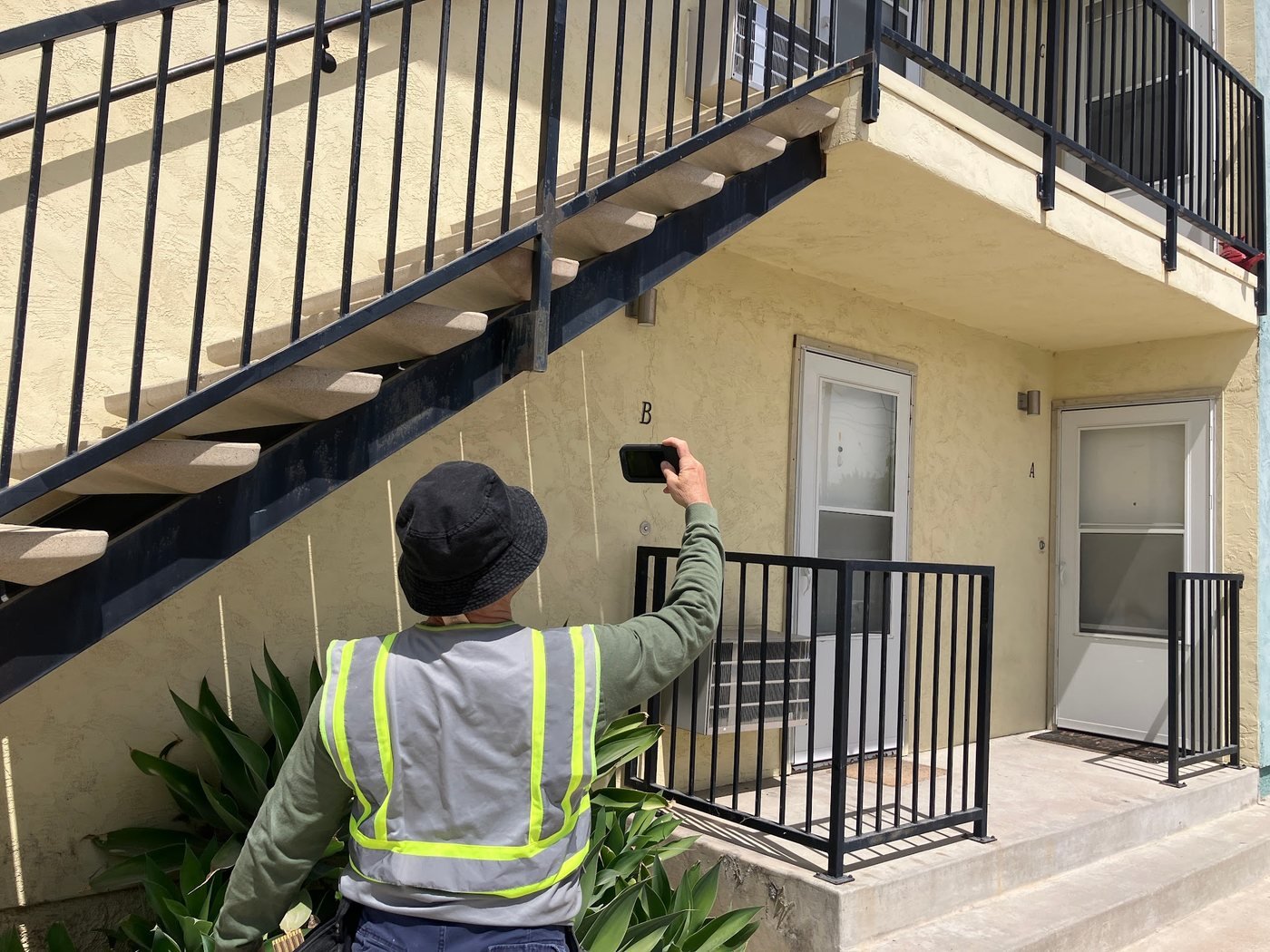
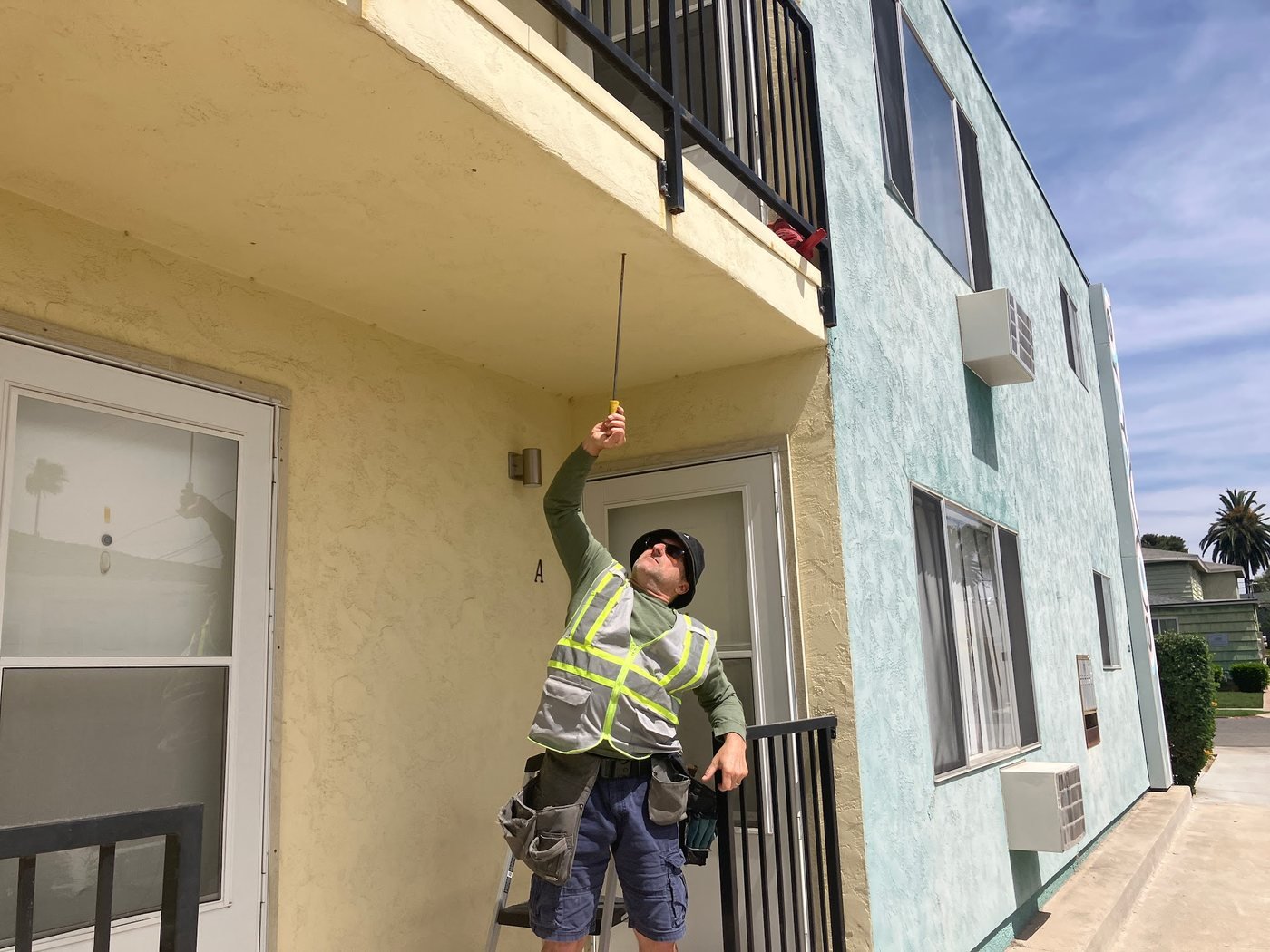
Thermal scanning in action
Our inspectors use FLIR thermal cameras to find moisture and heat issues hidden in walls and soffits.
More inspections in College Area
- Commercial inspection in College Area
- Pool and spa inspection in College Area
- Sewer scope inspection in College Area
- 4-point inspection in College Area
- Home inspection in College Area
Nearby and countywide
Were You Happy With Your Inspection?
We are proud of our 4.9-star rating across 100+ Google reviews. If Joseph and the team did right by you, a quick Google review helps other San Diego County buyers and sellers find us.