
Roof Inspection in College Area, San Diego, CA
The College Area runs on two clocks. The tract houses on Montezuma Mesa and the blocks between El Cajon Boulevard and Montezuma Road were framed in the 1950s and early 60s, so these roofs carry sixty-plus years of inland sun. And because SDSU sits a short walk away, a large share of those houses now operate as student rentals — where the roof gets attention only after a tenant finally mentions the ceiling stain. Patch-over maintenance, decades of antenna and satellite hardware, garage conversions wearing bargain rolled roofing, and rim lots above Alvarado Canyon all turn up within the same square mile.
I'm Joseph Romeo. A roof inspection from me is a photographed, visual evaluation of the covering and every component that moves water off the structure — flashing metal, valleys, penetrations, skylights, gutters and downspout discharge — plus attic-side moisture evidence and ventilation wherever access exists. The report tells you what shape the roof is in and what the wear indicators suggest about its remaining service. Certifying a roof or repairing one is a roofing contractor's job, and I'll refer you to one when the findings call for it. For the rest of the property, start at the College Area home inspection hub.
Call (619) 752-4399 Schedule an Inspection
What gets documented on a College Area roof?
Every roof gets the same systematic pass, adjusted for the covering type and how I can safely reach it:
- Covering and layer count. Composition shingle dominates the 50s-60s blocks, concrete and clay tile appears toward Alvarado Estates, and rolled or foam-coated material tops the flat additions and converted garages common on rentals near campus. I record material, apparent age, stacked layers, and each one's wear signature — granule shed on comp, fractured tile, alligatored coating and ponding rings on the flat work.
- Flashing metal and transitions. Chimney counterflashing, the junction where an addition's roof dies into the original wall, and the metal lining every valley — houses added onto two or three times leak at these junctions far more often than out in the open field.
- Penetrations. Plumbing stacks, furnace flues, bath and kitchen exhaust terminations, and the boot or seal around each. College Area rentals carry extra penetrations from added bathrooms, so there's more to examine than on a comparable owner-occupied tract house.
- Skylights, gutters, and where the water lands. Curb seals and glazing on skylights, then the discharge path — a detail that matters on slab-on-grade houses, where runoff dropped at the foundation edge has nowhere good to go.
- The attic side. Staining around penetrations and below valleys, daylight where none belongs, and whether ventilation still functions after decades of modifications.
The deliverable is condition and remaining-life evidence with a photo behind it. Quoting the fix, performing it, or issuing a certification belongs to a licensed roofing contractor.
Which roof problems does the College Area breed?
Aging tract stock, heavy rental conversion, dry inland exposure, and canyon edges combine into a wear profile I don't see in quite this mix anywhere else in the county:
- Rental economics drive patch cycles. An owner in Orange County and a tenant who graduates in May make a poor maintenance team. Leaks get reported late, then tarred over between school years instead of traced and corrected. I look past the fresh mastic to what it's hiding.
- Sixty years of hardware. Generations of antennas, satellite dishes, cable runs, and swamp-cooler mounts have come and gone from these roofs, and the lag-bolt holes they left rarely got sealed. Abandoned brackets and open fastener penetrations are a College Area signature.
- 1950s geometry meets cheap conversions. The converted garages and tacked-on bedrooms that turned three-bedroom houses into six-bedroom rentals usually got near-flat roofs of rolled composition that were never meant to last. Those sections fail first and most often.
- Inland heat does the slow damage. This far from the water, UV and dry heat are the aging agents — comp shingle goes brittle, sealants release their grip on the metal, and underlayment beneath the tile sections bakes toward failure while the surface reads fine from the curb.
- Canyon-rim exposure. Lots backing the fingers of Alvarado Canyon and the slopes toward Adobe Falls sit against open brush. On those parcels I note attic vents without ember screening, gaps at open eaves, and the leaf litter packed into valleys that gives an ember something to work with.
What do you keep photographing on roofs near SDSU?
Work enough roofs between El Cajon Boulevard, Collwood, and the 55th Street corridor and the same defects repeat, sorted almost perfectly by whether the house is owner-occupied or a rental:
- Mastic archaeology. Layer upon layer of roofing tar troweled over flashings, seams, and old leak points — years of symptom-chasing, and a reliable sign the junction underneath was never rebuilt.
- Orphaned mounts and open holes. Dish brackets still bolted to the ridge, antenna stand-offs at the chimney, and unsealed fastener holes left when the equipment came down.
- Comp shingle run far past its design life. Long-held rentals where the covering was already tired a decade ago — cupped, bald in the sun-facing field, mat showing at the edges.
- Failing flat sections over conversions. Ponding rings, blisters, and split seams on the roofs above garage conversions and added bedrooms — the cheapest roofing on the house protecting the rooms that generate the rent.
- Ventilation choked by remodeling. Insulation or framing from bedroom partitions blocking the airflow path, and bath fans exhausting straight into the attic — moisture the roof never sees coming.
- Runoff dumped at the slab line. Gutters missing, detached, or discharging against the foundation edge, with soil staining and splash erosion to prove it.
No single item condemns a roof. The report separates what needs a roofer this month from what belongs on a watch list, with photographic evidence an owner, buyer, or property manager can act on.
How does scheduling and the site visit work?
Call (619) 752-4399 or email joe@sandiegohomeinspection.com with the address. College Area work is often investor-driven — a rental purchase, a parent buying near campus for a student, a portfolio owner facing an insurance renewal — and many of these houses are tenant-occupied, so I'm used to coordinating entry through a property manager and working around student schedules. On a purchase, the roof typically rides along with the full inspection.
On site, I get on the roof wherever the pitch and material support it without damage. Where they don't — brittle rolled roofing, fragile tile — I work the perimeter with ladder access at the roof edge, use optics from the ground, and read the deck's underside from the attic interior. Each finding is photographed, and anything I couldn't see is noted honestly along with the reason.
Your report comes through HomeGauge, usually delivered the same day or by the next morning, so a contingency window or a renewal deadline isn't waiting on me. Findings that need a specialist — a junction to rebuild, a flat section due for replacement, ember-vulnerable venting — come with a clear referral to a licensed roofing contractor. I document what's there; I don't sell the repair.
What credentials stand behind the read?
Judging whether a sixty-year-old tract roof has real service left — or whether the flat roof over a garage conversion is one winter from failure — is pattern recognition built over thousands of houses. I'm an InterNACHI Certified Professional Inspector (CPI) and I hold CSLB General Contractor license #1113143. For investors, that contractor's background means I can frame whether a finding is maintenance-level or replacement-level — the difference between a turn-budget line item and a renegotiation — without ever bidding the work myself.
- More than 20 years and over 10,000 inspections across San Diego County, a steady diet of them on 50s-60s slab ranches, converted rentals, and canyon-edge lots like these
- 106 Google reviews averaging 4.9 stars
- Zero interest in the repair. I don't sell roofing, coatings, or certifications, so a finding never exists to generate work for anyone
When a certification or repair is needed, I coordinate or refer a licensed roofing specialist who acts on exactly what the report documents.
Which other inspections do College Area properties need?
On most College Area visits the roof is one chapter of a bigger story. These pair with it on a single trip:
- Full home inspection — the complete buyer's evaluation for a purchase near campus; details at the College Area hub
- 4-point inspection — the roof, electrical, plumbing, and HVAC snapshot insurers increasingly request on 1950s-60s rentals before writing or renewing coverage
- Sewer scope — the original clay laterals under these lots are pushing seventy, and six tenants load a drain line far harder than the family it was built for
- Thermal / infrared imaging — traces roof-leak moisture that has migrated into walls or ceilings ahead of any visible stain
Unsure which apply to a given address? Send it over and I'll tell you straight which are worth paying for. The full menu is under services, and you can book through the contact page.
College Area Roof Inspection FAQs
What does a College Area roof inspection cost?
The house is a tenant-occupied student rental. Can you still inspect it?
How can you tell how many layers are on a 1950s roof?
Will your report satisfy a lender or insurer asking for a roof certification?
Why does the flat roof over my garage conversion keep leaking?
Do you check the attic in a house that's been cut into extra bedrooms?
Roofs we document
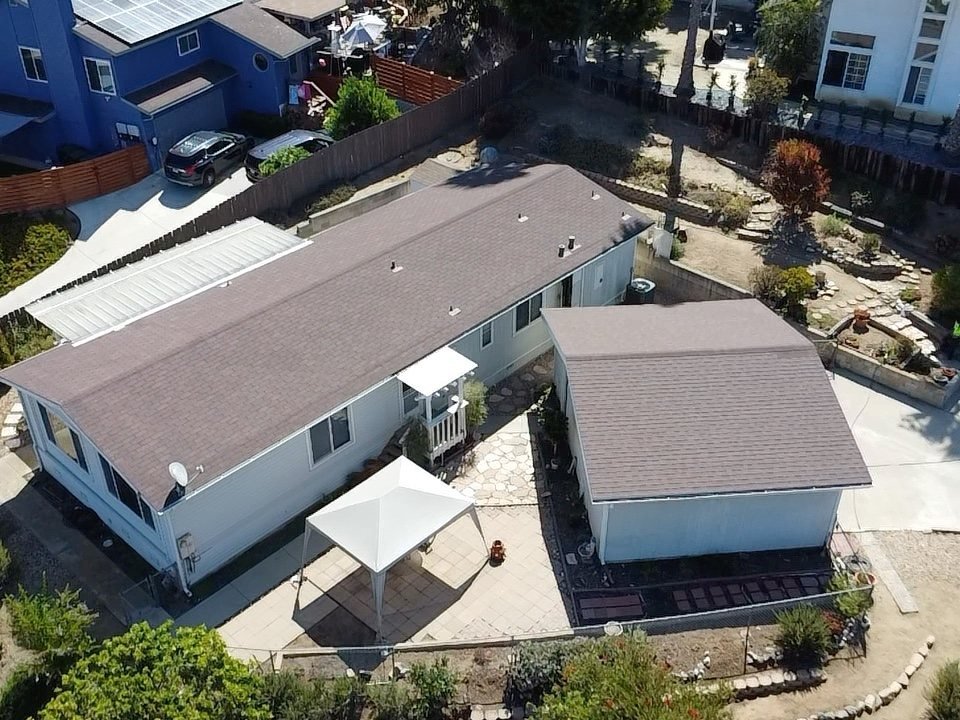
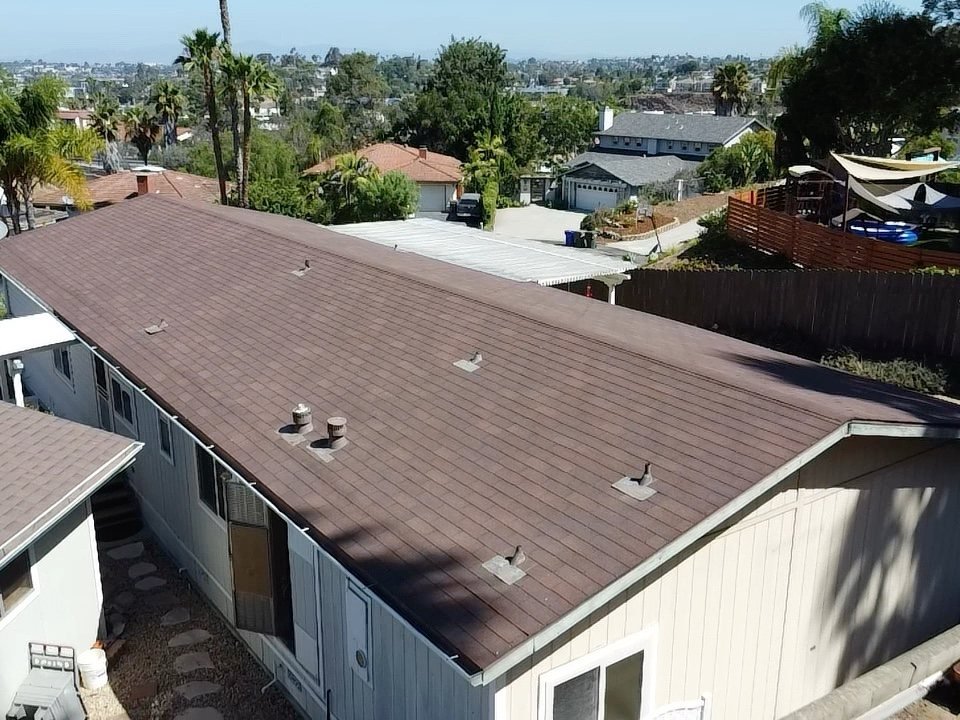
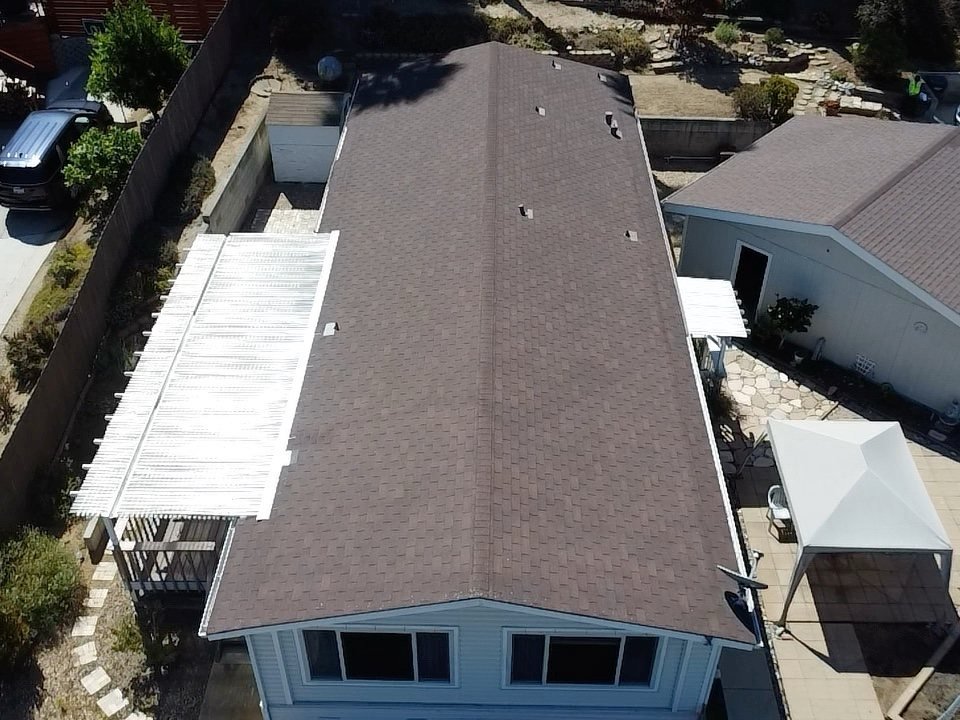
Aerial and on-roof photos from recent San Diego County roof inspections.
More inspections in College Area
- Warranty inspection in College Area
- Commercial roof cleaning in College Area
- Commercial inspection in College Area
- Pool and spa inspection in College Area
- Home inspection in College Area
Nearby and countywide
Were You Happy With Your Inspection?
We are proud of our 4.9-star rating across 100+ Google reviews. If Joseph and the team did right by you, a quick Google review helps other San Diego County buyers and sellers find us.