
Commercial Roof Cleaning in North Park, San Diego
North Park packs more commercial roofline per block than almost any neighborhood in San Diego. University Avenue and 30th Street stack 1920s masonry storefronts shoulder to shoulder from the water tower down past the 1928 theater block, the brewery boom turned bow-truss garages into taprooms with serious rooftop equipment, and four-story mixed-use infill keeps arriving with fresh TPO. Nearly all of it is flat or low-slope — built-up systems draining through parapet scuppers on the old stock, single-ply with interior drains on the new — and three miles inland, the marine layer thins early and membranes take a harder UV beating, while ficus and jacaranda canopies feed the drainage paths litter all year.
This page covers the maintenance service I run for that stock: clearing the membrane, restoring flow at every scupper, drain, and overflow, and recording condition in dated photographs. Actual repairs go to a licensed roofer working from my documentation. Whole-building questions start at the North Park home inspection hub.
Call (619) 752-4399 Schedule an Inspection
What does a North Park roof cleaning visit cover?
A typical visit on a University Avenue or 30th Street building covers:
- Field debris removal — ficus leaf mats, jacaranda blossom sludge, palm litter carried in on Santa Ana winds
- Drainage restoration — parapet scuppers opened end to end on the older stock, strainer baskets and interior drains cleared on the newer infill, overflows verified
- Biological growth treatment — algae streaking and moss removed from shaded parapet returns and from any spot that holds water between storms
- Seam and flashing exposure — laps, base flashings, and counterflashing swept clean so wear is visible instead of buried
- Equipment-curb and penetration review — HVAC curbs, brewery and restaurant vents, signage anchors, and solar standoffs cleared and photographed
- A dated photographic record of the field, every outlet, and every condition worth a second look
The line I hold: I clean and document. Membrane repair, coping work, and recoating are a roofing contractor's trade; my photo set shows that contractor where to start.
What does North Park's building stock do to its roofs?
The neighborhood's character — historic, dense, inland — shapes the conditions overhead:
- Century-old decks under multiple roof generations. Storefronts built alongside the craftsman and Spanish revival housing of the 1910s–30s carry sawn-lumber decks; a century of settling plus stacked overlays turns shallow deflection into standing water.
- Scupper-dependent drainage. Pre-war buildings here drain through a handful of small parapet openings — one outlet choked with ficus litter can flood an entire storefront's roof.
- Restaurant and taproom density. Few neighborhoods pack this many kitchens and brewhouses per block, so grease-exhaust fans, walk-in condensers, and glycol gear work on these membranes continuously.
- Inland UV. The overcast burns off by mid-morning, asphaltic surfaces alligator and shed granules faster, and a dark leaf mat concentrates heat beneath it.
- Bow-truss spans. The converted garages carry long clear spans that flex and pond differently than joisted storefronts; their flow lines need checking along the full truss length.
Which roof conditions show up again and again here?
Between the water tower and Switzer Canyon, the pattern repeats:
- Buried outlets — scuppers and strainers entombed in leaf compost, tide-line staining on the parapet showing how high the last storm stood
- Ponding rings over deck sag, mineral-crusted and stained, often over a tenant's sales floor rather than a back room
- Grease-saturated membrane downwind of kitchen exhaust fans — softened surfacing that cleaning exposes but cannot reverse
- Failed mastic at legacy penetrations — old sign anchors, dead conduit, and abandoned vents, split open years after sealing
- Coping and parapet cap cracks feeding water into the wall assembly, surfacing later as an interior stain nowhere near a drain
- Granule wash collecting at outlets, a sign the cap sheet is aging out
Each finding lands in one of two columns: resolved by the cleaning itself, or referred onward with photos and locations.
How does the visit run, and what does the report look like?
Start by calling (619) 752-4399 or emailing joe@sandiegohomeinspection.com with the address and roof access details — in North Park that might be a hatch inside an upstairs unit or alley ladder placement that has to dodge a patio full of customers.
Method follows membrane: aged built-up roofing gets hand tools and brooms only, sprayed foam gets nothing that can score it, and TPO gets cleaning agents its manufacturer permits. I work from high points toward the outlets and confirm every path actually flows. The inspection happens simultaneously — uncovering the surface is when seam condition, UV wear, and ponding history become readable.
Deliverable: a HomeGauge report, same or next business day, with a photograph behind every observation. It doubles as the maintenance documentation most membrane warranties require and a baseline for next season's visit. The fee schedule explains how pricing works.
Who is the inspector behind the work?
I'm Joseph Romeo, owner and lead inspector of The Real Estate Inspection Company. I hold the Certified Professional Inspector (CPI) credential through InterNACHI and a California General Contractor license — CSLB #1113143. That pairing matters on North Park's commercial stock: a contractor's eye can distinguish ordinary century-old deck settlement from deflection that deserves an engineer; when it's the latter, I coordinate a structural specialist referral rather than guess.
- Twenty-plus years in the field, north of 10,000 inspections across San Diego County
- 4.9 stars across 106 Google reviews
- Zero repair interest — I don't bid roofing work or sell recoats, so the report has no thumb on the scale
Everything past cleaning and documentation goes to the licensed roofer of your choosing, equipped with my photos and locations.
Which related inspections do North Park commercial owners need?
Buildings this age rarely have just one system worth documenting:
- Commercial building inspection — the apartments above these storefronts still hide knob-and-tube circuits, galvanized supply lines, and cast-iron waste stacks
- Roof condition assessment — when the real question is remaining service life ahead of a purchase or lease negotiation
- Infrared imaging — for chasing moisture already inside a ceiling or party wall back to its entry point
- Sewer scope — the clay laterals beneath these lots are the below-grade twin of the ponding problem above
- Standing maintenance scheduling — a fall visit locked in before the first storm, building a year-over-year photo history
Tell me the address and the decision in front of you, and I'll say which earns its cost. The full menu is at our services page, or reach me through the contact page.
North Park Commercial Roof Cleaning FAQs
How often should a North Park commercial roof be cleaned?
Do you deal with grease and condensate around restaurant and brewery equipment?
Is pressure washing used on these older roofs?
Will your report satisfy my membrane warranty's maintenance requirement?
If you find damage, do you repair it on the spot?
What determines the cost of a commercial roof cleaning in North Park?
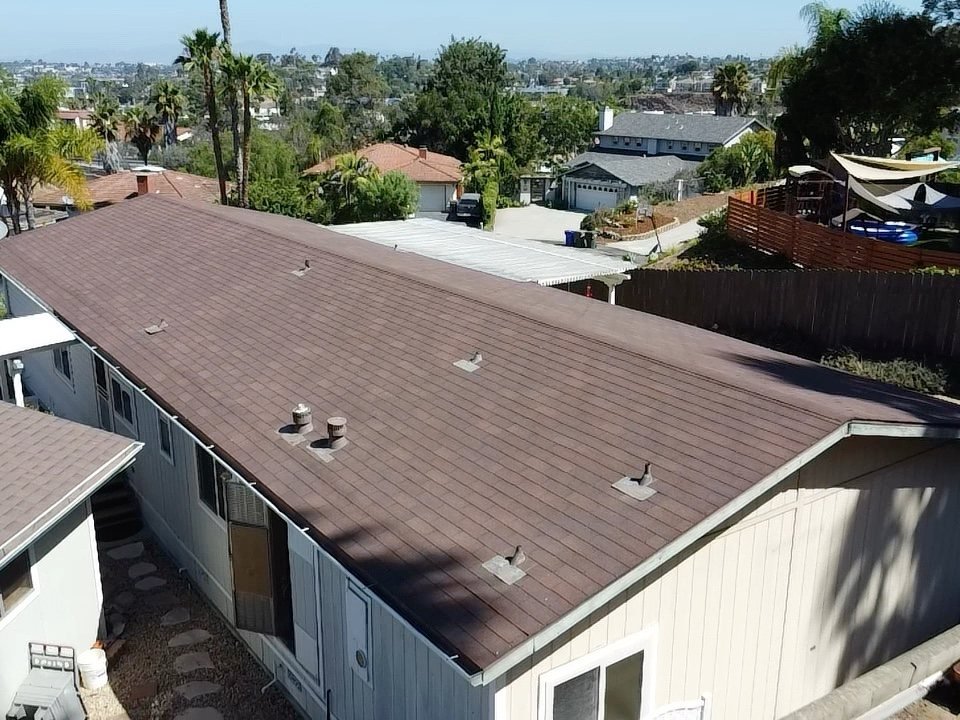
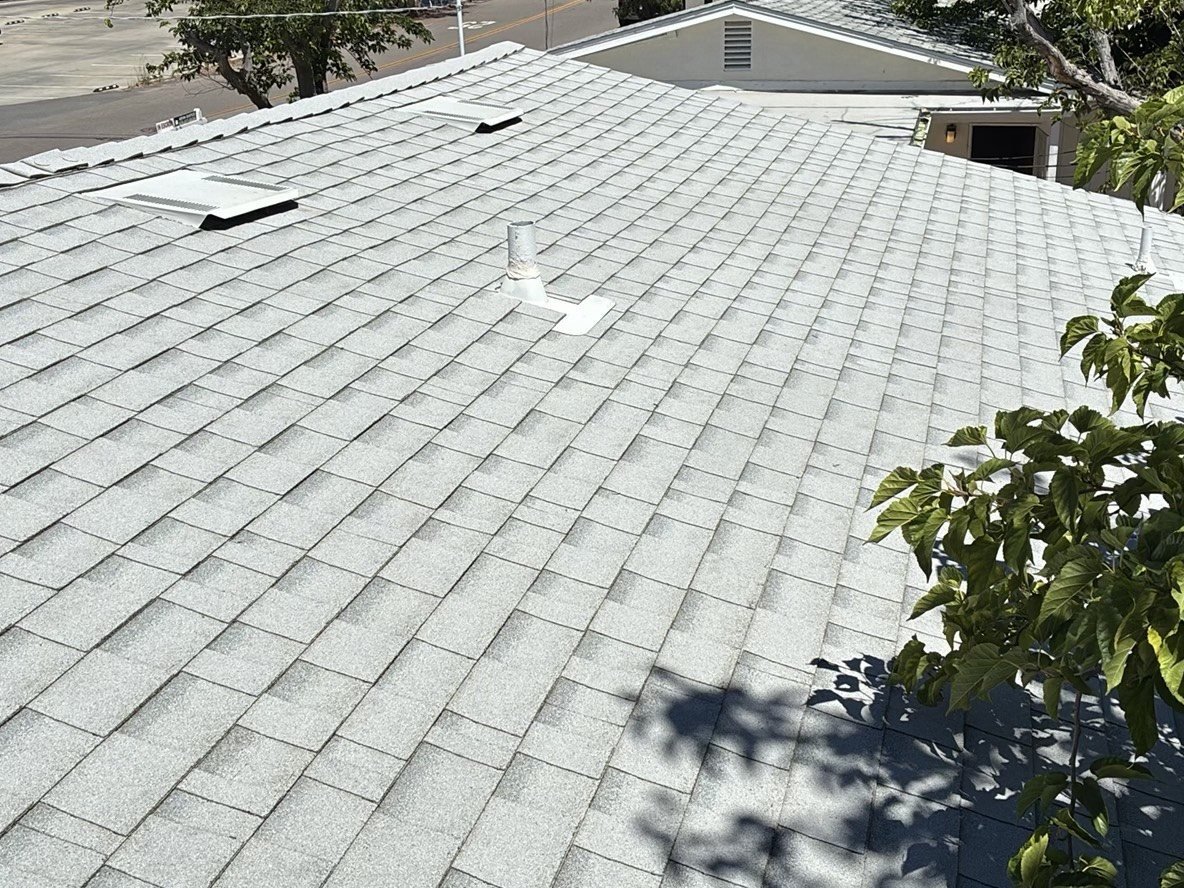
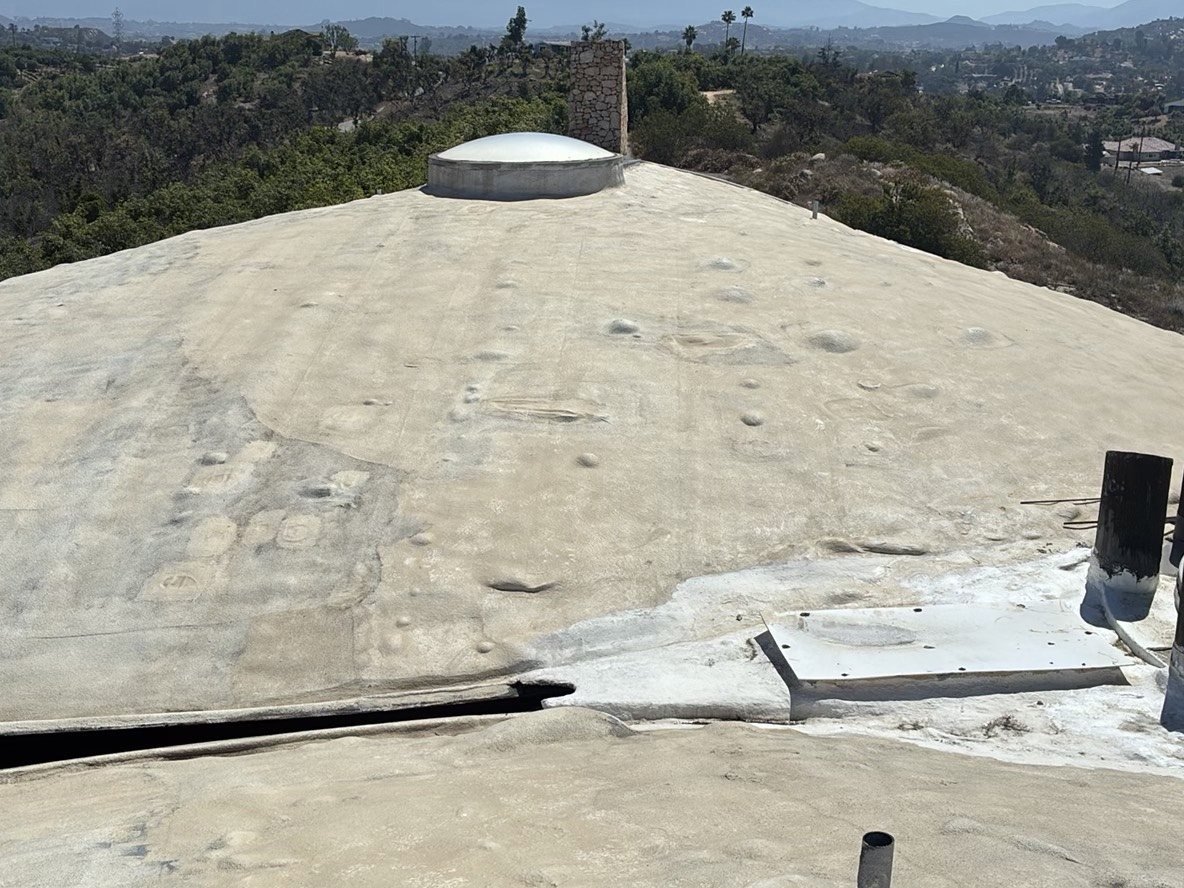
Large rooftops, handled
Flat and low-slope commercial roofs we access, document and maintain.
More inspections in North Park
- Commercial inspection in North Park
- Pool and spa inspection in North Park
- Sewer scope inspection in North Park
- 4-point inspection in North Park
- Home inspection in North Park
Nearby and countywide
Were You Happy With Your Inspection?
We are proud of our 4.9-star rating across 100+ Google reviews. If Joseph and the team did right by you, a quick Google review helps other San Diego County buyers and sellers find us.