
Thermal Imaging Inspection in San Marcos, CA
San Marcos climbs. From the Discovery Hills slopes up toward Twin Oaks Valley and the ridgelines above CSUSM, a lot of this city's housing sits on graded hillside pads where one floor is cut into the slope and the next hangs out over it. That layout hides a particular kind of trouble — water that tracks down a hillside wall, a retaining edge that wicks moisture into a lower level, framing that stays damp where the grade meets the structure. None of it shows on a flashlight pass. It shows on temperature.
I'm Joseph Romeo, and the infrared scan I run during an inspection reads temperature instead of surface, which is exactly what's needed to surface those buried differences before they become a stain or a repair bill. The camera turns a damp wall, an overheating breaker, or a thinned-out batt of insulation into something you can actually see on the screen. It's a non-invasive add-on layered onto the San Marcos home inspection — nothing opened, nothing drilled — and it's straight about its ceiling: the camera flags thermal anomalies worth a second look, it doesn't X-ray the wall or promise what's behind it. Below: what the scan reads, why San Marcos terrain and housing make it pay, and what I keep catching here.
Call (619) 752-4399 Schedule an Inspection
What does the infrared scan read on a San Marcos home?
An infrared camera renders surface temperature as a heat map. Where a wall, ceiling, or component should read even, the irregularities — a cool band, a warm joint, a damp shadow — tell me where to verify by hand. On a San Marcos property the sweep covers:
- Hillside and lower-level walls for moisture — on slope-cut homes the downhill walls and daylight-basement levels are where water migrates, and evaporative cooling makes that dampness read colder than the dry material beside it
- Electrical panels and connections under load — a loose lug, a fatigued breaker, or an overloaded circuit runs hotter than its neighbors and stands out plainly on the camera
- Insulation coverage in attics and walls — thinned, slumped, or skipped batts read as temperature bands where conditioned air is leaking through the envelope
- HVAC delivery — registers that aren't moving air, duct leakage into the attic, and rooms that lag the rest of the house
- Plumbing runs and slab floors — warm trails from pressurized supply leaks and cool paths from drains, including the thermal signature of a leak under a slab-on-grade floor
- Window and door perimeters — air infiltration and water entry at the framing edges
I back up what the camera flags with a moisture meter wherever I can reach it, so an anomaly reaches you with a confirming reading attached — not just a colorful picture open to interpretation.
Why does San Marcos terrain make the scan pay off?
San Marcos isn't one kind of home, and that's the point — graded hillside tracts, expansive valley soils, dense CSUSM rental stock, and a wave of newer construction each give the camera something different to catch. The local conditions that justify the scan here:
- Hillside grading and water migration: the slope developments around Discovery Hills, San Elijo Hills, and the Twin Oaks ridgelines put living space against cut-and-fill pads and retaining walls. Water moves downhill, and on these homes it works into lower-level walls and slab edges where you'd never see it. Infrared reads the damp track before it surfaces inside.
- Expansive soil and slab leaks: the clay and decomposed-granite soils across the valley swell and shrink seasonally, and that ground movement stresses copper supply lines run under slabs. A pinhole under-slab leak shows thermally as a warm path across the floor long before a water bill jumps — one of the more valuable catches out here.
- Hard-used CSUSM rentals: the rental belt around the university takes heavy occupancy, deferred upkeep, and overloaded outlets and panels. The camera flags the overheating connection and the leak under a neglected bath that a quick walk-through would miss.
- Newer construction quality control: San Marcos has built fast, and even recent homes carry insulation gaps, ducts that came loose in the attic, and early plumbing seepage from the original installation. Infrared is how you catch construction-stage misses while a warranty might still cover them.
What does the camera commonly turn up in San Marcos?
Scan enough San Marcos homes and the patterns repeat. These are the anomalies I most often flag for further evaluation across the city's mix of slope tracts, valley builds, and rentals:
- Moisture in lower-level and downhill walls — cool patches on the slope-facing side of hillside homes where grade water has worked into the framing or behind a retaining edge
- Warm floor trails from slab leaks — a heat path crossing a slab where a pressurized line is leaking underneath, common where expansive soil has stressed the plumbing
- Hot spots at the panel — a breaker or connection reading noticeably warmer than the rest, frequent in hard-used rental and older valley wiring
- Insulation voids in newer attics — temperature bands over bedrooms where batts were skipped or slumped during a fast build, driving up the cooling load on a hot inland day
- Loose and leaking ductwork — supply runs dumping conditioned air into the attic so back rooms never reach temperature
- Hidden window and ceiling leaks — cool evaporative shadows at window heads and under upstairs baths that haven't bled through the drywall yet
Each one is a flag, not a verdict. I document the anomaly, confirm it with a meter where it's reachable, and tell you plainly whether it reads like active intrusion or a harmless temperature difference.
How does the scan run, and what report do you get?
Start with a call to (619) 752-4399 or an email with the San Marcos address and a note that you want infrared added. The scan works best inside the standard inspection — the camera tells me where to look, and the hands-on checks confirm what it found — so I fold it in rather than running it as a blind standalone pass.
A meaningful read depends on contrast: the camera needs a temperature difference between inside and outside to make anomalies pop, so I run the sweep at the point in the inspection where the read is cleanest, with HVAC and water on so the systems are actually working when I look. On a hillside home I pay particular attention to the downhill walls and any lower-level or daylight-basement space, since that's where grade water collects out here. You're welcome to follow along on the screen as a cool bloom spreads across a wall or a breaker glows against its neighbors.
Everything lands in a HomeGauge report with the infrared images paired to standard photos, each anomaly described in plain language, the confirming meter reading where I took one, and a clear next step — a plumber, an electrician, a closer look — for anything that needs it. Most reports go out same day or the next day. I report what the camera and meter observed; I don't open walls, run leak pressure-tests, or perform the repairs.
Why do San Marcos owners trust the read?
The camera is the easy part — reading it correctly is the job. A cold spot can be a leak, a draft, or a cold-water line doing exactly what it should, and telling those apart is judgment, not equipment. I'm an InterNACHI Certified Professional Inspector (CPI) and I hold a California CSLB General Contractor license (#1113143). That building background is what lets me read a thermal anomaly against how a home was actually framed and graded — whether that cool plume on a hillside wall is real grade-water intrusion or just a shaded exterior, whether a warm patch at the panel is a failing connection or sun on the cover.
- 20+ years and 10,000+ inspections across San Diego County, including San Marcos's slope developments, valley tracts, and the dense rental stock around CSUSM
- 4.9 stars across 106 Google reviews
- Independent — I scan and report what the camera shows; I don't sell repairs, restoration, or electrical work, so no flag is ever steered toward a job I'd profit from
When an anomaly needs more than a camera — a confirmed slab leak, a panel problem, a moisture concern — I coordinate or refer the right licensed specialist and hand over the imagery so they start from evidence, not a guess. Reach me at joe@sandiegohomeinspection.com or the number above.
Which related inspections suit San Marcos properties?
Infrared sharpens an inspection; it doesn't replace one. On a San Marcos home these companion services pair naturally with the scan and book on a single visit:
- Full home inspection: the complete buyer's-grade evaluation the thermal scan layers onto — start at the San Marcos home inspection hub
- Sewer scope: when the camera flags floor moisture, a camera down the lateral confirms whether a leaking line is the source — worth it on older valley homes with aging clay and cast-iron
- Roof inspection: when infrared catches a cool ceiling plume, a roof read tracks the intrusion back to its source above — San Marcos roofs age fast under the inland sun
- 4-point inspection: the focused roof, electrical, plumbing, and HVAC report insurers ask for on older homes, with the panel hot spots infrared finds feeding straight in
- Pool and spa inspection: common on the larger hillside lots and easily added to the same trip
Not sure what your address needs? Send it over and I'll tell you whether infrared is worth adding — see all inspection services we offer or get a quote through contact.
San Marcos Thermal Imaging Inspection FAQs
What does adding thermal imaging cost in San Marcos?
Can infrared find a slab leak under my San Marcos home?
Is the scan worth it on a hillside home in San Elijo Hills or Discovery Hills?
Does thermal imaging see inside my walls?
Is infrared useful on a newer San Marcos build?
Do I need to prep the home before the scan?
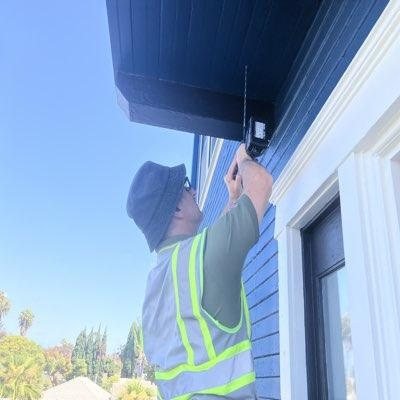
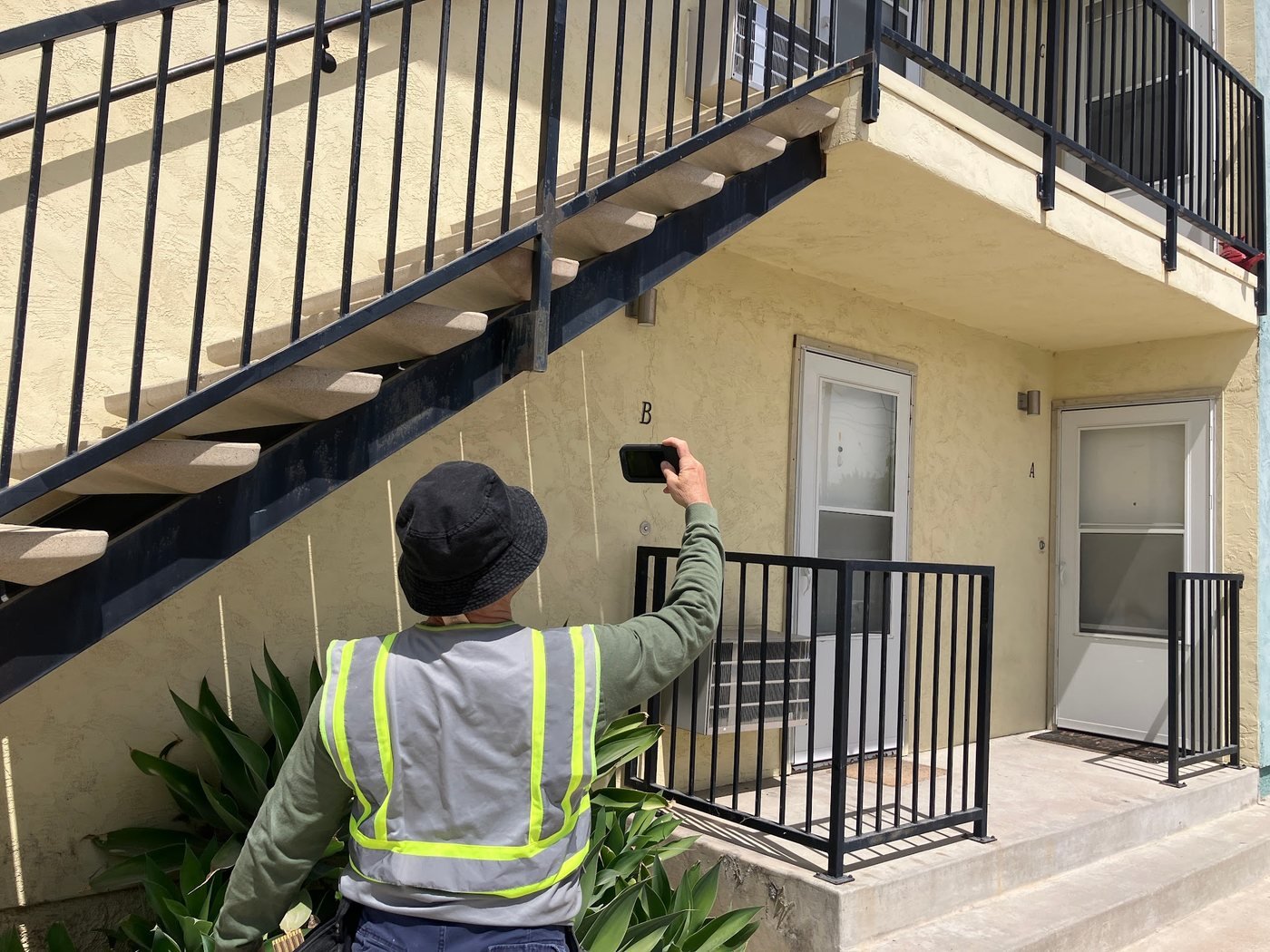
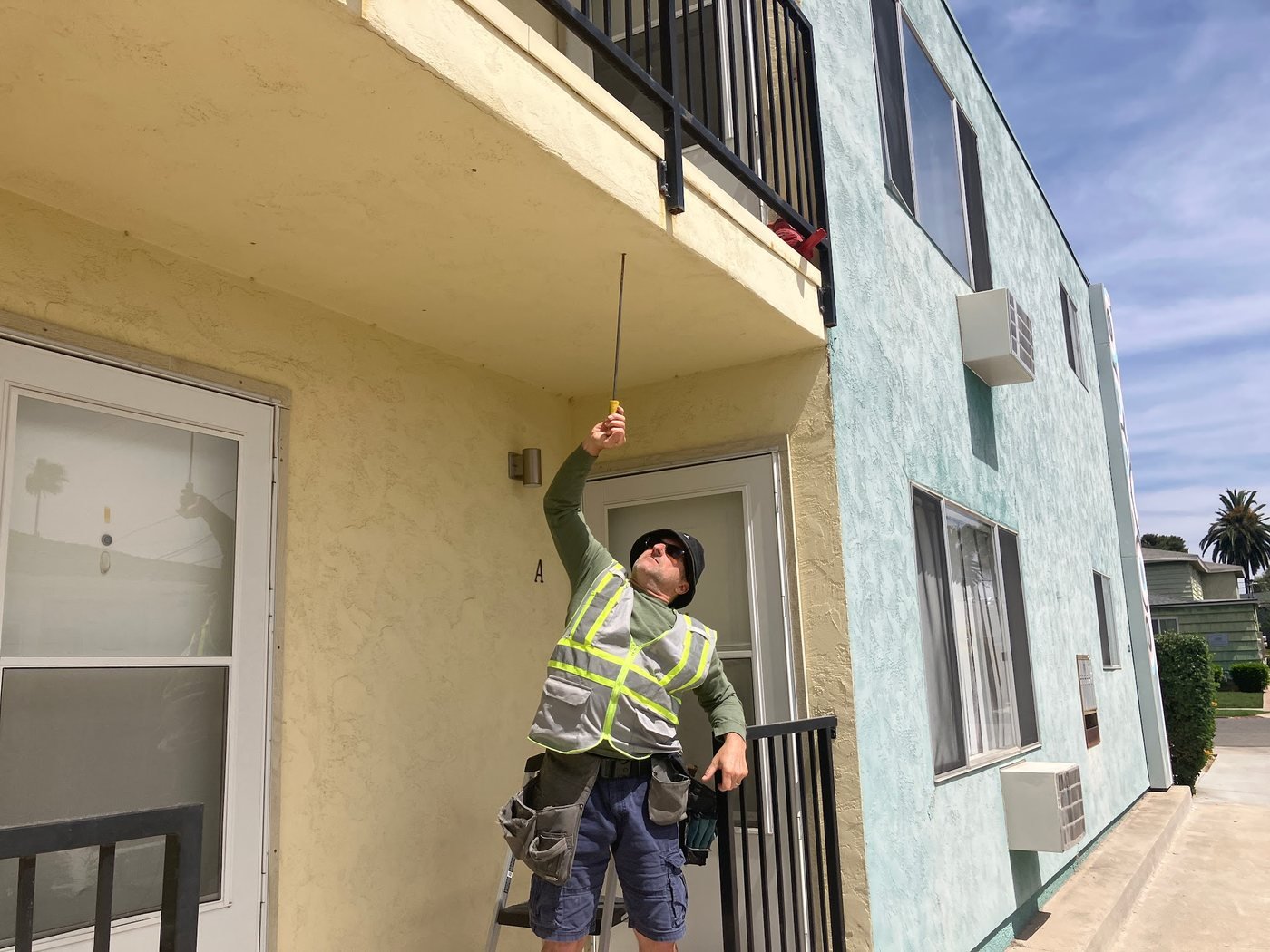
Thermal scanning in action
Our inspectors use FLIR thermal cameras to find moisture and heat issues hidden in walls and soffits.
More inspections in San Marcos
- Sewer scope inspection in San Marcos
- 4-point inspection in San Marcos
- Roof inspection in San Marcos
- Foundation slab survey in San Marcos
- Home inspection in San Marcos
Nearby and countywide
Were You Happy With Your Inspection?
We are proud of our 4.9-star rating across 100+ Google reviews. If Joseph and the team did right by you, a quick Google review helps other San Diego County buyers and sellers find us.