
Roof Inspection in Pine Valley, CA
At roughly 4,000 feet, a Pine Valley roof lives a harder life than almost anything down in the county. Real snow lands here some winters, and the weight of it — plus the melt that refreezes into ice at the eaves — finds every weak seam a coastal roof would never feel. Days still hit the 90s in summer, so the same covering bakes under thin-air UV for months, then carries a snow load weeks later. Add oak forest dropping litter into every valley, propane appliances venting through the roof, and a townsite ringed by fire country, and you have a roof that earns a close look before you buy, list, or renew a policy on a place out here.
I'm Joseph Romeo. A roof inspection is a documented visual evaluation of the covering and every component that keeps weather out — flashing, valleys, penetrations, vents, skylights, and the gutters and drainage that carry runoff and snowmelt off the building. I write down what I see: condition, evidence of leaking, aging, or storm damage, and indicators of how much life is left. I point you to a licensed roofer for any repair or certification; I don't certify roofs and I don't perform the work, which keeps my read honest. What follows is the scope of a Pine Valley roof inspection, the mountain conditions I watch for, and the defects that keep showing up at this elevation. The Pine Valley home inspection hub covers the rest of the house.
Call (619) 752-4399 Schedule an Inspection
What does a Pine Valley roof inspection include?
I treat the roof as a connected weather barrier, not a glance at the field shingles. On a Pine Valley property — whether that's a 1970s cabin off Old Highway 80 or a newer tile home on the townsite — I work each part that can admit water, snowmelt, or embers, photographing as I go:
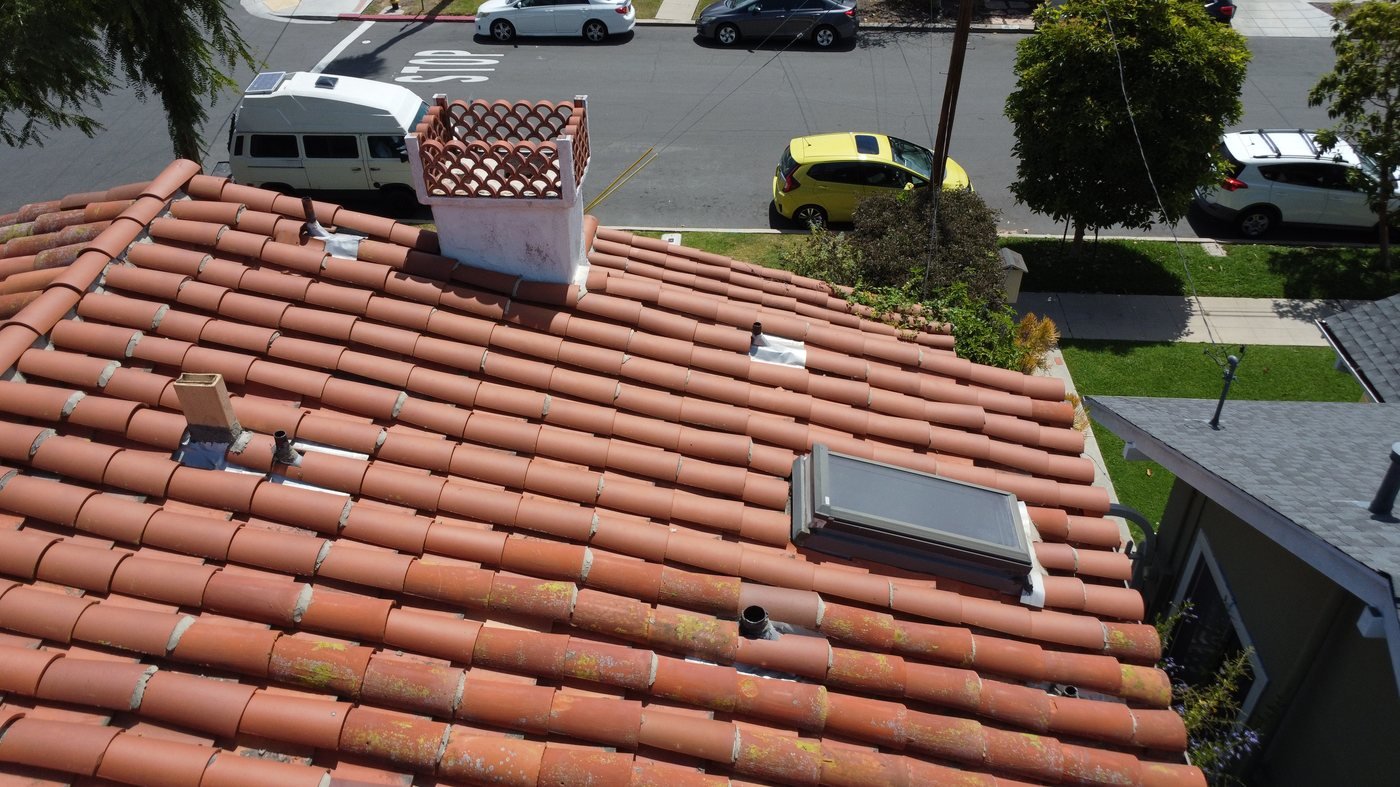
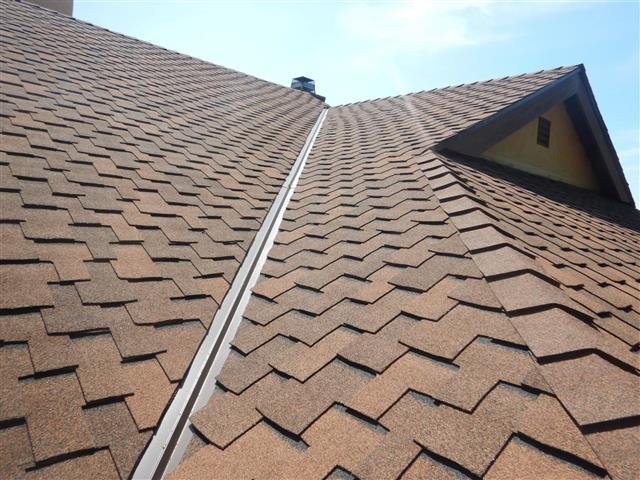
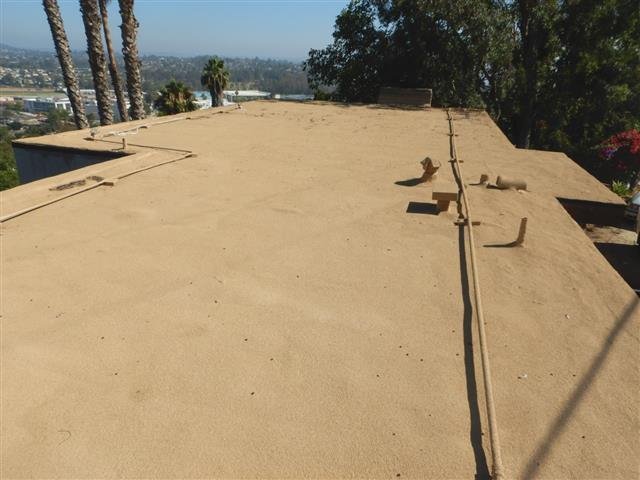
- The covering itself — asphalt (composition) shingle, concrete or clay tile, or a low-slope foam or modified-bitumen membrane. I record material, rough age, any layering, and the wear that shows up differently on each: granule loss and lifting on shingle, fractured or displaced tile, blistering and standing water on foam.
- Flashing and valleys — the metal at chimneys, sidewalls, valleys, and roof-to-wall joints. At this altitude, snowmelt backing up under flashing and litter packing the valleys make these the leak points I find most often.
- Penetrations and vents — plumbing stacks, the propane furnace and water-heater flues common up here, and attic ventilation, including boot seals that harden and split in the dry mountain air, plus whether vents resist ember entry on these forested lots.
- Skylights — curb, glazing, and surrounding flashing, a recurring source of drips on Pine Valley's cabins and custom builds.
- Gutters and drainage — whether melt and rain are routed away from the walls and foundation, which matters on the sloped, oak-shaded lots where water pooling at the base of a structure works its way inside.
- Attic, where I can reach it — staining old and new, daylight at penetrations, and the ventilation a deck needs in a climate that swings from snow to heat.
You walk away with a plain read on condition and remaining-life signs. What I won't hand you is a roof certificate or a repair bid — both belong to a licensed roofer, and I'll tell you when one needs to come up the mountain.
What makes Pine Valley roofs different at 4,000 feet?
Pine Valley's altitude, forest, and rural setting load a roof in ways the inland valleys and the coast never do. Here is what I'm reading for at 4,000 feet:
- Snow load and ice damming: Pine Valley sees genuine snowfall most winters, and the weight stresses an aging or under-built roof structure. Worse, snow that melts over a warm attic and refreezes at the cold eaves builds an ice dam that forces water backward under the shingles. It's a failure mode you won't find on a roof down the grade, and I look hard at the eaves and the attic insulation that drives it.
- Hard freeze cycling: nights here drop well below freezing through winter. Water seeping under a cracked tile or a tired flashing freezes, expands, and pries the gap a little wider with each cold spell — relentless on mountain roofs.
- Thin-air sun on a long summer: at this elevation UV hits the covering and every exposed sealant joint harder, and Pine Valley still bakes into the 90s in summer. Shingles surrender their oils and pipe boots crack faster than they would near the water.
- Wildfire and WUI exposure: the townsite sits surrounded by national forest and chaparral, deep in fire country. On a roof that means ember resistance counts alongside waterproofing — unscreened attic and gable vents, open eave gaps, and pine and oak litter caught in valleys are all ember pathways I call out, especially on the rural cabin parcels.
- Oak and pine litter: the forest that gives the place its name drops needles and leaves into valleys and gutters, where they trap moisture against the covering, block drainage, and on a fire lot become fuel sitting right on the roof.
- Propane flues: with no natural-gas line out here, homes vent propane furnaces and water heaters through the roof, and I check those flue penetrations and storm collars closely — a detail a roof in town wouldn't have.
Which defects do you keep seeing on Pine Valley roofs?
The findings repeat by covering type and by the decade a place was built. Knowing them ahead of an offer, a listing, or a policy renewal tells you whether you're facing routine maintenance or a re-roof down the road:
- Ice-dam and eave damage — water-stained eaves and sheathing where snowmelt refroze, backed up under the shingles, and leaked, a signature of homes at Pine Valley's elevation.
- Freeze-split tile and lifted flashing — cracked or slid tiles and flashing pried loose where repeated freezing has opened a small gap into a real one.
- Hardened pipe boots and cracked sealant — split neoprene boots at plumbing and propane penetrations and dried-out sealant at flashings and skylight curbs, two of the most common live leaks I find regardless of covering.
- Brittle underlayment under intact tile — tile roofs where the tile still serves but the felt beneath has dried and fractured, which points to a lift-and-relay rather than a full tear-off for a roofer to scope.
- Litter-choked valleys and gutters — pine needles and oak leaves holding water on the covering and clogging drainage, a moisture problem and, on forested lots, an ember-fuel problem perched on the roof.
- Ember-prone vents and eaves — older unscreened attic and gable vents and open eave gaps on fire-exposed cabin parcels, where ember-resistant upgrades are worth raising.
- UV-spent shingle — granule loss, curling, and bare mat on composition roofs, worst on south- and west-facing slopes taking the hardest high-altitude sun.
None of it is a verdict by itself. The report states condition clearly so you and a roofer can sort what needs attention now from what to keep an eye on through the next winter.
How does the visit go and what does the report deliver?
It begins with a call to (619) 752-4399 or an email with the Pine Valley address. I'll ask the covering type and age if you know them, and whether you want a standalone roof look or part of a broader inspection — on a purchase it usually pairs with the full whole-house visit, and on an older cabin it often runs with the 4-point a carrier asks for.
On site I evaluate the roof however conditions allow — walking it where slope and covering make that safe, and from a ladder at the eaves or from inside the attic where tile, steep pitch, snow cover, or a delicate membrane can't be walked without harm. I cover the field, then flashing, valleys, penetrations, vents, and skylights, then gutters and drainage, and I get into the attic where access permits to check for leaking and ventilation. Each finding is photographed.
Your report comes through HomeGauge, documenting the roof's condition, the specific defects I observed, and remaining-life indicators, with a photo behind every call. In most cases I deliver it same day or next day, so it never holds up a contingency or a renewal. Where something needs a specialist's hands — a leak traced to flashing, underlayment near its end, ice-dam damage, ember-vulnerable venting — I'll say so directly and steer you to a licensed roofer. I report observed condition; I don't certify the roof or price the repair, so the findings stay free of anyone selling the fix.
Why do Pine Valley owners and agents rely on the read?
Judging a roof is experience, not a checklist — telling a roof with two winters left from one with ten, or an ice-damaged eave that's actively leaking from a cosmetic crack that isn't, comes from years of doing it. I'm an InterNACHI Certified Professional Inspector (CPI) and I hold a California CSLB General Contractor license (#1113143). That building background is what lets me tell you whether a flagged item is a localized repair or signals a re-roof — and roughly what that path looks like — before you bring a roofer up to Pine Valley.
- 20+ years and 10,000+ inspections across San Diego County, including Pine Valley's mountain cabins off the old highway and its tile homes on the townsite, on lots backing the national forest
- 4.9 stars across 106 Google reviews
- Independent and conflict-free — I document the roof and report what's there; I don't sell roofing or certifications, so nothing in the report nudges you toward work you don't need
When the roof calls for a specialist's evaluation or repair, I'll point you to the right licensed trade to act on the exact findings. Reach me at joe@sandiegohomeinspection.com or the number above.
What related inspections pair with a Pine Valley roof check?
The roof is one system, and on most Pine Valley visits it pays to look at the wider house in the same trip up the mountain. I can arrange these around a single drive out:
- Full home inspection: the whole-house evaluation a buyer needs — begin at the Pine Valley hub if you're purchasing, not only checking the roof
- 4-point inspection: when a carrier wants the roof, electrical, plumbing, and HVAC documented together on an older fire-exposed Pine Valley cabin before it will bind or renew
- Attic and insulation evaluation: the underside of the roof you just had looked at, and the insulation that drives ice damming when it's thin or uneven up here
- Thermal / infrared imaging: surfaces hidden moisture behind ceilings and walls from a roof or ice-dam leak the surface hasn't shown — useful in unconditioned mountain spaces
- Drainage and grading review: connects roof runoff and snowmelt to where the water actually goes on a sloped, oak-shaded Pine Valley lot
- Well and septic coordination: for the many Pine Valley parcels running on a private well and septic that fall outside a roof's scope — I refer a licensed specialist
Not sure what your address needs? Send it over and I'll tell you what's worth doing — see all inspection services we offer or get a quote through contact.
Pine Valley Roof Inspection FAQs
What does a roof inspection cost in Pine Valley?
Does snow really damage a roof up in Pine Valley?
Do you walk the roof or inspect from the ground?
Can you certify my Pine Valley roof for a sale or insurer?
Does a roof inspection cover wildfire ember risk?
My tile roof looks fine from the road. Why inspect it?
Roofs we document
Aerial and on-roof photos from recent San Diego County roof inspections.
More inspections in Pine Valley
- Sewer scope inspection in Pine Valley
- 4-point inspection in Pine Valley
- Thermal imaging in Pine Valley
- Foundation slab survey in Pine Valley
- Home inspection in Pine Valley
Nearby and countywide
Were You Happy With Your Inspection?
We are proud of our 4.9-star rating across 100+ Google reviews. If Joseph and the team did right by you, a quick Google review helps other San Diego County buyers and sellers find us.