
4-Point Inspection in Pine Valley, CA
At 4,000 feet on the eastern edge of the county, Pine Valley homes sit in country that gives carriers two reasons to ask questions before they'll write or keep a policy: the houses tend to have real age on them, and they're tucked into oak-forested wildfire ground where the insurance market has gone cold. A cabin off Old Highway 80, a 1970s build up Pine Boulevard, or a parcel back toward Corte Madera — the underwriter wants a documented look at the systems that drive most of what it pays out before it commits.
I'm Joseph Romeo. A 4-point inspection puts a deliberately narrow lens on four systems and nothing else: roof, electrical, plumbing, and HVAC. It exists to answer an insurer's questions — how old is each system, what's it built from, and what shape is it in — not to grade the whole house. This page covers the scope of that report, the Pine Valley conditions that keep generating these requests, what I routinely find in these four systems up here, how the visit runs, my credentials, and what to pair it with. For the full-house side, the Pine Valley home inspection hub is the place to start.
Call (619) 752-4399 Schedule an Inspection
What does a Pine Valley 4-point inspection actually cover?
The whole point of a 4-point is restraint. The carrier doesn't want a buyer-grade walkthrough — it wants a defensible record on the four systems behind most paid claims, and I keep the report squarely there. For each one on a Pine Valley home, I log the age, the materials, and the condition I observe, with photos behind every call:
- Roof — covering type (composition shingle, concrete or clay tile, or a low-slope membrane over an addition), approximate age, layer count, and a realistic read on remaining years, plus cracked tiles, lifted shingles, and tired flashing. At this elevation I also watch for snow-load wear and ice-related damage the coast never sees.
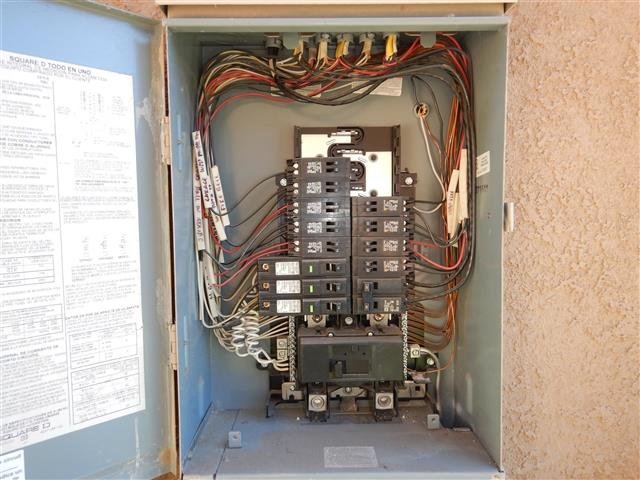
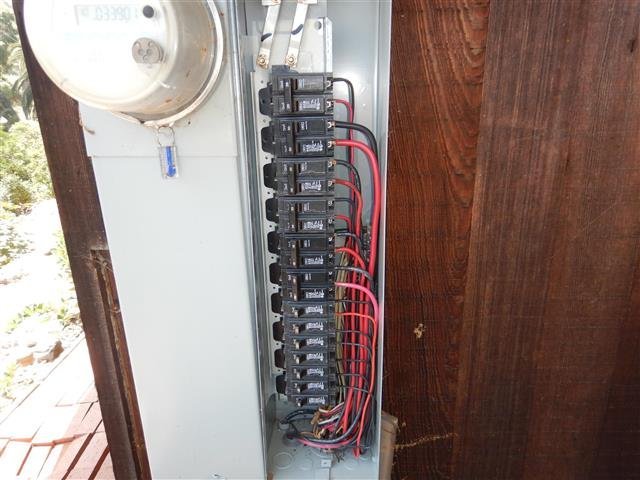
- Electrical — the panel brand and amperage, breaker or fuse arrangement, the visible branch wiring, and grounding. This is where the equipment that gets a policy turned down comes to light.
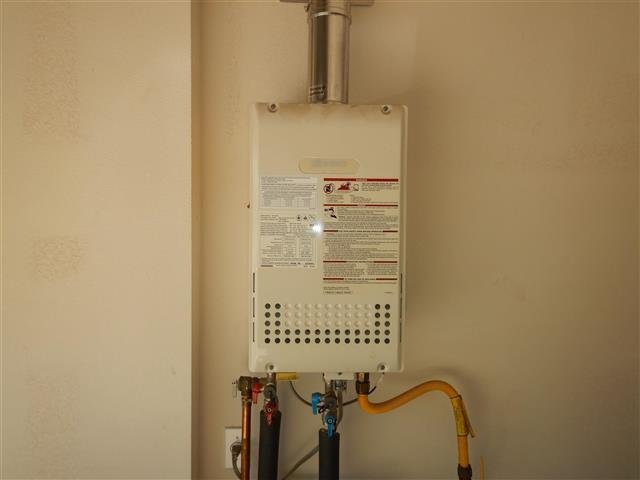
- Plumbing — supply-line material, drain material, the water heater's age and state, and any seeping or corroded joints in view. On well-served Pine Valley parcels I also note the pressure tank and the visible well plumbing the system feeds from.
- HVAC — the heating and any cooling equipment, its type and rough age, and whether it fires and runs. Up here that usually means propane-fired heat and, on the older cabins, a woodstove doing real work through mountain winters.
The result is a carrier-ready document covering the age, material, and condition of all four, photographed. What it is not: a look at the foundation, attic, windows, decks, or grounds — those belong to a broader, separate inspection.
Why do insurers request a 4-point on Pine Valley homes?
Underwriters flag Pine Valley homes for reasons built into the place itself — its elevation, its forest, and its age. These are the local factors that tend to land the report on your desk:
- High wildfire exposure in the oak forest: Pine Valley sits deep in the wildland-urban interface, ringed by Cleveland National Forest and the kind of oak-and-chaparral fuel that carriers now study before they bind. The 2003 firestorm reached this corridor, and underwriters read the roof covering and electrical service harder here than almost anywhere — many owners end up on the FAIR Plan with a 4-point attached.
- Older mountain and cabin stock: a lot of Pine Valley was built as weekend cabins and rural homes through the 1950s into the 1980s, putting much of it well inside the 25-to-40-plus-year window where carriers stop assuming the panel, pipe, and roof are current.
- Genuine snow and freeze: unlike most of the county, Pine Valley gets real winters — nights well below freezing and the occasional snowfall. That punishes exposed supply lines, hose bibs, and water heaters in unconditioned crawlspaces, which is wear a carrier wants documented on an aging plumbing system.
- Propane and woodstove heat: off the natural-gas grid, these homes heat with propane furnaces, wall units, and woodstoves fed from yard tanks and cordwood. I note the equipment's age, condition, and operation; the buried tank and the chimney's structural condition sit with the propane supplier and a specialist, not the four points.
- Well and septic service: many Pine Valley parcels run on a private well and a septic field, so the plumbing point takes in a pump, a pressure tank, and septic-fed drains. I report what's visible; well yield and septic function are specialty evaluations beyond a 4-point.
What do you commonly find in Pine Valley's four systems?
On Pine Valley's older homes the findings tend to repeat. Catching them before you submit to a carrier means you can repair or disclose on your own terms rather than watch a policy stall at bind:
- Panels carriers won't accept — Federal Pacific (FPE) Stab-Lok, Zinsco, and Sylvania panels turn up regularly in the mid-century-through-80s builds up here, and many insurers won't commit until one is replaced.
- Dated branch wiring — aluminum branch runs from the mid-1970s, and in the oldest cabins genuine knob-and-tube, both of which underwriters read as fire risk worth declining over.
- Compromised supply pipe — galvanized steel corroding closed and polybutylene prone to splitting — the latter especially brittle when a hard Pine Valley freeze hits an unprotected run.
- Rusting cast-iron drains — original waste lines deteriorating from the inside, routine in homes of this vintage.
- Roofs near the end — coverings worn thin by sun, snow load, and freeze-thaw, often the single item that forces a re-roof before a fire-wary carrier signs on.
- Spent water heaters and heating gear — propane water heaters and furnaces deep past their service window, flagged on age even when they still light, with venting and strapping noted.
None of this is an automatic policy-killer. The report states condition plainly — sound-but-aged set apart from must-replace — so you and your agent can sort which items a carrier will insist on fixing from those it will accept on disclosure.
How does the visit run and what do you receive?
It starts with a call to (619) 752-4399 or an email carrying the Pine Valley address, the home's age, and whichever carrier or form you're being asked to satisfy. Some insurers require their own 4-point template, and confirming that before I make the drive up the 8 saves a second trip into the mountains. I'll also make sure a standalone 4-point is really what you need versus pairing it with broader work.
On site I work the four systems in sequence: onto the roof for covering, age, and condition, with snow-load and freeze wear in mind; into the panel to read brand, amperage, and wiring; across the visible plumbing, the water heater, and any well pressure tank; and over the heating and cooling equipment to confirm type, age, and operation — propane and woodstove heat included. Each finding gets a photo. Because the scope is four systems rather than the whole house, it's a faster visit than a full inspection — handy when you're driving in from the coast to meet me.
You'll get a HomeGauge 4-point report — or the carrier's own form when they require it — laying out each system's age, material, and observed condition with the photo backup a mountain underwriter expects. In most cases it lands in your inbox the same day or the next, so a renewal deadline or a close doesn't slip. I document what I observe; I don't bid the work or perform it, which keeps the findings independent.
Why do Pine Valley owners and agents choose me?
A 4-point is worth exactly the judgment behind each flag — telling a serviceable old panel from one a carrier will reject, or a roof with eight years left from one with two, comes from doing the work, not from filling boxes. I'm an InterNACHI Certified Professional Inspector (CPI) and I hold a California CSLB General Contractor license (#1113143). That builder's background is what lets me tell you whether a flagged item is a weekend fix or a full replacement — and roughly what it takes — before your agent ever opens the report.
- 20+ years and 10,000+ inspections across San Diego County, including Pine Valley's cabins, its well-and-septic parcels, and the fire-exposed homes out toward Guatay and Mount Laguna
- 4.9 stars across 106 Google reviews
- Independent and conflict-free — I document the four systems and report what's there; I don't sell the panel swap, the re-pipe, or the re-roof, so nothing in the report steers you toward work I'd profit from
When something has to be handled before a carrier will bind, I'll point you to the right licensed trade to act on the exact finding. Reach me at joe@sandiegohomeinspection.com or the number above.
What related inspections suit a Pine Valley property?
The 4-point settles the carrier's four questions and nothing wider. If you're buying up here, or just want a fuller read on an older Pine Valley home, several companion inspections fold into a single trip up the mountain:
- Full home inspection: the whole-house evaluation a 4-point deliberately isn't — start at the Pine Valley hub when you're buying, not only insuring
- Roof inspection: a closer read on remaining life when the 4-point shows a roof worn by mountain sun, snow, and freeze-thaw
- Sewer or septic-line scope: a camera through the buried drain a 4-point can't follow, useful where mature oaks and rocky ground work on old pipe
- Thermal / infrared imaging: surfaces hidden moisture and missing insulation behind walls — worth it in unconditioned mountain spaces prone to freeze damage
- Well and septic coordination: for the many Pine Valley parcels on a private well and septic system that sit outside the four points
Not sure what your address actually calls for? Send it over with the home's age and what your carrier is asking, and I'll tell you which of these genuinely apply — see all inspection services we offer or reach out through contact.
Pine Valley 4-Point Inspection FAQs
What does a 4-point inspection cost in Pine Valley?
Why is my insurer requiring a 4-point on my Pine Valley home?
Does Pine Valley's snow and freeze affect my 4-point results?
Do woodstove and propane heat change the HVAC part?
Which electrical panels get a Pine Valley policy declined?
Is a 4-point the same as a full home inspection?
Roof, electrical, plumbing and HVAC
Documentation from recent 4-point inspections across San Diego County.
More inspections in Pine Valley
- Thermal imaging in Pine Valley
- Foundation slab survey in Pine Valley
- SB 721 balcony inspection in Pine Valley
- SB 326 balcony inspection in Pine Valley
- Home inspection in Pine Valley
Nearby and countywide
Were You Happy With Your Inspection?
We are proud of our 4.9-star rating across 100+ Google reviews. If Joseph and the team did right by you, a quick Google review helps other San Diego County buyers and sellers find us.