
Thermal Imaging Inspection in Jamul, CA
Out in Jamul the homes sit on big parcels of decomposed granite, draw from private wells, and run on propane instead of gas mains — a setup that hides problems city tracts never have to think about. Your eyes read the painted surface of a wall and stop. An infrared camera reads heat, and on a backcountry property heat is exactly where the trouble lives: the supply line weeping under a slab the expansive soil keeps shifting, the breaker carrying a propane water heater and a well pump on a panel that was never sized for both, the corner of attic insulation that pulled back and lets a hot afternoon pour into a bedroom.
I'm Joseph Romeo. Thermal imaging is an add-on I layer onto the inspection to turn those invisible temperature differences into pictures you can act on. As the standard walkthrough proceeds I sweep the home with an infrared camera and flag the cold damp patches, the warm electrical joints, and the thermal gaps that mark insulation gone wrong. Nothing is opened or drilled — it rides on top of the Jamul home inspection as a non-invasive layer. The camera is not an x-ray, and a flagged spot is a reason to look closer, not a proven defect. Below: what the scan covers, why Jamul's wells, soil, and propane make it pay, and what the lens keeps finding out here.
Call (619) 752-4399 Schedule an Inspection
What does an infrared scan read on a Jamul property?
An infrared camera renders a surface as a temperature map. Where a ceiling, wall, slab, or panel ought to read uniform, the outliers — a cool streak, a warm cluster, a damp shadow — aim me at something worth confirming. Folded into the standard inspection on a Jamul home, the scan reaches:
- Hidden moisture and leak signatures — evaporating water pulls heat from a surface, so wet drywall, a seeping supply line, or water creeping in from a roof penetration reads cooler than the dry material beside it, frequently before a stain ever shows
- Slab-level plumbing trails — on slab-on-grade homes the camera can pick up the warm path of a hot-water line under the floor and the cooler bloom where one is leaking into the concrete
- Missing or shifted insulation — with Jamul's wide swing from baking afternoons to cool nights, thin attic spots and slumped batts surface as sharp temperature bands where conditioned air bleeds through
- Electrical hot spots — an overloaded breaker, a loose lug, a corroded terminal runs warmer than its neighbors under load, a pattern a visual check alone tends to miss
- HVAC and propane-system distribution — registers not delivering, ducts dumping conditioned air into the attic, rooms that never settle to temperature
Two limits I keep honest: the lens reads the surface, not the literal inside of a wall or slab, and any anomaly is a flag for further evaluation, not a closed verdict. When something lights up I verify it with a moisture meter wherever I can reach, document it, and name the specific next step instead of calling a repair I can't actually see.
Why do Jamul's wells, soil, and propane make the scan pay off?
Jamul is east-county backcountry — rural parcels, well and septic, propane tanks, and ground that moves. Those conditions stack up exactly the kind of buried problem infrared is built to surface. The local factors that earn the scan its keep here:
- Expansive soil and slab stress: the clays and decomposed granite under many Jamul lots swell and shrink with the seasons, and that movement works on slab plumbing and foundation joints. A line stressed into a slow leak under the concrete leaves a cool evaporative bloom the camera can pick up before the floor ever feels damp.
- Long well supply runs: a home on a private well carries a pressure tank, longer interior plumbing, and water-heater lines — more places for a slow seep to start than a city-water house. The camera sweeps that bigger system fast and flags the wet spots.
- Propane heat and envelope loss: propane is metered by the tankful, so an attic missing batts or ducts leaking into the rafters is money off your wallet every cool month. Infrared maps precisely where the conditioned air you paid for is leaving the envelope.
- Aging and added-onto wiring: older Jamul homesteads and outbuildings off Lyons Valley Road and Jamul Drive often run panels and circuits expanded over decades to carry well pumps, propane appliances, and shop loads. Loose or overloaded connections heat under draw, and the camera catches those at the panel.
- Wildfire-interface detailing: on WUI parcels the eaves, vents, and rooflines you watch for embers are the same penetrations water and air exploit. The scan flags the ones reading wet or thermally open.
What does the camera keep finding in Jamul?
Scan enough backcountry homes and the same anomalies recur. Knowing the patterns helps you judge whether a flag is routine or worth chasing before your contingency runs out:
- Slab and supply-line leaks — cool blooms on a slab floor or weeping trails behind walls where a line cracked under soil movement and never got found
- Well-system seepage — slow drips around the pressure tank, water heater, or their supply runs that haven't shown a stain yet
- Missing or slumped attic insulation — thermal voids over bedrooms that explain a hot room and a propane bill that climbs every cool stretch
- Hot breakers and loose panel connections — warm spots at a service panel that's been added to over the years, worth an electrician's look
- Duct losses into the attic — registers reading the wrong temperature because conditioned air is escaping into the attic instead of the room it serves
- Roof-penetration and window moisture — damp tracking from a flashing gap or a tired window seal, cool against the dry surround
None of these is automatically a deal-killer. The value is catching them early: the report separates a minor insulation gap you'd simply keep an eye on from an active leak that changes your numbers, so you negotiate on what's real rather than guessing in the dark.
How do I run the scan and what report do you receive?
It starts with a call to (619) 752-4399 or an email with the Jamul address and a note that you want thermal imaging added. Conditions decide whether a scan is useful — a real temperature gap between inside and outside makes anomalies pop — and Jamul's strong day-to-night swing usually helps. I run the camera at the point in the inspection where contrast gives the cleanest read, with the heat and water on so the systems are working while the lens looks.
On site I sweep interior ceilings, walls, and floors, the slab where the layout allows, the electrical panel under load, the reachable plumbing and HVAC, the crawl space if there is one, and the window and door perimeters. You're welcome to watch the screen alongside me — seeing a cool bloom creep across a slab, or a breaker glowing against its cooler neighbors, makes a finding land in a way a report line can't. Anything the camera flags, I confirm with a moisture meter where I can reach it before it goes in writing.
You get a HomeGauge report with infrared frames paired to standard photos, each anomaly written in plain language, the confirming meter reading where I took one, and a clear next step for anything that needs it — delivered same day or the next day in most cases. I report what the camera and meter observed. I don't open slabs or walls, run leak pressure-tests, or repair what turns up.
Why do Jamul buyers and agents trust the read?
An infrared camera is only as sharp as the person reading it. A cool spot can be a leak, a draft, or a cold-water line doing precisely its job — telling them apart is judgment, not just owning the equipment. I'm an InterNACHI Certified Professional Inspector (CPI) and I hold a California CSLB General Contractor license (#1113143). That builder's background is what lets me read a thermal anomaly against how a backcountry home was actually put together — whether that cool trail is a slab leak or a supply line behaving, whether that warm patch is a stressed breaker or just sun on the drywall.
- 20+ years and 10,000+ inspections across San Diego County, including Jamul's rural well-and-septic parcels off Lyons Valley Road, Jamul Drive, and Skyline Truck Trail
- 4.9 stars across 106 Google reviews
- Independent and conflict-free — I scan and report what the camera shows; I don't sell repairs, restoration, or electrical work, so no flag is ever nudged toward a job I'd profit from
When an anomaly needs more than a camera — a confirmed leak, a panel concern, a mold question — I name the right licensed specialist and hand over the imagery so they start from evidence instead of a hunch. Reach me at joe@sandiegohomeinspection.com or the number above.
Which related inspections suit Jamul homes?
Thermal imaging sharpens an inspection; it doesn't stand in for one. On a Jamul property it pairs naturally with the rest of the work, all bookable on one trip:
- Full home inspection: the standard buyer's-grade evaluation the scan rides on — start at the Jamul home inspection hub
- Sewer scope inspection: when infrared flags floor or slab moisture, a camera down the line confirms whether a leaking lateral is the source — worth it on rural parcels running their own septic
- Roof inspection: sun-blasted backcountry roofs age fast, and their penetrations are a common path for the leaks the camera catches
- Crawl-space and foundation evaluation: useful where soil movement reaches framing and the same damp the camera reads shows up below the floor
- Well and septic coordination: arranged for rural Jamul parcels running their own water and waste systems
- Pool and spa inspection: common on Jamul's larger lots and easy to add to the same visit
Not sure what your address needs? Send it over and I'll tell you whether thermal imaging is worth adding — see all inspection services we offer or get a quote through contact.
Jamul Thermal Imaging Inspection FAQs
What does adding thermal imaging cost in Jamul?
Can infrared find a slab leak in my Jamul home?
Does thermal imaging see inside the walls of my Jamul home?
Is the scan worth it on a rural Jamul home with a well?
Will infrared show where my propane heat is escaping?
Do I need to do anything before the thermal scan?
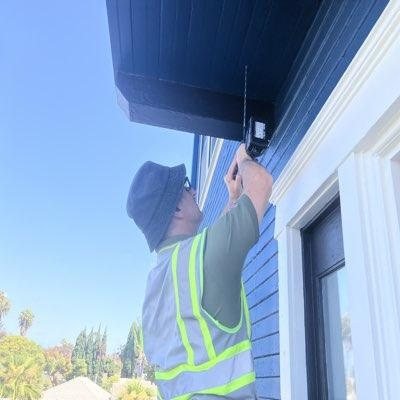
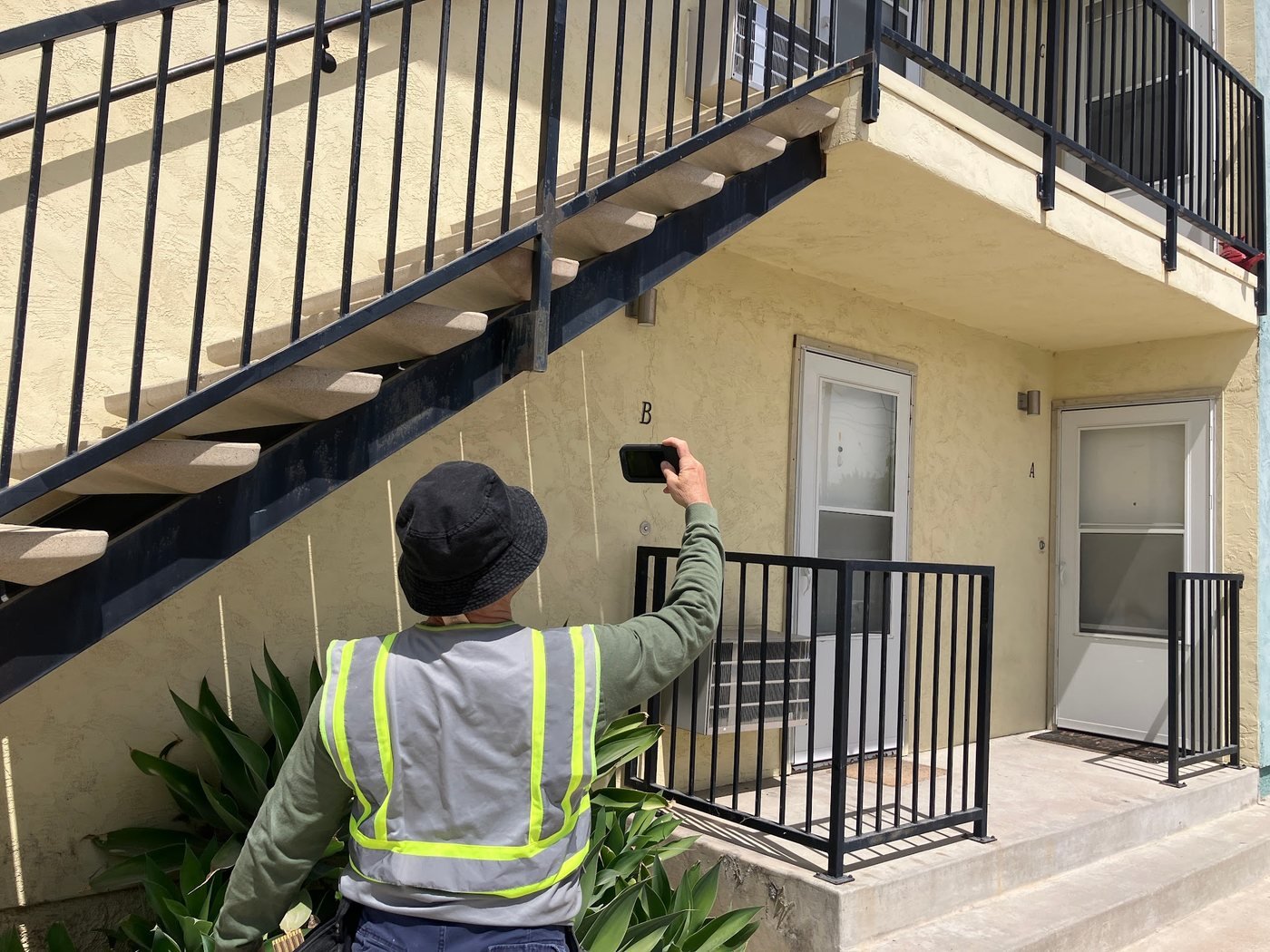
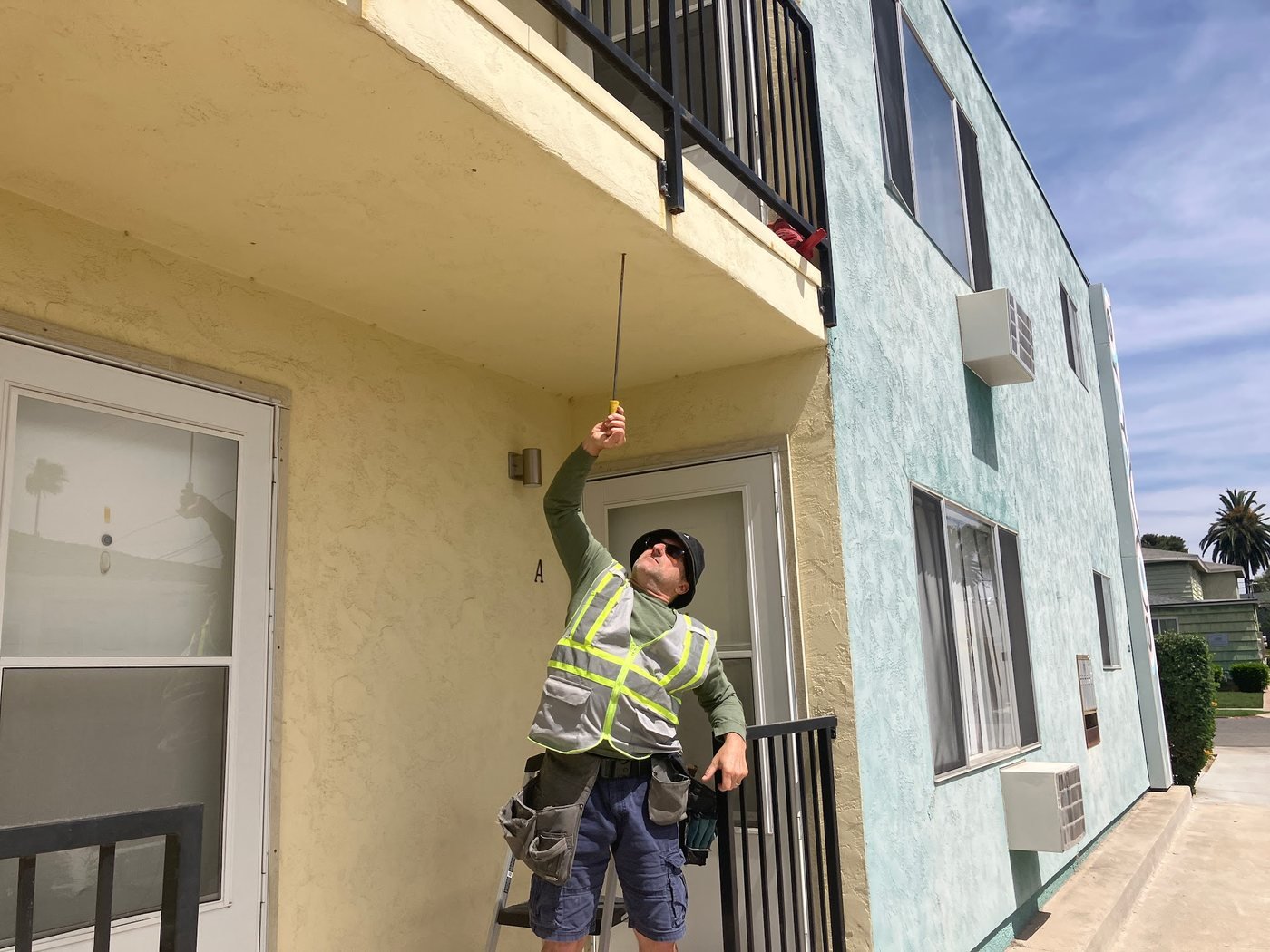
Thermal scanning in action
Our inspectors use FLIR thermal cameras to find moisture and heat issues hidden in walls and soffits.
More inspections in Jamul
- SB 721 exemption letter in Jamul
- Seller inspection in Jamul
- Warranty inspection in Jamul
- Commercial roof cleaning in Jamul
- Home inspection in Jamul
Nearby and countywide
Were You Happy With Your Inspection?
We are proud of our 4.9-star rating across 100+ Google reviews. If Joseph and the team did right by you, a quick Google review helps other San Diego County buyers and sellers find us.