
Commercial Roof Cleaning in Jamul, CA
Jamul reads as ranch land more than business district, but the flat roofs are out here all the same — over the market and feed store along Jamul Drive, the casino's outbuildings, the equestrian and contractor yards tucked off Skyline Truck Trail. Those low-slope roofs sit under coast live oak and sycamore that line the creek bottoms, they collect the decomposed-granite dust that hangs over every dirt drive in the valley, and they cook under a backcountry sun with no marine layer to soften it. Nobody looks at them until a scupper that's been packed since last spring sends the first October rain straight back across the membrane.
My name is Joseph Romeo. What I do here is roof cleaning and maintenance, not roofing: I strip debris and biological growth off the membrane, clear the scuppers, drains, and overflow outlets so water actually leaves, and photograph the roof's condition while I'm standing on it. The payoff is a membrane that lasts its rated life, a warranty that stays intact, and a leak caught while it's still a dirty drain instead of a soaked ceiling tile. Recoating, reseaming, and patching belong to a licensed roofer — I clear the roof and hand that roofer a documented map of where to work. Below is the scope on a Jamul building, the backcountry conditions behind it, what turns up most, how I run the visit, and where my work ends. The Jamul home inspection hub covers the property as a whole.
Call (619) 752-4399 Schedule an Inspection
What does a Jamul commercial roof cleaning include?
This work is maintenance and documentation for the flat and low-slope systems that cover Jamul's commercial buildings — single-ply TPO, modified bitumen, built-up (BUR) gravel and cap-sheet, and sprayed polyurethane foam. On a Jamul property, a visit takes in:
- Stripping the membrane field — removing oak and sycamore leaf drop, acorns, windblown chaparral, ranch chaff, and the gritty DG dust that collects in the dips and crowds the parapet base
- Opening every outlet — pulling debris from through-wall scuppers, roof drains, strainer baskets, and overflow ports so storm water has somewhere to go besides the low corner
- Removing biological growth — lifting algae, lichen, and moss out of the shaded, slow-to-dry pockets and off the cool sides of rooftop equipment
- Working the details — clearing litter packed at base flashings, equipment curbs, vent and conduit penetrations, and the crickets meant to steer water toward the drains
- Recording condition — photographs and plain-language notes on the membrane, seams, flashings, ponding evidence, and outlets, so you walk away with a dated picture of the roof
The result is a roof that drains and a straight account of how it's holding up. I won't weld a lap, spray a foam coat, or patch a puncture — that's licensed roofing, and the report tells you and that roofer precisely where it's owed.
Why does Jamul's backcountry setting drive this upkeep?
Jamul is east-county backcountry — large parcels, well-and-septic service, propane tanks behind the buildings, and a hard wildfire exposure. None of the coastal salt rules apply, and the things that age a flat roof here are their own list:
- Unshaded inland sun: with no marine layer reaching this far in, Jamul's roofs take direct summer UV for months. That bakes TPO thin and chalky, alligators modified bitumen, and breaks down foam coatings — and debris left sitting on the membrane traps heat and damp underneath, aging one stretch of roof ahead of the rest.
- Oak, sycamore, and creek-bottom litter: the riparian oaks and sycamores along Jamul's drainages, plus the brush crowding most commercial parcels, shed steadily and the wind carries it onto the roof and into the scuppers — the surest way a Jamul drain stops draining.
- Decomposed-granite dust: the DG roads, lots, and graded pads all over Jamul throw a fine grit into the air that settles on rooftops and washes into drains and strainer baskets, silting outlets shut faster than leaf litter could on its own.
- Wildfire WUI: Jamul sits squarely in the wildland-urban interface and has been overrun by fire before. Dry litter banked on a roof and in its gutters is ember fuel, plain and simple, and with propane on the parcel a clean roof is part of defending the whole site — not just a drainage nicety.
- Cloudburst rain after a dry run: the backcountry stays parched for months, then takes its rain in short, heavy hits. A scupper holding a season of oak litter and DG silt can't pass that volume, so it ponds — and water standing on a sun-tired membrane is where the leak you never noticed gets its start.
What turns up most on Jamul commercial roofs?
Across Jamul's flat-roofed buildings — the market and feed store on Jamul Drive, the casino's service structures, the ranch and equestrian operations, the contractor and storage yards off the truck trails — the same handful of problems keep showing up. Finding them on a maintenance visit beats meeting them as a water stain after the first storm:
- Outlets silted and choked — scuppers and roof drains packed with oak litter and DG grit, with a dried sediment ring marking how high water backs up each rain; far and away the most frequent finding
- Ponding stains on the low side — mineral rings and dark growth where water stands for days, the tell that slope or drainage isn't moving it off
- Sun-spent surfaces — chalked, thinning TPO, dried and cracked mod-bit, and BUR gravel scoured bare by inland UV and runoff
- Checked foam coating — sprayed-foam roofs with UV-cracked coating and exposed foam that drinks water until a roofer recoats it
- Growth in the cold corners — algae, lichen, and moss in the shaded, slow-draining spots behind parapets and beside equipment curbs
- Lifts hidden under debris — seam and base-flashing separations buried beneath litter at parapets, curbs, and penetrations — exactly where leaks begin
- Rooftop equipment trouble — HVAC condensate spilling onto the membrane, and litter banked around units, vents, and skylight curbs
None of that is a repair sentence on its own. I separate plain housekeeping a cleaning resolves from a membrane or flashing condition a roofer must see, and I photograph each so the report rests on what's actually up there.
How do I run the visit and what report do you get?
It opens with a call to (619) 752-4399 or an email carrying the Jamul building address, the roof type if you know it, and the reason behind the visit — routine upkeep, beating the rainy season, a warranty file, or a look before a sale or lease. That tells me what access and gear to haul to a backcountry site that may not have a ladder run or an easy hatch.
On the roof I work in sequence: clear the field, the dips, and the equipment surrounds of litter and growth, then open each scupper, drain, strainer, and overflow until water has an honest path off. While I clear, I'm reading what the debris was hiding — the membrane and foam for inland-sun wear, the seams and base flashings for splits and lifts, the outlets for whether they truly carry water, and the low corners for ponding history. The method stays matched to the system so I'm not forcing water into a seam or scuffing a foam coat.
You get back a photo-documented HomeGauge report — condition in plain words, the drainage cleared and noted, and any membrane or flashing concern flagged for your roofer, with a photo behind every line. It typically lands same day or next day, which is what a warranty file or a property manager usually needs. Where I see past cleaning — a split seam, a coating due for recoat, a chronic ponding spot — I point you to a licensed roofer. I clean and document; I don't bid the repair or perform it, so the report stays independent of anyone selling the fix.
Why do Jamul owners and property managers call me?
A maintenance record only earns its keep if the person writing it understands roofing systems, not just how to run a leaf blower. I'm an InterNACHI Certified Professional Inspector (CPI) and I carry a California CSLB General Contractor license (#1113143). That construction background is what makes the documentation worth filing: I know how a TPO seam, a mod-bit lap, a foam coating, and a scupper detail are supposed to behave, so when I flag a lifted flashing or a chronic ponding area, I can tell you whether it's housekeeping or it's pointing toward a recoat — before a roofer ever quotes it.
- 20+ years and 10,000+ inspections across San Diego County, Jamul's backcountry commercial buildings among them
- 4.9 stars across 106 Google reviews
- Independent and conflict-free — I clean the roof and record what's there; I don't sell roofing, coatings, or repairs, so nothing in the report is nudged toward work you don't need
When the roof needs a licensed roofer's hands — recoating a sun-spent foam roof, resealing a lifted seam, fixing a drain that won't clear, correcting a ponding low — I coordinate or refer the right trade rather than stretch a cleaning to cover it. Reach me directly at joe@sandiegohomeinspection.com or the number above.
Which related services suit Jamul commercial properties?
A roof cleaning is one piece of keeping a Jamul commercial building tight. Depending on the property, a few companion services are worth rolling into the same trip out to the backcountry:
- Roof inspection: a focused read on the covering, flashings, and remaining life when you need more than maintenance — a buyer's-grade or capital-planning assessment
- Commercial building inspection: the wider walk of structure, envelope, electrical, plumbing, and HVAC when you're buying, leasing, or sizing up the whole property
- Thermal / infrared imaging: for hidden moisture where a leak has already tracked into the deck or the ceilings under the roof, which the naked eye misses
- Well and septic coordination: on Jamul's well-and-septic parcels, where roof runoff discharge and grading around the building matter more with no city storm drains to carry it away
- Pre-rainy-season maintenance schedule: recurring clear-and-document visits timed before the backcountry's wet stretch so the scuppers and drains are open when the rain finally comes
Send me the Jamul address and what you're trying to protect, and I'll tell you which of these genuinely apply — see all inspection services we offer or start through contact.
Jamul Commercial Roof Cleaning FAQs
How often should a Jamul commercial roof be cleaned?
Why does decomposed granite matter for a flat roof in Jamul?
Does roof debris really matter for wildfire out here?
Does cleaning protect my roof warranty?
Do you repair the roof if you find a problem?
What roof types do you service in Jamul?
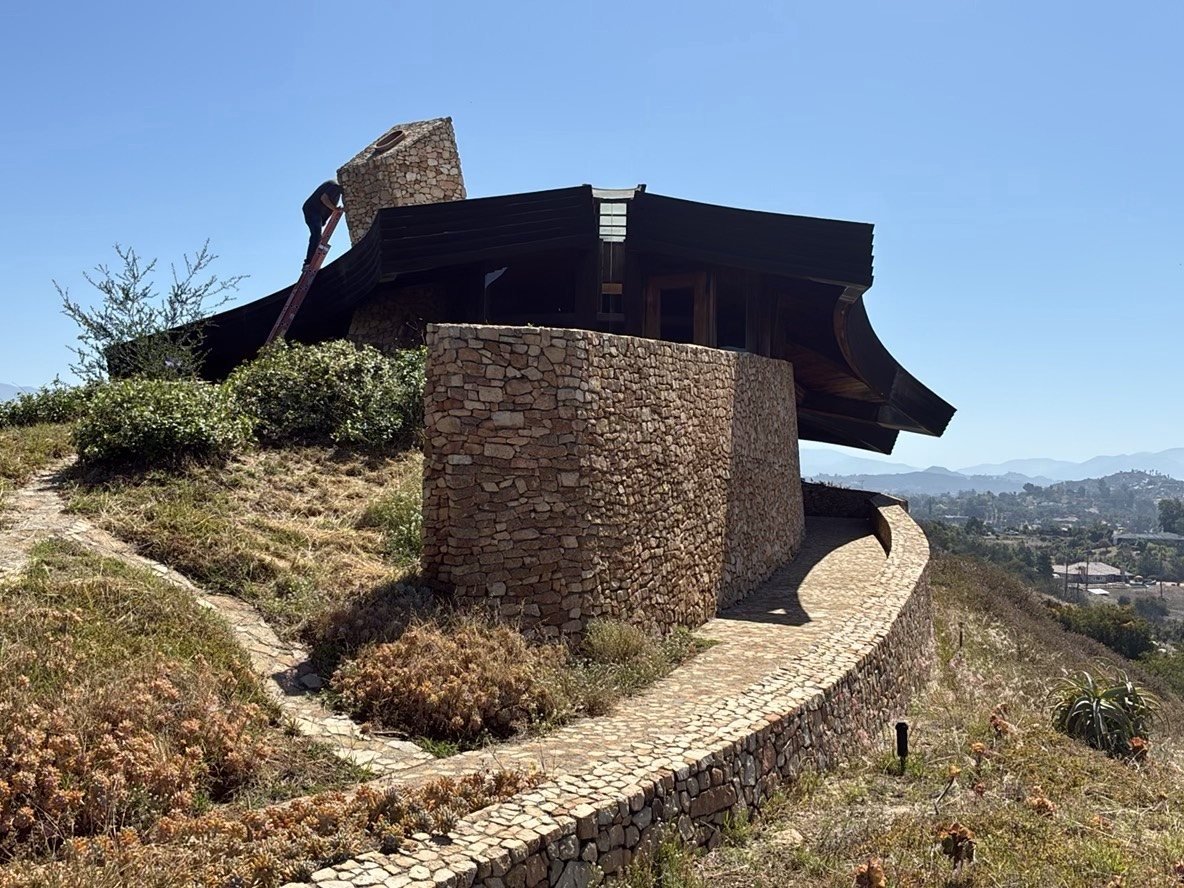
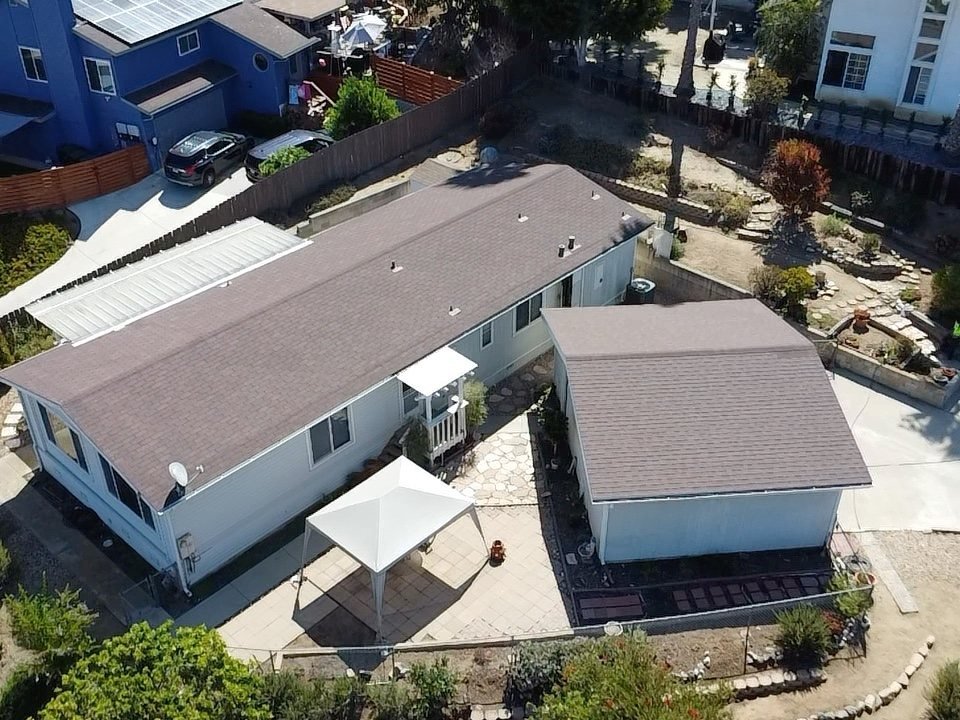
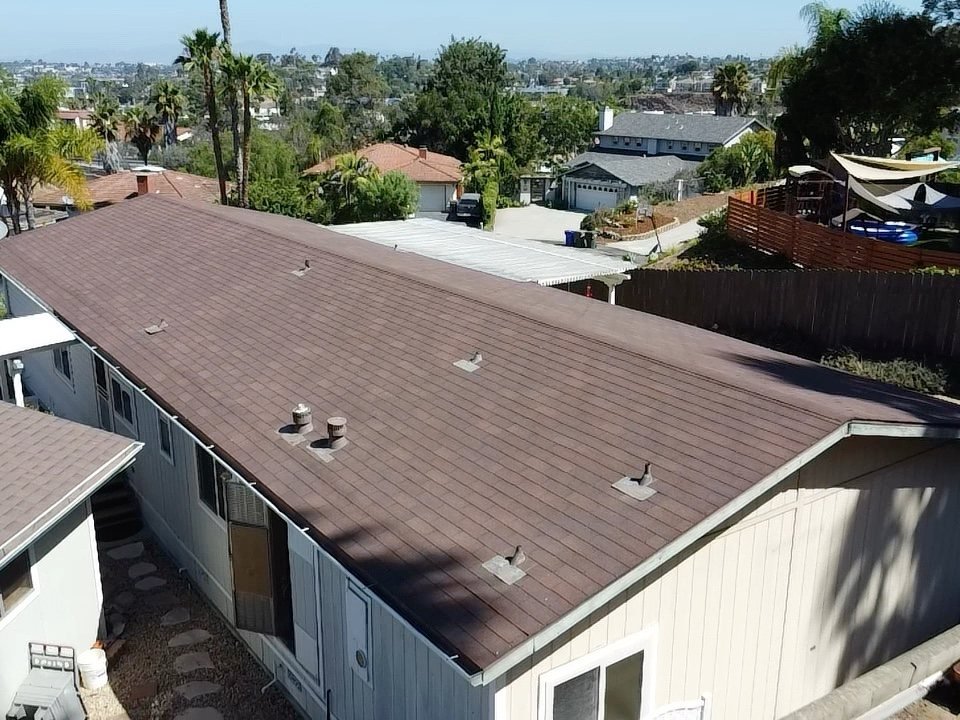
Large rooftops, handled
Flat and low-slope commercial roofs we access, document and maintain.
More inspections in Jamul
- Commercial inspection in Jamul
- Pool and spa inspection in Jamul
- Sewer scope inspection in Jamul
- 4-point inspection in Jamul
- Home inspection in Jamul
Nearby and countywide
Were You Happy With Your Inspection?
We are proud of our 4.9-star rating across 100+ Google reviews. If Joseph and the team did right by you, a quick Google review helps other San Diego County buyers and sellers find us.