
Thermal Imaging Inspection in South Park, San Diego
South Park sold its first lots when the Panama-California Exposition was still a blueprint, and the bungalows between Grape Street Park and the Juniper corridor have kept their secrets behind original plaster ever since. A 1915 house can look immaculate at an open house while a corroded supply line weeps inside a wall cavity or a fuse-era circuit cooks quietly under attic insulation. An infrared scan, added to the standard inspection, converts those invisible conditions into temperature patterns documented on the spot — damp materials read cool as water evaporates, and a stressed electrical connection reads warm under load.
Call (619) 752-4399 Schedule an Inspection
What does the thermal scan cover on a South Park property?
Infrared imaging maps fractional differences in surface temperature — it never penetrates a wall, but it reads what the wall is doing with remarkable precision. I move the camera across ceilings beneath bathrooms and roof planes, plaster under original window openings, the service panel and subpanels while circuits draw power, attic floors where insulation coverage can be judged, registers and visible duct runs with the system operating, and the water heater and laundry zones.
The defects that announce themselves this way fall into four families: water getting in, thermal envelope failures (voids, slumped batts, soaked material that has lost its R-value), electrical terminations running above the temperature of their neighbors, and conditioned air escaping the duct system en route to the rooms. Anything the lens flags is verified by hand before it earns a line in the report. Honest framing of the limits: this is not an x-ray, and no scan can warrant that a building hides nothing — it deepens an inspection rather than substituting for one.
Why does 1910s craftsman construction reward an infrared pass?
South Park is one of San Diego's original streetcar suburbs, and its housing stock skews older than almost any neighborhood I work — craftsman and California bungalows from roughly 1906 through the mid-1920s, plus Victorians near the Golden Hill boundary and airplane bungalows whose second stories were framed light and never insulated. Original systems persist at a higher rate than buyers expect: cloth-wrapped and knob-and-tube wiring in attic runs, galvanized water pipe narrowing year by year, century-old cast-iron and clay drainage.
The setting adds its own variables. Morning marine moisture pushes up from the harbor through late spring, and hundred-year-old double-hung windows and porch-roof flashings were never designed to shed it perfectly. Lots along the canyon fingers at the neighborhood's edges sit on soils that swell and shrink seasonally, working old drain lines and the slabs under rear additions until something seeps. And because so many South Park homes carry historic designations or Mills Act contracts, owners are rightly reluctant to open walls on a hunch. A non-invasive temperature map is exactly the diagnostic this neighborhood's preservation ethos favors: complete information, zero demolition.
What does the camera keep finding south of Juniper Street?
These signatures repeat on South Park scans often enough that I hunt for them:
- Damp framing where low-slope porch roofs tie into the main bungalow roof — a craftsman junction that fails before anything else
- Elevated heat at vintage fuse boxes and first-generation breaker panels, usually one termination outpacing the rest
- Cool, spreading stains at floor level traced to galvanized lines weeping inside raised-floor cavities
- Saturated plaster under weather-side casements after a damp May week
- Attic conversions and enclosed sleeping porches with no insulation at all, reading dramatically off-temperature from the rooms below
- Crawlspace ductwork shedding supply air at deteriorated joints
Hardly any of these sink a purchase. Every one belongs in your negotiation file rather than your move-in punch list — and none is visible at a Sunday showing.
How does the scan run and what report do you receive?
The infrared work happens within the standard inspection visit — no separate appointment. Sequencing matters: fixtures get run early and the heating or cooling system goes on first thing, so active leaks have time to develop a readable signature. Every apparent anomaly gets challenged — sun-loading on a west wall, a draft path, or a framing shadow can each imitate a defect, and only verified findings make the cut.
The deliverable is a single HomeGauge report, in your inbox the same or next business day, with each confirmed finding shown as a thermal capture beside an ordinary photo of the same spot, a plain-English explanation, and a defined next step. Where evidence suggests concealed wiring deterioration or an active supply or slab leak, I refer a licensed electrician, plumber, or leak-detection firm — pressure-testing lines sits outside a home inspection's scope. And I never bid on or perform repairs at homes I inspect, so no finding is shaped by a hoped-for second contract.
Whose credentials stand behind the thermal scan?
I'm Joseph Romeo, owner and lead inspector of The Real Estate Inspection Company — InterNACHI Certified Professional Inspector and CSLB General Contractor (#1113143). Across twenty-plus years and more than 10,000 inspections, a disproportionate share of my time has been spent inside pre-war San Diego housing. That building background turns a thermal image into a useful conclusion: a warm vertical stripe might be a chimney chase behaving normally or a buried junction box in trouble, and telling those apart takes someone who knows how a 1915 wall was assembled. Clients have rated the work 4.9 stars across 106 Google reviews, and South Park agents appreciate turnaround that fits a tight escrow calendar. Reach me at (619) 752-4399 or joe@sandiegohomeinspection.com.
Which inspections are worth pairing in South Park?
A thermal scan is a layer, not a foundation — book it on top of the complete South Park home inspection, where the roof, crawlspace, electrical, plumbing, and HVAC evaluation supplies the context every infrared image needs. Two companions earn their fee on housing this age: a sewer-line camera scope, since century-old clay laterals fail underground where no thermal camera reaches, and a wood-destroying-organism report — not a service we perform, but one we coordinate through a licensed termite specialist. The full add-on menu is on our services page, current pricing is published on the fee schedule, and you can contact us to set a date inside your contingency window.
South Park Thermal Imaging Inspection FAQs
Does infrared imaging work on South Park's original plaster and wood-paneled walls?
Can the scan locate a pipe leak under a raised-foundation bungalow?
Is thermal imaging safe for a Mills Act or historically designated home?
A South Park flip looks freshly renovated — is a scan still worth adding?
How much does the thermal imaging add-on cost?
What happens if the camera shows heat at my fuse panel or breakers?
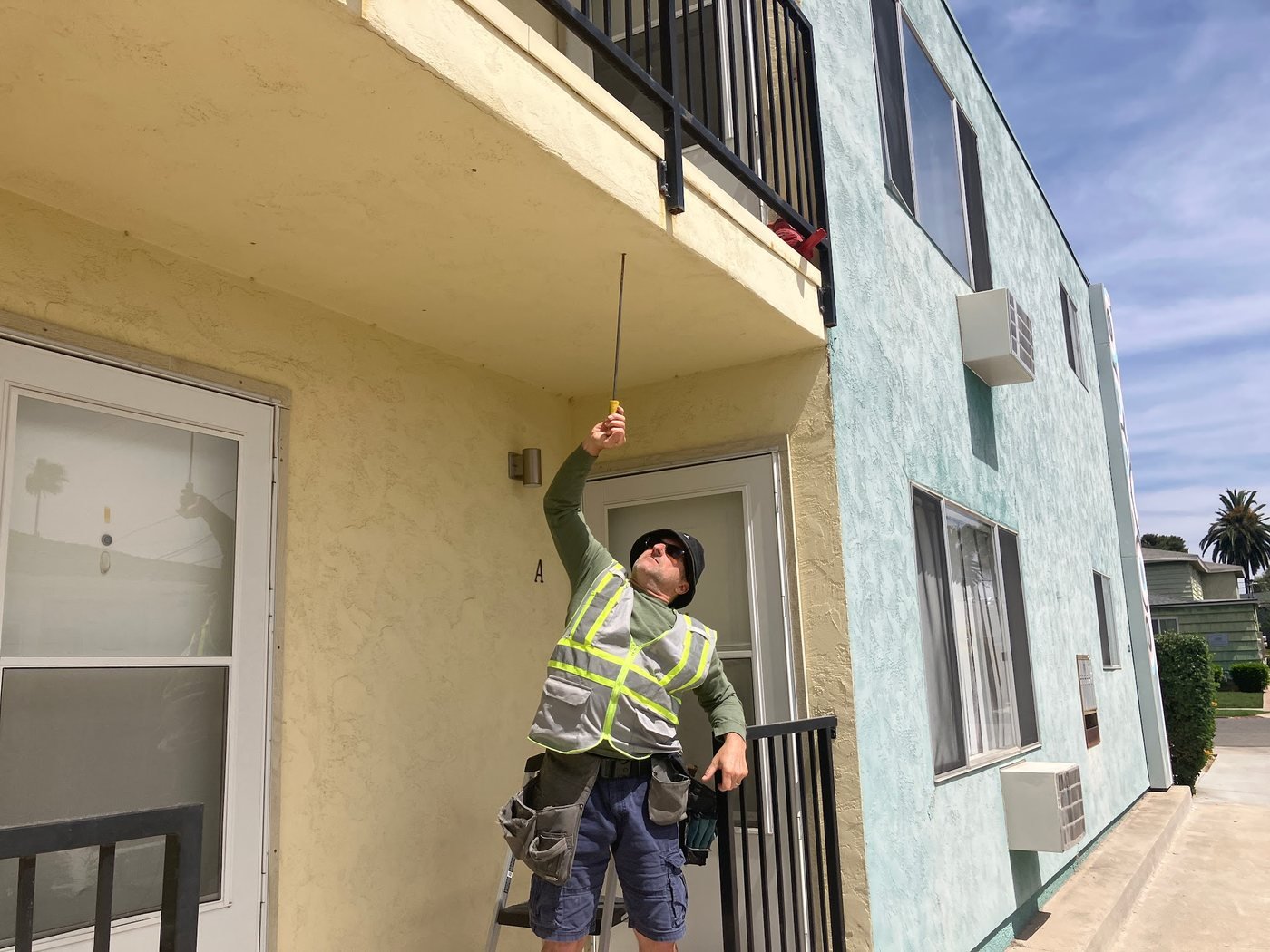
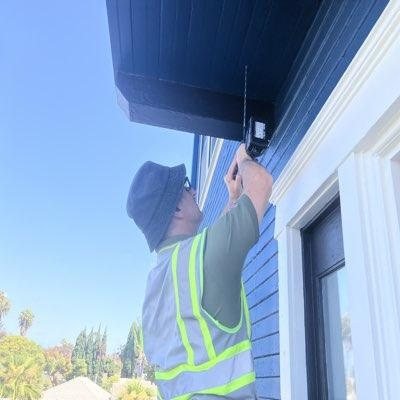
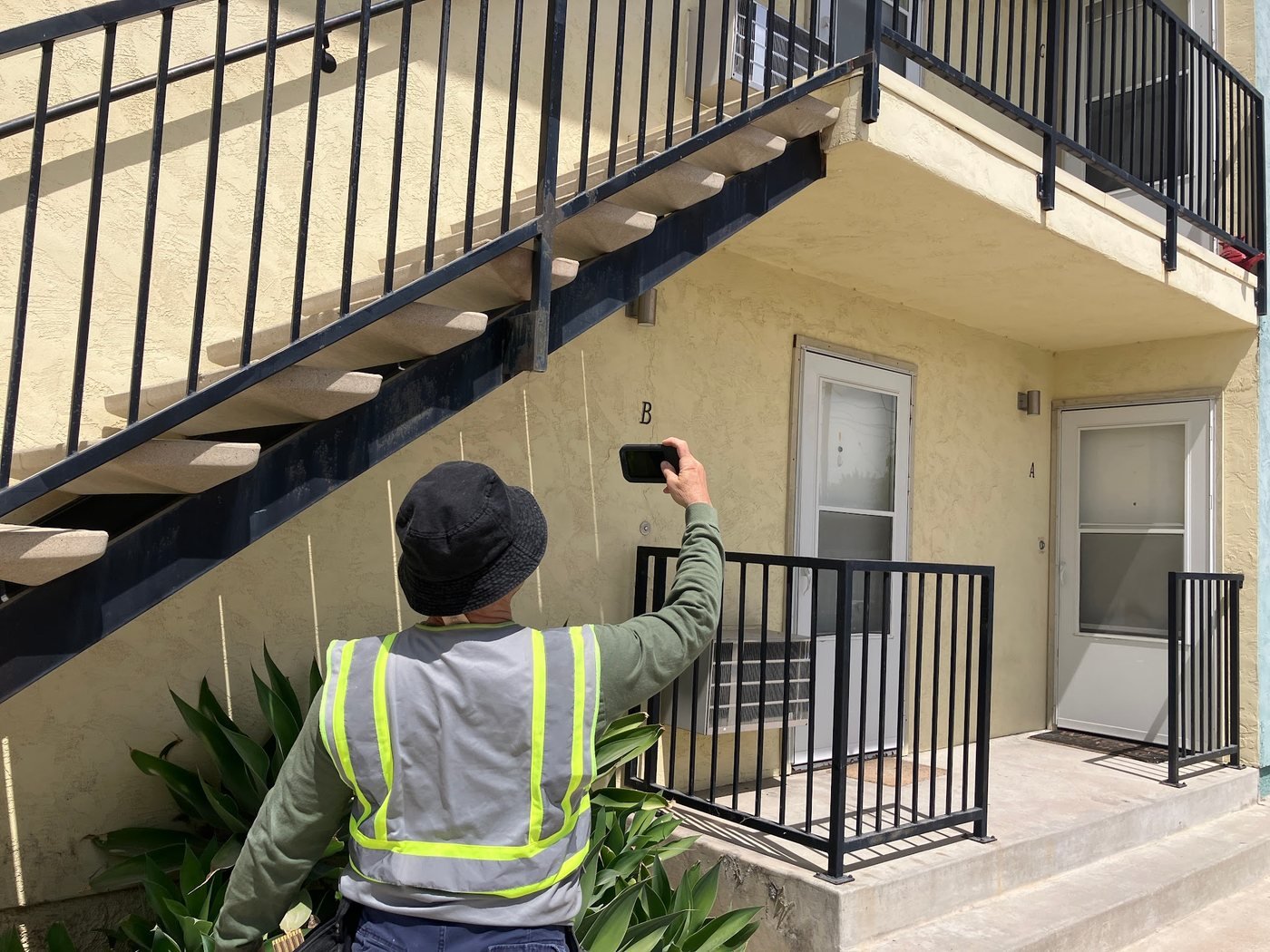
Thermal scanning in action
Our inspectors use FLIR thermal cameras to find moisture and heat issues hidden in walls and soffits.
More inspections in South Park
- Pool and spa inspection in South Park
- Sewer scope inspection in South Park
- 4-point inspection in South Park
- Roof inspection in South Park
- Home inspection in South Park
Nearby and countywide
Were You Happy With Your Inspection?
We are proud of our 4.9-star rating across 100+ Google reviews. If Joseph and the team did right by you, a quick Google review helps other San Diego County buyers and sellers find us.