
Roof Inspection in South Park, San Diego
South Park's housing followed the streetcar: after the 30th Street line opened in 1906, craftsman bungalows filled the blocks between Switzer Canyon and Grape Street within two decades, most still standing on original redwood framing. So the covering you see from Fern Street may be the third or fourth nailed over a 1912 board deck — and the deck is the real bet.
Our roof inspection documents what is actually up there — covering, flashing, drainage, attic side where accessible — in a photo report a licensed roofer can price from. We neither repair roofs nor certify them; we deliver the independent read. It can also fold into a complete South Park home inspection.
Call (619) 752-4399 Schedule an Inspection
What does the roof inspection cover on a South Park house?
The neighborhood splits into three roofing situations:
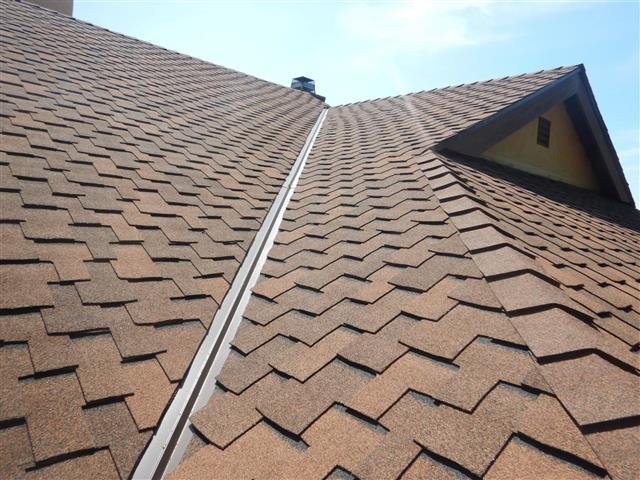
- Composition shingle over the original deck. Nearly every bungalow between Beech and Juniper began under wood shingle on spaced boards. We assess granule wear and tab adhesion, count layers at rakes and penetrations, and watch for the waviness and nail back-out stacked coverings produce over board gaps.
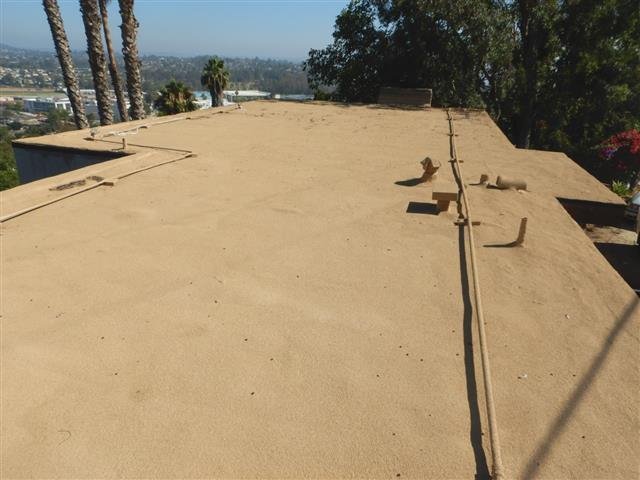
- Low-slope porch, addition, and ADU roofs. The flat front-porch roof is the signature South Park detail — and its most dependable leak. Rolled roofing, modified bitumen, and foam get checked for ponding evidence, open laps, alligatored coating, and the tie-in where new low-slope work meets the 1910s gable above.
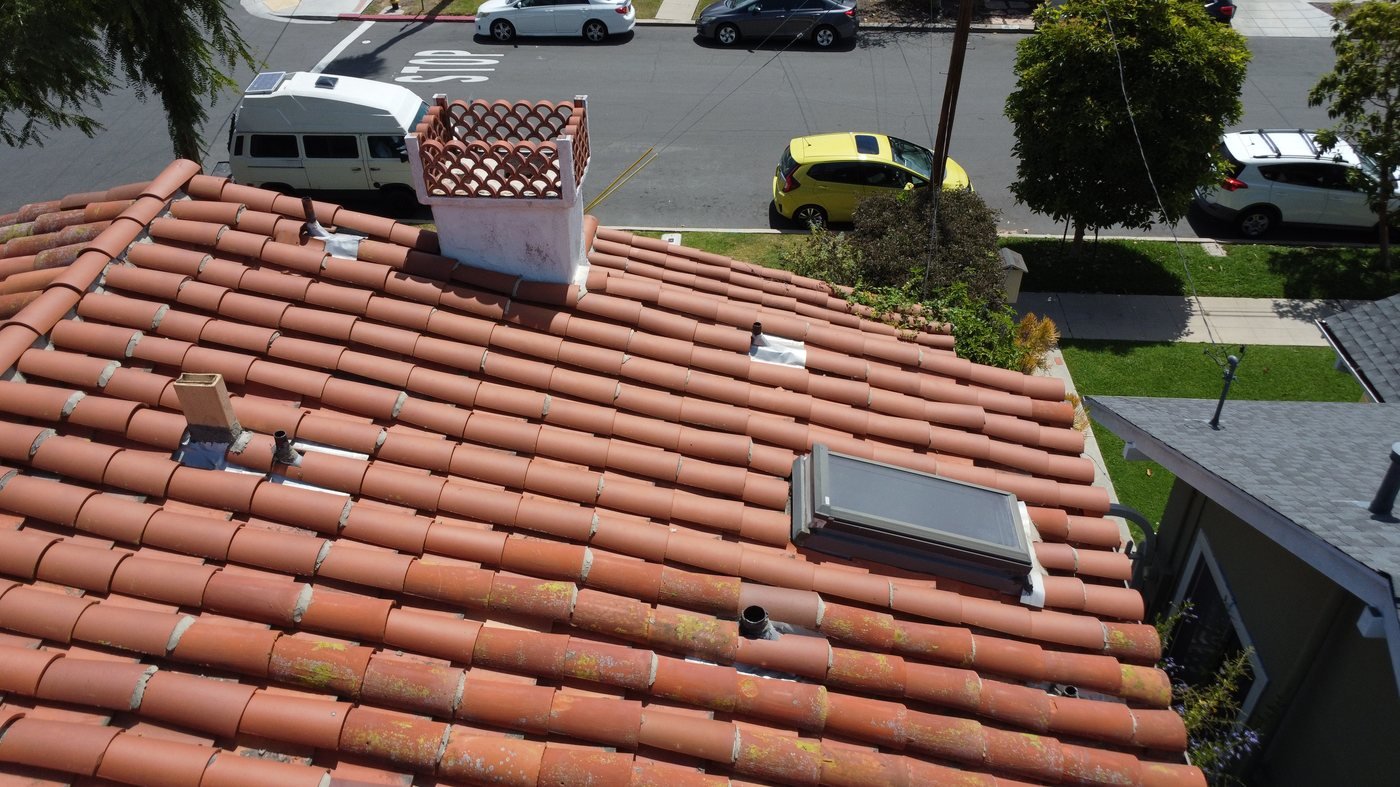
- Tile, where it appears. The occasional Spanish revival house carries clay tile that outlasts its underlayment; we map slipped and fractured pieces and judge the felt from the attic.
Around it: chimney and wall flashing, valley metal, stack boots, vents, skylights, abandoned penetrations, and the gutter-to-downspout path, plus the attic — staining, daylight, ventilation, moisture — wherever scuttle and wiring allow safe entry.
What stresses does South Park put on a roof?
This is an inland, canyon-cut, hundred-year-old neighborhood, and each trait shows up overhead:
- Two canyons in the grid. Switzer Canyon forms the north edge and Juniper Canyon cuts into the middle, so a surprising share of lots end at brush. Rim properties get extra scrutiny at vent screens, exposed rafter tails, and dry valley debris — the openings embers exploit.
- Sun without marine-layer cover. The marine layer gives up early here; UV dries shingle binder, releases sealants, and chalks flat-roof coatings years ahead of a coastal twin.
- A mature canopy. Jacarandas and ficus along Granada, Dale, and Fern fill gutters, hold moisture over shaded north slopes, and scuff coverings where limbs reach the roof.
- 1910s structure under modern weight. True-dimension rafters and spaced boards were sized for a single wood-shingle roof; generations of composition later, ridgelines dip and decks flex. We document it, and structural questions go to an engineer.
- Historic-fabric stakes. Mills Act contracts and historic-survey status are common here, raising the price of a careless re-roof; an honest remaining-life read lets owners plan replacement rather than react to failure.
- Original chimneys and wiring. Brick stacks meet the roofing at counterflashing that is often just aged mastic, and live knob-and-tube under the insulation decides how much of an attic we can cross.
Which roof findings do we log again and again here?
After enough South Park roofs, the pattern list writes itself:
- Coverings stacked since the Wilson administration. Original wood shingle often survives at the bottom of the sandwich, everything since nailed through it into spaced boards.
- Failed porch roofs. The low-slope porch drains slowly, gets re-coated instead of re-roofed, and sits over the front door — which is why so many entry ceilings here wear old stains.
- Goop where metal belongs. Troweled mastic over chimney metal and stack boots is the shortcut we photograph most often, and it rarely survives two winters.
- Drainage ending at the foundation. Downspouts that quit at the stem wall keep crawlspaces under these raised-foundation houses damp long after the rain stops.
- Attic evidence. Valley staining, rusted nail tips, ventilation predating the insulation now blocking it, and entry points where possums and roof rats found open eave bays.
Every observation lands in the report photographed and located, so the roofer you call quotes real work instead of rediscovering ours.
How do you schedule and run the roof visit?
Call (619) 752-4399 or email joe@sandiegohomeinspection.com with the address and whether the roof rides alone or inside a full inspection. Mention access too — some South Park side yards barely fit an extension ladder.
We walk every surface that can carry an inspector without harm; brittle coatings, fragile tile, and steep or soft sections get read from ladder, lens, and attic instead. A ceiling stain gets chased uphill to the roof detail that produced it, not diagnosed off the drywall.
Your HomeGauge report, labeled photos included, lands within a day and separates three things: maintenance you can handle, defects needing a licensed roofer promptly, and ordinary aging worth budgeting toward. Fees scale with size, covering, and access — current numbers live on the fee schedule.
Who is the inspector behind the report?
Joseph Romeo founded The Real Estate Inspection Company and still performs its inspections. He pairs InterNACHI's CPI certification with a California contractor license, CSLB #1113143 — a combination that pays off on pre-war housing: a builder's eye helps separate a century of benign settling from framing genuinely overmatched by its load. When an answer requires engineering, the report says so and we refer the specialist.
That judgment rests on twenty-plus years and 10,000-plus county-wide inspections, reflected in a 4.9-star Google rating built on 106 reviews. We keep no roofing crew waiting for work and never bid on repairs, so a finding is just a finding.
What else do South Park buyers inspect alongside the roof?
A 1915 house seldom limits its surprises to one system:
- The whole-house inspection — original wiring, galvanized supply pipe, and raised foundations deserve the same documented look; scope lives on the South Park home inspection page.
- Sewer camera inspection — the clay lateral running to the street predates most of the trees above it, and roots find every joint.
- Thermal imaging — picks up moisture a slow flashing leak has pushed into lath-and-plaster before any stain appears.
- Pre-listing roof evaluation — sellers around Fern Street use it to settle the roof question before buyers raise it.
Termite and wood-destroying-organism work goes to a licensed pest operator; we note evidence and connect you. Everything else sits on the services page, or get in touch to set a date.
South Park Roof Inspection FAQs
Will you actually get on the roof of a 1912 bungalow?
We have a Mills Act home. Does that change the roof inspection?
Our lot backs Switzer Canyon. What do you check for fire exposure?
How do you tell how many roofs are stacked up there?
How is a South Park roof inspection priced?
Can you give my insurer or lender a roof certification?
Roofs we document
Aerial and on-roof photos from recent San Diego County roof inspections.
More inspections in South Park
- Foundation slab survey in South Park
- SB 721 balcony inspection in South Park
- SB 326 balcony inspection in South Park
- SB 721 exemption letter in South Park
- Home inspection in South Park
Nearby and countywide
Were You Happy With Your Inspection?
We are proud of our 4.9-star rating across 100+ Google reviews. If Joseph and the team did right by you, a quick Google review helps other San Diego County buyers and sellers find us.