
Thermal Imaging Inspection in National City, CA
Most of what fails in a National City house hides where you cannot look, behind plaster on a 1920s bungalow, under the slab of a newer infill build, inside a panel that has been carrying a remodeled kitchen for years. An infrared camera reads the heat those problems give off. Wet framing pulls cooler than dry framing, a gap where insulation slumped reads warmer than the wall around it, and a connection running too much current glows against everything near it. The camera turns those invisible signatures into a picture I can act on during your inspection.
My name is Joseph Romeo. I add the infrared sweep to the regular inspection, walking the camera over ceilings, the slab or sub-floor, walls around windows, and the service panel while every system is energized. Nothing gets opened, no drilling, no cutting. Infrared is a reading of surface temperature, not an x-ray, and it will not promise that every buried flaw announces itself. When the camera marks an anomaly, I back it up with a moisture meter where the surface allows and write it up for the right trade to evaluate. The goal is simple: catch the issues worth tracking down while you can still walk away or negotiate.
Call (619) 752-4399 Schedule an Inspection
What does the infrared sweep look at in a National City home?
The camera cannot see through a wall. It measures the temperature of the surface, and shifts in that temperature tell the story of what sits behind it, damp lath reads cool, a void where batt insulation fell away reads off from its surroundings, and an overworked breaker burns hot. As I move through your National City home I aim the camera at the spots where those signatures land:
- Plaster and drywall ceilings, watching for the cool clouds of an active leak and the patchy thermal gaps of insulation that has settled inside an old wall cavity.
- The floor, slab or raised, reading a warm or damp signature where a supply or drain line runs under a newer infill slab, and the cold drafts that mark a leaky crawlspace under an older raised house.
- Window and door surrounds, where the coastal damp and tired flashing common to a port-adjacent neighborhood let water creep into framing that still looks sound.
- The service panel and reachable connections, scanned with the home pulling power, where a hot lug or loaded circuit gives away wiring stressed by decades of added appliances.
- Supply registers and attic ducting, reading delivered air temperature to expose a duct that came loose, a leak in the run, or a back bedroom the system never quite reaches.
A fair warning on limits: the camera needs the right conditions, a leak that is wet now, a circuit actually loaded, before a signature appears, and it cuts into nothing. Where an anomaly shows, I verify it where I can reach and pass it to the specialist who handles that system.
Why does a thermal scan pay off on National City homes?
National City carries a deep mix of housing, prewar bungalows and postwar tracts near the port sitting beside newer slab infill, and the thermal targets shift with the vintage. Here is what I chase block to block:
- Aging wiring in early-1900s to mid-century stock. Many homes off Highland and around Old Town still run original or patched-in branch wiring feeding loads they were never sized for. Scanning the panel and reachable junctions under power surfaces the warm connection or overdrawn circuit before it cooks.
- Raised-foundation crawlspace moisture. Older bungalows on raised perimeter footings trap humidity underneath. Infrared from inside reads the cold, damp signature of wet sub-floor framing and the temperature voids where insulation rotted out below the floor.
- Slab leaks under newer infill. The newer slab-on-grade builds dropped into older lots put plumbing under the pad with nowhere to vent a leak but up through the floor. The camera reads that warm or cool footprint long before a stain appears.
- Port-adjacent coastal moisture. Sitting close to the bay, National City stays under marine humidity that presses at window flashing, sill plates, and shaded walls. Infrared finds the damp framing behind a window that reads dry to the eye.
Which findings show up again and again in National City?
Certain results repeat across National City. None of them is automatically a deal-killer, but every one deserves a name before you put it in writing:
- Crawlspace damp, the cold signature of wet sub-floor joists and sodden insulation under a raised bungalow where ground moisture and poor venting collect.
- Slab moisture footprints, the warm or cool trail of a line leaking under a newer infill slab, invisible at the surface until it stains.
- Hot connections at the panel, a lug, breaker, or splice reading warmer than its neighbors on a home whose original wiring now carries a modern load.
- Insulation gaps, the temperature voids across a ceiling or wall where old insulation slumped or was never replaced after a remodel, driving uneven comfort and higher bills.
- Window and sill leaks, damp framing behind windows where coastal moisture and worn flashing let water past on the bay-facing side of the house.
- Duct faults, a register blowing air far off temperature or a disconnected run in the attic showing as a cold gap.
Each one enters the report as a thermal image set beside a normal photo, with plain wording on whether it is an efficiency item to budget for or a moisture or electrical flag that needs a specialist before you close.
How do I run the scan and what lands in your report?
The infrared portion rides along with the inspection instead of being a separate appointment. As I work the house I bring the systems to life so anomalies can surface, the heating and cooling running so I can read register temperatures and duct loss, fixtures cycled so a live leak shows itself, and the normal electrical load in place so the panel reads honestly. Then the camera moves across ceilings, the floor, window walls, and the panel, while I watch for the temperature breaks that mark trouble.
When the camera catches something I confirm it with a moisture meter wherever the surface is within reach, since a cool patch can be a draft just as easily as a leak, and I want the report carrying real findings, not guesses. You are welcome to stand at the screen with me, a hot breaker or a damp joist makes far more sense seen live than described later.
It all goes into a HomeGauge report, every finding pairing the thermal image with a matching photo so you see precisely what I saw and where it sits in the house. I turn most reports around the same day or the next morning, which leaves you room inside the contingency period to call a plumber, electrician, or HVAC tech where the scan points to one. The camera marks the area to look at; the licensed specialist confirms the cause and prices the work.
Who runs your National City thermal scan?
I hold the InterNACHI Certified Professional Inspector (CPI) credential, and I also carry a California CSLB General Contractor license (#1113143). On a thermal scan that contractor history earns its place: I know how a 1920s bungalow was framed over its raised footing, how plumbing was routed under a newer infill slab, and how an old panel was wired and later added to, so I can tell whether a warm reading is a genuine leak, a sun-baked wall, or a wiring issue that warrants an electrician.
- More than 20 years and over 10,000 inspections across San Diego County.
- 4.9 stars from 106 Google reviews.
- Independent work. I do not do remediation, rewiring, or repairs, so a flag in my report never points you toward work I would profit from.
I answer to the buyer beside me, and I write the report to stand up when you sit down to negotiate. Reach me directly at (619) 752-4399 or joe@sandiegohomeinspection.com.
Which inspections pair well with infrared in National City?
Thermal imaging makes the rest of the inspection sharper rather than standing in for it. On a National City home these services line up well with the scan, and I can fold them into a single visit:
- Full home inspection: the visible house top to bottom, roof, electrical, plumbing, heating and cooling, and structure, anchored by the National City home inspection hub, with infrared layered on to reach what the eye cannot.
- Sewer scope inspection: when a slab or crawlspace reading hints at moisture, running a camera down the lateral confirms whether a buried drain line is feeding it, important on the older clay laterals common here.
- Foundation and crawlspace evaluation: on raised bungalows where damp sub-floor framing shows up under infrared and deserves a closer structural look.
- Pool and spa inspection: on older lots where a buried pool line can leak and push moisture toward the house.
- Specialist referral: when the camera flags live moisture, a hot circuit, or a duct fault, I hand you the licensed plumber, electrician, or HVAC tech to evaluate and price the repair.
Send me the address and the year the home went up, and I will tell you whether the raised crawlspace, the infill slab, or the old panel is where the camera will do the most good.
National City Thermal Imaging Inspection FAQs
What does a thermal imaging inspection in National City cover?
Why does infrared matter on older raised-foundation bungalows here?
Can the scan catch electrical problems in century-old wiring?
Does being close to the bay change what you scan for?
Will thermal imaging find every hidden defect in the house?
How much does a National City thermal imaging inspection cost?
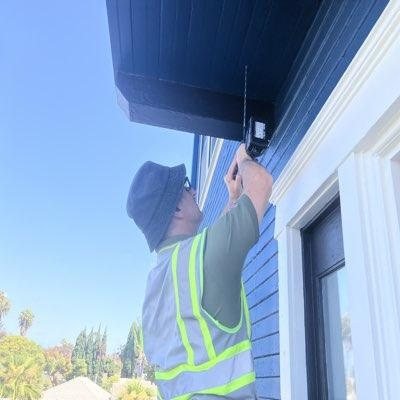
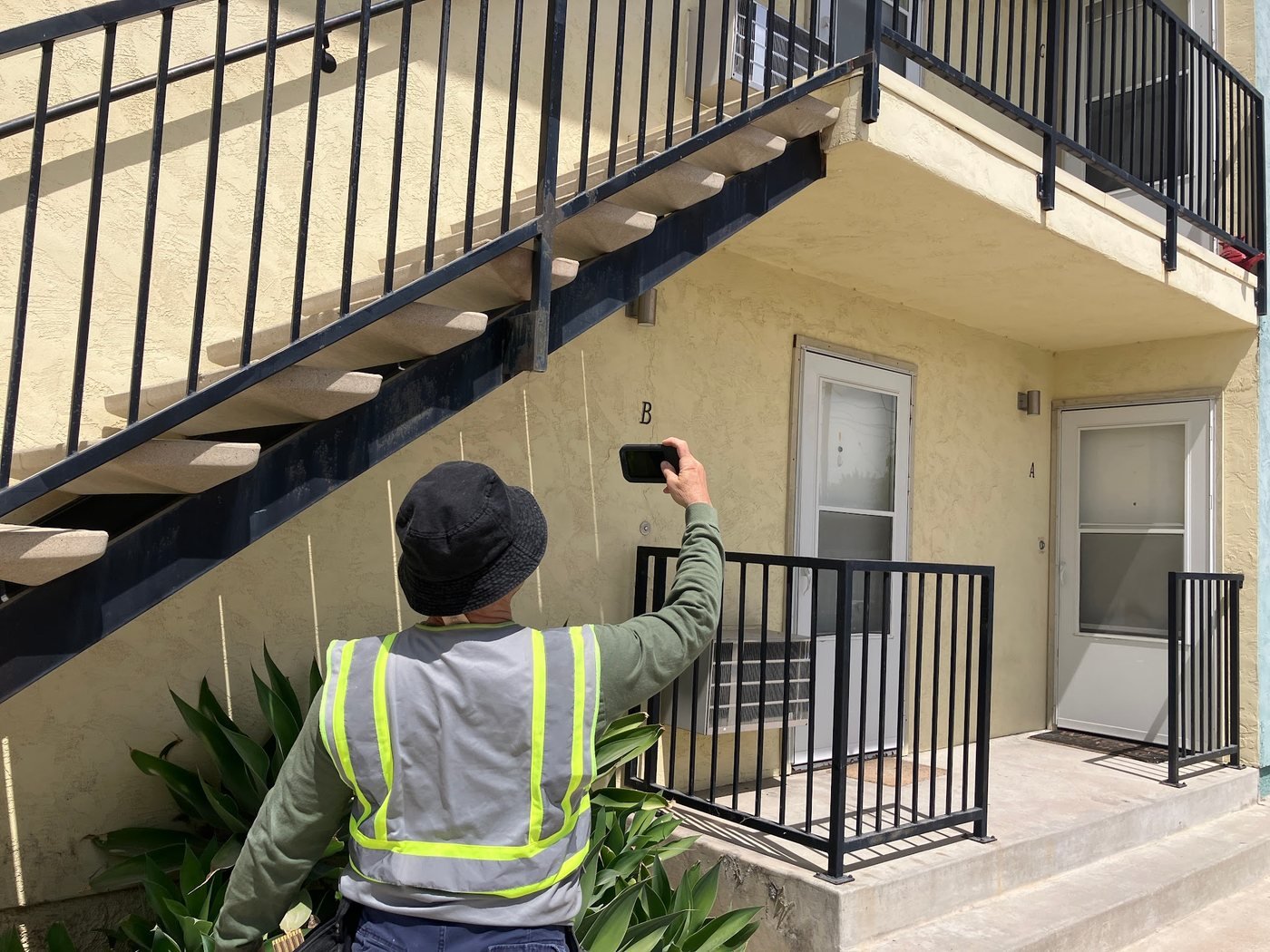
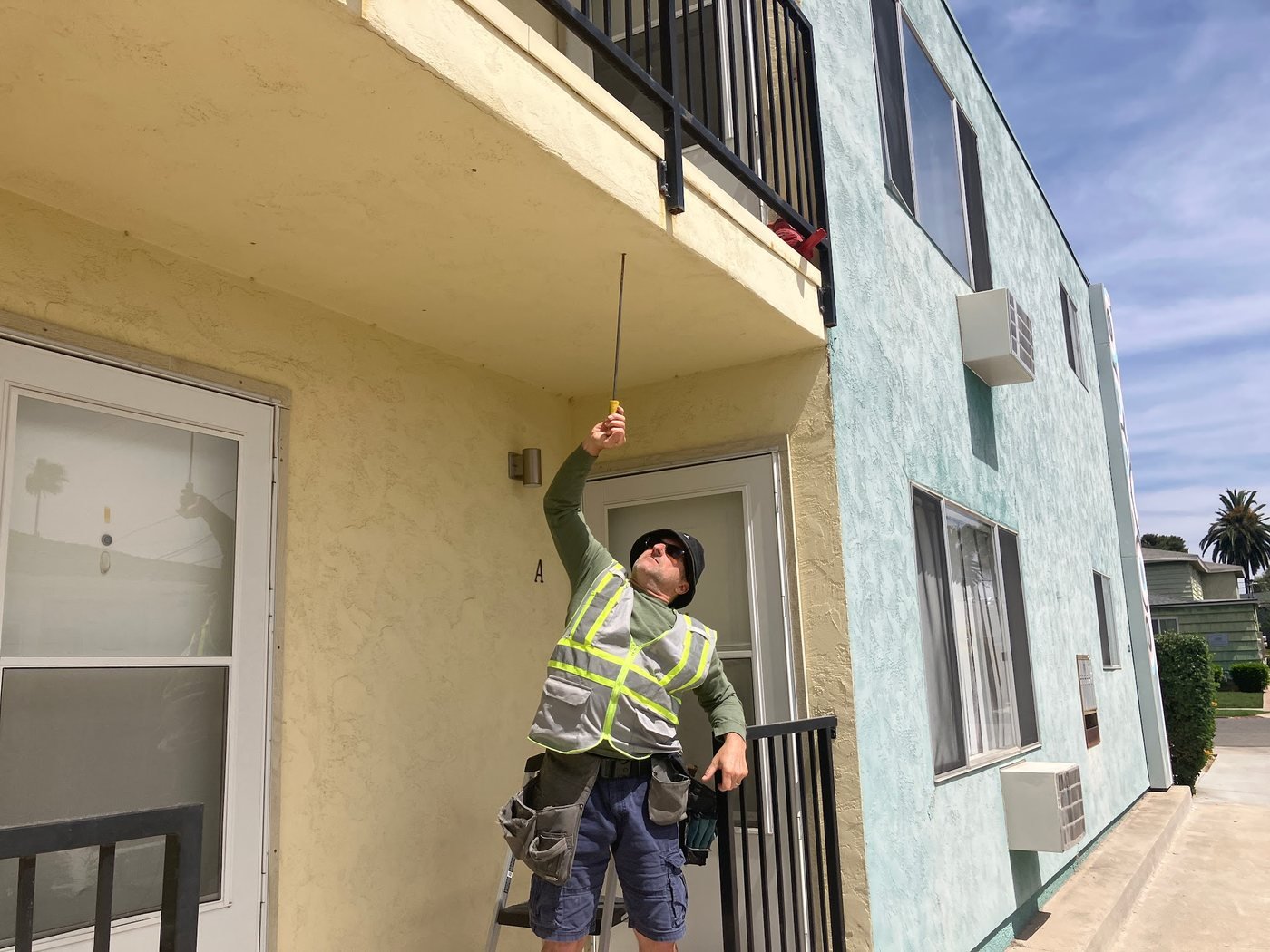
Thermal scanning in action
Our inspectors use FLIR thermal cameras to find moisture and heat issues hidden in walls and soffits.
More inspections in National City
- SB 721 exemption letter in National City
- Seller inspection in National City
- Warranty inspection in National City
- Commercial roof cleaning in National City
- Home inspection in National City
Nearby and countywide
Were You Happy With Your Inspection?
We are proud of our 4.9-star rating across 100+ Google reviews. If Joseph and the team did right by you, a quick Google review helps other San Diego County buyers and sellers find us.