
Commercial Roof Cleaning in Mira Mesa, CA
Mira Mesa filled in during the 1970s and 80s building boom, and that one-generation surge shows on the rooftops. The retail along Mira Mesa Boulevard, the pads around the Mira Mesa Mall and Camino Ruiz, and the tilt-up business parks edging toward Sorrento Valley and the Miramar fence line all carry low-slope roofs of roughly the same vintage — and they are all hitting the age where original drains and seams start asking for attention at once. The mesa runs hot and bright inland, yet sits close enough to the coast that a marine push still wets a membrane some mornings. That heat-then-damp swing, plus a steady litter drop from the mature pepper and eucalyptus trees lining the older blocks, is what slowly plugs a scupper and tires a roof.
I'm Joseph Romeo. A commercial roof cleaning is the ordinary maintenance that keeps a flat or low-slope roof draining and shedding rather than holding water: I clear debris and biological growth off the membrane, open the scuppers, drains, and overflows so water leaves the roof, and photograph the roof's condition while I'm up there. It isn't recoating and it isn't a repair contract — coatings and membrane work go to a licensed roofer. Below I lay out the scope on a Mira Mesa building, the mesa conditions driving the work, what keeps turning up, how the visit and report run, and where my part stops. The Mira Mesa home inspection hub covers the rest of the building.
Call (619) 752-4399 Schedule an Inspection
What does a Mira Mesa commercial roof cleaning cover?
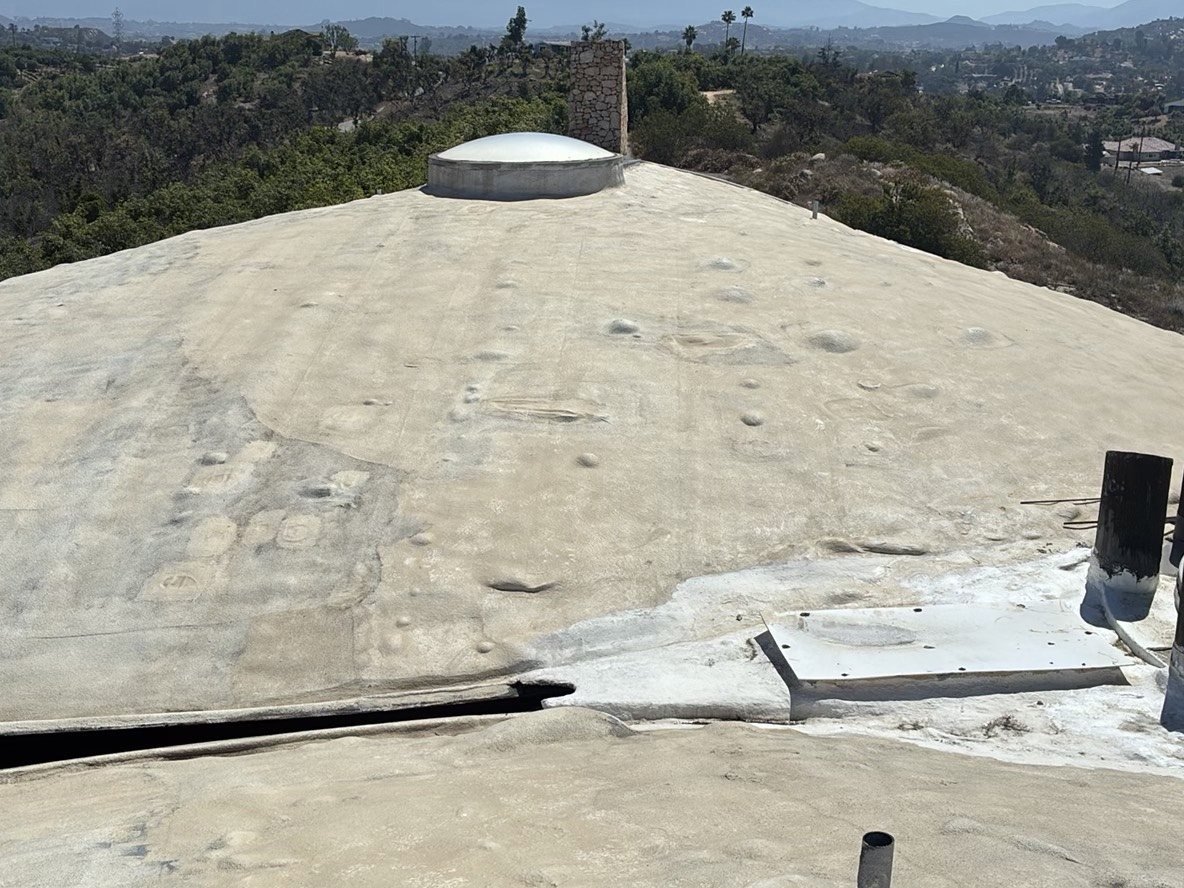
This is upkeep and documentation for the low-slope systems on Mira Mesa's commercial buildings — TPO and other single-ply membranes, modified bitumen, gravel and cap-sheet built-up roofs (BUR), and sprayed polyurethane foam. On a strip along Mira Mesa Boulevard or a tilt-up in one of the business parks near Camino Santa Fe, a visit handles:
- Field clearing — lifting pepper-tree and eucalyptus litter, windblown grit, and the seed and pod drop off the membrane, plus migrated gravel on BUR and anything piling at parapets and equipment curbs
- Drainage outlets — opening roof drains, strainer baskets, through-wall scuppers, and overflow ports so a marine-morning drizzle or a winter cell clears the roof instead of stacking behind a plug
- Growth removal — pulling the algae, moss, and mildew film out of the shaded, slow-draining pockets the early damp never fully burns off
- System-matched method — clearing TPO, mod-bit, BUR, and foam in a way that won't push water into laps or scuff a coating
- Detail exposure — sweeping seams, base flashings, and the surrounds of the packaged HVAC and skylight curbs common on these 70s-80s buildings, so the surface can be read
- Condition photos — a dated picture record of the membrane, flashings, penetrations, drains, and any ponding evidence
I clean the roof and record what's there. I don't heat-weld a seam, recoat foam, or patch a membrane — that work belongs to a roofer, and the report hands them the exact spots.
How do mesa heat, marine air, and old stock wear a flat roof?
Mira Mesa sits high and inland but within reach of the marine layer, so a roof here takes both a hard sun load and the occasional damp morning. The single-generation build-out gives those forces a lot to work on at once:
- Inland heat and UV: the mesa bakes through long, bright summers with little fog relief most days. That load chalks TPO, alligators modified bitumen, and checks foam — and debris cooking on top turns into a hot, moisture-trapping mat that ages one stretch ahead of the rest.
- Morning marine damp: close enough to the coast that an onshore push still beads the membrane some mornings before the sun dries it — the swing that grows moss in the shaded valleys while the open exposures cook.
- Roofs aging together: nearly all of Mira Mesa's commercial stock went up in the 70s and 80s, so the mod-bit and BUR roofs over the boulevard retail and the early business parks are reaching end-of-service on a similar clock, with original drains and scuppers sized tight and silting sooner.
- Mature street-tree litter: the pepper, eucalyptus, and pine along the older Mira Mesa Boulevard and Camino Ruiz blocks drop steadily into drain bowls and scupper throats — the leading reason an outlet backs up here.
- Salt riding the onshore air: the same marine push carries a thin salt load onto drip edges, drain bowls, and counterflashing; clearing debris off that metal lets corrosion get caught before it turns into a leak.
What keeps turning up on Mira Mesa commercial roofs?
Because one building era and one mesa climate repeat across the area — the Mira Mesa Boulevard strips, the mall-area pads, the tilt-up parks toward Sorrento Valley and Miramar — the same handful of conditions surface when I clear and document a roof. Catching them on a maintenance visit beats reading them off a stained ceiling tile below:
- Silted original outlets: the tight drains and scuppers on 70s-80s buildings packed with pepper and eucalyptus litter, a dried sediment line marking how high water stacks each storm
- Ponding marks on tired pitch: dirt rings, blistering, and soft spots on low-slope BUR and mod-bit where shallow original slope and a slow drain let water stand for days
- Moss in the shaded pockets: algae and moss settling into the north faces and equipment-shadow zones where the marine morning lingers longest
- Sun-spent membrane and coating: chalked, thinning TPO and dried, cracked modified bitumen on the open mesa exposures, plus UV-checked foam coating that drinks water until a roofer recoats
- Corroded coastal metal: rust on drain bowls, counterflashing, and termination bars from the salt-bearing air, usually hidden under debris until it's cleared
- Debris dammed at penetrations: leaf packs and trapped gravel piled against HVAC curbs, skylights, and pipe penetrations — right where a backed-up flow finds a seam
None of that condemns a roof on its own. I separate plain housekeeping — the debris a cleaning clears — from a membrane or flashing condition that needs a roofer, and photograph each so the report stands on what's actually up there.
How does the visit run and what reaches your inbox?
Start with a call to (619) 752-4399 or an email with the Mira Mesa building address, the roof type if you know it, and what's prompting the visit — routine upkeep, getting ahead of the winter rains, a warranty-compliance record, or a check before a sale or lease. That tells me what access to plan, which matters on the older boulevard strips where the hatch and ladder setup aren't always straightforward.
On site I work the field, the low corners, and the equipment surrounds first, then open every drain, strainer, scupper, and overflow until water has a clear path off the roof. As I clear, I'm reading what the debris hid — the membrane and foam for mesa sun and UV wear, the seams and base flashings for separations, the outlets for whether they truly carry water, and the low corners for ponding evidence. I keep the method matched to the system so I'm not forcing water under laps or scuffing a foam coat.
What comes back is a photo-documented HomeGauge report, usually the same day or the next day — condition spelled out plainly, the drainage cleared and noted, and any membrane or flashing concern flagged for your roofer. That dated record answers a manufacturer warranty's maintenance requirement and gives a roofer a precise place to start. I clean and document; I don't recoat, repair, run leak pressure-tests, or certify the roof — which keeps the report independent of anyone selling the work.
Why do Mira Mesa owners and property managers bring me in?
A maintenance record only earns its keep if the person writing it understands roofing systems, not just how to run a blower. I'm an InterNACHI Certified Professional Inspector (CPI), and I hold a California CSLB General Contractor license (#1113143). That building background is why the documentation matters: I know how a TPO seam, a mod-bit lap, a foam coat, and an original scupper detail are supposed to behave, so when I flag a lifting flashing or a chronic ponding spot, I can tell you what it means before a roofer ever quotes it.
- 20+ years and 10,000+ inspections across San Diego County, Mira Mesa's boulevard retail corridors and the business parks toward Sorrento Valley and Miramar included
- 4.9 stars across 106 Google reviews from owners, property managers, and agents who needed a straight read on a roof
- Independent and conflict-free — I sell no roofing, coatings, or repairs, so the report points to what the roof needs, not to work I'd profit from
For recoating, seam or flashing repair, drain replacement, or a formal roof certification, I coordinate or refer a licensed roofer rather than pretend a cleaning covers it. We're InterNACHI CPI and CSLB-licensed — not ASHI or CREIA members — and I don't post flat prices, since scope shifts with size, access, membrane, and how much growth and debris are up there. Reach me at joe@sandiegohomeinspection.com or the number above.
Which Mira Mesa inspections pair with roof cleaning?
A roof cleaning is one piece of keeping a Mira Mesa building tight, and most owners fold a companion service into the same trip. Depending on the property, a few are worth weighing:
- Roof inspection — a focused condition and remaining-life read on the covering, flashings, and drainage when the cleaning turns up wear you want fully assessed, which matters across the area's same-vintage 70s-80s roofs
- Commercial building inspection — the broader walk of structure, roof, electrical, plumbing, and HVAC before a purchase or lease rather than chasing one roof concern
- Thermal / infrared imaging — reads hidden moisture in the deck and the ceilings below a suspect low-slope roof once a leak has started
- Sewer scope — a camera down the lateral, worth it on the original 70s-80s lines under older Mira Mesa commercial buildings
- Pre-rainy-season maintenance walk — a scheduled clear-and-document before the wet stretch so the drains and scuppers are open when the storms arrive
Send me the address and what you're trying to protect and I'll tell you which of these actually apply — see the full range of inspection services or reach out through contact.
Mira Mesa Commercial Roof Cleaning FAQs
How often should a Mira Mesa commercial roof be cleaned?
Do you repair the roof or only clean and document it?
Why does ponding water matter on an aging Mira Mesa roof?
Will cleaning damage my TPO or foam roof?
Does roof cleaning help with warranty compliance?
What does commercial roof cleaning cost in Mira Mesa?
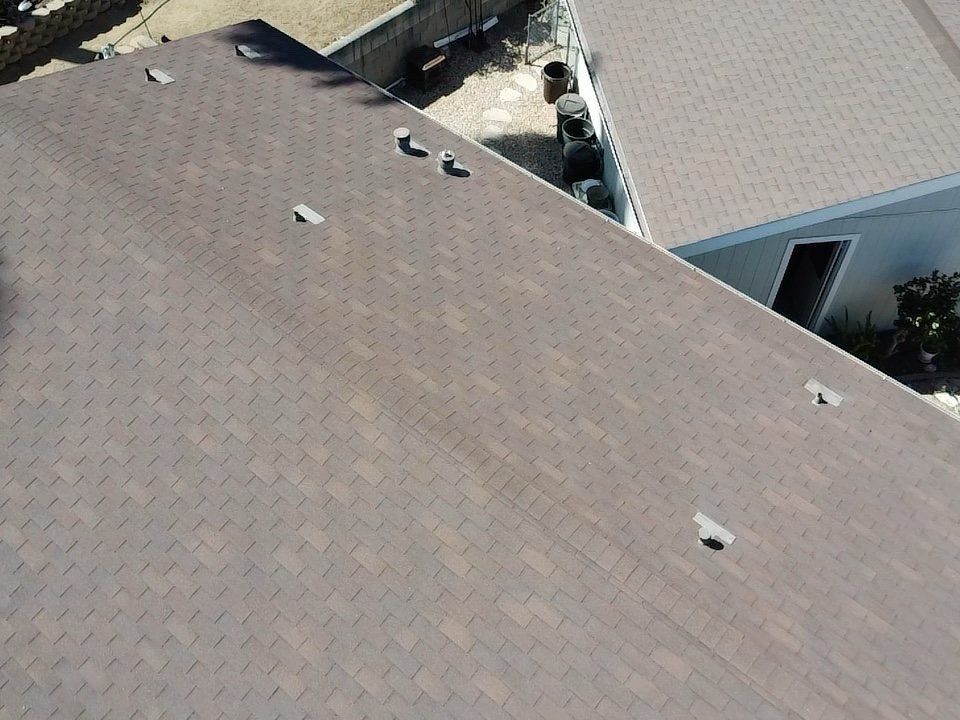
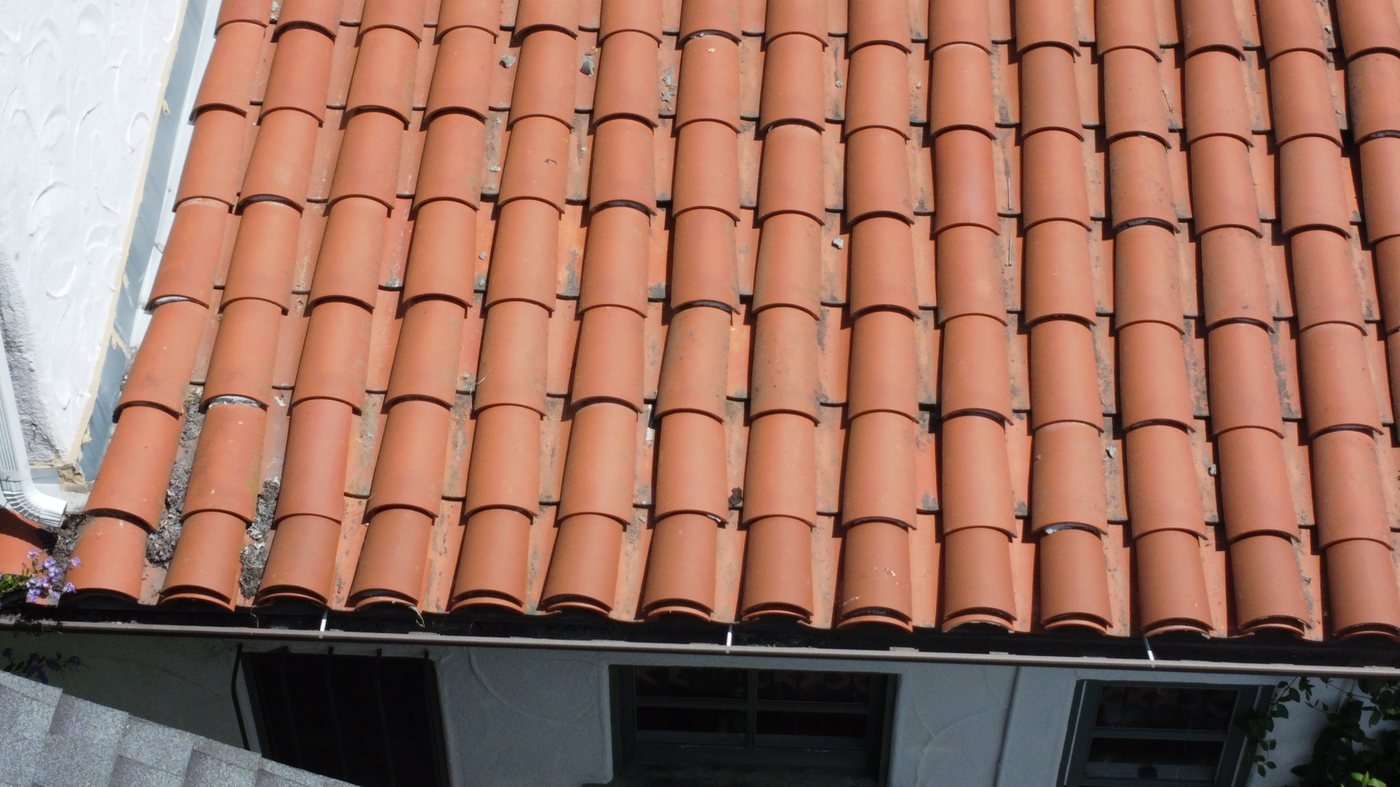
Large rooftops, handled
Flat and low-slope commercial roofs we access, document and maintain.
More inspections in Mira Mesa
- Warranty inspection in Mira Mesa
- Commercial inspection in Mira Mesa
- Pool and spa inspection in Mira Mesa
- Sewer scope inspection in Mira Mesa
- Home inspection in Mira Mesa
Nearby and countywide
Were You Happy With Your Inspection?
We are proud of our 4.9-star rating across 100+ Google reviews. If Joseph and the team did right by you, a quick Google review helps other San Diego County buyers and sellers find us.