
4-Point Inspection in Mira Mesa, San Diego, CA
When a carrier asks for a 4-point before it will bind or renew a Mira Mesa policy, the trigger is almost always the year on the deed. This whole community filled in during one stretch — the tract subdivisions that fanned out north and south of Mira Mesa Boulevard through the 1970s and into the '80s, the planned grids off Camino Ruiz, Black Mountain Road, and Westview. Those houses are now decades past their original systems, and California insurers — pulling back hard as the statewide market reprices fire risk — no longer take an aging roof, an original panel, or first-generation pipe on faith. They want it documented first.
I'm Joseph Romeo. A 4-point is a narrow report on four systems and nothing more: roof, electrical, plumbing, and HVAC. Its purpose is to satisfy an underwriter, not to grade the whole property — so it captures each system's age, what it's made of, and the condition I actually observe, then it stops. Below I walk through what the report reaches, the things about Mira Mesa's dense inland tract stock that keep this request landing here, the conditions I keep running into in these slab homes, how the visit and report work, and where the scope ends. For the whole-house view, start at the Mira Mesa home inspection hub.
Call (619) 752-4399 Schedule an Inspection
Which four systems do I document on a Mira Mesa home?
Four systems, recorded to the depth an underwriter weighs — that's the whole job, and it's where I stay. A carrier isn't paying for a buyer's walkthrough; it wants a clean factual record of the systems that drive the claims it covers. On a Mira Mesa property I note, for each point, the age, the material, and what I see, with a photo standing behind every line:
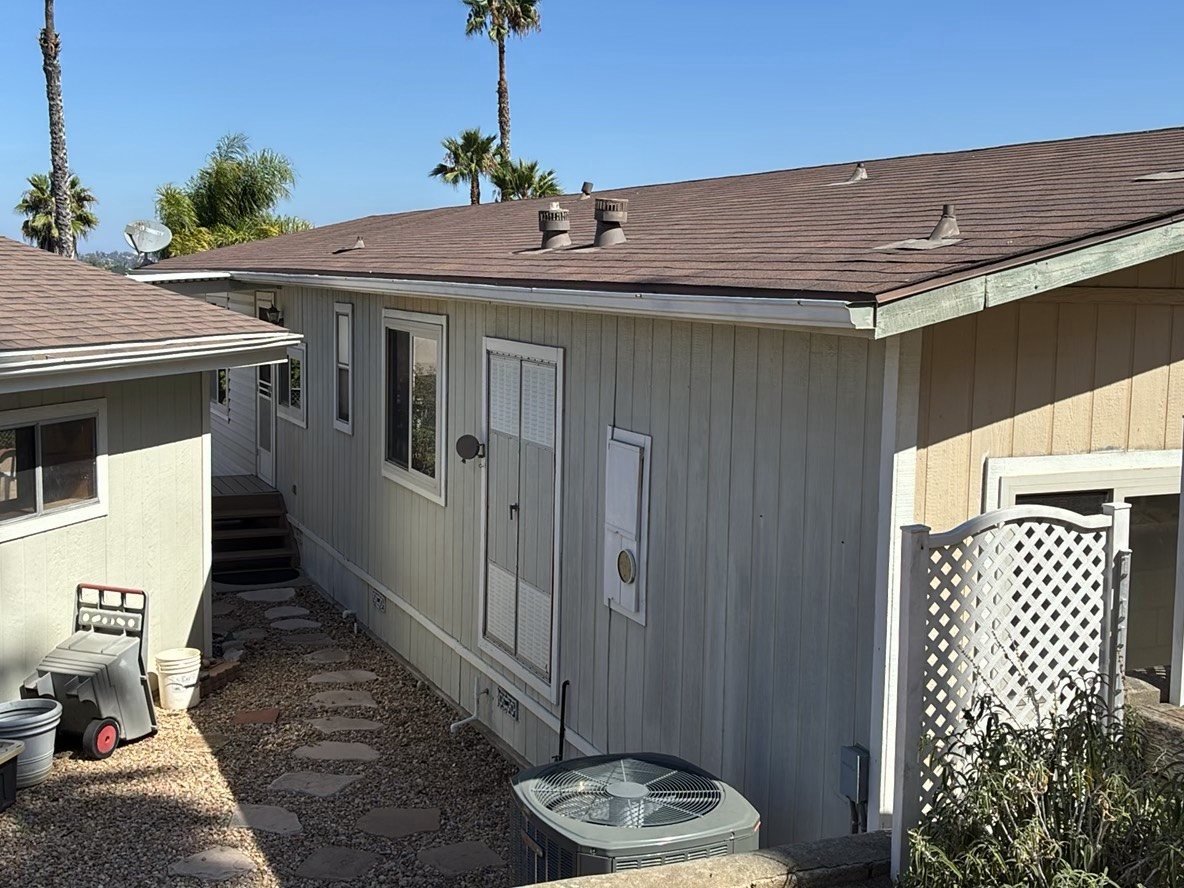
- Roof — covering type (the composition shingle and concrete tile that blanket these tract neighborhoods), rough age, layer count, and the years of service life left, alongside slipped or cracked tiles, granule loss, and worn flashing. Under the steady inland sun north of Miramar, remaining roof life is frequently the one line that settles the policy.
- Electrical — service panel make and amperage, breakers versus any surviving fuse setup, the branch wiring I can see, and grounding. This is where the panels and wiring that get a Mira Mesa policy bounced get named.
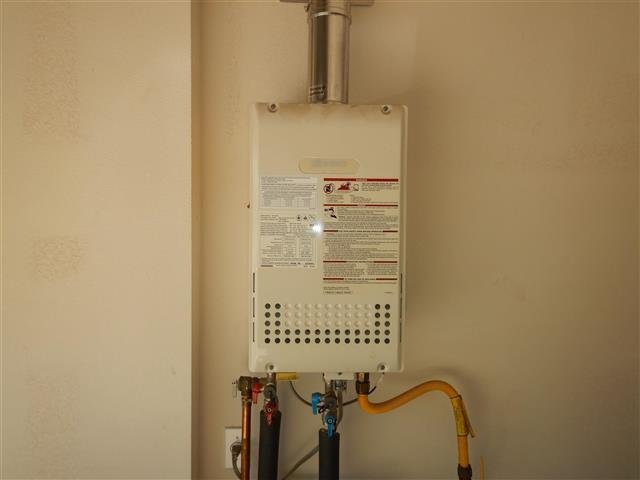
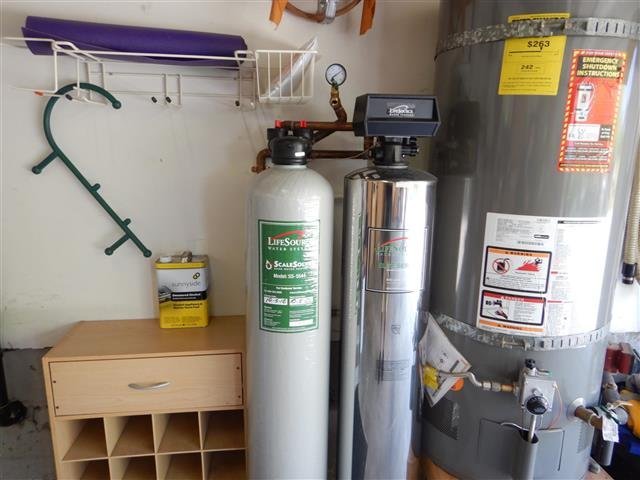
- Plumbing — supply-line material, drain material, the water heater's age and condition, and any corroded or weeping joints in view. Mira Mesa's mid-'70s-through-'80s vintage falls squarely in the polybutylene and early-copper window, so the supply material weighs heavily here.
- HVAC — the heating and cooling gear, its type and approximate age, and whether it runs when I cycle it. That last check matters in Mira Mesa, where summers inland of the coastal marine layer push a condenser harder than anything down by the water.
What you get back is a carrier-ready document listing age, material, and condition across all four, photographed. What it isn't is a full inspection — foundation, attic, windows, and grounds belong to a separate, wider visit.
Why do Mira Mesa addresses keep drawing this request?
Underwriters aren't singling out Mira Mesa arbitrarily. It's the pairing of a single dense building era reaching middle age with a warm inland setting — conditions specific to this corner of the city that put the letter in your mailbox:
- One concentrated wave of 70s-80s tract housing. Mira Mesa built out quickly and all at once, so block after block crossed the 25-to-40-plus-year line on the same clock. The panels, supply pipe, and original roofs from that era are exactly what the 4-point exists to verify, and they're aging in lockstep across the community.
- Slab-on-grade construction throughout. Most of these homes sit on concrete slabs poured straight on the pad, which buries the supply runs in the slab. That shapes the plumbing point — I read condition from the water heater, the visible connections, and any signs of a slab leak rather than from pipe hidden under the floor.
- Inland heat that ages roofs and AC early. Sitting well off the coast and shielded from much of the marine layer, Mira Mesa runs warm. Composition shingle sheds granules ahead of schedule and condensers wear faster than the calendar suggests, so roof remaining life and HVAC condition often read worse than the build year — and carriers know to look there.
- Dense original mechanicals reaching the end together. Tightly packed tract homes here still run a fair number of their original water heaters, furnaces, and service panels — first-generation equipment now well past its service window, which is precisely the wear a 4-point is built to surface.
- A wildfire-strained insurance market. As carriers retreat across California or steer owners toward the FAIR Plan, the ones still writing in Mira Mesa lean on the 4-point to screen the systems most likely to fail — spent roofs and obsolete panels first in line.
What do these slab tract homes keep turning up?
Because so much of Mira Mesa came out of the same building push, the findings rhyme from one house to the next. Knowing which ones stall an underwriter lets you correct or disclose ahead of time instead of watching a policy bounce at bind:
- Panels carriers reject — Zinsco and Sylvania panels surface regularly in Mira Mesa's 70s-80s homes, with the odd Federal Pacific Stab-Lok in the earliest builds, and many insurers decline flat until one is swapped out.
- Aluminum branch wiring — the mid-'70s aluminum branch runs common to tract homes of this vintage, which underwriters treat as a fire flag wherever the terminations haven't been corrected.
- Polybutylene and galvanized supply — gray polybutylene prone to splitting at the fittings and, in the older pockets, galvanized steel corroding shut from the inside — either of which a carrier may insist be addressed.
- Cast-iron drains corroding — original cast-iron waste lines eating themselves from within, routine in slab homes this age and harder to read where they run beneath the concrete.
- Roofs out of runway — original or once-replaced roofs baked down to a few remaining years by inland heat, often the single item that forces a re-roof before a policy will bind.
- Original water heaters and HVAC — heaters past their service window or missing proper seismic strapping, and furnaces and condensers deep into a second decade of warm summers, flagged on age even when they still fire up.
None of this is an automatic decline. I separate a system that's merely old but serviceable from one a carrier will refuse, and I photograph each so the report rests on what's there rather than on opinion.
How does the visit run and what lands in your inbox?
It opens with a call to (619) 752-4399 or an email carrying the Mira Mesa address, the home's age, and — if you have it — your carrier's own 4-point form. Some insurers require their exact template filled in, and knowing that before I head out spares a second trip. I'll also confirm whether you need a standalone 4-point or want it folded into broader work on the same visit.
On site I take the four systems in order: up on the roof for covering, age, and wear; into the panel to read make, amperage, and wiring; through the visible plumbing and the water heater, watching for the slab-leak signs these poured-slab homes can show; and across the HVAC to confirm type, rough age, and that it cycles. Every finding gets a photo. Because the scope is four systems rather than the entire house, it's a quicker visit than a full inspection.
You receive a 4-point report in HomeGauge — or on the carrier's form when they require it — documenting age, material, and condition on each system with the images a Mira Mesa underwriter expects. In most cases it reaches your inbox the same day or the next, so it never holds up a bind or a renewal deadline. I report observed condition only; I don't bid or carry out repairs, which keeps the findings independent.
What judgment stands behind each flag?
A 4-point is worth only the judgment behind each call — telling a policy-killing panel from a serviceable one, or a roof with two summers left from one with eight, is experience, not a checkbox. I'm an InterNACHI Certified Professional Inspector (CPI) and I hold a California CSLB General Contractor license (#1113143). That builder's background is what lets me tell you whether a flagged item is a quick correction or a full-system replacement — and roughly what the work involves — before you're on the phone with your agent.
- 20+ years and 10,000+ inspections across San Diego County, including Mira Mesa's tract neighborhoods off Mira Mesa Boulevard and Camino Ruiz
- 4.9 stars across 106 Google reviews from homeowners, buyers, and agents
- Independent and conflict-free — I document the four systems and report what's there; I don't sell the panel swap, the repipe, or the roof, so nothing in the report nudges you toward work I'd profit from
When a system needs attention before a carrier will bind, I coordinate or refer the right licensed trade to act on the exact findings rather than pretend the 4-point covers the fix. Reach me directly at joe@sandiegohomeinspection.com or the number above.
Which inspections pair with a Mira Mesa 4-point?
The 4-point answers the carrier's four questions and nothing wider. If you're buying, or just want a fuller read on an older Mira Mesa home, a few companion inspections drop neatly into the same trip:
- Full home inspection — the whole-house evaluation the 4-point deliberately isn't; start at the Mira Mesa hub if you're buying, not only insuring
- Sewer scope — a camera down the buried lateral the plumbing point can't reach, where decades-old cast iron and clay under these slab lots fail expensively
- Roof-focused inspection — a closer read on remaining years when the 4-point shows a covering cooked near the end by inland sun
- Thermal / infrared imaging — surfaces hidden moisture and electrical hot spots behind walls, a real payoff on slab homes where a plumbing leak hides under the floor
- Pool & spa inspection — for the older backyard pools common on these tract lots, separate from the insurance four points
Not sure what your address actually needs? Send it over with the home's age and what your carrier is asking for, and I'll tell you which of these genuinely apply — see all inspection services we offer or get a quote through contact. For the panel swap, repipe, or roof work a carrier wants, I coordinate the right licensed specialist rather than reach past our scope.
Mira Mesa 4-Point Inspection FAQs
Why is my insurer requiring a 4-point on my Mira Mesa home?
Is a 4-point the same as a full home inspection?
Which electrical panels get a Mira Mesa policy declined?
Does Mira Mesa's slab construction affect the plumbing point?
Should I worry about polybutylene supply in my Mira Mesa house?
How fast do I get the report for my carrier?
Roof, electrical, plumbing and HVAC
Documentation from recent 4-point inspections across San Diego County.
More inspections in Mira Mesa
- Warranty inspection in Mira Mesa
- Commercial roof cleaning in Mira Mesa
- Commercial inspection in Mira Mesa
- Pool and spa inspection in Mira Mesa
- Home inspection in Mira Mesa
Nearby and countywide
Were You Happy With Your Inspection?
We are proud of our 4.9-star rating across 100+ Google reviews. If Joseph and the team did right by you, a quick Google review helps other San Diego County buyers and sellers find us.