
Thermal Imaging Inspection in Julian, CA
Julian sits up around 4,200 feet in the apple country of east San Diego County, and the housing stock matches the altitude: gold-rush-era cabins, century-old farmhouses, weekend retreats heated by a wood stove, and rural homesteads running their own well, septic, and propane. Buy up here and you inherit a building that has weathered snow, sub-freezing nights, and decades of patch-and-add work — with most of the wear tucked into places a walkthrough simply can't reach. An infrared camera reads heat instead of light, which is precisely why it catches what those old timber walls keep hidden.
I'm Joseph Romeo. The thermal scan is an optional infrared add-on I run as part of the inspection, translating temperature differences into an image you can actually use: the chilled shadow of a supply line that fractured during a January cold snap, the warm flare of a tired breaker in a panel that's been expanded for generations, the cold band over a bedroom where the wood-stove heat keeps escaping through bare insulation. It rides alongside the standard Julian home inspection with nothing opened or drilled. Worth saying plainly up front: the camera is not an x-ray, and a flagged spot is a cue to investigate, not a verdict. Below I lay out what the scan covers, why Julian's elevation and rural systems make it worthwhile, and what the lens keeps turning up around town.
Call (619) 752-4399 Schedule an Inspection
What does the infrared scan examine in a Julian home?
An infrared camera converts a surface into a temperature map. Where a wall, ceiling, floor, or electrical panel should read evenly, the outliers — a cool damp blotch, a hot terminal, a striped insulation gap — tell me where to verify. Folded into the standard inspection on a Julian property, the sweep takes in:
- Concealed dampness and leak paths — wet material sheds heat as it evaporates, so saturated sheathing, a seeping pipe, or meltwater wicking in from a roof edge reads colder than the dry surface beside it, usually well ahead of any visible stain
- Missing or settled insulation — in a town that swings from hot summer afternoons to freezing nights, thin batts and empty cavities in the attic and walls show as crisp temperature bands where heated or cooled air is leaking away
- Electrical heat patterns — a breaker carrying too much load, a loose lug, or an oxidized splice runs hotter than its neighbors, a difference the lens reveals where a visual-only pass would miss it entirely
- Wood-stove, propane-furnace, and duct heat delivery — uneven warmth around a stove or flue, registers that aren't pushing air, and rooms that won't hold temperature on a cold mountain night
- Plumbing trails and freeze cracks — warm signatures from a pressurized leak and cold trails where a line split over winter and now weeps behind a wall or under the floor
Two honest boundaries: the lens registers surface temperature, not the inside of the cavity itself, and a flag is a reason to dig further, not a confirmed defect. When something stands out I back it with a moisture meter wherever I can reach, write it up, and spell out the specific next step rather than calling a repair off an image I can't see behind.
Why do Julian's elevation and rural systems earn the scan?
Not many corners of the county assemble the conditions an infrared sweep was built to expose the way a Julian parcel does. The local realities that make it worth adding:
- Snow and deep-freeze plumbing damage: winter at this altitude brings real snowfall and nights well under freezing, and that cracks exposed plumbing — hose bibs, crawl-space runs, lines threading through uninsulated additions and old exterior walls. A pipe that split last season can seep quietly for months, and the cold evaporative trail it leaves is a textbook infrared find long before it wrecks the finish.
- Wood stoves, flues, and chimneys: many Julian homes lean on a wood stove or fireplace for winter heat, and the camera reads how that warmth actually moves through the house — cold rooms the stove never reaches, and the heat loss around an old flue or masonry chimney where the envelope was never tightened up.
- Well, septic, and long supply runs: a homestead drawing from its own well carries a pressure tank, stretched interior plumbing, and water-heater feeds, every one a candidate for a slow leak. The lens covers that larger network quickly and isolates the wet spots.
- Aged cabin and farmhouse wiring: gold-rush-era cabins and apple-country farmhouses around Main Street and the back roads off Highway 78 run panels and circuits cobbled together over a century. Loose terminations and overloaded breakers heat up under load, and infrared catches those hot spots right at the service panel.
- Wildfire-scarred exposure: the 2003 Cedar fire and later burns left this WUI country acutely fire-aware, and the eave, vent, and roofline gaps that worry you for embers are the same openings air and water exploit. The scan flags the ones reading wet or thermally open.
What does the lens keep turning up around Julian?
Scan enough mountain homesteads and the same anomalies keep reappearing. Knowing the patterns helps you weigh whether a flag is ordinary or worth pursuing before your contingency closes:
- Freeze-split supply lines — cold seeping trails behind exterior or addition walls and beneath floors where a line cracked during a hard winter and went unnoticed
- Crawl-space and under-floor saturation — many Julian cabins sit on raised pier or post foundations, and the lens reads wet framing and soaked subfloor from a slow supply or drain leak underneath
- Bare or settled attic insulation — thermal voids over bedrooms that explain a cold room and the propane or firewood you keep burning through
- Heat loss around wood stoves and flues — cool zones where stove warmth never reaches and gaps around an old flue penetration leaking heated air
- Hot breakers and slack panel lugs — warmth at the service panel in century-old cabin wiring that warrants an electrician's review
- Water-heater and pressure-tank weeping — slow drips around a well setup or heater that haven't yet surfaced as a stain
None of this automatically sinks a deal. The value is catching it early: the report separates a minor insulation gap you'd simply keep watching from an active leak that shifts your numbers, so you negotiate on what's real instead of guessing.
How does the sweep run and what report do you get?
It begins with a call to (619) 752-4399 or an email naming the Julian address and asking to add infrared. Conditions govern whether the read is worthwhile — a solid temperature gap between inside and out makes anomalies surface — and Julian's wide day-to-night and season-to-season swing usually works in our favor. I schedule the scan for the point in the inspection where the contrast is sharpest, with the heat and water running so the systems are genuinely working when the lens looks.
On the property I cover interior ceilings, walls, and floors, the panel under load, the reachable plumbing and HVAC, the crawl space where one exists, the area around a wood stove or flue, and the window and door perimeters. You're welcome to stand at the screen alongside me — watching a cold bloom spread under a sill, or a breaker glowing against its cooler neighbors, makes a finding land in a way a written line can't. Anything the camera flags, I confirm with a moisture meter where reachable before it goes on paper.
You receive a HomeGauge report with infrared frames set next to standard photos, each anomaly described in plain language, the confirming meter number where I logged one, and a clear next step for whatever needs it. It lands same day or the next in most cases. I report what the camera and meter observed — I don't open walls, run leak pressure-tests, or repair what surfaces.
Who interprets the read in Julian?
A thermal camera is only as good as the person interpreting it. A cold spot might be a leak, a draft, or a plumbing chase performing exactly as designed — sorting those apart takes judgment, not just owning the gear. I'm an InterNACHI Certified Professional Inspector (CPI) and I hold a California CSLB General Contractor license (#1113143). That builder's grounding is what lets me measure a thermal anomaly against how a historic mountain home was truly framed — whether that cold streak is a freeze-cracked line or a cold-water supply behaving, whether that warm patch is a loaded breaker or sun beating on old siding.
- 20+ years and 10,000+ inspections across San Diego County, from coastal tracts to the gold-rush cabins, apple-country farmhouses, and well-and-septic homesteads around Julian and Highway 78
- 4.9 stars across 106 Google reviews
- Independent and conflict-free — I scan and report what appears; I don't sell repairs, restoration, or electrical work, so no flag ever gets nudged toward a job I'd profit from
When an anomaly outgrows a camera — a confirmed leak, a panel fault, a mold or pest question — I name the right licensed specialist and pass along the imagery so they start from evidence rather than a hunch. Reach me at joe@sandiegohomeinspection.com or the number above.
What related inspections fit Julian properties?
Thermal imaging sharpens an inspection; it doesn't replace one. On a Julian home it pairs naturally with the rest of the work, all bookable in a single trip:
- Full home inspection: the standard buyer's-grade evaluation the scan rides on top of — start at the Julian home inspection hub
- Sewer scope inspection: when infrared flags floor or crawl-space damp, a camera down the lateral confirms whether a failing line is the source — worth it on parcels running their own septic
- Roof inspection: snow load, sun, and mountain storms age Julian roofs fast, and roof-edge penetrations are a frequent route for the leaks the camera catches
- Crawl-space and foundation evaluation: useful on the raised pier and post foundations common under older cabins, where the same damp the lens reads can reach framing
- Well and septic coordination: arranged for the rural Julian homesteads running their own water and waste
- Pool and spa inspection: easily added to the same visit on the larger apple-country lots
Not sure what your property needs? Send the address and I'll tell you whether infrared is worth adding — see all inspection services we offer or get a quote through contact.
Julian Thermal Imaging Inspection FAQs
What does adding thermal imaging cost in Julian?
Can infrared find a freeze-cracked pipe in my Julian cabin?
Does thermal imaging see inside the walls of my Julian home?
Will infrared show heat loss around my wood stove?
Is the scan worth it on a rural Julian home with a well?
Do I need to prepare the house before the thermal scan?
Thermal scanning in action
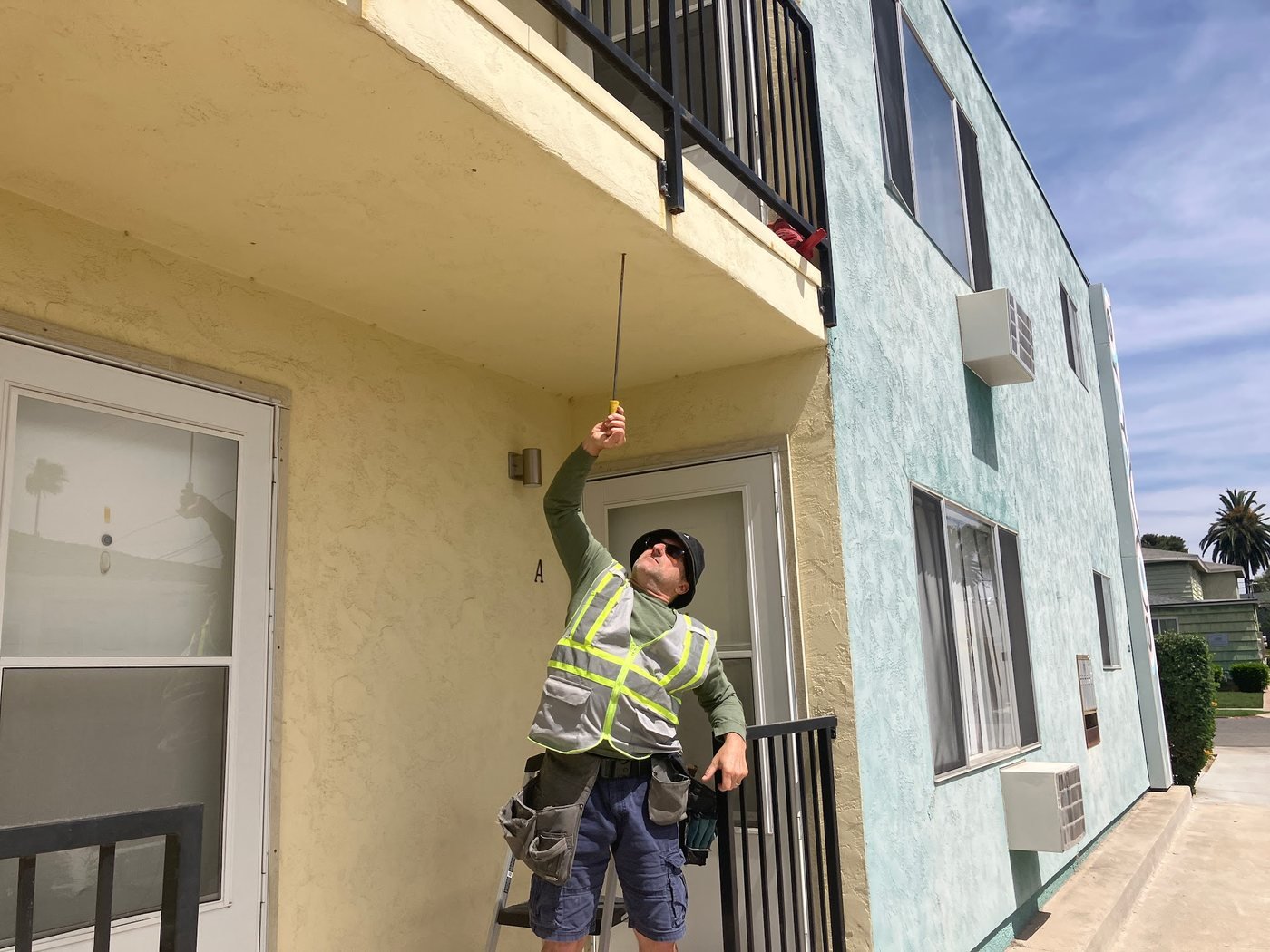
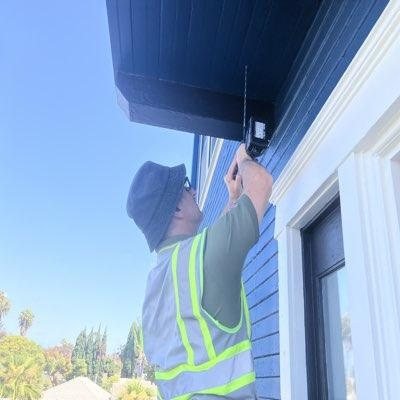
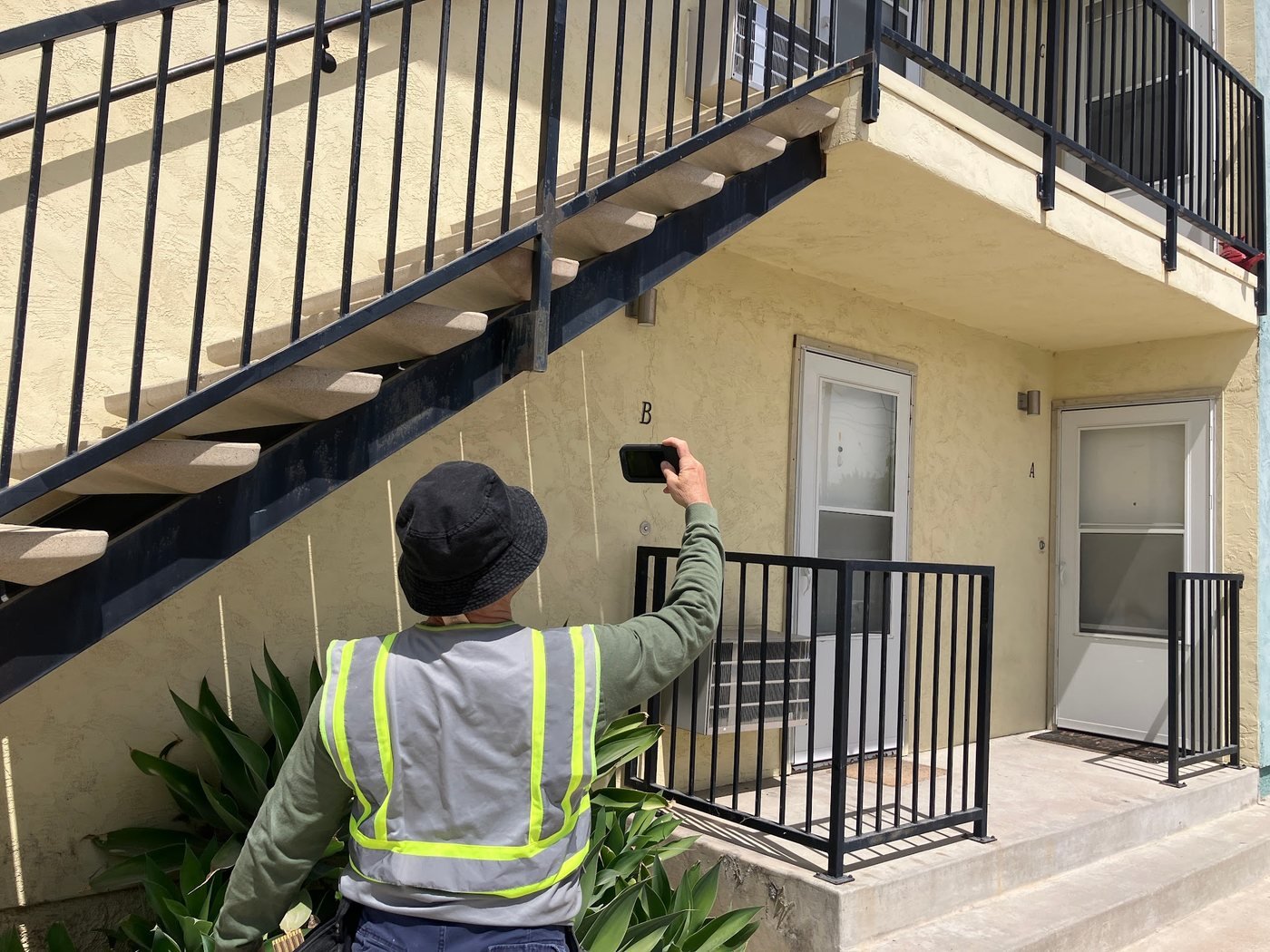
Our inspectors use FLIR thermal cameras to find moisture and heat issues hidden in walls and soffits.
More inspections in Julian
- Roof inspection in Julian
- Foundation slab survey in Julian
- SB 721 balcony inspection in Julian
- SB 326 balcony inspection in Julian
- Home inspection in Julian
Nearby and countywide
Were You Happy With Your Inspection?
We are proud of our 4.9-star rating across 100+ Google reviews. If Joseph and the team did right by you, a quick Google review helps other San Diego County buyers and sellers find us.