
Roof Inspection in Del Mar, CA
In Del Mar the roof is the part of a home most exposed to the ocean and the part nobody gets a good look at. It pitches away from the street toward the water on the bluff-front lots off Ocean Front and Stratford Court, hides behind a parapet on the modern builds in Del Mar Heights, or sits two stories up over a canyon in Olde Del Mar. Salt air off the beach, the marine layer that hangs in the San Dieguito River valley most mornings, and unfiltered coastal sun all age a roof here on a faster clock than the same roof would run a few miles inland.
A roof inspection is a focused, visual read of that system before it becomes your problem. We assess the covering — asphalt shingle, concrete or clay tile, or the flat foam and modified-bitumen decks common on Del Mar's contemporary and remodeled homes — along with the flashing, valleys, penetrations, vents, skylights, gutters, and drainage that decide whether water stays out. We walk the roof where it's safe and inspect from ladders, eaves, and the attic where it isn't. We document condition and remaining-life indicators with photos. We don't certify roofs and we don't repair them; when the roof needs work or a formal certification, we point you to a licensed roofer.
Call (619) 752-4399 Schedule an Inspection
What does a Del Mar roof inspection cover?
This is a condition assessment of the whole roofing system, not just the surface visible from the curb or the racetrack-side approach. On a Del Mar property we look at and photograph:
- The roof covering — asphalt/composition shingle, concrete or clay tile, and the flat foam (SPF), modified-bitumen, and single-ply decks found on many Del Mar Heights and beach-modern homes. We note material, apparent age, and how much serviceable life the surface appears to have left.
- Flashing and transitions — the metal at chimneys, sidewalls, valleys, and roof-to-wall joints, where salt corrosion and tired sealant let water in well before the field of the roof gives out.
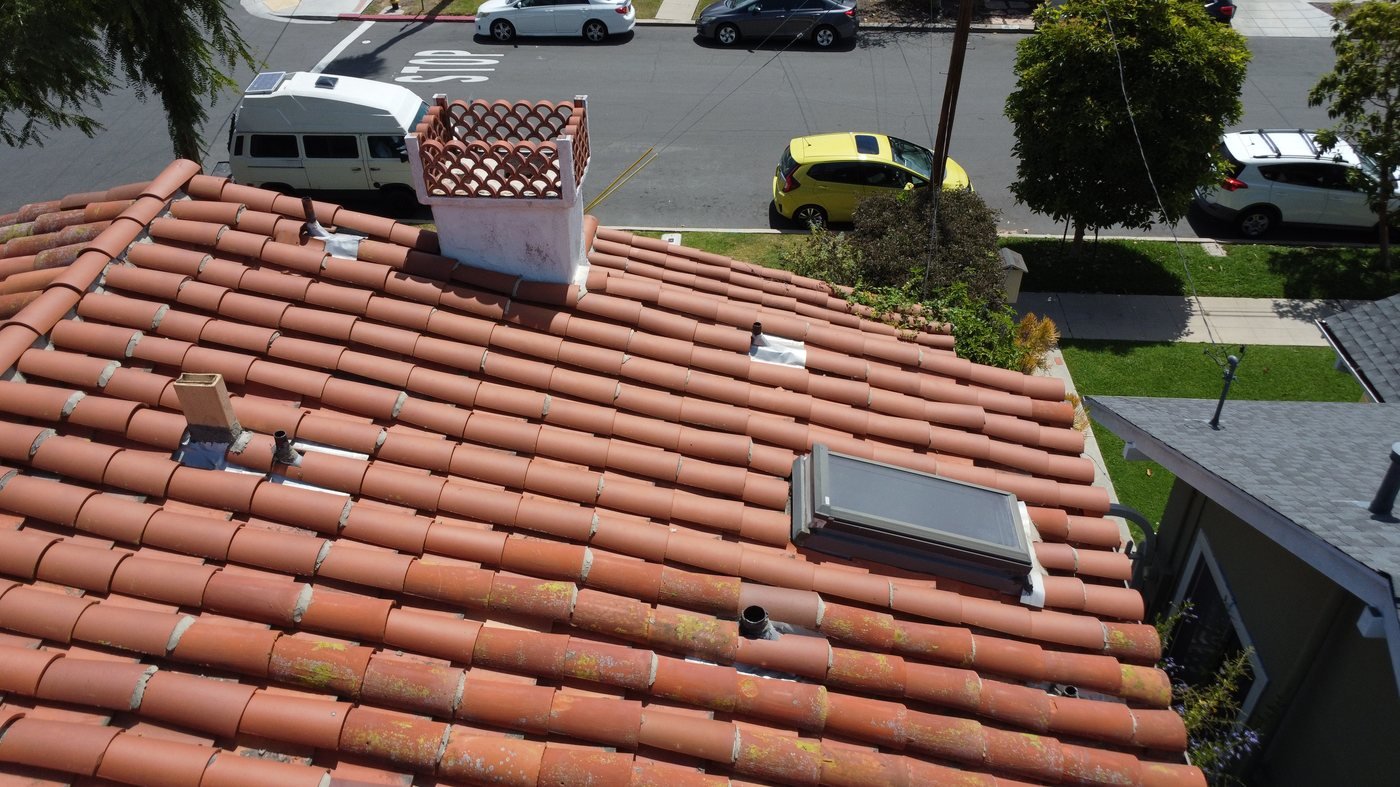
- Penetrations and rooftop equipment — plumbing vents, HVAC curbs, solar mounts, and skylights, each a deliberate hole that depends on intact flashing and boots.
- Gutters, scuppers, and drainage — how water is meant to leave, which matters most on the flat and low-slope decks that ring the beach blocks and the Heights.
- Valleys and low-slope sections — where water concentrates and finds the smallest gap.
- Attic and underside, where accessible — staining, active moisture, daylight at the deck, and ventilation. On the coast that airflow is the difference between a roof that dries each morning and one quietly rotting from below.
We report only what we can safely reach and see. On a steep tile pitch, a fragile foam deck, or a wet roof after a marine-layer morning, we inspect from the eaves, ladders, and attic and tell you plainly what was viewable and what wasn't — instead of implying we walked a roof we never stepped onto.
What do Del Mar's coast and river valley do to a roof?
Del Mar packs a lot of punishment into a small footprint. The bluff-front blocks, the river-valley lots, and the inland Heights each weather a roof differently, and the inspection has to read all three:
- Salt on the metal. On the bluff-front and beach-colony homes within sight of the surf, flashing, fasteners, drip edge, and vent collars corrode early. The field of the roof can still look serviceable while the metal that actually keeps it watertight is rusting through at the seams — the most common coastal failure we document.
- Bluff exposure and onshore wind. Lots perched on the eroding coastal bluff catch direct onshore wind that lifts shingle tabs and drives rain up under flashing, and the constant exposure weathers the seaward slope faster than the rest of the roof.
- River-valley moisture and a high water table. Homes near the San Dieguito River mouth and the lower valley sit in heavy marine humidity that holds north slopes, valleys, and shaded sections damp for hours, feeding moss and algae and slowing the drying a roof relies on.
- Coastal UV on flat foam. The foam and modified-bitumen decks common on Del Mar Heights and contemporary beach homes live and die by their coating. Marine UV chalks and cracks that top layer, and once it's gone the foam underneath degrades fast and starts ponding.
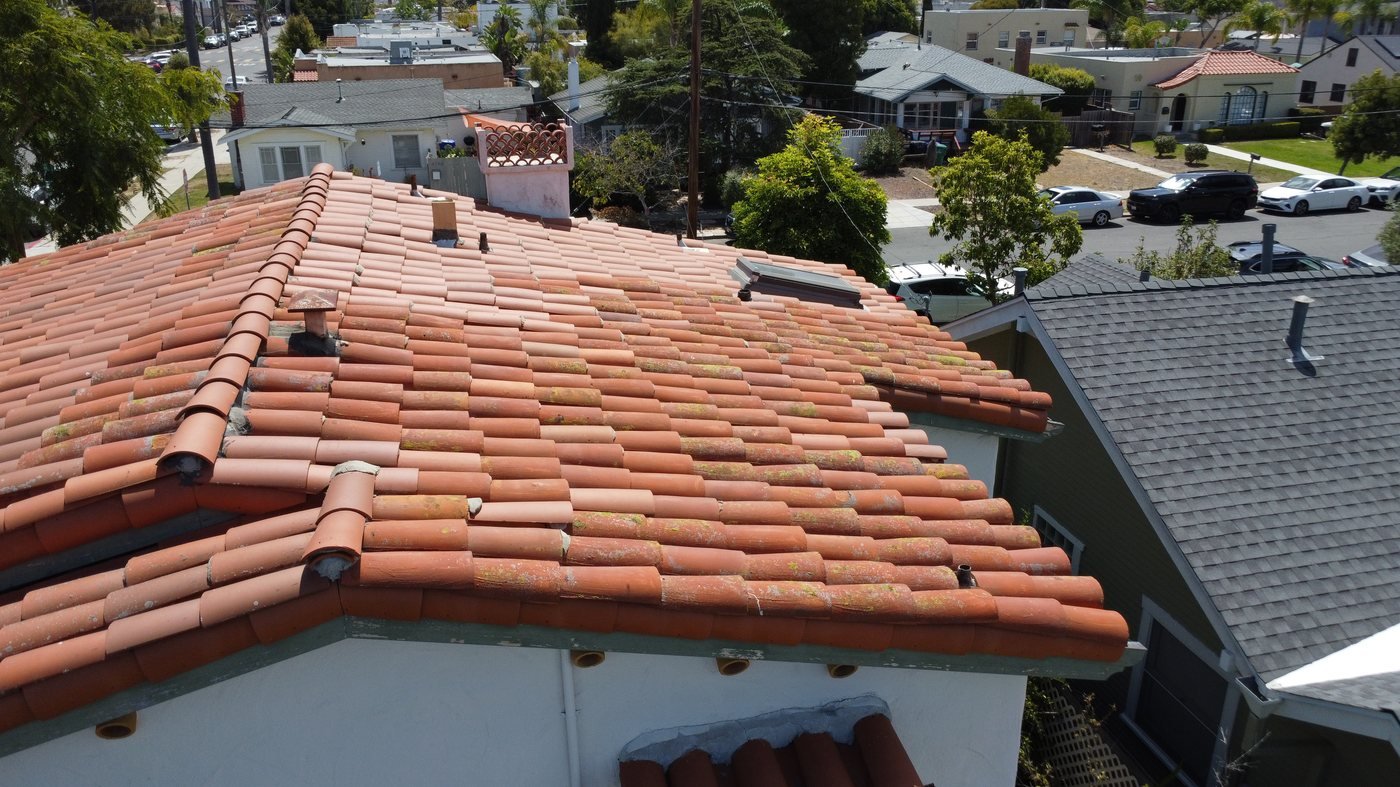
- Tile that outlives its underlayment. Concrete and clay tile is everywhere on the larger and Mediterranean-style homes here. The tile lasts decades while the underlayment beneath it doesn't — so a roof that looks permanent may already be leaking under intact-looking tile.
- Wildfire-ember exposure inland. In the canyon-edge and WUI pockets backing the Heights and the upper valley, we watch ember-vulnerable roof and attic vents, open eaves, and valleys loaded with leaf litter.
What do we routinely find on Del Mar roofs?
Inspect enough roofs between the Beach Colony, Olde Del Mar, and the Heights and the same defects keep surfacing. Most aren't reasons to walk away — they're items to understand, price with a roofer, and weigh before closing:
- Corroded and lifting flashing. Rusted, loose, or poorly sealed metal at chimneys, sidewalls, and skylights — the single most frequent finding this close to the surf.
- Failed coating on flat foam decks. Chalked, cracked, blistered, or ponding foam and modified-bitumen sections where the protective coat has worn through and water now sits.
- Cracked and slipped tile. Broken, displaced, or previously foot-trafficked tile over brittle or already-failed underlayment on the valley and hillside homes.
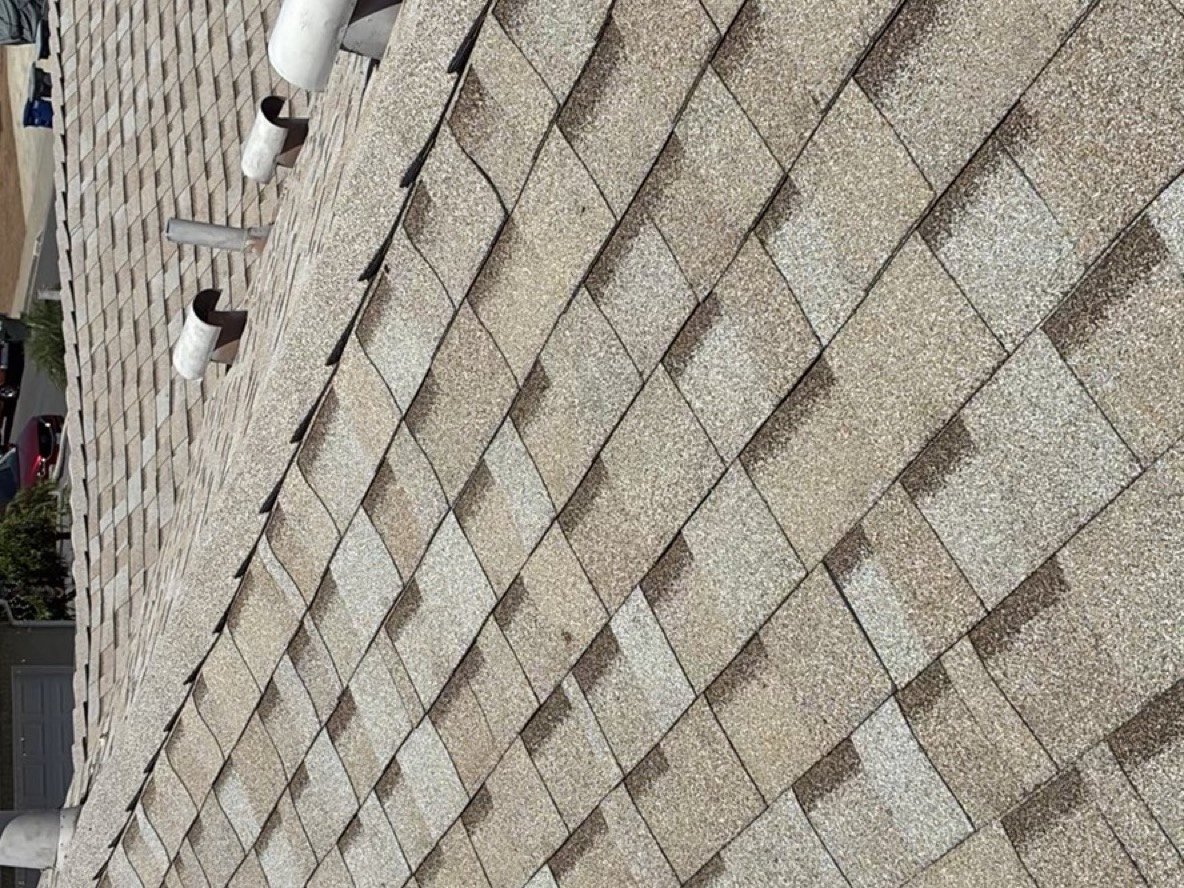
- Aging shingle. Granule loss, curling, and moss or algae on asphalt shingle, accelerated on the fog-held north slopes near the river.
- Drainage that backs up. Clogged gutters, undersized or blocked scuppers, and ponding on low-slope decks where water can't leave fast enough — a real concern on flat-roofed beach builds.
- Attic clues. Staining at the deck, prior leak patches, daylight at penetrations, and weak ventilation that traps coastal moisture and shortens the roof's life from underneath.
When we find a leak indicator, we trace it as far as safe access allows — from the attic stain back toward the failed flashing or penetration above — so a roofer knows where to start rather than guess.
How does the inspection run and what does your report show?
We start from the ground and the eaves, then get onto the roof itself whenever the pitch, material, and safety allow — a walkable shingle or low-slope deck gets a hands-on, close look. On a steep tile roof or a fragile foam deck where walking would crack tile or puncture the membrane, we inspect from ladders, the perimeter, and the attic, because protecting the roof we're evaluating beats a better photo angle. Where it's accessible, we read the attic underside for moisture, staining, and ventilation. On a major-system call like a roof, you're welcome to have us walk you through what we found.
Your deliverable is a photo-documented HomeGauge report that names the covering, locates each defect, and gives our read on condition and remaining-life indicators — the difference between re-flashing one chimney and a covering near the end of its run. We turn findings around same day or next day, so an escrow contingency on a Del Mar purchase never stalls waiting on us.
One boundary we're upfront about: we assess and document, we don't certify or repair. We don't issue roof certifications, seal flashing, or re-coat foam, and we never bid the work we find — so nothing in the report carries a conflict of interest. When the roof needs repair or a buyer or lender wants a formal certification, we refer a licensed roofer and hand over our photos and notes to give them a running start.
Why do Del Mar buyers and owners call Joseph Romeo?
Reading a roof well is part knowing the material and part knowing what the repair actually involves. Your inspection is led by Joseph Romeo, an InterNACHI Certified Professional Inspector (CPI) who also holds a California CSLB General Contractor license (#1113143). That builder's background matters on a Del Mar roof — he can tell you whether what's on the surface means re-flashing a single chimney or re-roofing an entire bluff-front home, so you head into negotiation knowing the difference rather than the worst case.
- 20+ years and more than 10,000 inspections across San Diego County's coast, river valleys, and inland hills.
- 4.9 stars across 106 Google reviews from buyers, sellers, and agents.
- Straight talk — we tell you what we'd want to know if we were buying the home ourselves, with no scare tactics and no push toward repairs we don't perform.
- Real familiarity with Del Mar's roofing mix, from clay and concrete tile on the larger estates to flat foam decks in the Heights and aging shingle near the river.
We are InterNACHI CPI and CSLB-licensed; we are not ASHI or CREIA members, and we don't post flat prices — the fee tracks the roof's size, pitch, and access, so we point you to the fee schedule or confirm a quote before you book.
What related inspections suit Del Mar properties?
A roof inspection answers the water-and-remaining-life question, but the roof rarely ages alone on a Del Mar home. We offer the full range so you can cover the property in one coordinated visit:
- Full home inspection — all accessible systems together with the roof folded in, the foundation of any Del Mar purchase and the visit we most often assess the roof within.
- Thermal/infrared imaging — reads hidden moisture behind ceilings and walls, a real payoff in a fog-and-river corridor where a slow roof leak can wet framing long before it stains.
- 4-point inspection — the roof-electrical-plumbing-HVAC summary insurers ask for on older Olde Del Mar and beach-cottage homes.
- Sewer scope — a camera down the buried lateral, smart on the older homes near the river with mature trees over the line.
- Pool & spa inspection — equipment, bonding, and safety on the larger hillside and estate lots built around a backyard pool.
The pairing we recommend most often is the roof inspection alongside a full home inspection, for one read on the whole property in a single trip. We suggest what fits your purchase instead of pushing a package.
Del Mar Roof Inspection FAQs
Do you walk the roof, or inspect it from the ground?
Why does salt air matter for a Del Mar roof inspection?
Does living near the San Dieguito River affect my roof?
My Del Mar home has a tile roof that looks perfect. Why inspect it?
Will you certify the roof or repair what you find?
What does a roof inspection in Del Mar cost?
Roofs we document
Aerial and on-roof photos from recent San Diego County roof inspections.
More inspections in Del Mar
- Commercial inspection in Del Mar
- Pool and spa inspection in Del Mar
- Sewer scope inspection in Del Mar
- 4-point inspection in Del Mar
- Home inspection in Del Mar
Nearby and countywide
Were You Happy With Your Inspection?
We are proud of our 4.9-star rating across 100+ Google reviews. If Joseph and the team did right by you, a quick Google review helps other San Diego County buyers and sellers find us.