
Foundation & Slab Inspection in Del Mar, CA
In Del Mar the prettiest part of the house is rarely the part that's struggling. A remodeled beach-colony cottage west of the tracks can look immaculate while the slab beneath it sits in soil that stays damp year-round, and a custom build up in Del Mar Heights can have a chef's kitchen and a floor that quietly runs downhill toward the canyon. A foundation and slab inspection is the step where someone reads the whole picture — the cracks, the floor slope, the doors that won't latch, and the water moving around the lot — instead of judging each clue alone.
We walk the property inside and out to confirm what kind of foundation you actually have — slab-on-grade, a raised perimeter foundation over a crawlspace, or a post-tension slab on a newer luxury rebuild — and we document the signs of movement that go with it: slab and stem-wall cracking, uneven or sloping floors, sticking doors and windows, drywall cracks at openings, and the grading, drainage, and soil conditions driving them. This is a plain-language condition report, not an engineering certification. When the evidence points to active or structural movement, we say so and refer a licensed structural engineer for the certification or repair design — we don't perform that work, and we don't bid the fix.
Call (619) 752-4399 Schedule an Inspection
What does a Del Mar foundation and slab inspection cover?
This is a careful visual assessment of the foundation system and whatever evidence the home is giving up about how it's moving. On a Del Mar property we document:
- Foundation type — slab-on-grade, a raised perimeter foundation over a crawlspace (common in the older Beach Colony cottages and the homes along Stratford Court and Ocean Avenue), or a post-tension slab under a newer custom build. The type sets the rules for what's normal and what isn't.
- Slab and stem-wall cracks — we map cracking in the slab and the perimeter stem walls, noting width, direction, and whether it reads as ordinary curing shrinkage or something still on the move.
- Floor level and slope — floors that pitch, dip, or bounce, the kind of thing that points to settlement, heave, or a sagging structure under a raised home.
- Doors, windows, and drywall — openings that stick or sit out of square and the diagonal cracks running off their corners, among the most honest signals a frame is racking over a moving base.
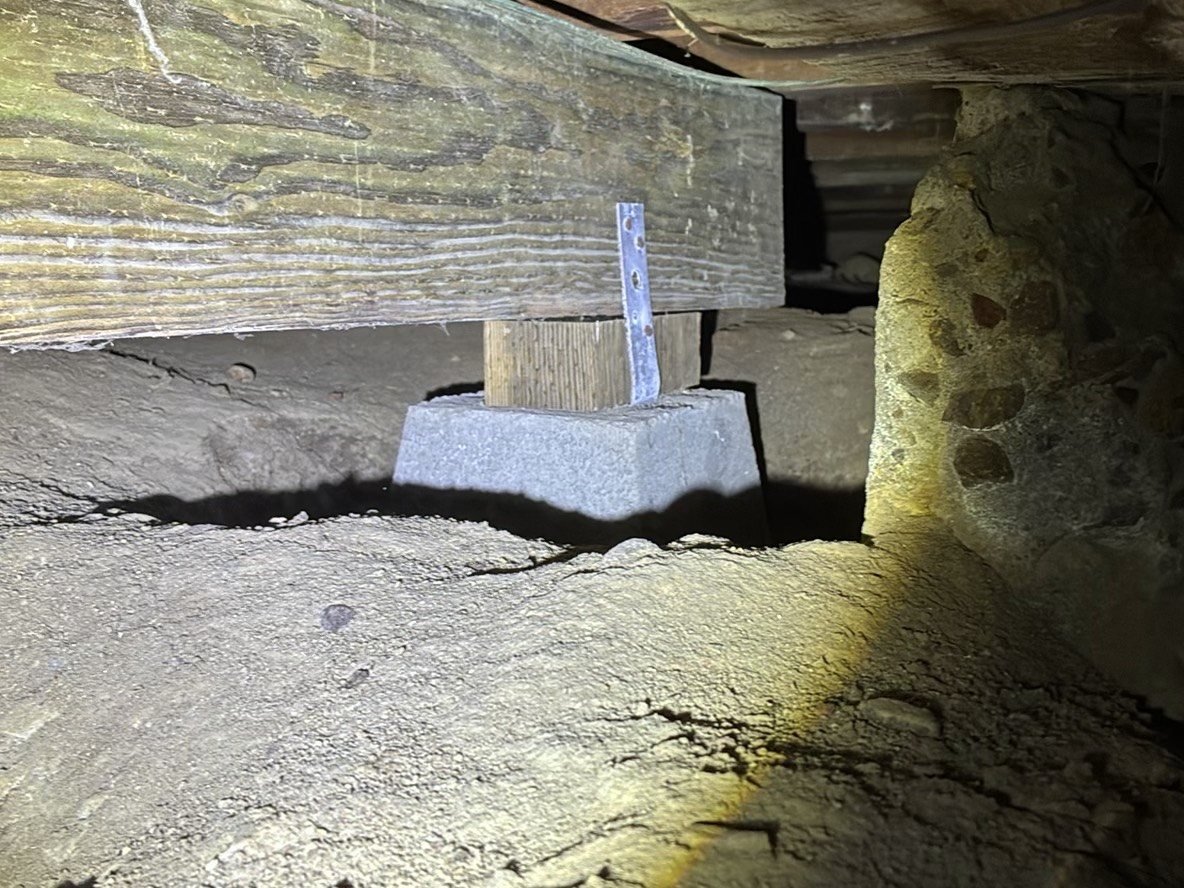
- Crawlspace structure — on raised homes we look, where accessible, at posts, piers, girders, sill plates, and any moisture, rot, or prior shoring.
- Grading, drainage, and soil — how water is meant to leave a tight coastal lot, whether grade falls toward the house, and the soil and slope conditions that drive movement in this stretch of the county.
We report what's visible and accessible. Where finished flooring, built-ins, storage, or a tight crawlspace block the view, we say so plainly instead of implying we cleared a foundation we couldn't actually reach.
Which Del Mar ground conditions put a foundation to work?
Del Mar packs several very different ground conditions into a couple of square miles, and each one stresses a foundation its own way. Here's what we're reading against:
- The San Dieguito river valley and lagoon. Homes near the river mouth, the lagoon, and the low ground along Jimmy Durante sit over a high water table and soft alluvial soil. Saturated, poorly draining ground undermines bearing, feeds crawlspace moisture, and is a prime driver of settlement on the valley floor.
- Beachfront and Beach Colony lots. West of the railroad, the cottages on the sand sit in salt air with the water table close beneath. Salt attacks exposed rebar, anchor bolts, hold-downs, and sill connections; the rust expands and spalls concrete from the inside, so we read stem-wall faces and crawlspace metal closely.
- The coastal bluffs along the rail line. The bluff edge above the beach and the tracks is actively retreating. On bluff-adjacent lots we look hard at the foundation nearest the ocean side for differential movement and cracking that tracks the slope.
- Del Mar Heights and Crest Canyon slopes. Up the hill, graded hillside and canyon-rim lots sit on cut-and-fill and decomposed-granite soils that creep slowly downhill, loading the uphill foundation and opening cracks on the downhill side.
- Marine-layer damp. The fog belt keeps crawlspace soil wet under raised cottages, feeding rot at posts and sill plates and keeping any expansive soil cycling seasonally.
- Post-tension slabs on new builds. The custom homes replacing older Del Mar stock often sit on post-tension slabs, which carry their own rules — you don't core them casually, and the slab edge and floor condition deserve a type-aware look.
What do we routinely find on Del Mar foundations?
Inspect enough foundations from the Beach Colony up to the Heights and the same patterns keep surfacing — most of them conditions to understand and watch, not automatic deal-breakers:
- Settlement on the valley floor — cracking and floor slope on homes near the lagoon and river, where soft, saturated soil and a high water table let the foundation drop unevenly.
- Corroded connections near the sand — rusting anchor bolts, hold-downs, and rebar with rust staining and spalled concrete at the stem wall on beachfront and Beach Colony homes inside the salt-air zone.
- Hillside differential movement — stair-step cracking and floors pitching toward the canyon on Del Mar Heights and Crest Canyon lots, the signature of slope creep and cut-and-fill settling at different rates.
- Crawlspace moisture and rot — damp soil, efflorescence, and decayed posts and girders under older raised cottages kept wet by the marine layer and the high water table.
- Cosmetic shrinkage cracks — thin, often spider-pattern cracks in garage and patio slabs that came from concrete curing rather than movement, common and usually nothing structural.
- Drainage working against the structure — negative grade, failing area drains, and downspouts discharging next to the foundation on tight, built-out coastal lots.
When a crack is wide, actively widening, or paired with measurable floor slope, we don't shrug it off and we don't oversell it — we describe what we see and flag whether it warrants an engineer's evaluation.
How does the inspection run and what does your report show?
We start outside, walking the perimeter to read the foundation type, the stem walls, the grade, and how water is supposed to leave the lot — which on a Del Mar valley or bluff lot is half the story. Inside, we check floors for slope and bounce, work the doors and windows, and trace cracking through the drywall at openings. On a raised cottage we enter the accessible crawlspace, conditions permitting, to look at posts, piers, girders, sill plates, moisture, and any past shoring. You're welcome to walk it with us — standing at a stair-step crack or feeling a floor pitch toward the canyon lands a finding in a way a paragraph never quite does.
Your deliverable is a photo-documented HomeGauge report that names the foundation type, locates the significant cracks and slope, and explains in plain terms whether what we found reads as routine for the home's age and ground or as a sign of active movement. We turn it around same day or next day, so an escrow contingency never stalls waiting on it.
Here's the line we're upfront about: we inspect and report observed condition — we don't issue structural certifications, perform engineering analysis, run leak pressure-tests, or handle termite/WDO work in-house. When a finding warrants a licensed structural engineer or a pest specialist, we say so plainly and coordinate or refer the right professional. We also don't bid or perform repairs on a home we inspect, which keeps the report independent and genuinely useful to you, your agent, and any engineer who picks it up next.
Why do Del Mar buyers and owners call Joseph Romeo?
Reading a foundation well is half knowing what a crack is telling you and half knowing what the repair would involve. Your inspection is led by Joseph Romeo, an InterNACHI Certified Professional Inspector (CPI) who also holds a California CSLB General Contractor license (#1113143). On a Del Mar property that contracting background carries real weight — he's built and corrected the structures he's now reading, so he can tell a curing crack from a movement crack and tell you whether a finding warrants an engineer before you close, rather than just photographing it and leaving you to guess.
- 20+ years and more than 10,000 inspections across San Diego County's coast, valleys, and hillside neighborhoods — from Beach Colony cottages to post-tension custom builds in the Heights.
- 4.9 stars across 106 Google reviews from buyers, sellers, and agents.
- Straight talk — we tell you what we'd want to know if we were buying the home ourselves, with no scare tactics and no push toward repairs we don't perform.
- Reports an engineer can act on without re-walking the whole house.
We are InterNACHI CPI and CSLB-licensed; we are not ASHI or CREIA members, and we don't post flat prices, because the fee depends on the home's size, foundation type, and access. We point you to the fee schedule or confirm a quote before you book.
What related inspections should Del Mar buyers consider?
A foundation and slab inspection is usually one piece of a larger read on a Del Mar property, especially an older cottage near the water or a custom home on a slope. Buyers here commonly pair it with:
- Full home inspection — the roof, electrical, plumbing, and the rest of the structure, the visit we most often run the foundation assessment alongside.
- Sewer scope — a camera down the lateral, worth coordinating on the older lines near the Beach Colony and the river valley, since a leaking lateral can saturate already-wet soil and feed movement.
- Thermal/infrared imaging — reads hidden moisture behind walls and under floors, a real asset near the lagoon's high water table and the coastal marine layer.
- Roof inspection — the salt-stressed flashing and coverings that fail early this close to the ocean, and the drainage that starts up top and ends at your foundation.
- Specialist coordination — for a structural certification or repair design, an engineering report, or a termite/WDO evaluation of crawlspace damage, we refer the right licensed professional rather than stretch past our scope.
The pairing we recommend most often on an older Del Mar home is the foundation assessment alongside a full home inspection and a sewer scope — one coordinated read on the whole property in a single visit.
Del Mar Foundation & Slab Inspection FAQs
What does a foundation & slab inspection in Del Mar cost?
Why do homes near the San Dieguito lagoon settle?
Does salt air really affect a beachfront Del Mar foundation?
Do hillside lots in Del Mar Heights need extra attention?
Do you certify the foundation or design the repair?
Can you inspect a post-tension slab on a newer Del Mar build?
Slab surveys in action
ZipLevel altimeter measurements and foundation documentation from recent surveys.
More inspections in Del Mar
- Seller inspection in Del Mar
- Warranty inspection in Del Mar
- Commercial roof cleaning in Del Mar
- Commercial inspection in Del Mar
- Home inspection in Del Mar
Nearby and countywide
Were You Happy With Your Inspection?
We are proud of our 4.9-star rating across 100+ Google reviews. If Joseph and the team did right by you, a quick Google review helps other San Diego County buyers and sellers find us.