
Thermal Imaging Inspection in Rancho Bernardo, CA
Rancho Bernardo was master-planned in waves — Bernardo Heights and Westwood in the 70s and 80s, Oaks North and the later hillside villages climbing the slopes off Bernardo Center Drive. Walk a 1984 home here and the bones are solid, but the systems have aged: original copper, panels never meant for today's load, attic insulation that has settled across four decades. A standard walkthrough sees the finished surface. It does not see the temperature underneath, and out here temperature is where the trouble hides — the damp band under a slider, the breaker running warmer than the ones beside it, the cold void where a batt slid down a sloped ceiling.
I'm Joseph Romeo. The infrared scan I add during the inspection turns those heat differences into something on a screen you can act on, which is the only way to surface aging-system problems in these tracts before they read as a stain or a runaway water bill. It rides along with the Rancho Bernardo home inspection as a non-invasive add-on — nothing opened, nothing torn out — and I'll say plainly where it stops: it flags thermal anomalies worth a closer look, it is not an x-ray and it does not promise what sits behind the wall. Below is what the scan reads, why RB's hillside soils, inland heat, and aging stock earn the camera, and what I keep catching with it.
Call (619) 752-4399 Schedule an Inspection
What does the infrared scan add to a Rancho Bernardo inspection?
An infrared camera renders surface temperature as an image. Where drywall, a ceiling, or an electrical panel should read uniform, the odd spot — a cool shadow, a warm joint, a damp stripe — points to what is going on just under the finish. Folded into the standard inspection on a Rancho Bernardo home, the sweep takes in:
- Hidden moisture and active plumbing leaks — as water evaporates it draws the wet material cooler than what surrounds it, so intrusion past a window or a leaking supply line shows as a temperature signature long before paint blisters
- Settled, thin, or missing insulation — four decades of attic settling in these tracts leaves voids the camera maps as bands where conditioned air bleeds through the envelope
- Electrical connections running hot — a tired breaker, a loose lug, or a circuit carrying more than it was built for reads warmer than its neighbors at the panel, a pattern the eye alone passes over
- HVAC delivery faults — ducts that worked loose in the attic, registers not pushing conditioned air, and rooms that never catch up to the rest of the floor plan
- Slab and floor anomalies — warm trails where a pressurized line is seeping under the slab, the early signature that beats a spiking bill by weeks
Two honest limits: the camera reads the surface, not literally inside the cavity, and a flagged anomaly is a reason to investigate, not a confirmed defect. When something lights up I document it, confirm it with a moisture meter where reachable, and name the exact next move rather than calling a repair off a colorful picture.
Why do Rancho Bernardo's hillside tracts earn the camera?
RB sits inland and uphill, away from the steady coastal damp, and that shapes what the camera is hunting compared with a beach home. The local conditions that make the scan pay here:
- Expansive soil on graded slopes: these villages were cut into hillsides, and the clay-heavy inland soil swells and shrinks with the seasons, flexing slabs and the plumbing cast into or run beneath them. That movement is a leading driver of slab leaks, and a slow under-slab leak often surfaces as a warm thermal trail across the floor before anyone spots a high bill.
- Inland heat load: RB runs hot through summer, well above the coastline, so attic insulation and duct integrity carry real weight. Infrared maps the thin and settled spots that push up cooling bills and leave upstairs bedrooms uncomfortable.
- Aging 70s-90s wiring: panels and branch circuits in Bernardo Heights, Westwood, and the original tracts have been added to over decades — sub-panels, pools, EV chargers. Loose or overloaded connections heat up under load, and the camera catches those hot spots at the service equipment.
- Wildfire-interface exposure: RB sits in the wildland-urban interface and took fire damage in 2007. On WUI parcels, attic and eave details matter, and infrared helps confirm insulation coverage and flag the gaps that affect both comfort and resilience.
- Window and roof-penetration leaks: winter rains still find aging sliders, skylights, and the vaulted-ceiling penetrations common in these floor plans, and evaporative cooling makes those wet spots stand out on the camera.
What does the camera keep turning up across Rancho Bernardo?
Scan enough of these tracts and the findings start to rhyme. Knowing the recurring patterns helps you judge whether a flag is routine or worth chasing before your contingency closes:
- Warm floor trails from a slab leak — a heat path crossing the slab where a pressurized line seeps beneath, stressed by the expansive hillside soil, the higher-stakes find out here
- Damp sliders and vaulted-ceiling penetrations — cool evaporative shadows where winter rain has worked past aging glazing or a skylight in these 80s floor plans
- Settled attic insulation over bedrooms — thermal voids that explain a hot upstairs room and the summer cooling bill that climbs every July
- Hot breakers and loose panel lugs — warm spots at original service panels that have absorbed decades of added circuits and warrant an electrician's eyes
- Loose or disconnected attic ductwork — a supply run dumping conditioned air into the attic so a back bedroom never reaches temperature
- Water-heater and supply-line seepage — slow drips behind a wall or under a cabinet on aging original plumbing that have not yet shown a stain
None of these is automatically a deal-breaker. The value is catching them early: the report separates a minor insulation gap you would simply monitor from an active under-slab leak that changes your numbers, so you negotiate on what is real.
How do I run the sweep and what report do you get?
It begins with a call to (619) 752-4399 or an email noting the Rancho Bernardo address and that you want infrared added. The scan does its best work inside the standard inspection rather than as a blind standalone pass — the camera tells me where to look, and the hands-on checks confirm what it found.
A useful read depends on contrast: the camera needs a temperature difference between inside and outside for anomalies to stand out, so I time the sweep to where the read is cleanest, with the HVAC running and the water on. On these hillside homes I pay extra attention to sliders, skylights, vaulted-ceiling penetrations, and the floor areas over slab plumbing, since that is where RB's leaks tend to start. You are welcome to follow on the screen as a cool bloom spreads across a wall or a breaker glows against its cooler neighbors — the moment to talk through what needs a specialist versus what you simply monitor.
Everything lands in a HomeGauge report with infrared images paired to standard photos, each anomaly described in plain language, the confirming meter reading where I took one, and a clear next step for anything that needs it. Most reports go out same day or the next day. I report what the camera and meter observed — I do not open walls, run leak pressure-tests, or perform the repairs.
Why do Rancho Bernardo buyers and agents trust the read?
Owning the camera is the easy part; reading it correctly is the work. A cool spot can be a leak, a draft, or a cold-water line doing exactly what it should — telling those apart is judgment, not equipment. I'm an InterNACHI Certified Professional Inspector (CPI) and I hold a California CSLB General Contractor license (#1113143). That building background lets me read a thermal anomaly against how these RB tracts were actually framed — whether a cool plume under a slider is real intrusion or just a shaded wall, whether a warm patch at the panel is a failing connection or a sub-panel under load.
- 20+ years and 10,000+ inspections across San Diego County, including Rancho Bernardo's Bernardo Heights, Westwood, and Oaks North tracts and the later hillside villages
- 4.9 stars across 106 Google reviews
- Independent and conflict-free — I scan and report what the camera shows; I do not sell repairs, restoration, or electrical work, so no flag is ever steered toward a job I would profit from
When an anomaly needs more than a camera — a confirmed slab leak, a panel issue, a moisture concern — I coordinate or refer the right licensed specialist and hand over the imagery so they start from evidence, not a hunch. Reach me at joe@sandiegohomeinspection.com or the number above.
Which related inspections fit Rancho Bernardo properties?
Infrared sharpens an inspection; it does not stand in for one. On a Rancho Bernardo home these companion services pair naturally with the scan and book on a single trip:
- Full home inspection: the complete buyer's-grade evaluation the thermal scan layers onto — start at the Rancho Bernardo home inspection hub
- Sewer scope inspection: when the camera flags floor moisture, a camera down the lateral confirms whether a leaking line is the source — worth it on the aging laterals common in these tracts
- Roof inspection: when infrared catches a cool ceiling plume, a roof read tracks the intrusion back to its source above — sun-beaten RB roofs and skylight penetrations are frequent entry points
- Foundation and slab evaluation: valuable on the same expansive hillside soil that drives the slab leaks the camera detects
- Pool and spa inspection: common on RB's larger hillside lots and easily added to the same visit
Not sure what your address needs? Send it over and I'll tell you whether infrared is worth adding — see all inspection services we offer or get a quote through contact.
Rancho Bernardo Thermal Imaging Inspection FAQs
What does adding thermal imaging cost in Rancho Bernardo?
Can infrared find a slab leak under my Rancho Bernardo home?
Is thermal imaging worth it on an older Rancho Bernardo tract home?
Does thermal imaging see inside the walls of my Rancho Bernardo home?
Do I need to prep my Rancho Bernardo home before the scan?
What happens if the camera flags a problem in my RB home?
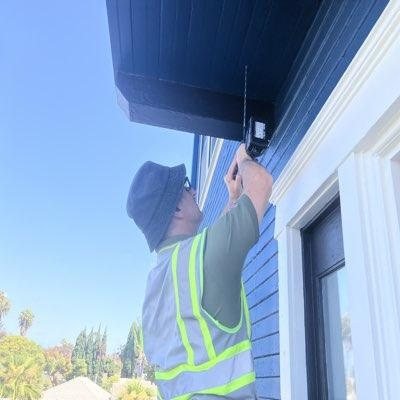
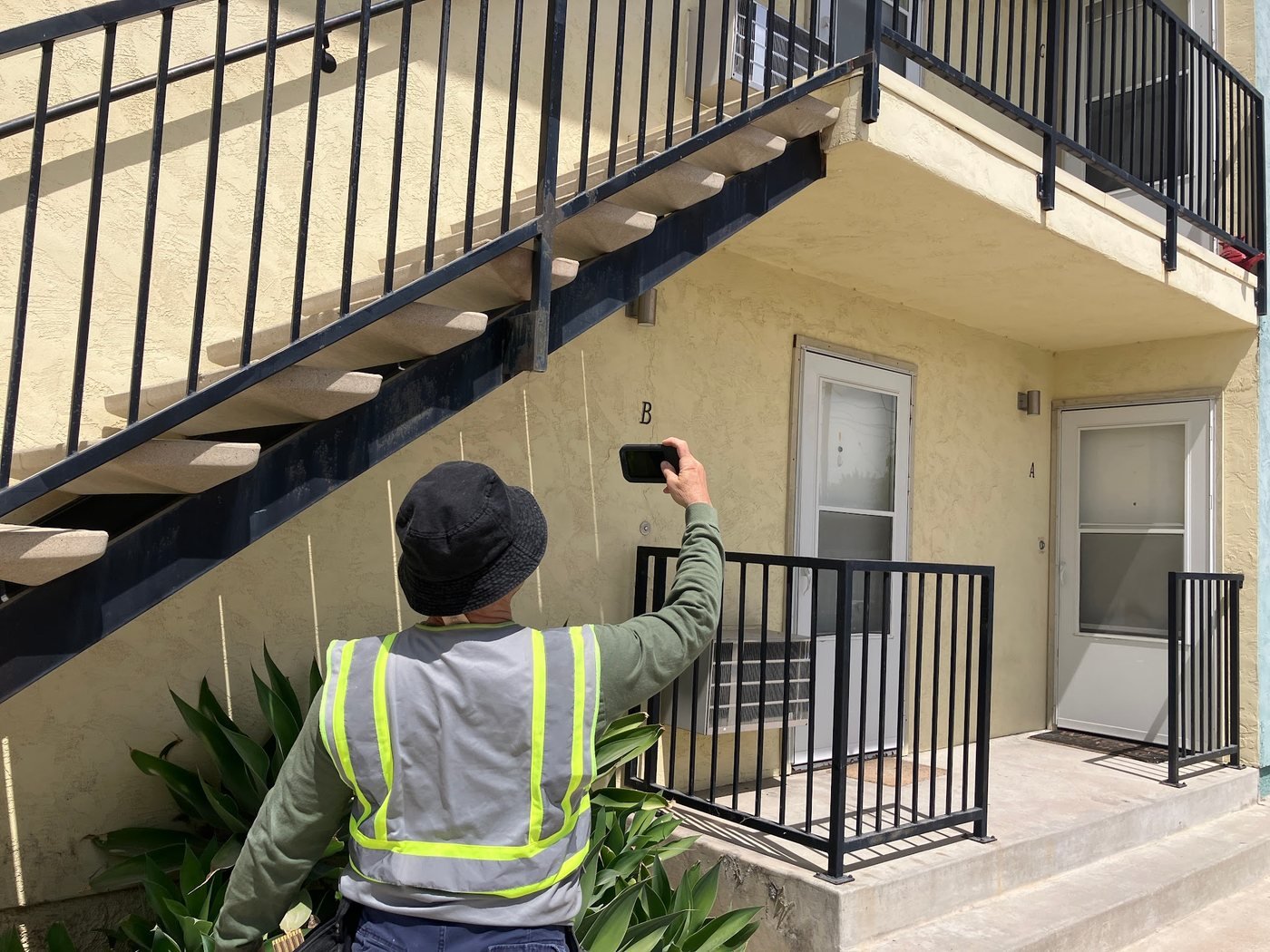
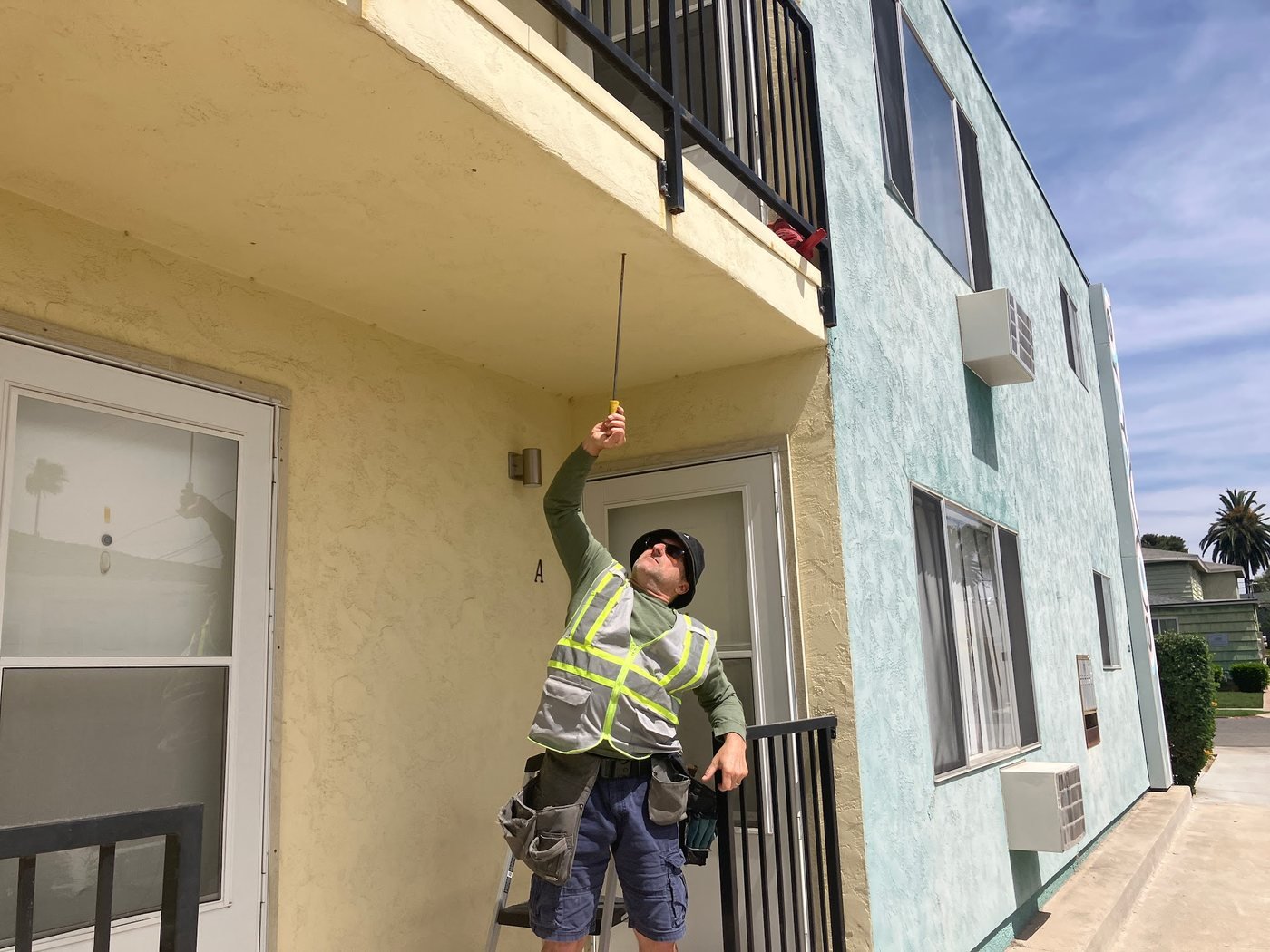
Thermal scanning in action
Our inspectors use FLIR thermal cameras to find moisture and heat issues hidden in walls and soffits.
More inspections in Rancho Bernardo
- Foundation slab survey in Rancho Bernardo
- SB 721 balcony inspection in Rancho Bernardo
- SB 326 balcony inspection in Rancho Bernardo
- SB 721 exemption letter in Rancho Bernardo
- Home inspection in Rancho Bernardo
Nearby and countywide
Were You Happy With Your Inspection?
We are proud of our 4.9-star rating across 100+ Google reviews. If Joseph and the team did right by you, a quick Google review helps other San Diego County buyers and sellers find us.