
Thermal Imaging Inspection in 4S Ranch, CA
4S Ranch reads young on paper — most of it went up in the 2000s, slab-on-grade pads, stucco walls, tile roofs, solar-ready from the framing stage. Buyers assume a home this new has nothing to hide. After 10,000-plus inspections I can tell you a 2004 tract home off Camino San Bernardo hides defects differently than a 1965 one does: not worn-out wiring, but a duct that pulled loose in the attic during a fast build, a batt of insulation that was never seated right, a stucco penetration that has been wicking marine moisture for fifteen years. None of that prints on the surface. It prints on temperature.
I'm Joseph Romeo, and the infrared scan I run during the inspection trades the visible surface for a heat map, which is the only way to surface those construction-era misses before they read as a stain or a water bill. The camera makes a damp wall, a warm breaker, or a thinned-out attic batt show on screen. It rides along with the 4S Ranch home inspection as a non-invasive add-on — nothing opened, nothing cut — and I'm upfront about its limit: it flags thermal anomalies worth a second look, it does not X-ray the wall or promise what sits behind it. Here's what the scan reads, why 4S Ranch's newer stucco-and-slab stock still earns the camera, and what I keep finding on it.
Call (619) 752-4399 Schedule an Inspection
What does infrared add to a 4S Ranch inspection?
An infrared camera paints surface temperature as a picture. Where a wall, ceiling, or panel ought to read even, the irregularities — a cool shadow, a warm joint, a damp band — point me to what's happening just under the finish. Folded into the standard inspection on a 4S Ranch home, the sweep takes in:
- Concealed moisture behind stucco and drywall — evaporation pulls a wet area colder than the dry material around it, so intrusion past a window head or a wall penetration shows as a thermal signature well before it bleeds through paint
- Insulation that was skipped, slumped, or thinned — common in volume-built tracts, mapped as temperature bands where conditioned air bleeds through the envelope
- Electrical connections running hot — a fatigued breaker, a loose lug, or an overloaded circuit reads warmer than its neighbors at the panel, a pattern a visual check can pass right over
- HVAC delivery faults — ducts that came loose in the attic, registers not moving conditioned air, and rooms that lag the rest of the floor plan
- Slab-floor anomalies — warm trails from a pressurized line leaking under the slab, the kind of early signature that beats a spiking water bill
Two honest limits: the camera reads the surface, not literally inside the cavity, and a flag is a reason to look closer, not a confirmed defect. When something lights up I document it, back it with a moisture meter where I can reach the spot, and name the specific next move — a plumber, an electrician, a closer look — instead of calling a repair off a colorful image alone.
Why does a newer 4S Ranch tract still earn the scan?
The instinct on a 2000s master-planned home is to skip the infrared — it's too new to have problems. That's exactly backward for what this camera hunts. The conditions specific to 4S Ranch that make the scan pay:
- Fast-build quality control: 4S Ranch went up quickly during the 2000s housing run. Speed leaves insulation gaps, ducts that worked loose before drywall closed, and plumbing connections that were never quite right. Infrared is how you catch those original-install misses — sometimes while a builder or systems warranty might still answer for them.
- Marine layer on stucco: the morning coastal fog that rolls inland over 4S Ranch sits on stucco and window assemblies for hours. Fifteen-plus years of that loads moisture into penetrations, weep screeds, and window heads. The camera reads the damp track behind the stucco before it ever stains the interior.
- Slab-on-grade plumbing under expansive soil: nearly the whole community is slab-on-grade, with copper supply lines run under the pour. The clay-heavy inland soils swell and shrink seasonally and stress those lines — a pinhole under-slab leak shows as a warm thermal path across the floor long before anyone notices it.
- Solar-ready roofs and attic heat: these homes were framed solar-ready, and many now carry panels and the conduit penetrations that come with them. Infrared maps attic insulation voids that drive the cooling load and flags roof penetrations — solar or plumbing vent — as moisture paths.
- Tight HOA tracts, repeated floor plans: Del Sur, Santaluz, and the 4S core repeat a handful of builder plans, so the same construction-stage weak spots recur house to house — and the camera knows where to look.
What does the camera keep turning up across 4S Ranch?
Scan enough of these tracts and the findings rhyme. Knowing the recurring patterns helps you weigh whether a flag is routine or worth chasing before your contingency closes:
- Loose or disconnected attic ductwork — a supply run dumping conditioned air into the attic so a back bedroom never reaches temperature, one of the most common construction-stage misses here
- Insulation voids over bedrooms — thermal bands where batts were skipped or slumped during the build, the reason an upstairs room runs hot on an inland afternoon
- Damp window heads and stucco penetrations — cool evaporative shadows where marine moisture or winter rain has worked past aging sealant on a fifteen-year-old assembly
- Warm floor trails from a slab leak — a heat path crossing the slab where a pressurized line is seeping underneath, the higher-stakes find on slab-on-grade homes
- Hot connections at the panel — a breaker or lug reading warmer than the rest, sometimes tied to a sub-panel added for solar or an EV charger
- Seepage under baths and at water heaters — slow drips behind a wall or under a cabinet that haven't yet shown a stain
None of these is automatically a deal-breaker. The point is catching them early: the report separates a minor insulation gap you'd simply monitor from an active under-slab leak that changes your numbers, so you negotiate on what's real.
How do I run the sweep and what lands in the report?
It starts with a call to (619) 752-4399 or an email noting the 4S Ranch address and that you want infrared added. The scan does its best work inside the standard inspection, not as a blind standalone pass — the camera tells me where to look, and the hands-on checks confirm what it found.
A useful read lives on contrast: the camera needs a temperature difference between inside and outside to make anomalies stand out, so I time the sweep to the point in the inspection where the read is cleanest, with the HVAC running and the water on so the systems are actually working when I look. On these stucco homes I pay extra attention to window heads, weep screeds, and any wall below a solar or vent penetration, since that's where marine moisture collects out here. You're welcome to follow on the screen as a cool bloom creeps across a wall or a breaker glows against its neighbors.
Everything lands in a HomeGauge report with the infrared images paired to standard photos, each anomaly described in plain language, the confirming meter reading where I took one, and a clear next step for anything that needs it. Most reports go out same day or the next day. I report what the camera and meter observed — I don't open walls, run leak pressure-tests, or perform the repairs.
Why do 4S Ranch buyers and agents trust the read?
Owning the camera is the cheap part; reading it right is the work. A cool spot can be a leak, a draft, or a cold-water line behaving exactly as it should — sorting those apart is judgment, not equipment. I'm an InterNACHI Certified Professional Inspector (CPI) and I hold a California CSLB General Contractor license (#1113143). That building background is what lets me read a thermal anomaly against how these tracts were actually framed and finished — whether a cool plume under a window is real intrusion past the stucco or just a shaded exterior, whether a warm patch at the panel is a failing connection or a solar sub-panel under load.
- 20+ years and 10,000+ inspections across San Diego County, including 4S Ranch's 2000s tracts and the neighboring Del Sur and Santaluz builds
- 4.9 stars across 121 Google reviews
- Independent and conflict-free — I scan and report what the camera shows; I don't sell repairs, restoration, or electrical work, so no flag is ever steered toward a job I'd profit from
When an anomaly needs more than a camera — a confirmed slab leak, a panel issue, a moisture concern — I coordinate or refer the right licensed specialist and hand over the imagery so they start from evidence, not a hunch. Reach me at joe@sandiegohomeinspection.com or the number above.
What inspections pair with a 4S Ranch thermal scan?
Infrared sharpens an inspection; it doesn't stand in for one. On a 4S Ranch home these companion services pair naturally with the scan and book on a single trip:
- Full home inspection: the complete buyer's-grade evaluation the thermal scan layers onto — start at the 4S Ranch home inspection hub
- Sewer scope: when the camera flags floor moisture, a camera down the lateral confirms whether a leaking line is the source — worth it even on newer slab-on-grade laterals
- Roof inspection: when infrared catches a cool ceiling plume, a roof read tracks the intrusion back to the source above — tile roofs and solar penetrations are common entry points here
- Pool and spa inspection: common on 4S Ranch's larger lots and easily added to the same visit
- 11-month builder warranty inspection: a fit for newer tracts — the infrared catch list feeds straight into a punch list while the warranty is still live
Not sure what your address needs? Send it over and I'll tell you whether infrared is worth adding — see all inspection services we offer or get a quote through contact.
4S Ranch Thermal Imaging Inspection FAQs
Is thermal imaging really worth it on a newer 4S Ranch home?
What does adding thermal imaging cost in 4S Ranch?
Can infrared find a slab leak under my 4S Ranch home?
Does the marine layer cause moisture problems infrared can see?
Does thermal imaging see inside my walls?
Do I need to prep my 4S Ranch home before the scan?
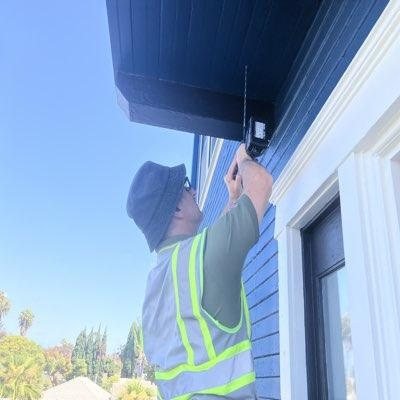
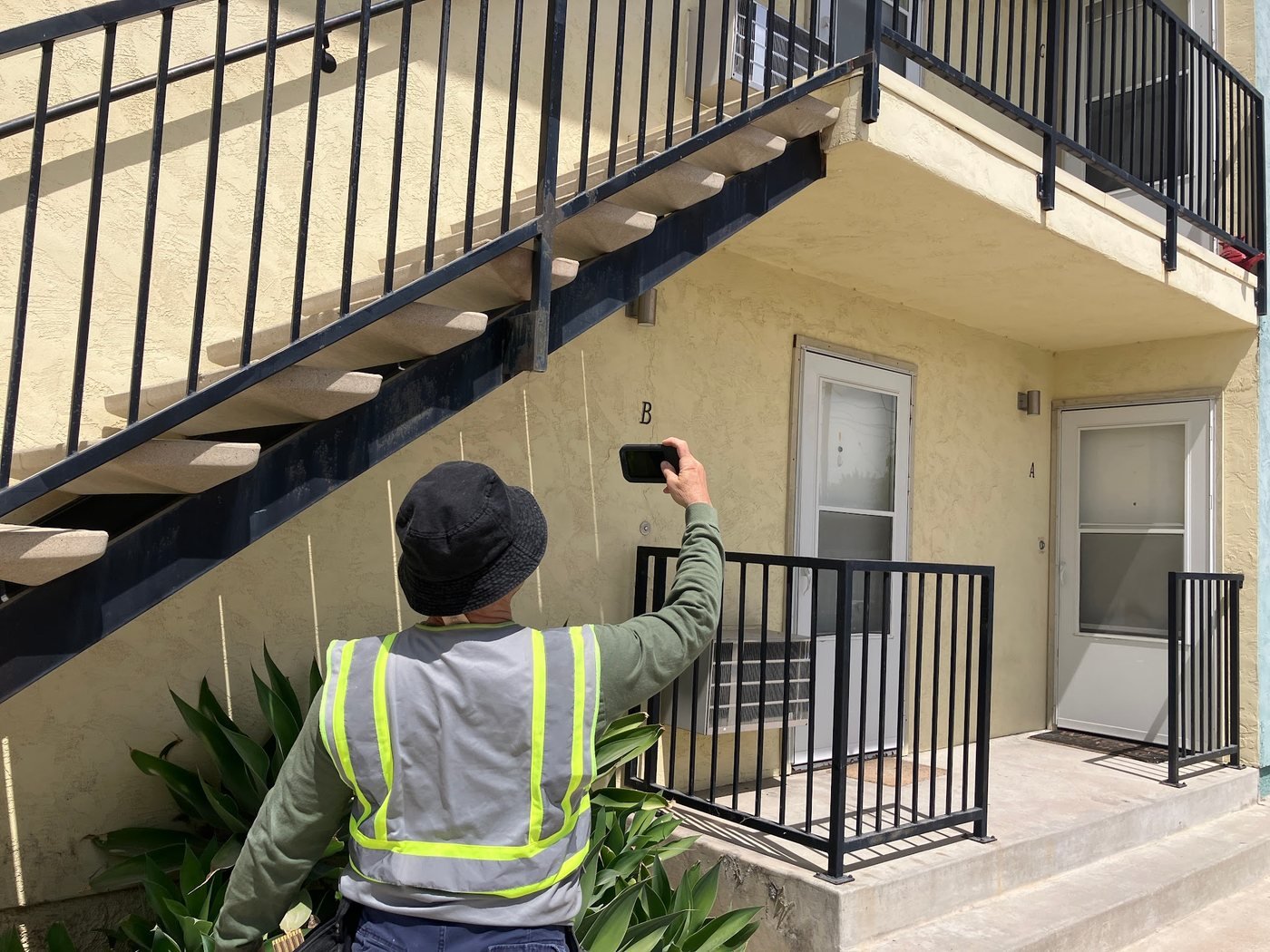
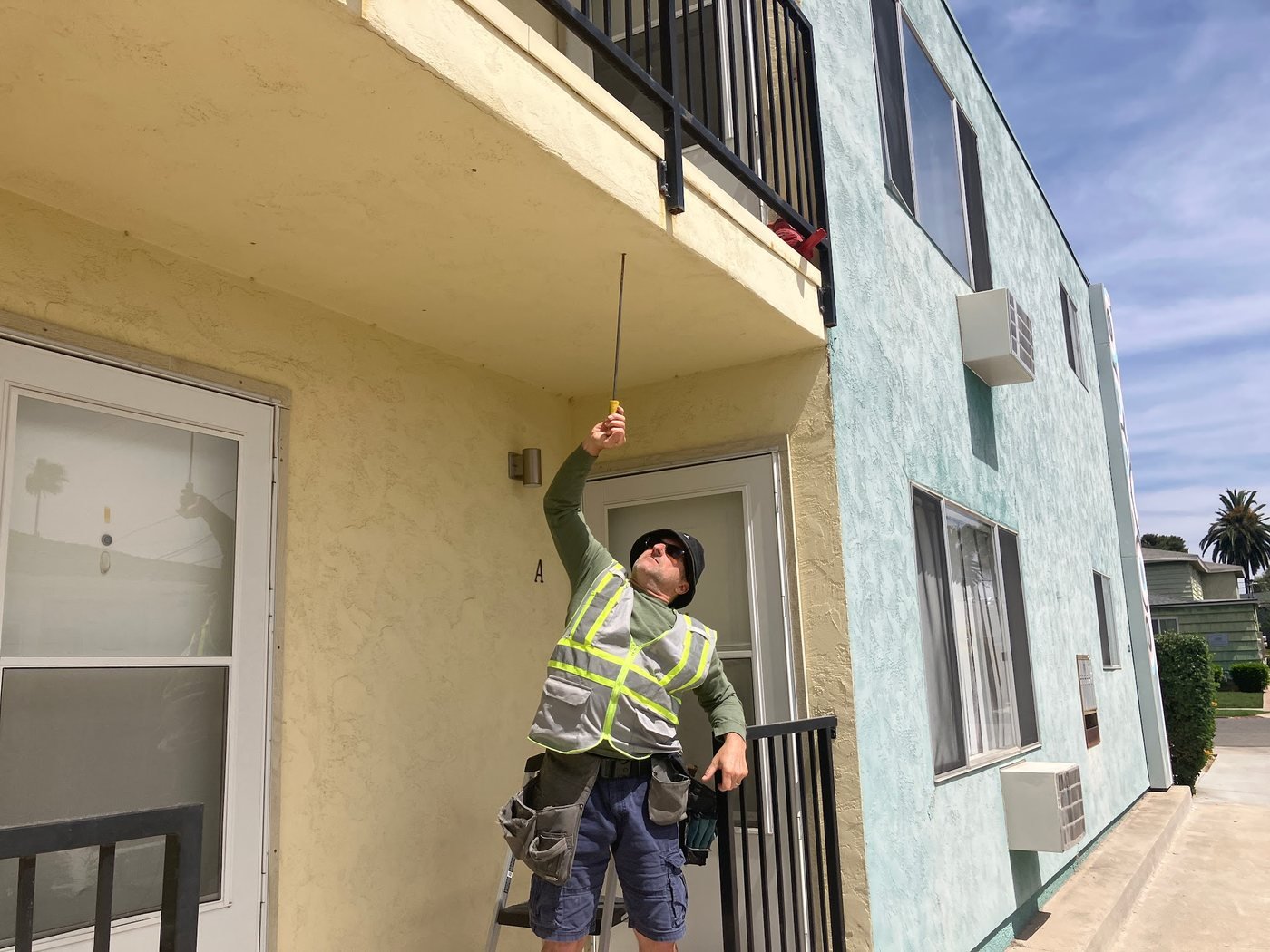
Thermal scanning in action
Our inspectors use FLIR thermal cameras to find moisture and heat issues hidden in walls and soffits.
More inspections in 4S Ranch
- Sewer scope inspection in 4S Ranch
- 4-point inspection in 4S Ranch
- Roof inspection in 4S Ranch
- Foundation slab survey in 4S Ranch
- Home inspection in 4S Ranch
Nearby and countywide
Were You Happy With Your Inspection?
We are proud of our 4.9-star rating across 100+ Google reviews. If Joseph and the team did right by you, a quick Google review helps other San Diego County buyers and sellers find us.