
4-Point Inspection in Rancho Bernardo, CA
When an insurer wants a 4-point before it will bind or renew a policy on a Rancho Bernardo home, it's usually reacting to two things at once: the home's age and where it sits on the map. The neighborhoods that make up RB — Bernardo Heights, Westwood, Seven Oaks, the Oaks North 55-plus tracts, the hillside lots stepping up off Bernardo Center Drive — were largely platted between the 1970s and 1990s. Those homes have now aged into the window where carriers stop assuming and start asking for documentation. Pair that with RB's position against the wildland edge west of I-15, and a 4-point request stops being a surprise.
I'm Joseph Romeo. A 4-point isn't a whole-house inspection and it doesn't try to be — it's a tight, carrier-facing report on the four systems an underwriter prices risk against: roof, electrical, plumbing, and HVAC. I record how old each system is, what it's built from, and the shape it's in today, with photos behind every line. On a planned-community RB home that means reading a concrete-tile or composition roof that's baked through a lot of inland summers, the panel a 70s or 80s builder installed, the supply pipe in the walls, and a furnace-and-AC pairing that's earned its keep. Below I walk through the scope, why RB's housing stock and California's insurance squeeze keep generating these, what I keep finding, and where the report stops. The Rancho Bernardo home inspection hub covers the full-house side.
Call (619) 752-4399 Schedule an Inspection
Which four systems does a Rancho Bernardo 4-point document?
The scope is narrow on purpose. An underwriter isn't asking me to weigh the whole house — it wants a documented read on the four systems that drive most paid claims. On an RB property I inspect, photograph, and write up the age, material, and condition of each:
- Roof — the covering (concrete or clay tile on much of RB, composition shingle on the rest), its age, the layers, and the remaining life a carrier will underwrite against, plus visible trouble like slipped or cracked tile, spent underlayment, and tired flashing. On hillside RB lots, roof slope and the penetrations on a complex roofline get extra attention.
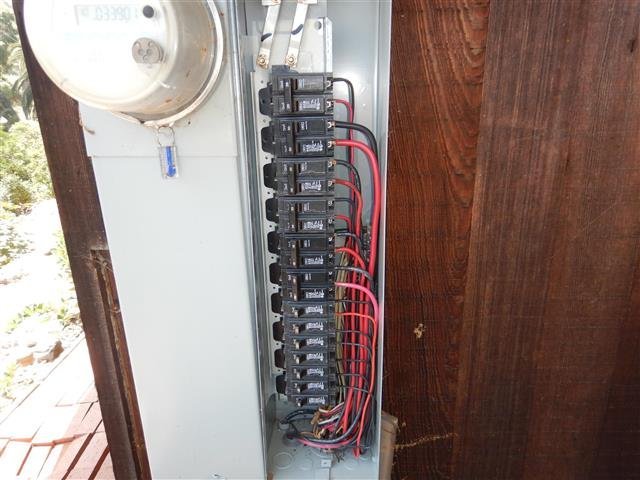
- Electrical — the panel brand and service size, the breaker or fuse setup, the branch wiring I can see, and grounding. This is where the decline-list panels and wiring an RB-era build might carry get called out.
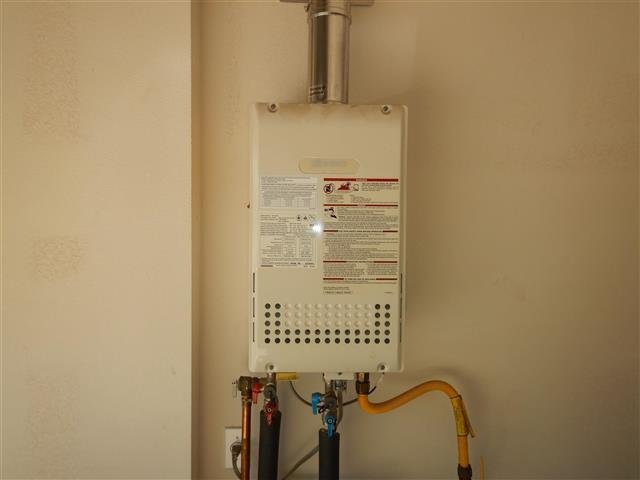
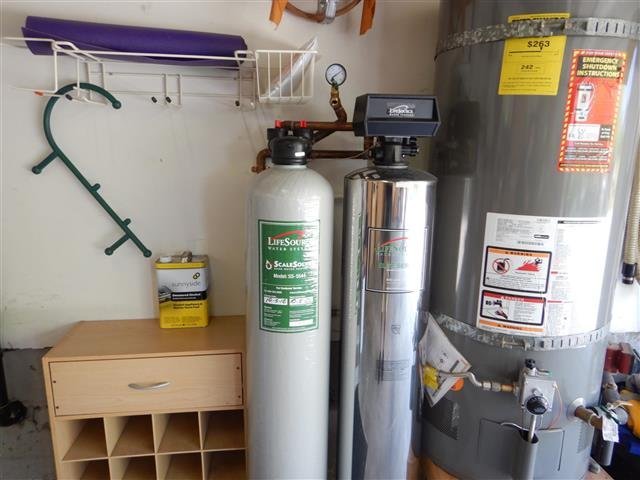
- Plumbing — the supply material running the walls, the drain material, the water heater's age and condition with its seismic strapping, and any seepage or corrosion at reachable joints.
- HVAC — the heating and cooling equipment, its type and rough age, and whether it actually runs — no small thing given how hard an RB summer leans on the air conditioning compared to the coast.
You come away with a photo-backed summary built to sit on your insurer's 4-point form. Anything sealed up, buried, or unsafe to reach I mark plainly rather than guess at it.
Why does Rancho Bernardo generate these requests so often?
A few things specific to RB explain why a 4-point lands here more often than in a fresh subdivision a few exits north:
- 1970s-90s planned-community vintage: the master-planned tracts off Bernardo Center Drive, Rancho Bernardo Road, and West Bernardo Drive are squarely in the 25-to-40-plus-year band where carriers begin requiring a 4-point at renewal. The panels, pipe, and original roofs from those build decades are exactly what the report exists to verify.
- Wildland-urban interface exposure: RB hugs the open hillsides and canyon edges — the slopes toward the San Pasqual valley and the brush west of the freeway. After the 2007 Witch Creek fire pushed into these neighborhoods, carriers underwrite RB roofs and electrical with the wildfire risk front of mind, and the 4-point is the form that proof goes on.
- Hillside lots and expansive soil: RB was built into terrain, not flat pads. The clay-heavy, expansive soil under many of these hillside homes shifts with the wet and dry seasons, and that movement works on slab and drain plumbing — worth knowing when the plumbing point turns up aging galvanized or cast iron.
- Inland heat on aging roofs: RB summers run hot and dry, which bakes underlayment and strips granules off composition roofs faster than coastal exposure does. A roof's real remaining life out here often reads shorter than its installation date suggests.
- Long-held 55-plus homes: in Oaks North and Seven Oaks, many homes have had one owner for decades with original systems still in place — precisely the profile that puts a roof, water heater, or panel on an underwriter's list.
What do I keep finding in RB's four systems?
Because RB homes share their build eras and a handful of regional builders, the findings repeat. Knowing them before your coverage hangs on the report lets you correct or disclose ahead of the underwriter rather than after a kickback:
- Decline-list panels — Federal Pacific (FPE), Zinsco, and Sylvania panels still turn up in RB's 70s and early-80s homes, and a fair number of carriers won't bind until one is swapped out.
- Aging branch wiring — aluminum branch wiring from the mid-70s in some tracts, which underwriters treat as a flag and want evaluated or pigtailed.
- Supply pipe past its prime — galvanized steel corroding closed in the older pockets and polybutylene in certain 80s builds, either of which a carrier may want addressed before it writes the policy.
- Cast-iron drains — original cast-iron waste lines rusting from the inside out, common at this vintage and aggravated by the seasonal soil movement on RB's hillside lots.
- Roofs and underlayment running out — tile roofs whose tile has life left but whose underlayment and flashing are spent, and composition roofs near the end after years of inland sun — often the single item that forces work before a policy will bind.
- Tired water heaters and HVAC — original or first-replacement water heaters past warranty (and sometimes missing the California-required strapping) and furnace-AC systems deep into their second decade, flagged on age even when they still cycle.
None of this is an automatic denial. The report states condition plainly and separates a system that's simply aging from one a carrier will reject, each backed by a photo — so you and your agent know which items need fixing and which just get disclosed.
How does the visit run and what does your insurer get?
It opens with a call to (619) 752-4399 or an email with the RB address, the home's age, and — if you have it — the carrier's own 4-point form. Some insurers insist on their specific template, and knowing that before I arrive saves a second trip. Tell me too if the home has rooftop solar, since on an RB hillside roof that changes how I read both the covering and the panel.
On site I move through the four systems in order: up onto the roof for covering, age, underlayment, and remaining life; into the panel to read brand, amperage, and wiring; along the visible plumbing and over the water heater; and across the HVAC equipment to confirm type, age, and that it runs. Every flag gets a photo. Because the scope is four systems and not the whole house, it's a focused, quicker visit than a buyer's inspection.
What you receive is a HomeGauge 4-point report — or your carrier's form when they require it — with the age, material, and condition of each system and the supporting images an RB underwriter expects to see. In most cases it turns around same day or next day, so a renewal deadline or an escrow clock doesn't catch you. I report observed condition only; I don't bid or perform repairs, swap a panel, or re-roof, which keeps the findings independent. Where something falls outside the four points — a pressure-test for a suspected supply leak, a structural opinion — I say so and coordinate or refer the right licensed specialist rather than stretch the report past what it covers.
Why do RB owners and agents have me write it?
A 4-point is only as good as the judgment behind what gets flagged — telling a carrier-killing panel from a serviceable one, or a roof with two years left from one with ten, is experience, not a checkbox. I'm an InterNACHI Certified Professional Inspector (CPI) and I hold a California CSLB General Contractor license (#1113143). That contractor background is exactly what these four systems demand: I've worked roofs, panels, supply lines, and water heaters, so when I write that an underlayment is spent or a panel needs replacing, I can tell you what the fix actually involves before you ever phone your agent.
- 20+ years and 10,000+ inspections across San Diego County, including RB's planned-community tracts, its Oaks North and Seven Oaks 55-plus homes, and the hillside lots west of I-15.
- 4.9 stars across 106 Google reviews from buyers, sellers, and agents.
- Independent and conflict-free — I document the four systems for your carrier and don't sell the re-roof, the re-pipe, or the panel upgrade, so nothing in the report points toward work I'd profit from.
When a system needs attention before a carrier will bind, I'll steer you to the right licensed trade to act on the exact findings. For the record, I'm InterNACHI CPI and CSLB-licensed rather than an ASHI or CREIA member, and I don't post flat prices — the fee depends on the property. Reach me at joe@sandiegohomeinspection.com or the number above.
Which related inspections fit Rancho Bernardo homes?
A 4-point answers your insurer's four questions and stops there. If you're buying, or want a fuller read on an RB home, several companion inspections fold into the same trip:
- Full home inspection — the whole-house, structure-included evaluation a 4-point deliberately isn't; start at the Rancho Bernardo hub if you're buying rather than just insuring.
- Roof inspection — a deeper standalone look when the 4-point shows tile underlayment or composition shingle near the end under RB's inland sun.
- Sewer scope — a camera down the buried lateral the plumbing point can't reach, where RB's expansive hillside soil and mature trees do their damage.
- Foundation and slab evaluation — valuable on the same shifting clay soil that stresses RB's slab and drain plumbing.
- Thermal / infrared imaging — surfaces hidden moisture or an electrical hot spot a plumbing or roof flag hints at but the eye misses.
- Pool & spa inspection — equipment, bonding, and safety for the backyard pools common on RB lots, separate from the insurance four points.
Not sure what your address actually needs? Send it over with the home's age and what your carrier is asking for, and I'll tell you which of these genuinely apply — see all inspection services we offer or reach me through contact.
Rancho Bernardo 4-Point Inspection FAQs
Why is my insurer asking for a 4-point on my Rancho Bernardo home?
Is a 4-point the same as a full home inspection?
Which electrical panels get a Rancho Bernardo policy held up?
Will an aging roof fail my RB 4-point?
Does Rancho Bernardo's hillside soil matter for the plumbing point?
Do you repair the problems the 4-point turns up?
Roof, electrical, plumbing and HVAC
Documentation from recent 4-point inspections across San Diego County.
More inspections in Rancho Bernardo
- Pool and spa inspection in Rancho Bernardo
- Sewer scope inspection in Rancho Bernardo
- Roof inspection in Rancho Bernardo
- Thermal imaging in Rancho Bernardo
- Home inspection in Rancho Bernardo
Nearby and countywide
Were You Happy With Your Inspection?
We are proud of our 4.9-star rating across 100+ Google reviews. If Joseph and the team did right by you, a quick Google review helps other San Diego County buyers and sellers find us.