
Foundation & Slab Inspection in Rancho Bernardo, CA
Most of Rancho Bernardo went up between the early 1970s and the 1990s, which means the typical foundation I'm asked to read here is no longer young. A slab poured for an original Bernardo Heights or Westwood home has now lived through forty-plus wet-and-dry cycles on inland soil, and a raised-floor home up in the older Rancho Bernardo Road tracts has spent the same decades shifting a little each season. That age is the whole reason this inspection matters in RB — you're not looking at a new pad settling in, you're looking at how a mature foundation has answered the ground beneath it over a working lifetime.
I'm Joseph Romeo. A foundation and slab inspection in Rancho Bernardo is a hands-on visual read of which foundation your home sits on and whether the structure has moved off it — cracks in the slab and stem wall, floors that have gone out of level, doors and windows that no longer fit their frames, drywall splitting at the corners — traced back to the grading, drainage, and soil doing the pushing. I tell you what I observe. Where a finding points to active structural movement, I bring in a licensed structural engineer for certification or repair design rather than guess at it. Everything else about the house lives on the Rancho Bernardo home inspection hub.
Call (619) 752-4399 Schedule an Inspection
What do I read on a Rancho Bernardo foundation?
This is a visual condition assessment, not an engineering study — I don't core the concrete, open trenches, or run load math. I establish the foundation type, then read the whole house above it for the fingerprint that moving soil leaves behind. RB's build era spans three decades, so the type genuinely varies block to block, and I confirm it rather than assume:
- Slab-on-grade — the poured pad under most RB tract homes from the 70s and 80s. I read the exposed edge and stem walls for cracking and separation, weighing those cracks against the slab's real age.
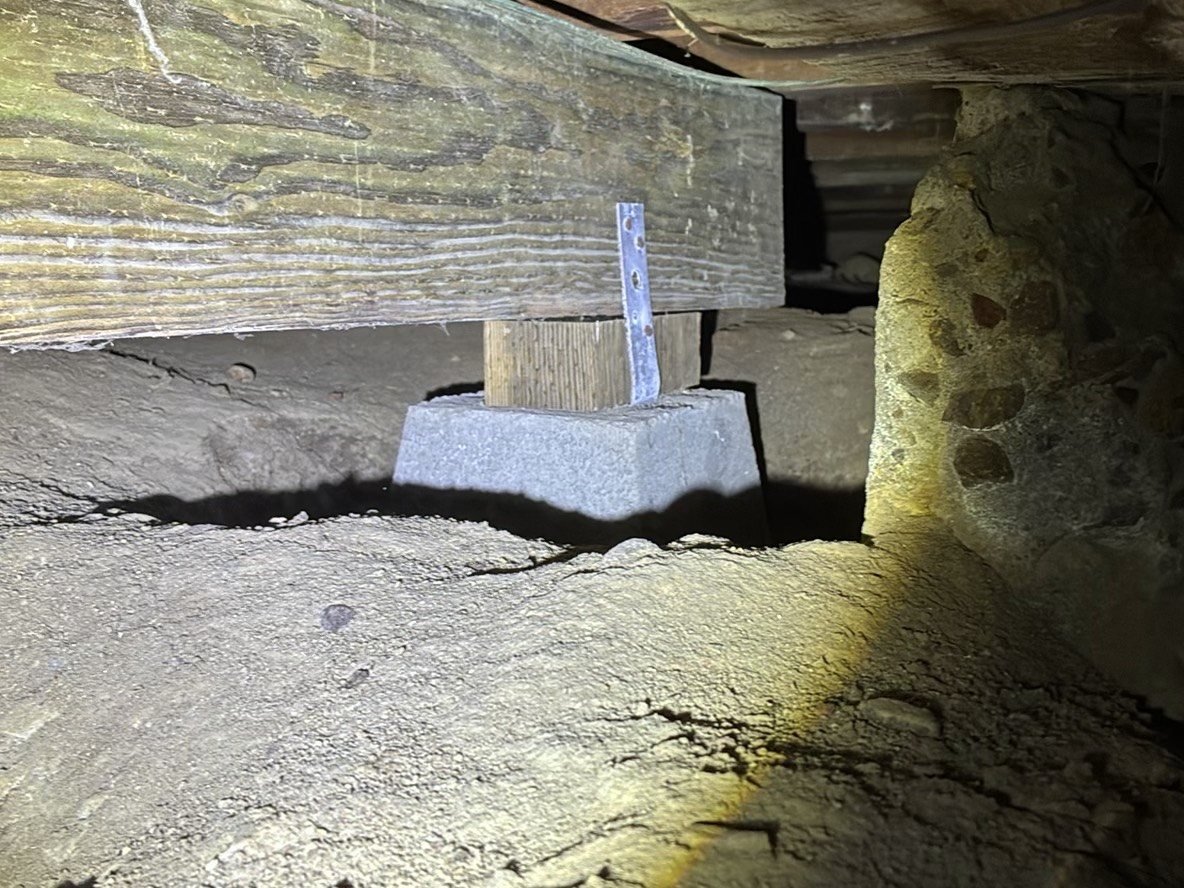
- Raised floor over a crawlspace — found on some earlier and custom RB homes. Where the hatch lets me in, I check piers, posts, girders, and the mudsill for settlement, rot, and shimming added to chase a sag.
- Post-tension slab — the pour under the newer infill and tracts that filled out RB into the 90s. I identify it and flag the tensioned cables, since they change how a crack gets read and where anyone can safely cut.
From there I document the evidence wherever the structure shows it: crack width and direction at the slab edge and stem walls, floors that slope across a room, doors and windows racked out of square, and the diagonal drywall cracking that runs off opening corners. Then I work the exterior, because on an RB lot the cause usually lives outside — how the ground is graded, where roof water and decades-old irrigation land, and whether the soil is held too wet or baked too dry. You leave with a documented read that draws the line between cosmetic and structural.
What forces work on foundations in Rancho Bernardo?
You can't read these homes without reading the inland ground they were built on and the decades they've sat there. RB combines expansive soil, graded hillside pads, and an aging housing stock, and each one leaves its own mark:
- Expansive clay and the long inland swing: much of RB sits on clay-bearing soil that takes on water through a wet winter and gives it back hard through the dry inland summer. That swell-and-shrink, repeated across forty years, is the leading driver of the stem-wall cracks, seasonally sticking doors, and corner drywall splitting I find in the older tracts.
- Decomposed-granite slopes and hillside creep: parcels climbing the ridges off Bernardo Heights Parkway, Duenda Road, and the slopes above the I-15 corridor sit on decomposed granite that drains fast but inches downhill over time, dragging at a foundation cut into the grade.
- Cut-and-fill pads under the hillside homes: many RB lots are engineered pads — cut into the slope on one side, built up with compacted fill on the other. When the fill consolidates differently than the cut, the crack pattern usually points to the half that's settling.
- Aging drainage that quietly feeds it: on homes this old, the original grading has often flattened, downspouts dump where they shouldn't, and irrigation has soaked one corner for decades — uneven soil moisture that turns clay movement into a crack.
- Wildfire WUI exposure: RB sits in the wildland-urban interface that burned in the 2007 Witch Creek fire. While reading the foundation and perimeter, I note where heat-exposed concrete, vents, and the soil interface warrant a closer look.
What do I commonly turn up under RB homes?
Across Rancho Bernardo's aging stock the findings settle into a familiar set, and the value is in knowing which ones to worry about before you lift a contingency:
- Mature shrinkage cracks — the thin, long-stable cracks normal to a slab that cured decades ago, which read as cosmetic and get labeled that way.
- Displaced slab and stem-wall cracks — the wider ones where one side has clearly lifted or dropped, which read very differently from a hairline and earn a closer look.
- Floors out of level — the dips and slopes I find where a cut-and-fill pad has settled unevenly under an RB hillside home, often most obvious at a tile or hardwood transition.
- Doors and windows that bind seasonally — units that stick in the wet months and free up in the dry ones, tracking the clay rather than worn hardware.
- Crawlspace settlement on the older homes — shimmed or sunken piers, moisture and rot at the mudsill, and added supports that tell the story of a sag someone already chased.
- Tired drainage at the perimeter — flattened grading, missing or disconnected gutters, and long-running irrigation holding the soil saturated against the foundation.
None of this automatically means a failed foundation. On a forty-year-old RB home, much of what I find is age-normal shrinkage or a drainage correction that's been waiting years. My job is to separate the cosmetic from the items that signal active movement — and to say plainly which is which.
How does the visit run and what report do you get?
It opens with a call to (619) 752-4399 or an email with the Rancho Bernardo address and a note on what's prompting the look — a crack you've watched lengthen, a door that recently started catching, a floor that feels off, or a hillside lot you're about to buy. That context tells me where to slow down.
On site I confirm the foundation type first — and in RB that genuinely varies by the home's vintage, so I never assume. Then I work the house inside and out: the interior for floor slope, wall and ceiling crack patterns, and openings gone out of square; the crawlspace where one exists and the hatch grants access; the full exterior perimeter for slab-edge and stem-wall cracks. Outside I read the grading, the downspouts, and where decades of irrigation have been putting water against the foundation, because on these older lots that's usually where the cause is hiding. Every finding is photographed as I go.
You receive a HomeGauge report with the foundation type stated, each condition described in plain English, and a clear call on what's cosmetic versus what suggests active structural movement, with a photo behind every item. In most cases it lands same day or next day. Where the evidence warrants it, I recommend a licensed structural engineer for certification or repair design. I assess and document observed condition — I don't certify the foundation, design the repair, or bid the work, which keeps the read independent of anything you'd later pay for. I also don't pressure-test plumbing for a slab leak; when that question surfaces, I point you to the right licensed specialist.
Why do RB buyers and owners have me make the call?
The foundation is the one call where judgment outweighs everything. Flag a harmless shrinkage crack as structural failure and you can sink a deal; wave off real movement under a fill-pad home and it costs far more later. Telling them apart on a forty-year-old RB slab takes experience, not a checklist. I'm an InterNACHI Certified Professional Inspector (CPI), and I hold a California CSLB General Contractor license (#1113143). That builder's background is exactly what a foundation read calls for — I've worked footings, concrete, framing, and drainage, so when I call a stem-wall crack age-normal settlement versus a structural problem to engineer, I'm reading it through hands-on work, not a template.
- 20+ years and 10,000+ inspections across San Diego County, including the aging slab-on-grade, raised-floor, and post-tension homes that fill RB's 70s-through-90s tracts.
- 4.9 stars across 106 Google reviews from buyers, sellers, and the agents who send me back.
- Independent and conflict-free — I don't sell foundation repair or underpinning, so nothing in the report is steered toward work I'd profit from.
Straight on credentials: I'm InterNACHI CPI and CSLB-licensed; I'm not an ASHI or CREIA member. I don't post flat prices, since foundation scope moves with the home's size and access — I point you to the fee schedule or confirm a quote first. For the engineering certification, repair design, or drainage correction a finding points to, I coordinate or refer the right licensed specialist. Reach me at joe@sandiegohomeinspection.com or the number above.
Which related inspections fit Rancho Bernardo properties?
Foundation movement rarely travels alone — the same soil and water that stress a slab tend to mark other systems, and I can line these up around one Rancho Bernardo visit:
- Full home inspection: the whole-house evaluation this foundation read folds into — start at the Rancho Bernardo hub if you're buying.
- Sewer scope: a decades-old clay or cast-iron lateral on a settling RB lot can pull its joints apart, and a leaking line then feeds the very soil movement that cracks a slab — worth scoping on the same trip.
- Thermal / infrared imaging: picks up hidden moisture at the slab edge and along the perimeter that aging drainage and long-run irrigation leave behind.
- Roof inspection: on 30-to-50-year-old RB homes, original gutters that are gone or disconnected dump roof water at the foundation — a leading cause of the soil-moisture swings I find — and the inland sun has aged the roofing hard.
- Pool and spa inspection: common on RB's larger and hillside lots, where a leaking pool, spa, or deck drain quietly soaks the soil against a nearby foundation.
Not sure what your address needs? Send it over and I'll tell you what genuinely applies before you spend on any of it — see all inspection services we offer or get a quote through contact.
Rancho Bernardo Foundation & Slab Inspection FAQs
Why does an older Rancho Bernardo home need a foundation inspection?
Are foundation cracks in a Rancho Bernardo home always serious?
What makes Rancho Bernardo soil move a foundation?
Can you inspect a post-tension slab in Rancho Bernardo?
Do you certify the foundation or just inspect it?
I'm buying a hillside lot in Rancho Bernardo. What should I watch for?
Slab surveys in action
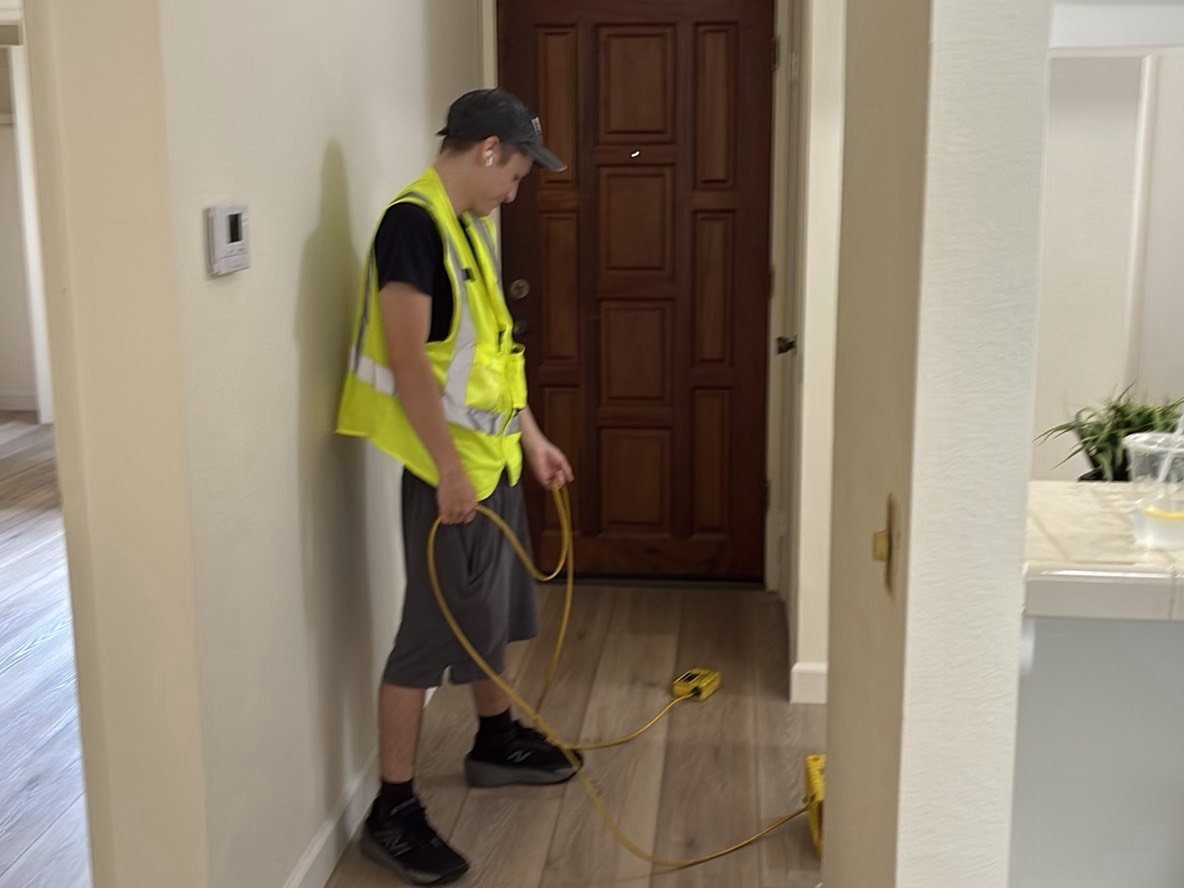
ZipLevel altimeter measurements and foundation documentation from recent surveys.
More inspections in Rancho Bernardo
- Roof inspection in Rancho Bernardo
- Thermal imaging in Rancho Bernardo
- SB 721 balcony inspection in Rancho Bernardo
- SB 326 balcony inspection in Rancho Bernardo
- Home inspection in Rancho Bernardo
Nearby and countywide
Were You Happy With Your Inspection?
We are proud of our 4.9-star rating across 100+ Google reviews. If Joseph and the team did right by you, a quick Google review helps other San Diego County buyers and sellers find us.