
Foundation & Slab Inspection in Santee, CA
Santee grew up around the San Diego River, and the river decides a lot about how a foundation behaves here. The valley floor through the middle of town — from Mast Park out past the Town Center toward the Lakes — sits on alluvium the river laid down over centuries: layered sand, silt, and clay with a water table that can run high close to the channel. Push up the edges toward Carlton Hills, Sky Ranch, or the slopes under Rattlesnake and Cowles Mountain and the ground changes to weathered granite and graded hillside pads. Most of the housing went up in the tract boom of the 1970s and 80s, so a huge share of Santee homes sit on early slab pours that have now baked and soaked through forty-plus East County summers and winters.
I’m Joseph Romeo. A foundation & slab inspection is a focused visual read of how your Santee home meets that ground — the foundation type, and the cracks, slope, and stuck doors that tell you whether it’s old settling or something still on the move. I report what I observe in plain language and refer a licensed structural engineer when a finding needs certification or repair design. I don’t stamp engineering and I don’t sell the repair. The Santee home inspection hub covers the rest of the house.
Call (619) 752-4399 Schedule an Inspection
What does a Santee foundation and slab inspection look at?
This is a visual, non-destructive assessment — no coring, no digging, no engineering math. The aim is to sort ordinary tract-home settling from movement that still needs an engineer, and on a Santee home that starts with naming the foundation type, because each one reads differently against river-valley ground:
- Slab-on-grade — the poured pad under most of Santee’s 70s-80s tracts in Carlton Hills, Carlton Oaks, and the neighborhoods off Mast and Carlton Oaks Drive. I follow the exposed slab edge, garage floor, and stem wall for cracking, separation, and any sign the pad has heaved or dropped.
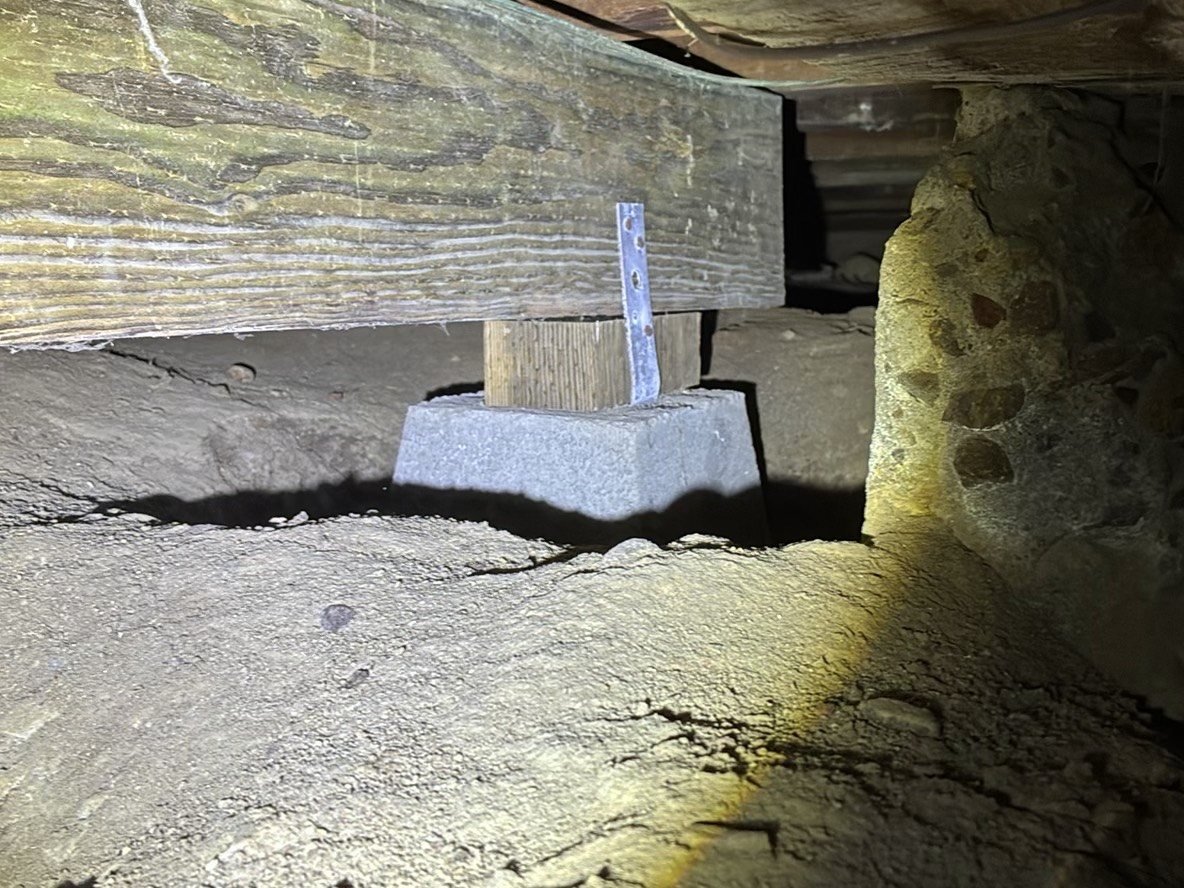
- Raised perimeter with crawlspace — found on the older homes and the ranches that predate the tract boom. Where access allows I read posts, piers, girders, mudsills, and stem walls for shifting, rot, and moisture rising off a high water table.
- Post-tension slab — common on the newer infill and the master-planned builds at Fanita and the city’s edges. I identify it clearly, because the cables inside change everything about how you treat a crack.
From there I read the evidence the soil pushes up through the house: slab and stem-wall cracks logged for width and direction, floors that slope or feel uneven, doors and windows that bind or won’t latch, and diagonal drywall cracks fanning off the corners. Just as important, I read the driver — how the lot is graded, where roof and yard water sheds, and whether soil sits too wet against the foundation. You get a documented read, and where it points to real structural movement I say so plainly and send you to an engineer.
How do Santee's river-valley soils stress a foundation?
You can’t judge a Santee foundation without reading the ground under it, and a river town hands you several kinds at once. These are the local conditions I weigh on every inspection:
- River alluvium on the valley floor. The flats along the San Diego River are built on water-deposited sand, silt, and clay in uneven layers. That mix settles unevenly under a slab, and the pockets of clay in it swell and shrink with the seasons — the engine behind a lot of the cracking and door-sticking I find near the river corridor.
- High water table near the channel. Homes closer to the river and the Santee Lakes can sit over groundwater that rises in a wet winter. On raised foundations that means crawlspace moisture and damp mudsills; under slabs it keeps the soil worked up and soft.
- Brutal inland heat. Santee bakes — East County summers pull moisture out of the clay-bearing soil fast and hard, so the dry-season shrink is sharper than anything the coast sees. That wide wet-dry swing, cycle after cycle, is what fatigues a forty-year-old slab edge.
- Foothill and hillside lots. Up toward Carlton Hills, Sky Ranch, and the slopes under Rattlesnake and Cowles Mountain, homes sit on decomposed granite and cut-and-fill pads. The granite drains fast but creeps downhill over years, and where one corner rests on cut native ground and another on fill, the two settle at different rates.
- Aging 70s-80s drainage. Many Santee tract lots still shed water the way they were graded four decades ago — flat yards, reverse slope toward the house, downspouts dumping at the footing — steering water into the soil against the slab instead of away from it.
What do I keep finding under Santee homes?
Across Santee’s river-valley slab tracts, its older raised homes, and the hillside builds, the findings fall into a recognizable set. Telling cosmetic from structural before you lift a contingency is the whole job:
- Uneven settlement on the valley floor — where layered river alluvium drops at different rates under a slab, leaving a slope you can feel and cracks that don’t line up corner to corner.
- Seasonal shrink-swell cracking — hairline-to-moderate slab and drywall cracks on the clay-bearing lots that open in the dry Santee summer and close back up in winter, usually cosmetic but worth tracking on a forty-year-old home.
- Doors and windows that bind by season — jambs that stick in one part of the year and free up in another, the everyday tell of a slab flexing on valley soil.
- Crawlspace moisture on raised homes — near the river especially, damp soil, efflorescence on stem walls, and softened girders where a high water table keeps the underside wet.
- Differential settlement on foothill lots — one corner dropping on the Carlton Hills and Sky Ranch slopes, where decomposed granite creeps and a cut-and-fill pad settles unevenly.
- Grading and drainage feeding the slab — soil sloped toward the house, downspouts at the footing, planters holding water against the stem wall — the fixable root cause behind much of what cracks out here.
- Post-tension cautions on the newer Fanita and infill builds — I flag the tendon layout so nobody cores or anchors into a cabled slab.
Most of this is age-normal or a drainage fix waiting to happen, not a failed foundation. Every meaningful finding gets a photo and a plain note on type, width, and whether it reads cosmetic or as a candidate for an engineer’s eyes.
How does the visit run and what report do you get?
It starts with a call to (619) 752-4399 or an email with the Santee address, the home’s age, and what’s prompting the look — a crack that’s widened over a couple of summers, a door that won’t latch, a crawlspace that smells damp, or a hillside lot you’re about to buy. That context tells me where to spend the extra time on a home this old.
On site I confirm the foundation type, then work the house as a loop, outside then in. On the exterior I follow the exposed slab edge or stem wall, read the grading and where roof and yard water actually sheds, and watch the uphill-downhill behavior on foothill lots. Inside I read floors for slope and bounce, work the doors and windows that have gone out of square, and trace drywall cracks back to their corners. On a raised home I get into the crawlspace for posts, piers, girders, mudsills, and the moisture a high water table leaves; on a post-tension slab I read the surface and never core into it. You’re welcome to walk it with me — I’d rather show you why a garage crack is curing shrinkage than leave you worrying about it.
The deliverable is a HomeGauge report with a photo on every meaningful finding, the foundation type identified, each item described plainly, and a clear call on what’s cosmetic versus what needs a structural engineer. Most reports land same day or next morning. I document observed condition — I don’t certify the foundation, design a repair, or bid the work; when a finding warrants it, I point you to a licensed structural engineer.
Why do Santee owners have me read the foundation?
A foundation call is the one where judgment matters most — calling a harmless shrinkage crack a structural failure can sink a deal, and missing real movement costs far more down the road. Telling them apart on Santee’s river alluvium and granite slopes is experience, not a checklist. I’m an InterNACHI Certified Professional Inspector (CPI), and I hold a California CSLB General Contractor license (#1113143). That builder background is exactly what helps on a foundation: I’ve poured slabs, set stem walls, and corrected drainage, so when I tell you a stem-wall crack is old settlement to monitor versus a structural problem to engineer, I’m reading it through hands-on work.
- 20-plus years and more than 10,000 inspections across San Diego County, with deep time in East County — Santee’s 70s-80s slab tracts, its older raised homes near the river, and the hillside builds toward Carlton Hills and Sky Ranch.
- 4.9 stars across 106 Google reviews.
- Independent and conflict-free — I don’t perform or sell foundation repair, so nothing in the report is steering you toward work I’d profit from. You get a straight read.
For the engineering certification, repair design, or drainage correction a finding points to, I coordinate or refer the right licensed specialist rather than pretend a visual inspection covers it. Reach me directly at joe@sandiegohomeinspection.com or the number above.
Which inspections pair with a Santee foundation check?
Foundation movement rarely travels alone — the same valley soil and water that stress a slab leave marks on other systems, and I can fold these into one visit:
- Full home inspection: if you’re buying, the foundation read is one part of a whole-house inspection — roof, electrical, plumbing, HVAC, and structure — on the Santee home inspection hub.
- Sewer scope: on these 70s-80s homes a camera down the lateral catches cracked or root-intruded clay and cast-iron lines, which often track the same soil movement — and a leaking lateral can itself keep the ground around a foundation wet.
- Thermal / infrared imaging: useful in Santee for confirming hidden moisture at the slab edge or under raised flooring where a high water table or poor drainage hides it.
- Drainage and grading review: a closer look at how water moves on a valley-floor or foothill lot, the fixable cause behind much of the cracking I find here.
Not sure what your address needs? Send it over with the home’s age and what you’re seeing and I’ll tell you what’s worth doing — see all inspection services we offer or reach out through contact.
Santee Foundation & Slab Inspection FAQs
Is the crack in my Santee slab serious or just an old house settling?
Does Santee's location near the San Diego River affect my foundation?
My Santee home is from the 1970s. Does its age change the inspection?
Do you inspect post-tension slabs on newer Santee homes?
I'm buying a hillside home toward Carlton Hills or Sky Ranch. What should I watch for?
Will you certify my Santee foundation or tell me how to fix it?
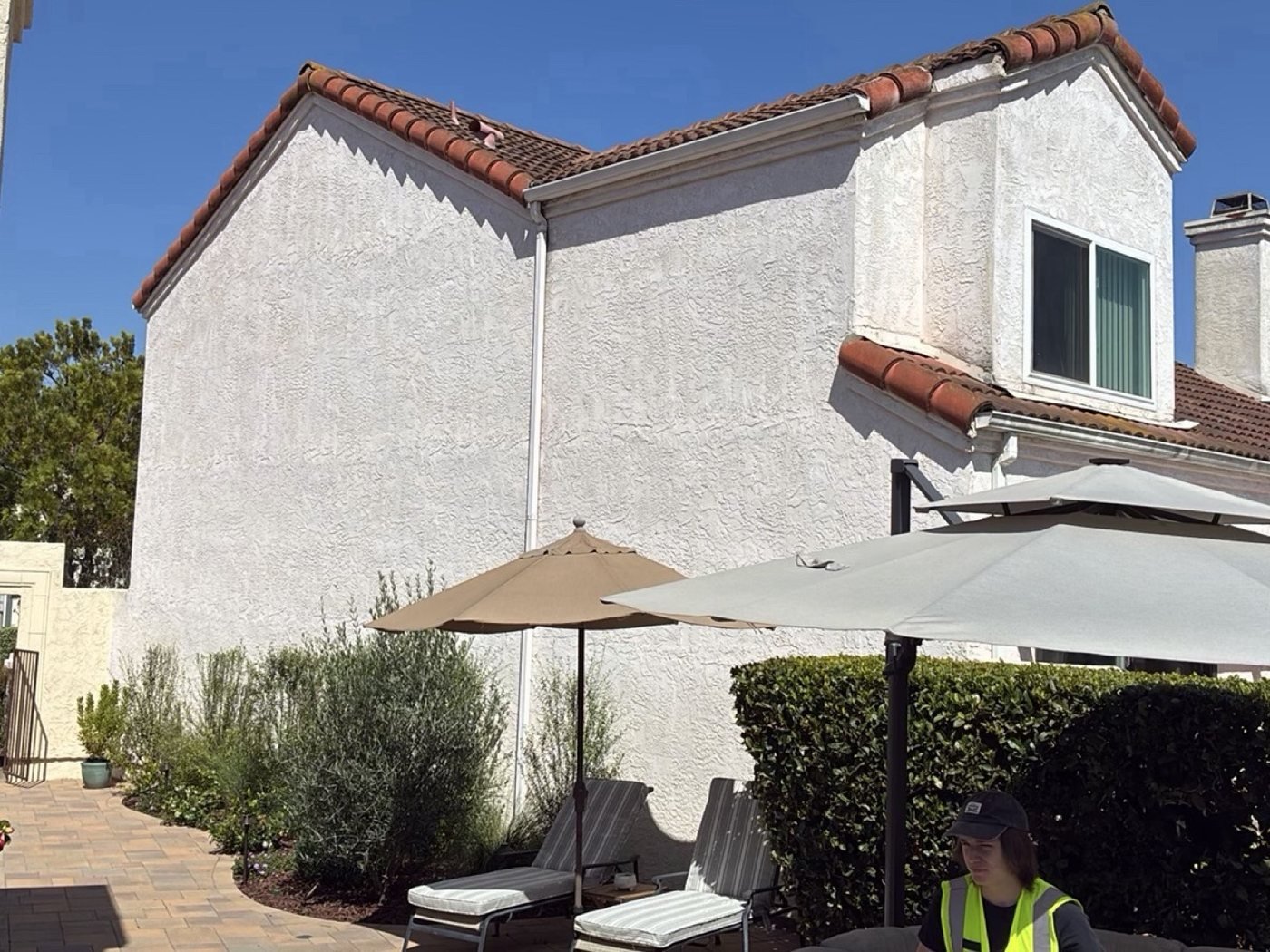
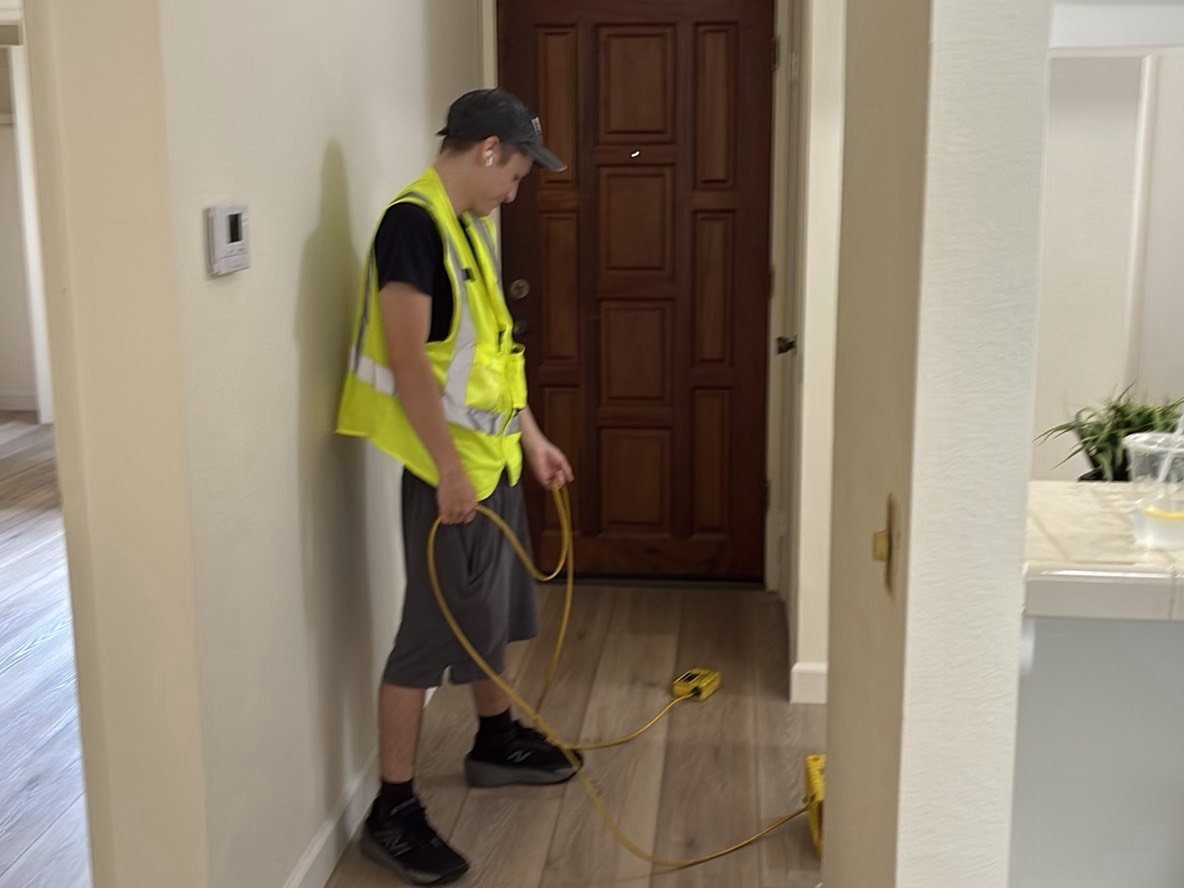
Slab surveys in action
ZipLevel altimeter measurements and foundation documentation from recent surveys.
More inspections in Santee
- Commercial roof cleaning in Santee
- Commercial inspection in Santee
- Pool and spa inspection in Santee
- Sewer scope inspection in Santee
- Home inspection in Santee
Nearby and countywide
Were You Happy With Your Inspection?
We are proud of our 4.9-star rating across 100+ Google reviews. If Joseph and the team did right by you, a quick Google review helps other San Diego County buyers and sellers find us.