
Roof Inspection in Santee, CA
Santee runs hot and dry along the San Diego River valley, and a roof here pays for it. The afternoon sun pours into this east-county basin and holds, so the covering takes a longer, harsher beating than anything closer to the water. Most of Santee filled in during the 1970s and 1980s — Carlton Hills, Carlton Oaks, the tracts off Mast and Cuyamaca — which puts a lot of these roofs at or past the age where the original covering is on borrowed time. A roof inspection tells you what's actually up there before a ceiling stain shows up or a buyer's inspector flags it first.
I'm Joseph Romeo. A roof inspection is a documented visual look at the covering and every part that keeps water off the house — flashing, valleys, the penetrations for vents and pipes, skylights, gutters, and drainage. I report what I see: condition, signs of aging or leakage, and remaining-life indicators, and I point you to a licensed roofer for repair or certification. I don't certify roofs and I don't do the work, which is what keeps the read straight. The Santee home inspection hub covers the rest of the house.
Call (619) 752-4399 Schedule an Inspection
What gets looked at on a Santee roof?
I work the roof as a water-shedding system, not a glance from the curb. On a Santee tract home that means documenting every component that can let water past, each one photographed:
- The covering — asphalt composition shingle, concrete or clay tile, or low-slope foam and modified-bitumen. I log the material, rough age, how many layers are stacked, and the wear each one shows: thinning granules and curled tabs on shingle, slipped or fractured tile, blistered and chalky coating on foam.
- Flashing and wall transitions — the metal at chimneys, parapets, and roof-to-wall joints, plus the step flashing where the patio covers and room additions so common on these 70s-80s homes tie back into the main roof. Most leaks start at a transition, not in the open field.
- Penetrations and pipe boots — plumbing stacks, furnace and water-heater flues, and the rubber boots that dry out and split under years of valley sun.
- Valleys and skylights — the channels where two roof planes dump water together, plus skylight curbs and seals, including the old domed units still sitting on plenty of Santee originals.
- Gutters, drainage, and the attic — whether runoff is carried clear of the walls and the expansive valley soil at the foundation, plus attic staining, daylight at penetrations, and the ventilation that decides whether the deck cooks from below.
What you get is a plain read on condition and remaining life. Stamping a certification or pricing a repair is a licensed roofer's job — I'll tell you the moment a finding crosses into that territory.
How do Santee's heat and river valley wear a roof?
Santee's setting and the age of its housing push a specific set of roof problems. These are the conditions I'm reading for:
- Inland heat that won't quit: the valley bakes through the summer and roof-surface temperatures stay high for hours. A shingle spec'd for a milder coastal town surrenders its granules and curls years ahead of schedule out here, and the asphalt mat gets brittle enough to crack underfoot. In Santee, roof age is counted in hot summers, not permit dates.
- Roofs aging out together: because so much of town went up in a 15-year stretch, whole streets hit the end of a covering's life around the same time. Many homes are already on a second or third roof, and stacked layers trap heat, hide the deck, and add weight. I look for the thick edges and sagging eaves that flag an overlay rather than a clean tear-off.
- Tile on the master-planned tracts: a lot of Santee's newer subdivisions and the hillside builds run concrete and clay tile. The tile lasts decades, but the felt underlayment beneath it dries and cracks in this heat while the surface still looks new from the street. I read the underlayment, not just the tile.
- Expansive valley soil and where water lands: the river-valley clay swells and shrinks with moisture, and roof runoff dumped at the foundation feeds that movement. Where the gutters discharge matters more here than in towns sitting on stable ground — I note runoff that's washing back against the slab.
- WUI exposure on the edges: homes backing the open hills and brush toward Fanita Ranch, Sycamore Canyon, and the northern slopes sit at the wildland edge. There the roof is the first thing an ember tests — unscreened attic and gable vents, open eave gaps, and debris packed in valleys are fire vulnerabilities I call out specifically.
Which problems keep turning up on Santee roofs?
The same findings repeat by covering type and by the decade a neighborhood was built. Knowing them before an offer, a listing, or an insurance renewal tells you whether you're facing a weekend fix or a re-roof on the horizon:
- Sun-spent shingle — bald patches, curled tabs, and exposed mat on composition roofs, worst on the south- and west-facing slopes that take the long valley afternoons.
- Layered-over coverings — two or three roofs stacked on a single 70s-80s home, which cuts the life of the top layer and usually limits a roofer to a full tear-off.
- Split boots and dried flashing sealant — cracked rubber at vent penetrations and brittle sealant at wall and chimney flashings, two of the most common active leaks I trace in town.
- Brittle underlayment under good tile — sound tile over felt that's cracked and finished on the tile tracts, usually pointing to a lift-and-relay rather than a tear-off.
- Ponding and chalked foam — low spots holding water and UV-thinned coating on flat foam roofs over additions and patios, needing a recoat before the foam soaks up moisture.
- Attic stains at penetrations and valleys — old and active staining visible from inside, often the first hard proof of a leak the surface hasn't shown yet.
None of it is a verdict on its own. The report lays out condition plainly, with a photo behind each call, so you and a roofer can separate what needs doing now from what to watch through the next season.
How does the inspection run and what report do you get?
It starts with a call to (619) 752-4399 or an email with the Santee address. I'll ask the covering type and rough age if you know them, and whether this is roof-only or part of a fuller inspection — on a purchase the roof usually folds into the whole-house visit, and on an older Santee home it often runs alongside the 4-point a carrier asks for.
On site I read the roof however access allows — on foot where the slope and covering carry weight safely, off a ladder at the eaves where they don't, from the yard with optics on steep tile, and from inside the attic to see the deck's underside. I work the field, the flashing and valleys, every penetration and skylight, then the gutters and where they discharge, and I check the attic for staining and airflow. Each item is photographed as I go.
You get the report in HomeGauge — condition, the specific defects, and remaining-life indicators, with the photo behind every call. In most cases it lands same day or next day, so you're not stalling a contingency, a listing, or a renewal. Where something needs a specialist — a leak traced to flashing, underlayment near its end, ember-vulnerable venting — I point you to a licensed roofer. I report observed condition; I don't certify the roof or bid the repair, so the findings stay clear of anyone selling the work.
Why do Santee owners and agents call me for the roof?
A roof report is only as good as the judgment behind it — telling a roof with two summers left from one with ten is experience, not a checklist. I'm an InterNACHI Certified Professional Inspector (CPI) and I hold a California CSLB General Contractor license (#1113143). That construction background lets me tell you whether a flagged item is a spot repair or points toward a tear-off — and roughly what that path involves — before you bring in a roofer.
- 20+ years and 10,000+ inspections countywide — Santee's 70s-80s tract core in Carlton Hills and Carlton Oaks, its layered-over older roofs, and the tile subdivisions on the slopes toward Fanita
- 4.9 stars from 106 Google reviews
- No stake in the repair — I don't sell roofing, recoating, or certifications, so nothing in the report steers you toward work you don't need
When the roof needs a specialist or a formal certification, I coordinate or refer a licensed roofer to act on the exact findings. Reach me at joe@sandiegohomeinspection.com or the number above.
Which inspections pair with a Santee roof check?
The roof is one system, and on most Santee visits it makes sense alongside a broader look at an older tract home. I can line these up on a single trip:
- Full home inspection: the whole-house, buyer's-grade evaluation when you need more than a roof-only read — start at the Santee hub if you're purchasing
- 4-point inspection: the roof, electrical, plumbing, and HVAC report carriers want on older Santee homes before they'll write or renew
- Thermal / infrared imaging: finds hidden moisture where a roof leak has tracked but the stain hasn't yet surfaced
- Drainage and grading review: ties roof runoff to where the water actually goes on Santee's expansive valley soil, where discharge at the foundation drives clay movement
Not sure what your address needs? Send it over and I'll tell you which genuinely apply before you spend on any of them — see all inspection services we offer or get a quote through contact.
Santee Roof Inspection FAQs
What does a roof inspection cost in Santee?
Do you walk the roof or inspect from the ground?
Why does Santee's heat matter so much for a roof?
My Santee roof already has two layers. Does that matter?
Can you certify my Santee roof for a sale or insurer?
Does the inspection cover wildfire ember risk on hillside lots?
Roofs we document
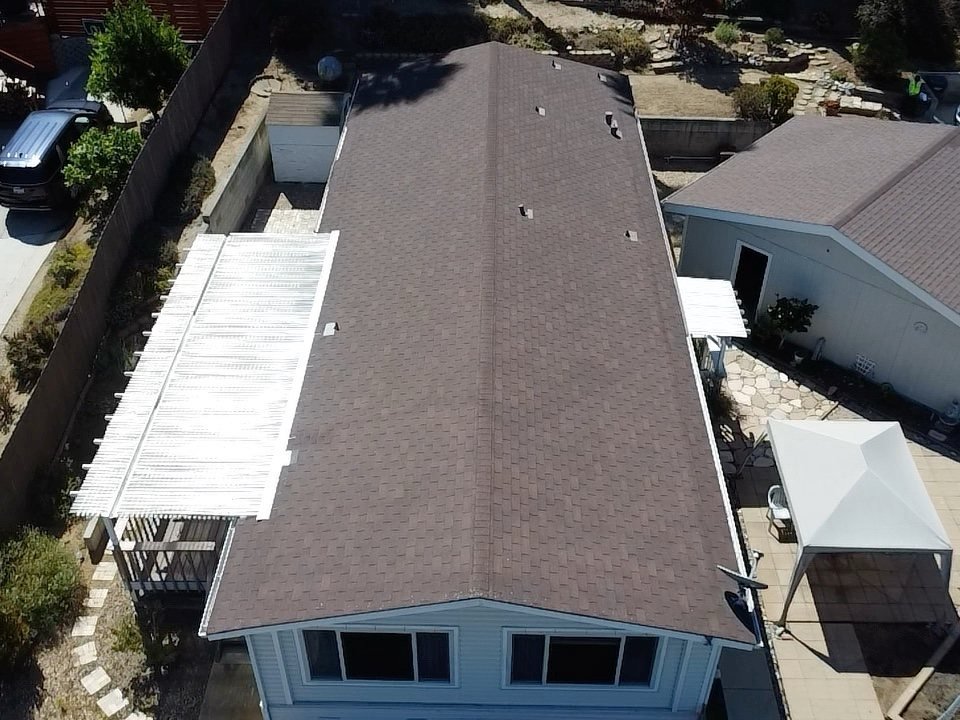
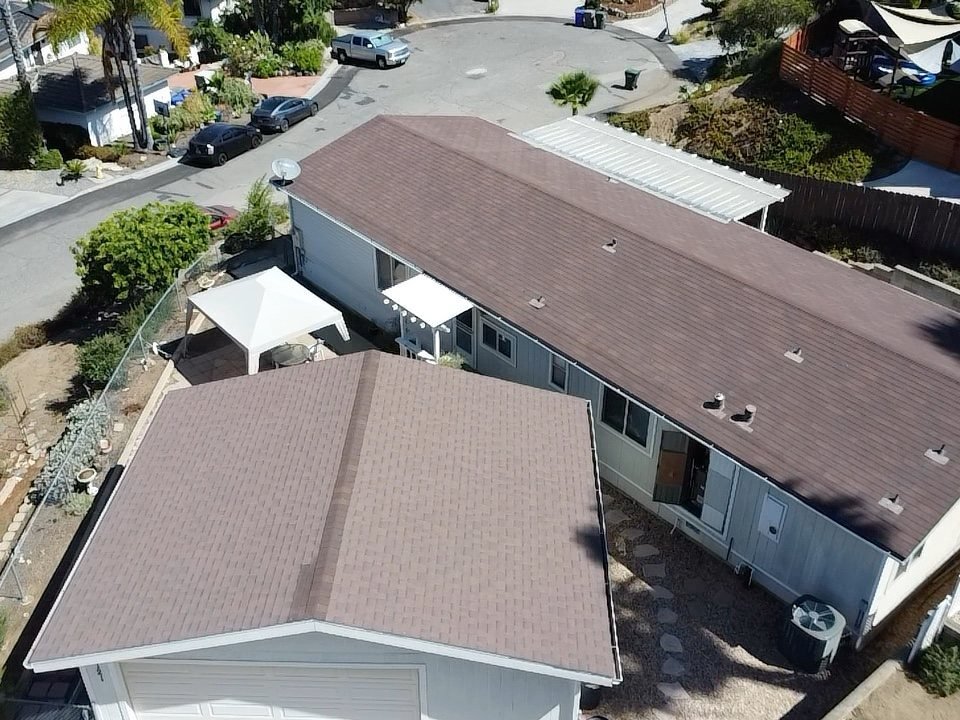
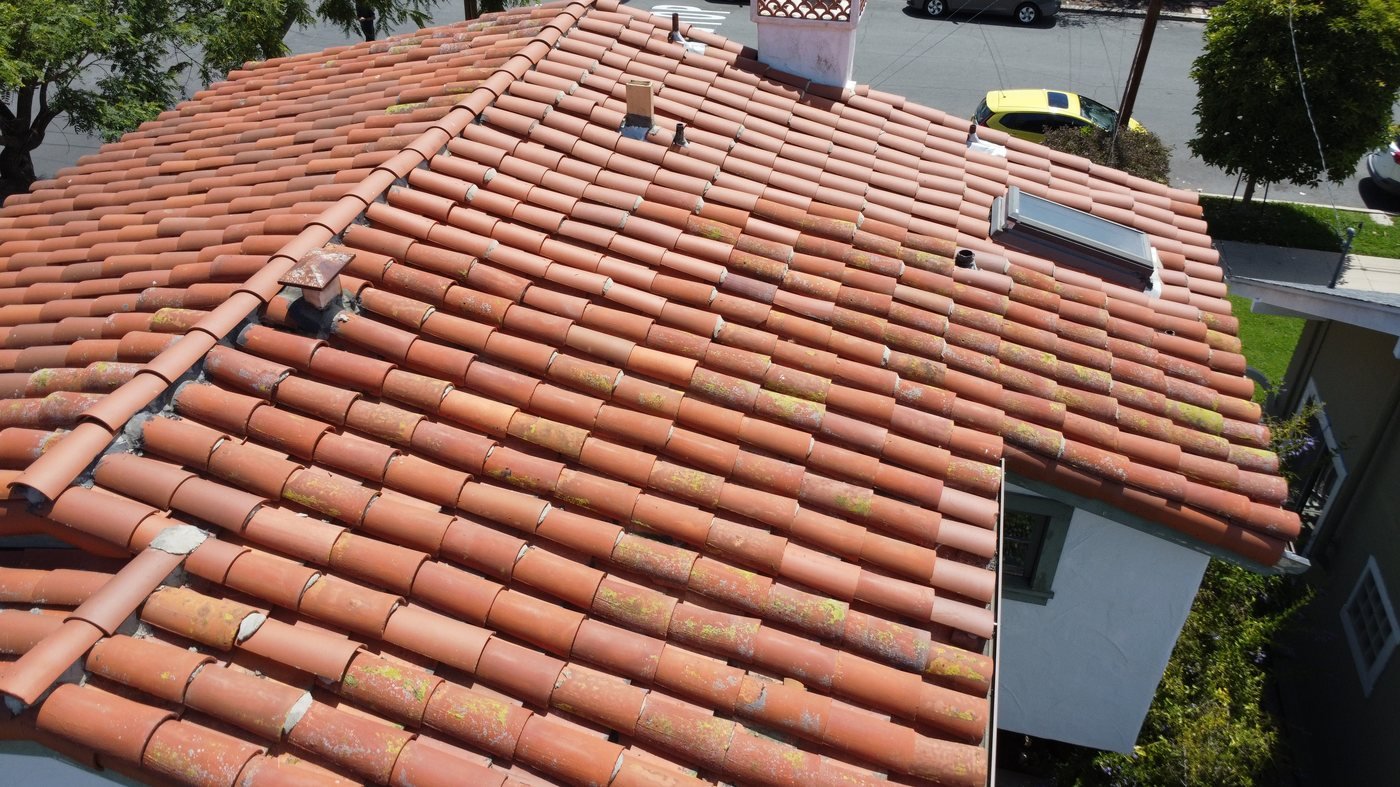
Aerial and on-roof photos from recent San Diego County roof inspections.
More inspections in Santee
- Commercial inspection in Santee
- Pool and spa inspection in Santee
- Sewer scope inspection in Santee
- 4-point inspection in Santee
- Home inspection in Santee
Nearby and countywide
Were You Happy With Your Inspection?
We are proud of our 4.9-star rating across 100+ Google reviews. If Joseph and the team did right by you, a quick Google review helps other San Diego County buyers and sellers find us.