
Commercial Roof Cleaning in Santee, CA
Santee grew up along the San Diego River, and that valley floor is where most of the city's commercial flat roofs sit — the strips along Mission Gorge Road, the Town Center and Trolley Square pads, and the light-industrial buildings toward Gillespie Field. The basin air barely moves, summer heat parks over these rooftops, and the cottonwoods and willows tracing the river shed onto everything downwind. The membrane cooks all summer, the scuppers silt up unseen, and the first real storm off a dry season is when an owner discovers a drain quit back in October.
I'm Joseph Romeo, and this page is about routine roof maintenance on Santee's commercial buildings: getting the leaf litter and growth off the membrane, getting the scuppers and drains flowing again, and putting the roof's real condition on the record with photos. It's housekeeping that buys a flat roof years — not recoating, not patching, not a repair contract. The moment a seam needs welding or foam needs a recoat, that's a roofer's job, and I'll say so. Below: the scope on a Santee property, the river-valley conditions behind the work, the recurring findings, and how a visit plays out. For the rest of the building, start at the Santee home inspection hub.
Call (619) 752-4399 Schedule an Inspection
What's covered on a Santee commercial roof cleaning?
The work covers the low-slope roofs over Santee's commercial buildings: single-ply membranes like TPO, modified bitumen, gravel and cap-sheet built-up roofs (BUR), and sprayed polyurethane foam. A typical visit handles:
- Field clearing — lifting off cottonwood and willow leaf drop, valley dust, and the grit that drifts off the ridgelines into the low corners
- Drainage clearing — freeing the through-wall scuppers, roof drains, strainer baskets, and overflows so storm runoff has somewhere to go instead of stacking up
- Growth removal — lifting algae, lichen, and moss out of the shaded, slow-draining pockets and off the cooler north faces of rooftop units
- Seam and flashing exposure — sweeping laps and base flashings clear at parapets, curbs, penetrations, and around the oversized HVAC and swamp-cooler units common inland, so the surface can be read
- Condition photos — documenting the membrane, seams, flashings, ponding evidence, and outlets for a dated record of the roof
I clean and write down what's there. I don't weld seams, recoat foam, or patch a membrane — that's roofer work, and the report hands them the spots.
Why do the river valley and tract-era stock wear these roofs?
Santee sits inland on the valley floor, past the coastal fog, so the forces that tire a roof here are inland ones:
- Valley-floor heat and UV: the basin holds warm, still air through long triple-digit summers, and the marine layer rarely reaches this far east. That load chalks TPO, alligators modified bitumen, and checks foam — and debris baking on top becomes a hot, moisture-holding mat that ages one stretch ahead of the rest.
- Riparian leaf drop: the cottonwoods, willows, and sycamores along the river corridor and Mast Park shed heavily, and the litter rides the afternoon breeze onto nearby rooftops to mat down and pack into the scuppers.
- 1970s–80s build-out: much of Santee's commercial stock went up in that tract-era growth, and many roofs still run aging mod-bit or BUR with tight, undersized outlets that silt up and need watching.
- Expansive clay underfoot: the valley's soils heave when wet and pull back when dry, and over time that flex reaches the deck and parapets — nudging the roof's pitch just enough to start a new ponding spot where runoff once cleared.
- Cloudburst rain after months of dry: the valley goes dry for a long stretch, then catches its rain all at once. A scupper plugged with a season's leaf fall can't pass that water fast enough, so it backs up — and water sitting on a sun-weakened membrane is how the slow leaks start.
What keeps surfacing on Santee commercial roofs?
The roofs I document around Santee — along the Mission Gorge strips, on the Town Center and Trolley Square pads, and in the Gillespie Field industrial blocks — tend to show the same short list of problems. Far better to catch them on a cleaning than to read them off a water-stained ceiling tile:
- Scuppers jammed with leaf fall — outlets stuffed with cottonwood and willow litter, a dried silt line marking how high water backs up each storm
- Ponding stains low on the field — mineral rings and dark patches where water lingers for days, sometimes in a corner that drained cleanly before the clay moved beneath it
- Sun-spent surfaces — TPO gone chalky, modified bitumen split open, BUR gravel scoured to bare felt, foam coating checked through to raw foam that soaks up water until recoated
- Growth in the cool shadows — algae, lichen, and moss in the damp ground behind parapets and against curbs the sun never reaches
- Lifts hiding under litter — lap seams and base-flashing edges peeling back beneath debris at parapets, curbs, and penetrations, the very places a leak starts
- Equipment doing damage — condensate from HVAC and swamp coolers running across the membrane, plus litter collecting around units and skylight curbs
By itself none of this condemns a roof. I draw the line between what a cleaning fixes and what a roofer must, and photograph both, so the report rests on what's genuinely there.
How does the visit run and what lands in your inbox?
Reach me at (619) 752-4399 or by email with the Santee address, the membrane type if you have it, and your reason for the visit — ongoing upkeep, beating the wet season, or due diligence on a sale or lease. Those details let me sort out access ahead of time, which isn't a given on the older Mission Gorge buildings where the only way up is an interior hatch.
The day runs in order. I sweep the field, the low corners, and around every rooftop unit, then pull the scuppers, drains, strainers, and overflows open until water actually moves. The cleaning doubles as the inspection — as debris comes off, I check the membrane and foam for sun damage, the laps and base flashings for lift, and the low spots for ponding that hints the soil has nudged a slope out of true. Each system gets its own method, so foam never gets scuffed and no water gets driven under a seam.
You receive a HomeGauge report backed by photos: condition in plain terms, every outlet I cleared, and anything that crosses from dirt into a defect marked for your roofer. Turnaround is usually same or next day — the dated maintenance proof a warranty looks for, and a precise starting point for a roofer. Because I only clean and document, never recoat or repair, nothing in it is colored by an interest in selling you the fix.
Why do Santee owners and property managers bring me in?
A maintenance file is only as good as who wrote it. A crew with a blower can clear a roof; reading whether a flashing detail or a ponding pattern is trouble takes a builder's eye. I hold both an InterNACHI Certified Professional Inspector (CPI) credential and a California CSLB General Contractor license (#1113143). Having built and assessed these assemblies, I can look at a lifting lap or a stubborn ponding spot and tell you what it means — and whether Santee's shifting clay is feeding it — before a roofer puts a number on it.
- 20+ years, 10,000+ inspections around San Diego County, Santee's Mission Gorge and Town Center corridors and the Gillespie Field industrial pockets included
- 4.9 stars from 106 Google reviews
- No conflict of interest — I sell no roofing, coatings, or repairs, so the findings track what your roof actually needs
When the roof has moved past cleaning — a recoat, a seam or flashing repair, a drain swap, a certification — I bring in or refer a licensed roofer. Email joe@sandiegohomeinspection.com or call the number above.
Which inspections suit Santee commercial properties?
Clearing the roof is one part of protecting a Santee building. A few related services often fit the same trip:
- Roof inspection: a deeper read on the covering, flashings, drainage, and remaining service life when you're into capital planning — common on the valley's decades-old roofs
- Commercial building inspection: the whole-property walk of structure, envelope, electrical, plumbing, and mechanical for a purchase or due-diligence file
- Thermal / infrared imaging: finds trapped moisture in the deck or ceiling once a leak has gotten in, where a visual pass falls short
- Foundation and drainage check: on Santee's expansive clay, whether site grading carries runoff away from the building instead of back toward it
Tell me the address and what you're protecting and I'll point you to the ones that fit — or browse the full range of inspection services and get in touch through contact.
Santee Commercial Roof Cleaning FAQs
How often should a Santee commercial roof be cleaned?
Does cleaning help keep my roof warranty intact?
Why does the San Diego River corridor matter for these roofs?
Can expansive soil really change how my roof drains?
Do you repair the membrane or recoat the foam if you find a problem?
What does commercial roof cleaning cost in Santee?
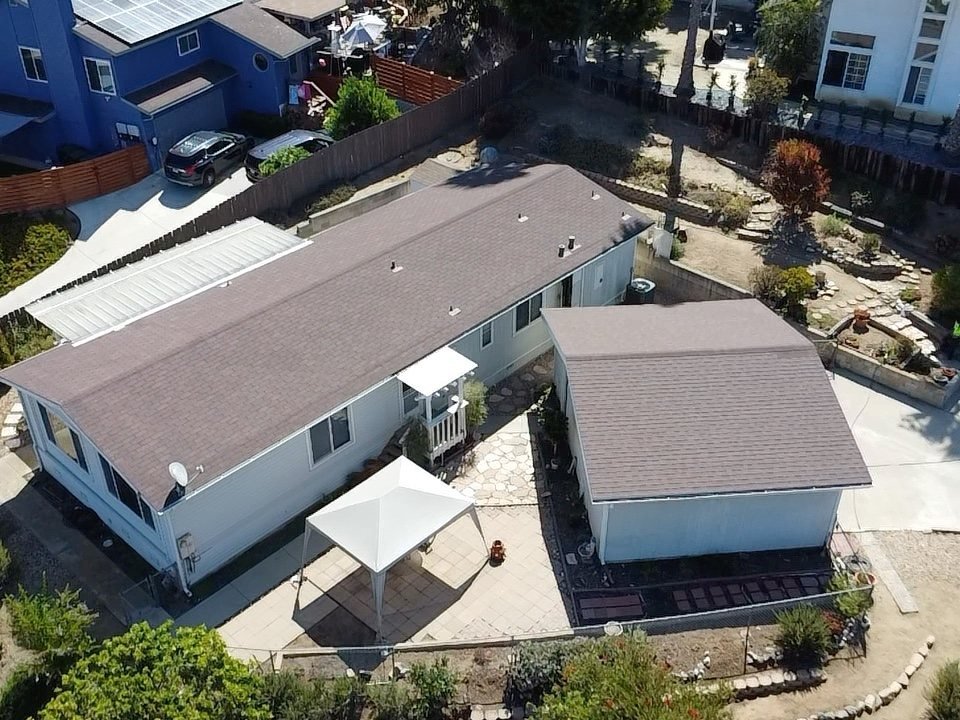
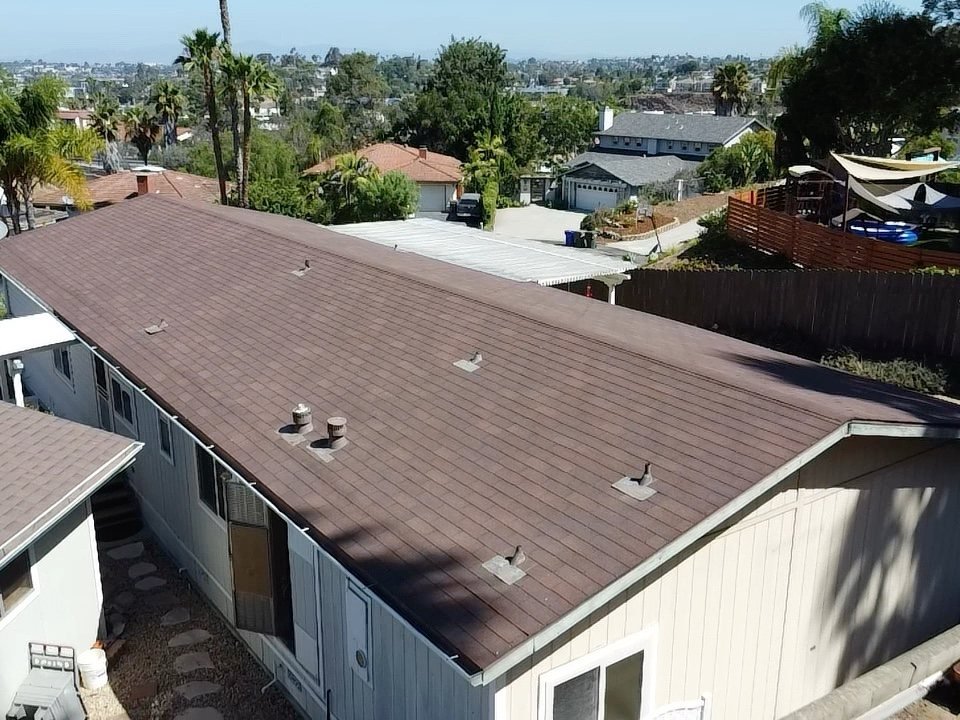
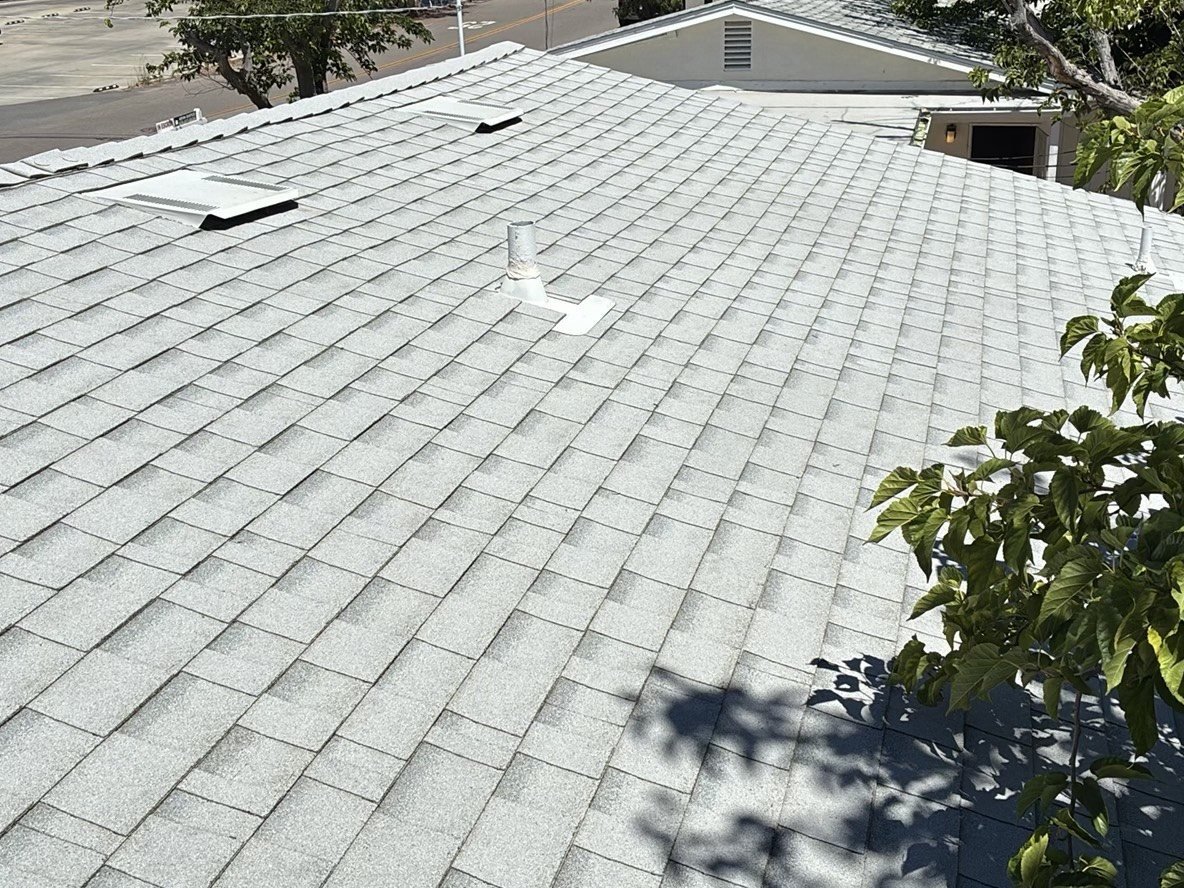
Large rooftops, handled
Flat and low-slope commercial roofs we access, document and maintain.
More inspections in Santee
- SB 326 balcony inspection in Santee
- SB 721 exemption letter in Santee
- Seller inspection in Santee
- Warranty inspection in Santee
- Home inspection in Santee
Nearby and countywide
Were You Happy With Your Inspection?
We are proud of our 4.9-star rating across 100+ Google reviews. If Joseph and the team did right by you, a quick Google review helps other San Diego County buyers and sellers find us.