
What a pool inspection covers, and the safety items that get missed
Inspection blog, 2024-12-13
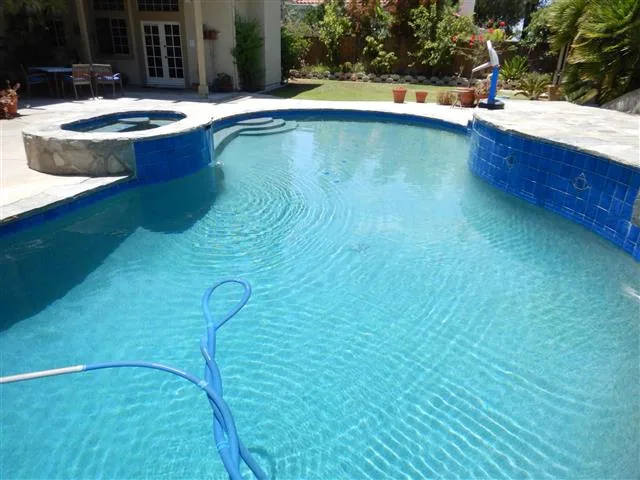
Pools are a separate inspection from the house, and worth doing properly. Equipment is expensive, leaks are hard to find, and two of the safety requirements are life safety items rather than maintenance.
The drain cover
The federal Virginia Graeme Baker act requires anti-entrapment drain covers on pools and spas. A flat or broken main drain cover can hold a swimmer down through suction, and it has killed people.
Covers are stamped with a standard and an expiration date, usually seven years from manufacture. We look for the marking and the date, and we find expired or missing covers regularly, particularly on spas. A single unblockable drain or dual drains spaced apart also satisfies it. This is a cheap part and it is not optional.
The barrier
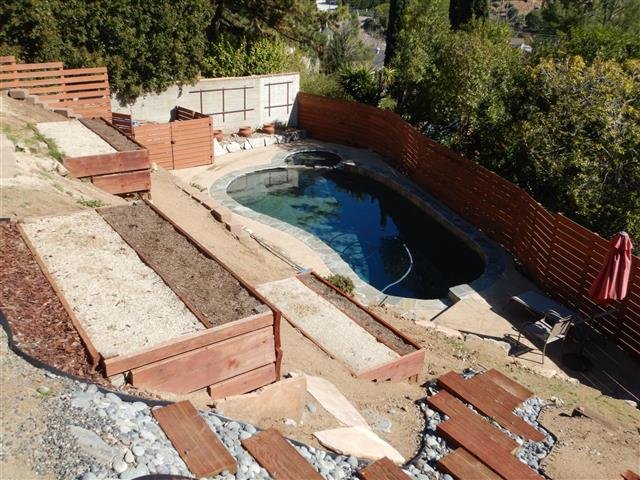
California requires pools at single family homes to have at least one approved safety feature, and new or remodeled pools need an enclosure meeting specific rules: at least 60 inches tall, no gaps a four inch sphere passes, self closing and self latching gates that swing away from the pool with the latch at least 60 inches up or shielded.
The failure we see almost every time is the gate. The self closing hinge is adjusted to be weak, or the latch has been reversed so it is reachable from outside, or the gate has dropped and no longer latches unless you lift it. A gate that does not close and latch by itself is not a barrier.
Door alarms on the house doors leading to the pool are another approved option, and they get disconnected because they are irritating.
Equipment
We run the pump and filter, look at the pressure reading, check for leaks at unions, the pump lid and the multiport valve, and look at the heater's venting and gas connection. We note the age of each component. Pumps run eight to twelve years, heaters ten to fifteen, filters longer.
Since 2021 California has required most replacement pool pumps to be variable speed. A single speed pump still running is a large electrical bill and will have to be replaced with a variable speed unit when it dies.
Bonding
All the metal around a pool, ladders, rails, the pump motor, the shell reinforcement, has to be tied together with a bonding wire so it is all at the same electrical potential. We look for the bonding lug at the pump and visible bonding connections. Corroded or disconnected bonding is common on older pools and it is a shock hazard.
What we cannot see
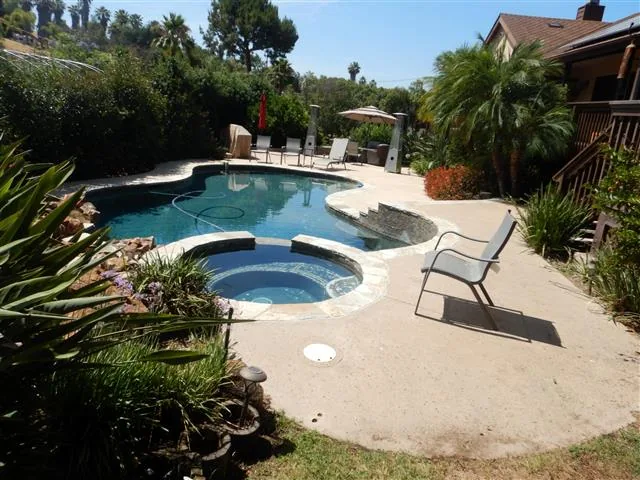
Underground plumbing, the shell under the water line, and anything behind the equipment pad. A suspected underground leak needs a pool leak detection specialist with pressure testing equipment.
More from the field

Your home is a major investment.
Protect it with San Diego's certified, 5-star-rated inspectors.