
What we can and cannot tell you about a furnace
Inspection blog, 2024-11-19
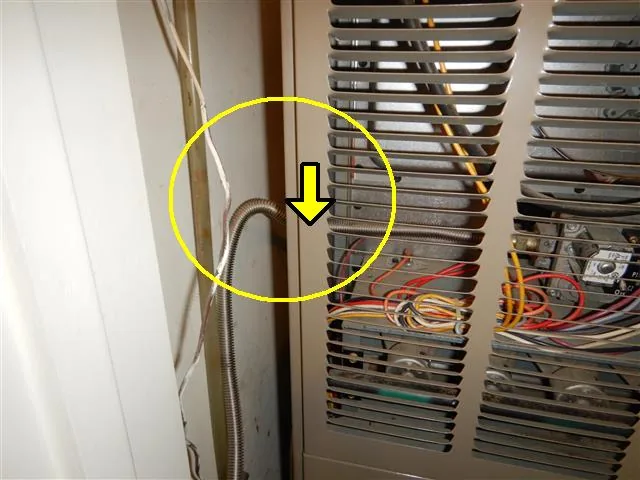
Heating gets less attention here than almost anywhere, and that is the problem. A furnace in San Diego might run twenty days a year. It still ages, it still corrodes, and it still gets ignored for a decade at a time.
What we do
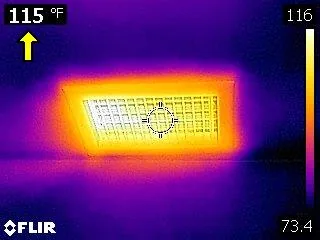
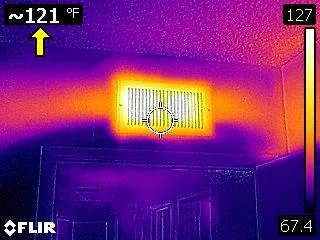
We operate the furnace from the thermostat, confirm it fires and produces heat, and watch it run through a full cycle. We check the flue for slope, support and corrosion, look at the combustion air supply, measure temperature rise if the setup allows it, and look over the visible portion of the heat exchanger with a light and a mirror.
We also check the obvious things that get missed: a filter so clogged the blower is starving, a return air leak in a garage furnace closet, a gas shutoff that has been painted solid, storage stacked against the unit.
The heat exchanger
The heat exchanger is the metal wall between the burning gas and the air that goes into your house. Cracks in it let combustion gases, carbon monoxide among them, into the supply air.
Most of that surface is not visible without taking the furnace apart, and a home inspection is a visual inspection of an assembled house. When we see a crack or heavy rust scaling, we call it. When we see indirect signs, flame that rolls or lifts when the blower starts, soot around the burner compartment, rust flakes on the burners, we tell you what we saw and recommend an HVAC technician who can pull the unit down and run a combustion analysis.
A clean visual check is not a certificate that the exchanger is sound. It means we did not find a defect from the outside.
Age
The data plate carries a serial number that dates the unit, and we record it. A gas furnace runs fifteen to twenty five years. Ours stay on the low-hours end of that, so a thirty year old furnace in a San Diego house is common and is not automatically failed. It is a budget item, and older units burn more gas for the same heat.
What you should do before winter
Change the filter and note the size on your phone. Run the heat for twenty minutes in October with the windows open, so the first burn-off smell happens on your terms and you find out in autumn if it does not light. Confirm the carbon monoxide alarm outside the bedrooms still works, since California requires one in every dwelling with a fuel burning appliance, attached garage or fireplace.
More from the field

Your home is a major investment.
Protect it with San Diego's certified, 5-star-rated inspectors.