
How we work
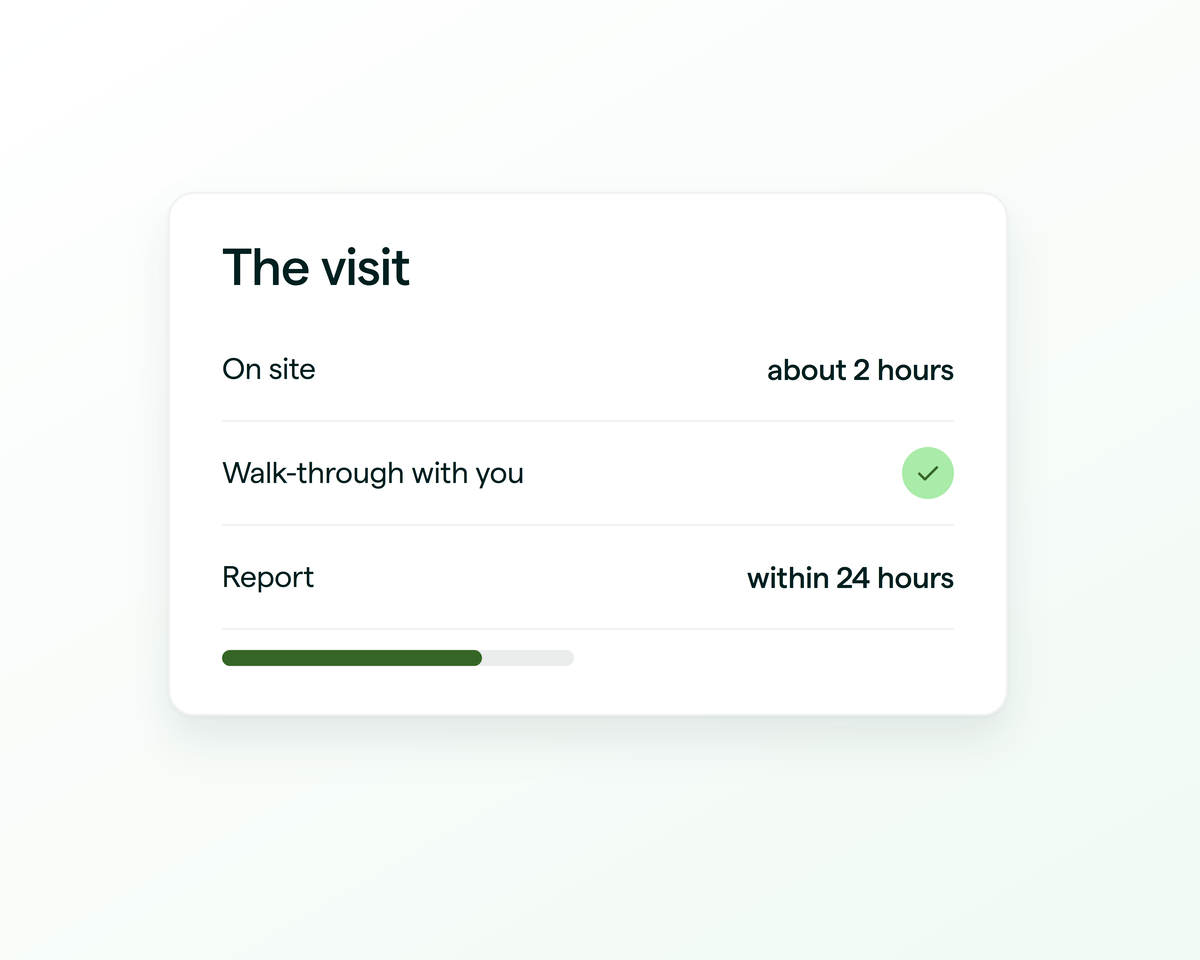
Two hours on site with instruments, a walk-through with you at the end, and an annotated report you can negotiate with.








Introductions first, then the instruments come out
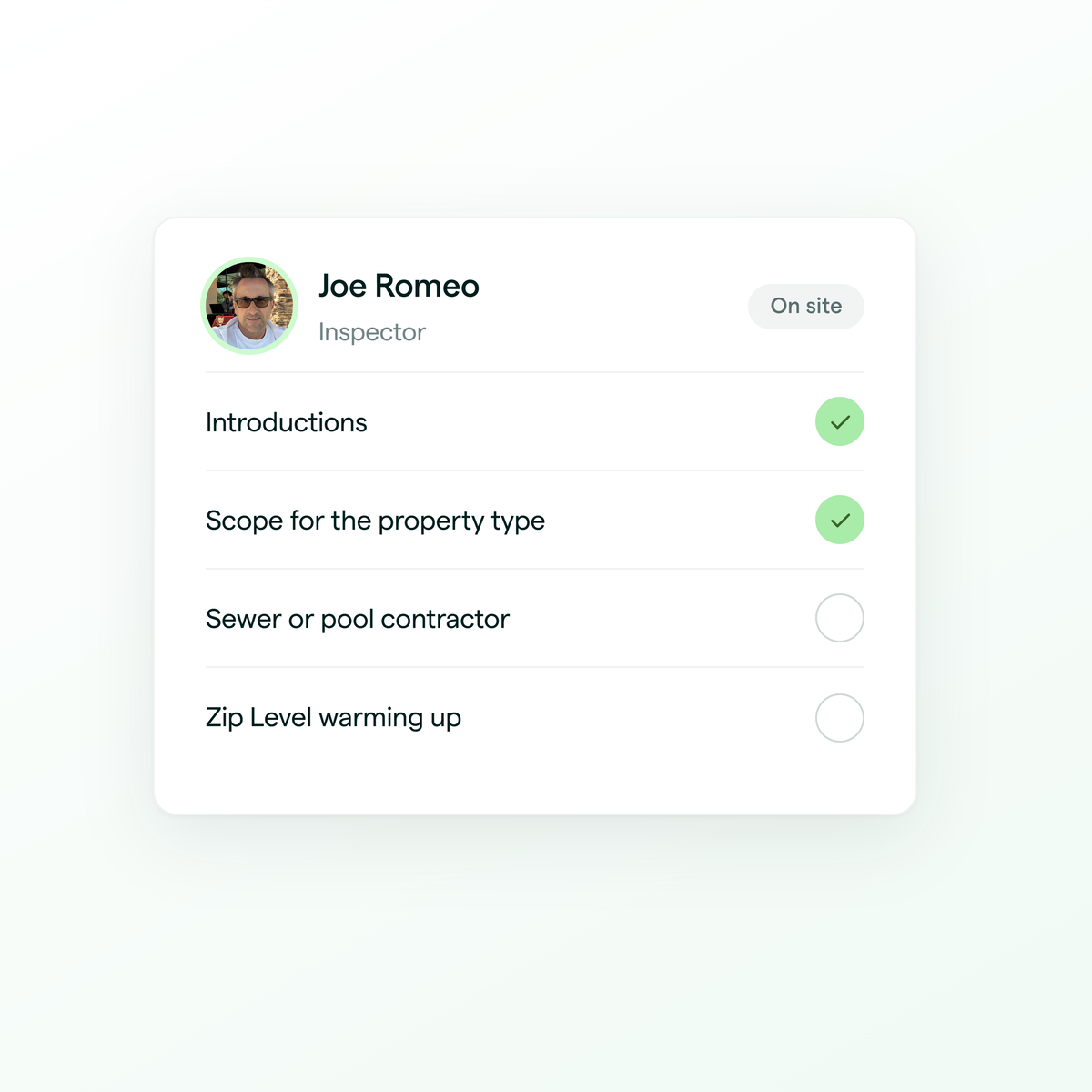
We meet you at the property, introduce ourselves and explain what the next couple of hours will look like. We are glad to answer any questions while we are there. If the property is vacant, we get straight to work.
We begin by assessing the property to decide how the inspection should be run, which depends on the type of home. If a sewer scope or a pool inspection has been booked, we bring those contractors in at this point so their work runs alongside ours. If the slab survey has been added, we set up the Zip Level altimeter early so it can warm up before we take readings.
He came on short notice, arrived early, and left no stone unturned.

About two hours on site, in two halves
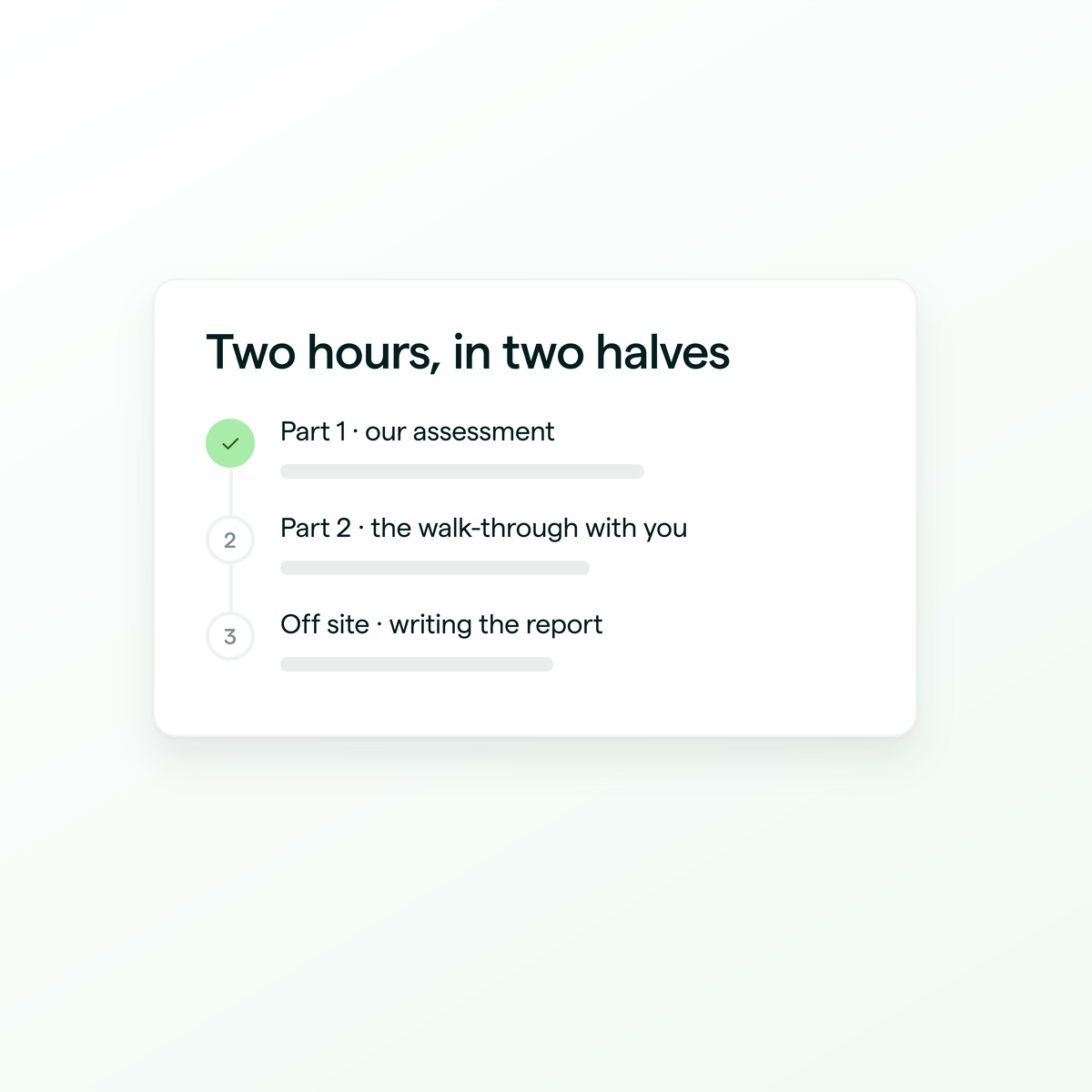
A typical single-family home inspection takes about two hours on site, plus roughly two more off site writing the report. Large homes, custom-built homes and older homes on raised foundations take considerably longer; condos take less. We can give you a time estimate from the square footage when you book.
You are welcome to attend, and many clients do. If you would like to join us, the end of the visit is the best time.
Part 1: our assessment
We pull covers off live electrical panels, climb tall ladders, walk roofs and crawl through cramped under-floor spaces, following a set routine. For everyone’s safety and so that nothing is overlooked, we ask that clients join us once this stage is complete, and we document each system with notes and photographs as we work.
Part 2: the walk-through with you
We then go over our main findings and stay as long as it takes to answer your questions.
Then we run the house, system by system
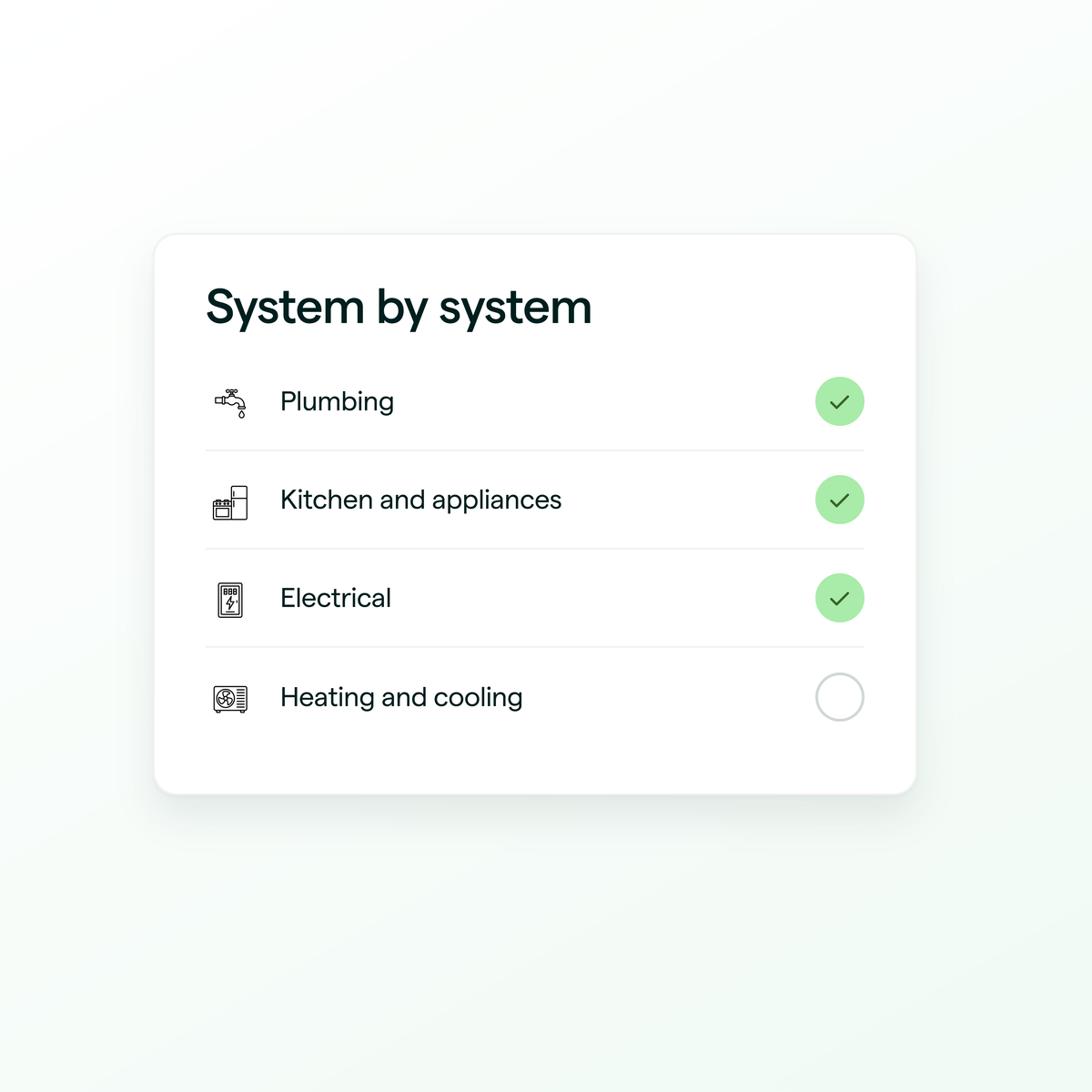
Everything below is part of a standard inspection unless it says otherwise, and every system is photographed as we go, so the report shows you exactly what we looked at.
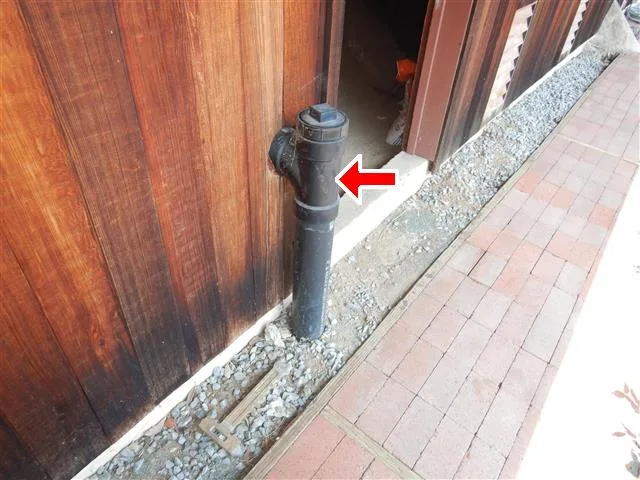
- Plumbing. We run the water at every fixture and look under the sinks, flush the toilets, run the dishwasher and check the drain lines, then scan with the thermal camera for leaks and moisture the water alone will not show.
- Kitchen and appliances. Microwave, oven, range and cooktop, dishwasher, the updraft fan and its light, and every cabinet. We read the fridge, dryer, microwave and oven with the IR camera and run the washer through a cycle.
- Electrical. Outlets, lights and fans get switched on or read with a plug tester for power and GFCI protection, and we pull the covers on the main panel and any subpanels to see what is behind them.
- Heating and cooling. An infrared scan of the registers and the accessible ductwork shows whether your HVAC and heating system is actually delivering to every room in the house.
Then the roof, the openings and the add-ons
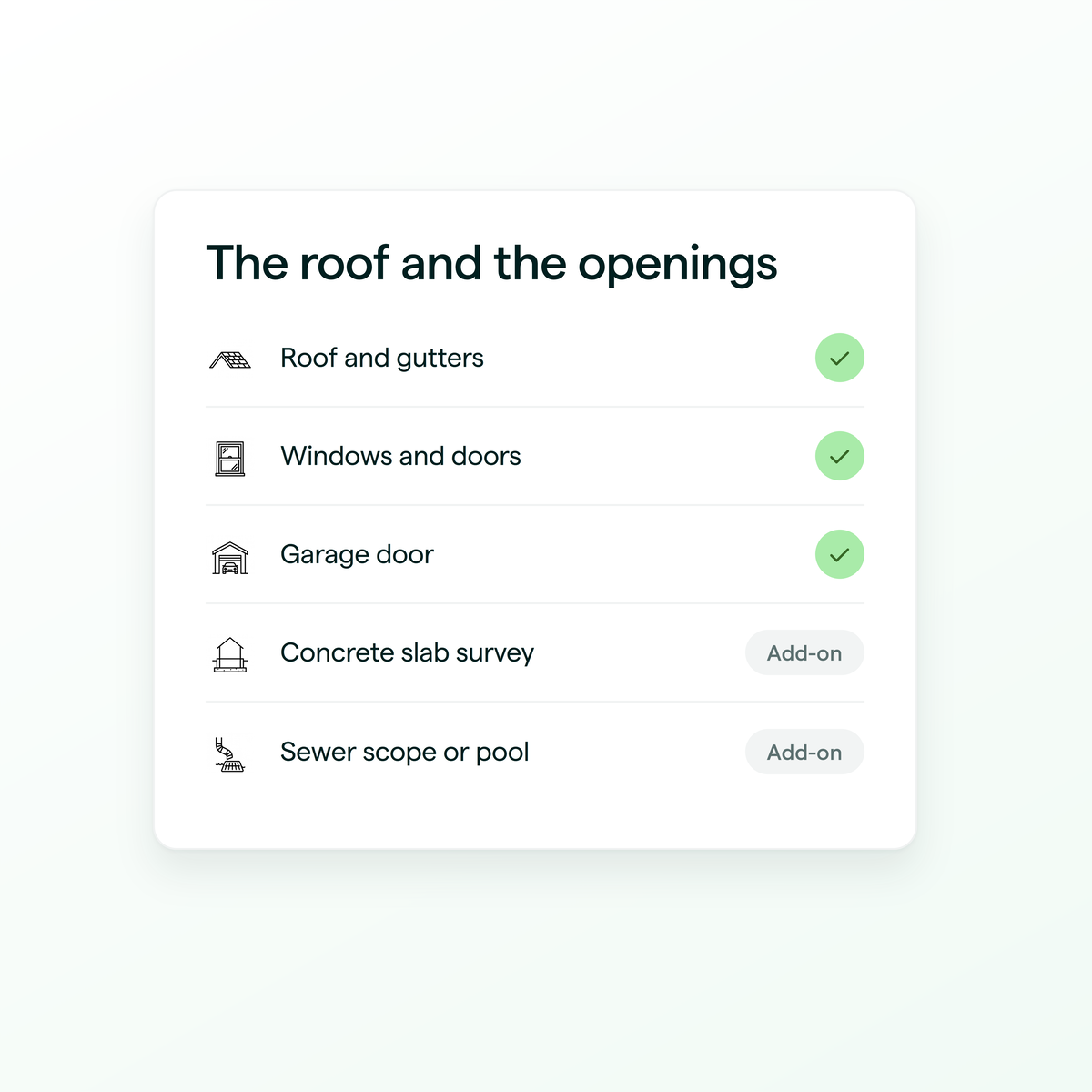
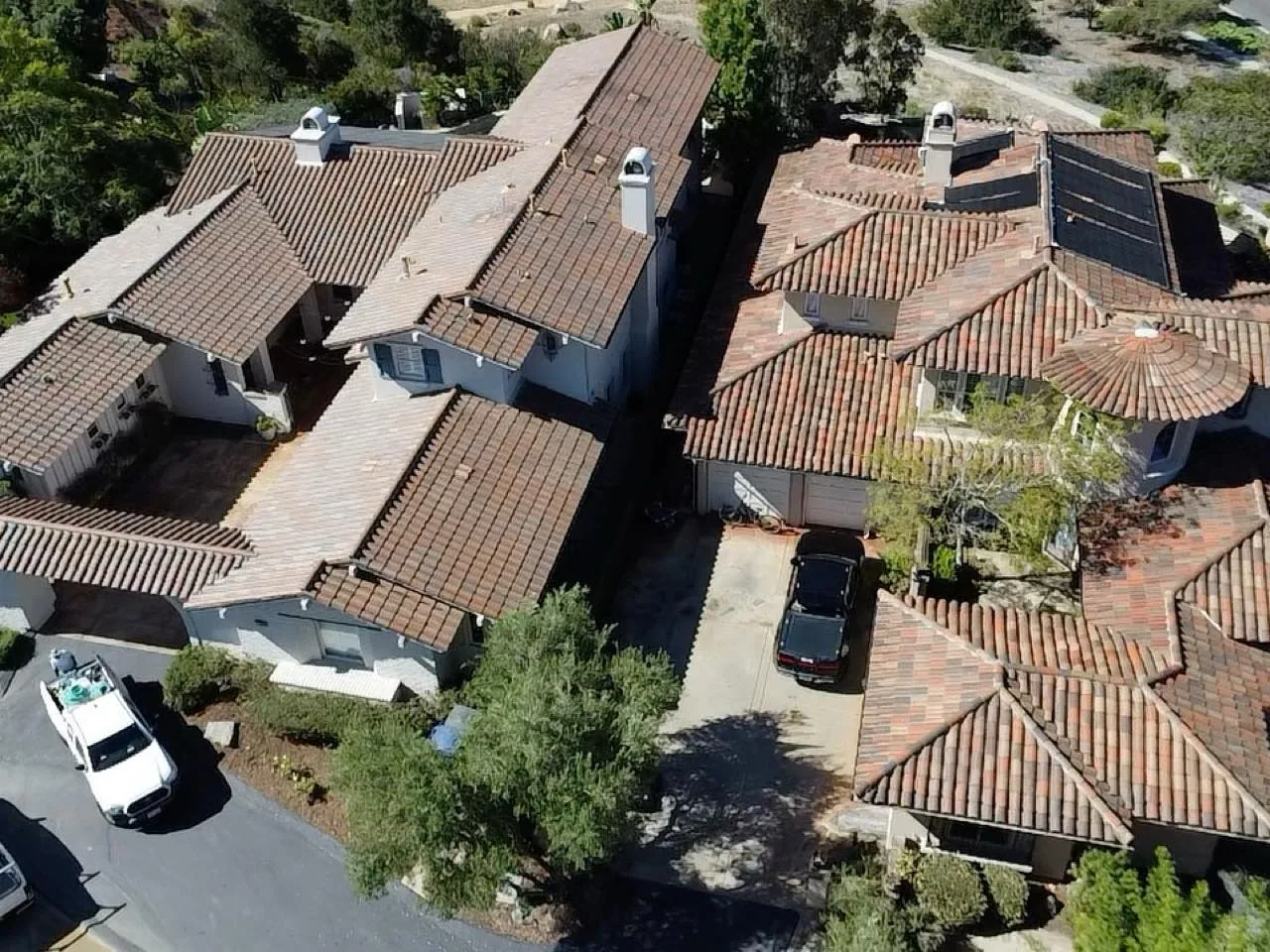
- Roof and gutters. Damage, wear and debris on the roof and in the gutters, including the parts that are wearing out but have not failed yet.
- Windows, doors and the garage. Every window and door gets opened and closed, window locks included, and the garage door gets run through its cycle.
- Foundation, when booked. We look for rust, decay and anything else wrong with the components holding the house up.
- Concrete slab survey, an add-on. A Zip Level altimeter measures the floor across the slab. Three-quarters of an inch to an inch of variation up or down is normal here. More than that points to a slope problem in the slab.
- Pool and spa, or sewer scoping, both add-ons. We send our own pool inspector or sewer inspector, and their separate report comes to you alongside ours.
The report, and how you get it
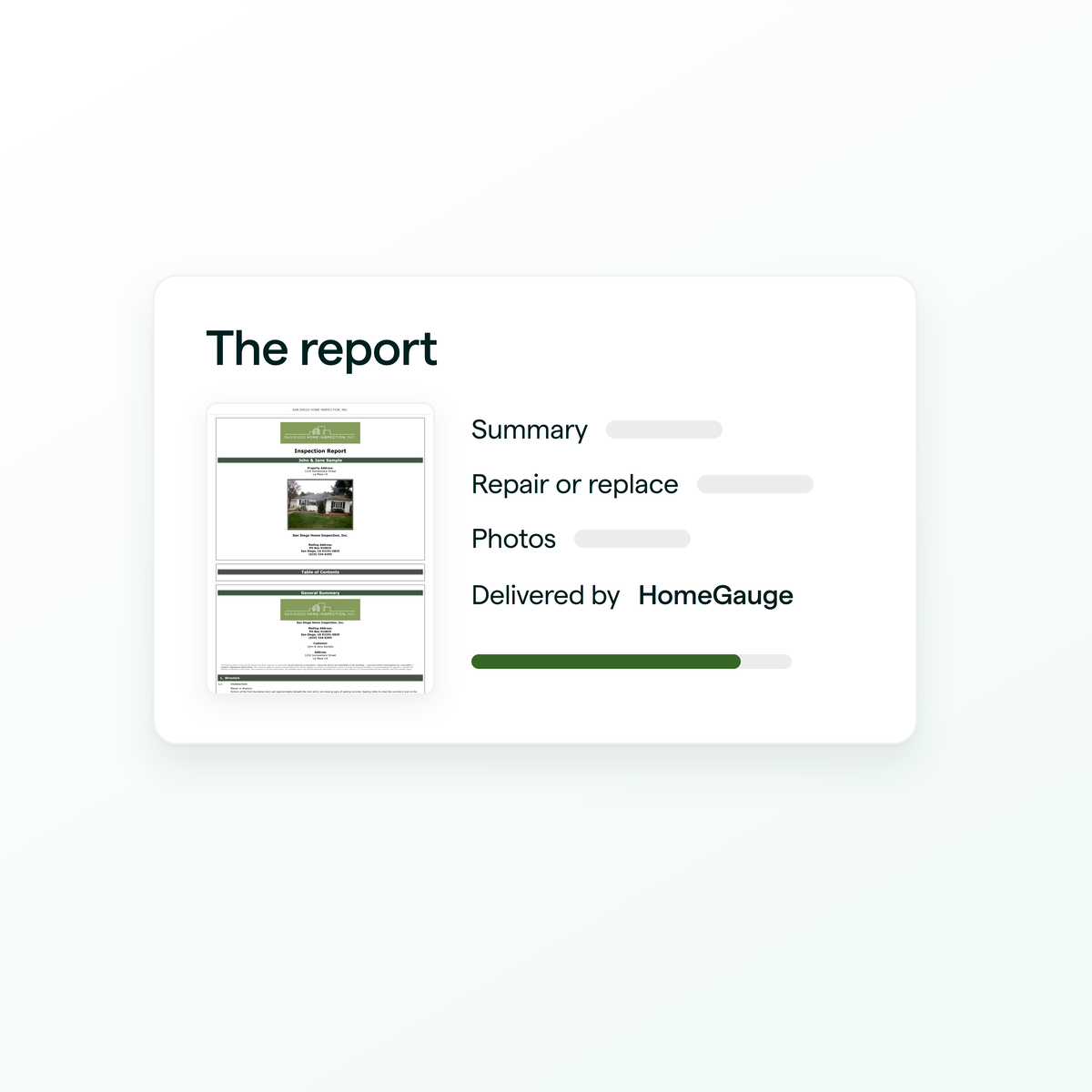
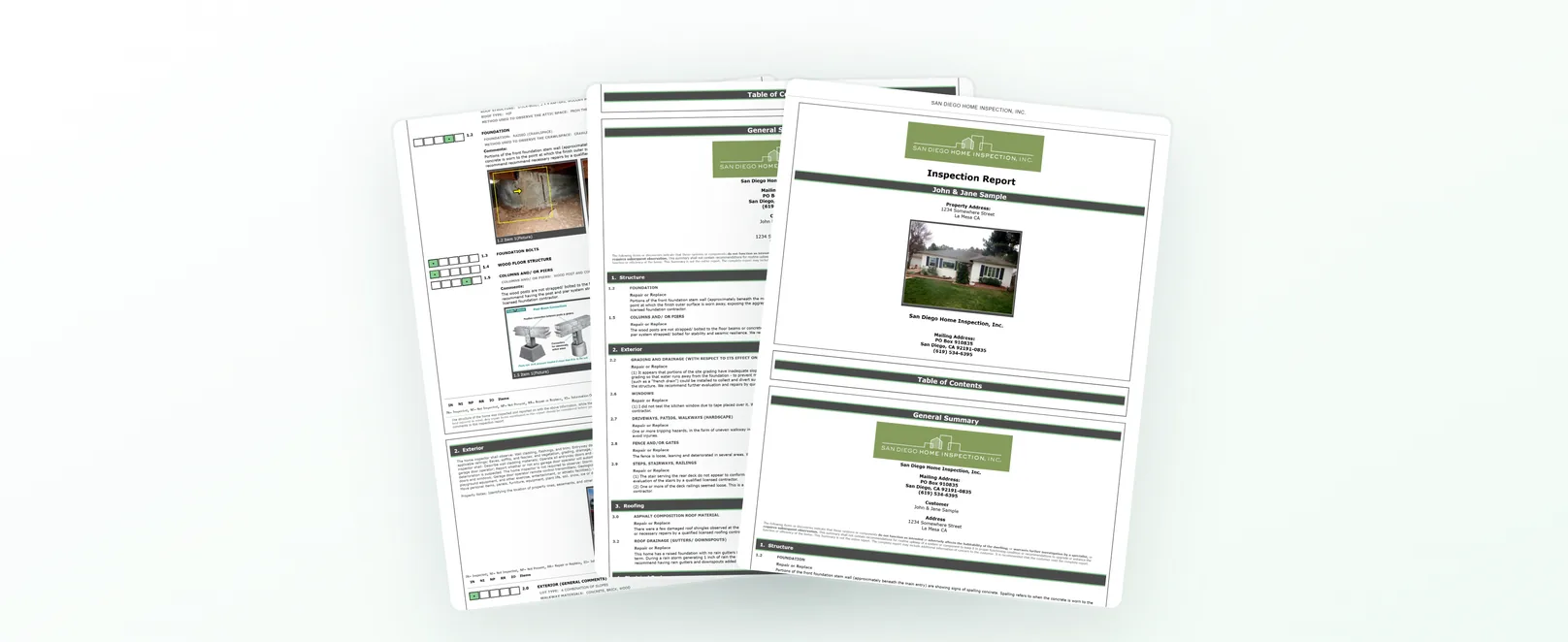
The report documents every component we inspected and how it did. Anything that needs work goes on a repair-or-replace list, and each item carries an annotated photo of the problem, a plain description of what it is and where in the house it sits, and the trade you should call to fix it. Most reports are ready within 24 hours.
We deliver through a platform called HomeGauge. Your login arrives once the inspection agreement is signed and the fee is paid. Cash gets you an 8% discount; otherwise it is a check or a card through the payment platform, on site. Add-ons are the one thing we need settled early: they have to be agreed and paid for before we arrive at the property, and they are non-refundable once booked.
Every fee is published in full. The number you are quoted when you book is the number you pay.
Home inspection
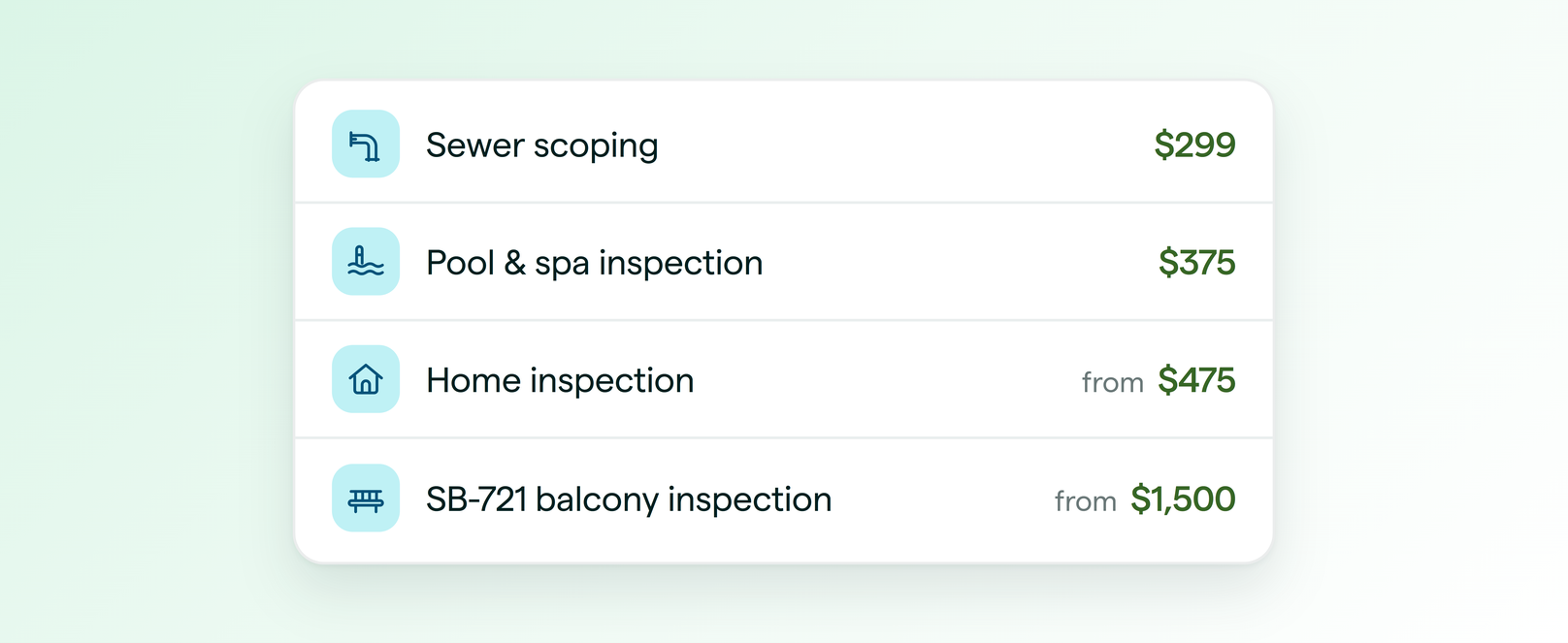
- Single family, from$475
- Condominium unit, from$395
- Townhome or attached, from$425
- Raised foundation+ $150 / $245
ADD $150 for all raised foundation type properties under 2,000 sq ft, $245 over 2,000 sq ft
Add-ons
- Sewer Camera Inspection (standalone)$475
- Sewer Camera Inspection (with home inspection)$299
- Pool & Spa Inspection (standalone)$475
- Pool & Spa Inspection (with home inspection)$375
- Concrete Slab Survey (with home inspection)$40
Before the day
When should I schedule the inspection?
If you’re a buyer, you should schedule an inspection as soon as you have a signed contract in place. The standard contract agreement only allows 17 days for buyers to perform investigations and removal of contingencies. Most REO and bank foreclosure sales insist on even shorter contingency periods. If you are selling a property, consider a pre-listing inspection before putting the home on the market. This will give you time to consider making any necessary repairs to boost buyer confidence and help your home rise above the nearby competition.
How much does a property inspection cost?
Fees depend on square footage and the age of the home. Every price is posted on the fee schedule. Call or text (619) 752-4399 for an accurate quote.
What payment options do I have?
We accept credit card payments when you sign your pre-inspection agreement paperwork, or you can bring cash or a personal check to the inspection. Cash gets you an 8% discount. Add-ons have to be agreed and paid for before we arrive, and they are non-refundable once booked.
Will you recommend someone for the repairs?
Depending on what we find, we may recommend that a specialist such as a plumber or an electrician take a closer look at a particular component, and we are glad to refer you to trades we know. We do not carry out repair work ourselves, and we take no commission or kickback from anyone we refer you to.
Before you book
What we look for
Field notes from the inspectors.

Your home is a major investment.
Protect it with San Diego's certified, 5-star-rated inspectors.