
How much attic insulation a San Diego house actually needs
Inspection blog, 2024-06-08
Insulation gets sold on winter heating, which is the weaker argument in this county. The case here is summer. An uninsulated ceiling under a 140 degree attic radiates heat into the rooms below all evening, long after the sun is off the roof.
The number
San Diego sits in climate zones 7 and 10 for California's energy code, with a slice of the mountains in colder zones. For an existing house, R-30 in the attic is a reasonable floor and R-38 is the common target. That is roughly ten to fourteen inches of blown fiberglass or cellulose, depending on the product.
Houses built before the mid 1970s often started with nothing at all. The typical thing we find in a 1960s ranch is three to four inches of settled rock wool, which is somewhere near R-11 after sixty years of compressing.
Coverage beats depth
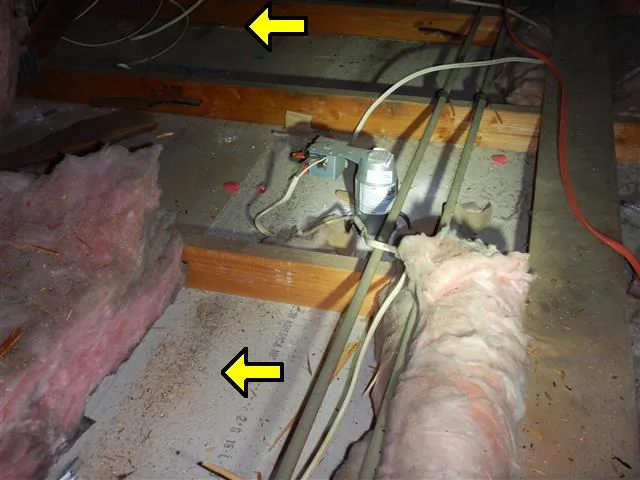
A gap does more damage than most people expect, because heat takes the easy path. Insulation stops at the edge of the attic hatch, or someone pushed it aside to run a cable and never pushed it back, or a batt got flipped so the paper facing is on top. Those spots undo the average.
The attic hatch itself is usually bare quarter inch plywood with no weatherstrip, a two foot square hole in an otherwise insulated ceiling. It costs very little to glue rigid foam to the back of it.
What we look at
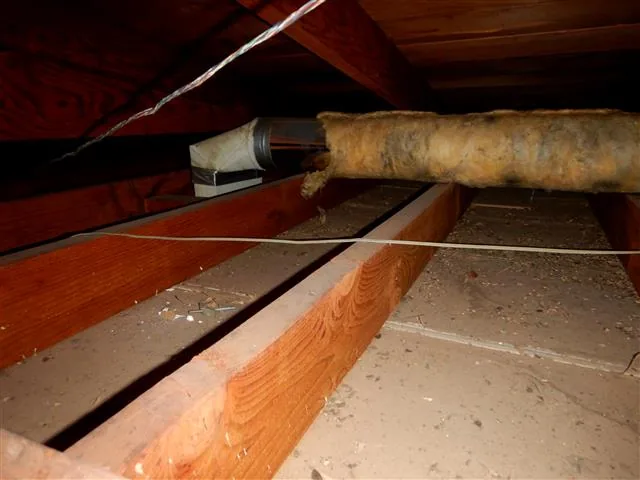
Depth measured at several points, since blown insulation drifts. Whether the insulation is in contact with the ceiling or bridging over ducts and framing. Baffles at the eaves, so soffit venting still has a path. Clearance around recessed lights and flues: old non-IC-rated cans need three inches of space, and B-vent flues need an inch of air all around. We find insulation packed against both regularly.
Bathroom fans venting into the attic instead of through the roof. That is a moisture problem wearing an insulation costume, and it is the origin of a lot of the attic mold we get called about.
Worth doing, and in what order
Air sealing first, insulation second. Sealing the gaps around top plates, plumbing penetrations and can lights costs a few hundred dollars and does more per dollar than the first six inches of new blown insulation, because it stops air moving rather than slowing heat.
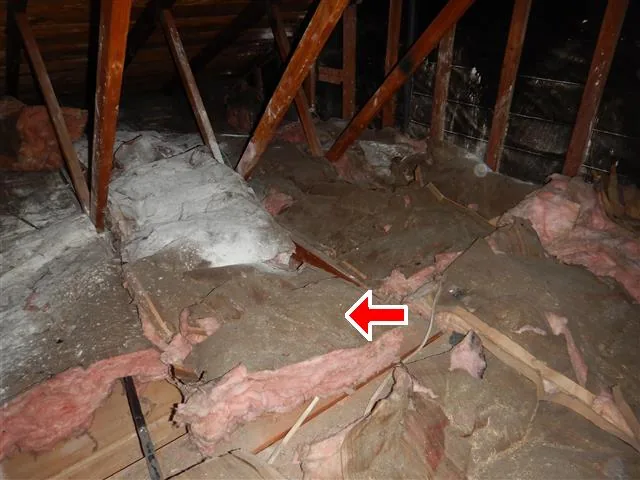
Then top up to R-38. Blowing over existing material is fine as long as it is dry and not contaminated. If there is rodent activity, that has to be dealt with before anything gets covered over.
More from the field

Your home is a major investment.
Protect it with San Diego's certified, 5-star-rated inspectors.