
Sewer Scope Inspection in San Ysidro, CA
San Ysidro sits right against the international line, the busiest land port of entry in the hemisphere a few minutes from most front doors. It is a dense, mixed neighborhood, postwar homes from the 1960s through the 1980s sharing blocks with newer infill and a thick belt of commercial and mixed-use property feeding the border crossing. Underneath all of it runs the one component a standard inspection cannot touch: the sewer lateral, the private drain line carrying everything from the house out to the public main. You do not see it, your agent does not see it, and on a community this old in patches and this busy, the bill for ignoring it lands after you own the place.
My name is Joseph Romeo. A sewer scope is the only honest way to learn what that buried line is built from and how it is holding up before escrow closes. I push a waterproof video camera into the lateral through a cleanout and drive it toward the city connection, recording every foot, then hand you the video and a report written in plain language. One thing up front: this is a camera diagnosis, not a repair, a snaking, or a hydro-jet. If the pipe needs work, I connect you with a licensed plumber and forward the recording so he starts informed.
Call (619) 752-4399 Schedule an Inspection
What does a San Ysidro sewer scope actually inspect?
I introduce a self-leveling camera head into the property's main drain line, normally through an exterior cleanout, and steer it all the way to the tie-in at the public main. Every foot is captured to video so you can watch the inside of your own pipe instead of trusting a summary. On a San Ysidro property I am looking to document:
- Pipe material: vitrified clay, cast iron, tar-paper Orangeburg, or modern ABS/PVC. The material the line is built from usually predicts the trouble before I even see a joint.
- Root intrusion: from fine feeder roots slipping through a joint seam to a packed plug choking the bore, the leading defect anywhere old pipe runs beneath established trees.
- Fractures, breaks, and shifted joints: sections that have split, dropped, or slid out of alignment as soil moved around them.
- Bellies and sags: low dips that pool water and collect waste, typical where an older line settled unevenly over decades.
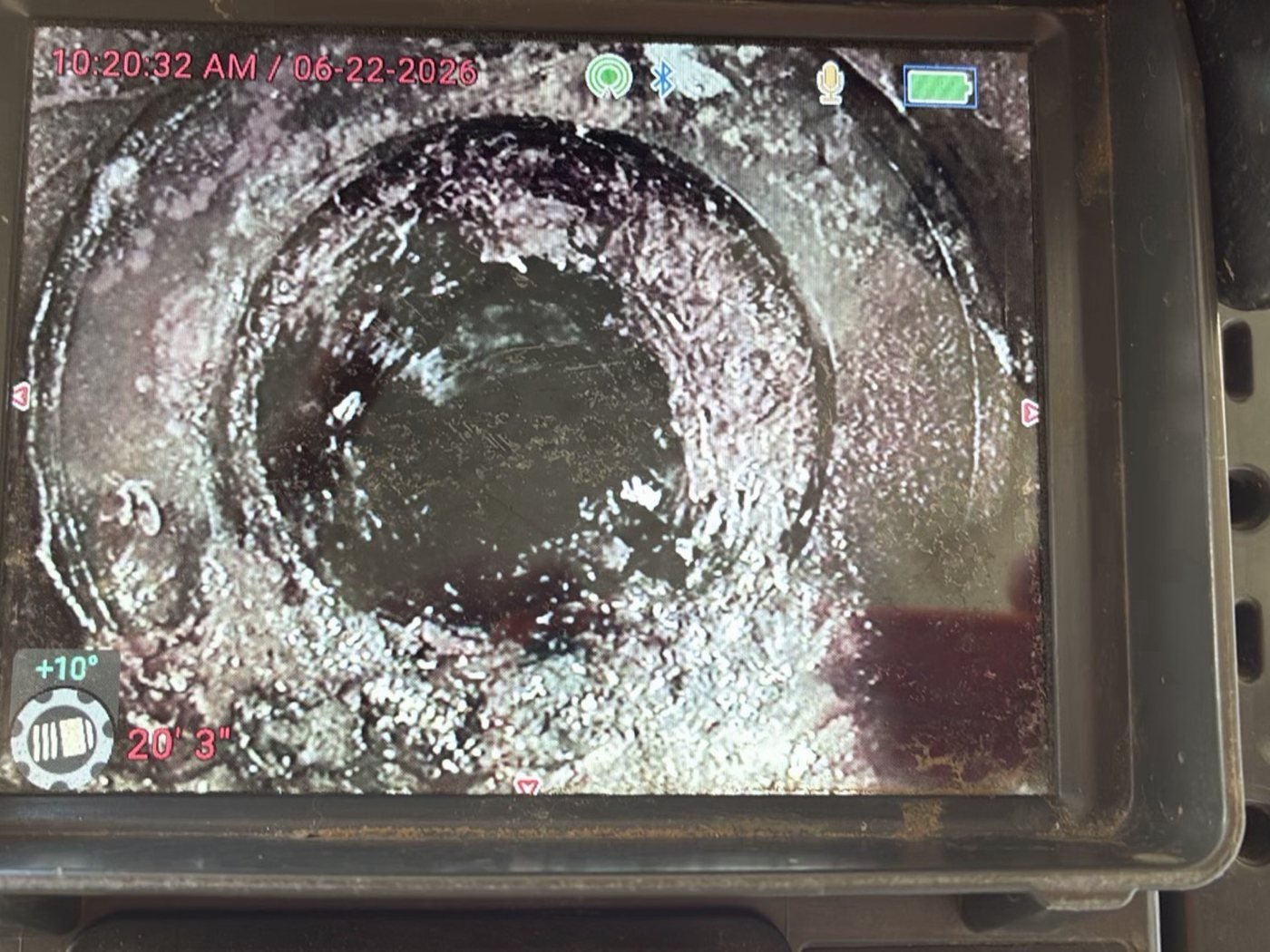
- Corrosion and interior scaling: the rough, flaking inner surface of worn cast iron that narrows the channel and snags solids.
- Blockages and prior repairs: grease, debris, patch jobs, and liner segments that show the line already carries a service history.
What I do not do: dig, jet, descale, or repair. The camera diagnoses, full stop. When it surfaces something needing clearing or excavation, I refer a licensed plumber and supply my footage so his quote begins with the pipe already on screen.
How do border-area housing and slabs affect the lateral?
San Ysidro's building stock is a patchwork, and the lateral underneath tracks that history more truthfully than anything you can see at a showing. Here is what shapes my read before the camera goes in:
- 1960s to 1980s tract and infill. Much of the residential core went up across those decades, an era that still saw clay and cast iron in the ground on the older end before ABS became standard. Lines from this window are squarely in the age range where joints loosen and iron scales.
- Slab-on-grade construction. A lot of San Ysidro housing sits on slab, which means a buried, under-slab portion of the lateral you cannot reach without a camera. A break or belly hidden beneath a slab is exactly the defect a scope is built to catch.
- Older pre-1975 pockets with clay and Orangeburg. In the longer-standing sections, original clay tile and even tar-impregnated Orangeburg can still be carrying flow. Orangeburg deforms and collapses with age and is the material I most want to rule out before you sign.
- Dense lots and mixed commercial use. Tight residential blocks and the commercial corridors near the crossing put heavier, steadier load on aging lines, and shared or close-set laterals can complicate where the run exits and ties in.
What does the camera commonly turn up in San Ysidro?
A handful of defects show up again and again on this side of the South Bay. None is automatically fatal to a deal, but each is a number you want in hand before you commit, not after the moving truck leaves:
- Roots through clay seams, from light feeders a plumber can clear to a solid mass that forces excavation, the usual story wherever mature trees overhang an older line.
- Collapsing Orangeburg, the ovaled, blistered wall of a tar-paper pipe at the end of its life, which nearly always means full replacement.
- Cast-iron corrosion and scale, the gritty, narrowed interior of a mid-century iron line that drags down flow and traps debris.
- Bellies holding standing water, settled low points where solids gather and eventually back up on unevenly bedded runs.
- Separated and offset joints, where soil shift or root pressure has nudged sections out of true.
- Grease and partial obstructions, buildup that has to be cleared before the camera can reach the main and verify the remainder of the line.
Every finding lands in the report with a still frame lifted from the video, a distance or depth marker wherever the camera gives me one, and a straight note on whether it reads as ordinary maintenance or a genuine repair worth raising at the table.
How does the scope run and what lands in your report?
I begin by finding a usable cleanout. Some older San Ysidro homes were never fitted with an accessible one, and when that is the case I pull a toilet to get the camera into the lateral and reset it cleanly afterward. I drive the self-leveling head toward the public main, narrating what we pass, and record the entire run. Stand at the monitor with me if you can. A root mass or a sagging low spot reads far more clearly when you watch it live than when you scan a line item two days later, and I would rather you see the pipe with your own eyes.
I build the report in HomeGauge, a video still on each finding with the full recording attached, organized so the real repairs, a collapse, an Orangeburg run, a heavy intrusion, stand apart from cosmetic wear. Most reports go out the same day or the following morning, which keeps you inside your contingency window with room to line up a plumber's bid or draft a repair request. Where the line has to be cleared before I can scope it fully, or where the footage shows a break that calls for digging, I spell out exactly what comes next and forward my recording to whatever licensed plumber you bring in.
Why do San Ysidro buyers reach out to Joseph Romeo?
I carry an InterNACHI Certified Professional Inspector (CPI) credential and a California CSLB General Contractor license (#1113143). On a buried lateral, that builder background changes what the picture on the monitor means: I know how an old clay-to-iron transition was assembled, how a slab home routes its under-slab run, and what it genuinely costs to open ground and replace a section, so I can tell you whether a finding is a quick maintenance call or a five-figure excavation.
- More than 20 years and over 10,000 inspections across San Diego County.
- 4.9 stars across 106 Google reviews.
- Completely independent. I do not snake drains, line pipe, or sell sewer repairs, so nothing in the report is steering you toward work that would pay me.
I answer to the buyer standing next to me, and the report is written to hold up when you carry it into a negotiation. Reach me directly at (619) 752-4399 or joe@sandiegohomeinspection.com.
Which inspections pair with a San Ysidro sewer scope?
The scope settles one buried question. On a San Ysidro home, several other services fit alongside it, and I can fold them into a single visit:
- Full home inspection: everything above grade, roof, electrical, supply plumbing, HVAC, and structure, anchored by the San Ysidro home inspection hub.
- Foundation and slab review: on slab-heavy lots, the same soil movement that bellies a lateral often shows at the slab edge, so a closer look there pairs naturally.
- Infrared and moisture scanning: reading slab and walls for hidden water where a failing drain or supply line may be seeping unseen.
- Specialist coordination: when a finding points toward termite, mold, or engineering questions outside a sewer scope, I bring in a licensed specialist rather than speculate.
- Plumber referral for repair: when the camera finds roots, a break, or Orangeburg, I refer a licensed plumber to clear, line, or excavate, and pass along my recording so he is not starting blind.
Send me the address and roughly the year the home was built, and I will tell you whether the lateral is the first thing to camera or one of several items worth combining into one trip.
San Ysidro Sewer Scope Inspection FAQs
What does a sewer scope inspection in San Ysidro cover?
Why does a sewer scope matter on San Ysidro homes?
How does slab-on-grade construction affect the scope?
Can you scope the line if there is no cleanout?
What happens if you find roots or a broken pipe?
How much does a San Ysidro sewer scope inspection cost?
What the camera sees
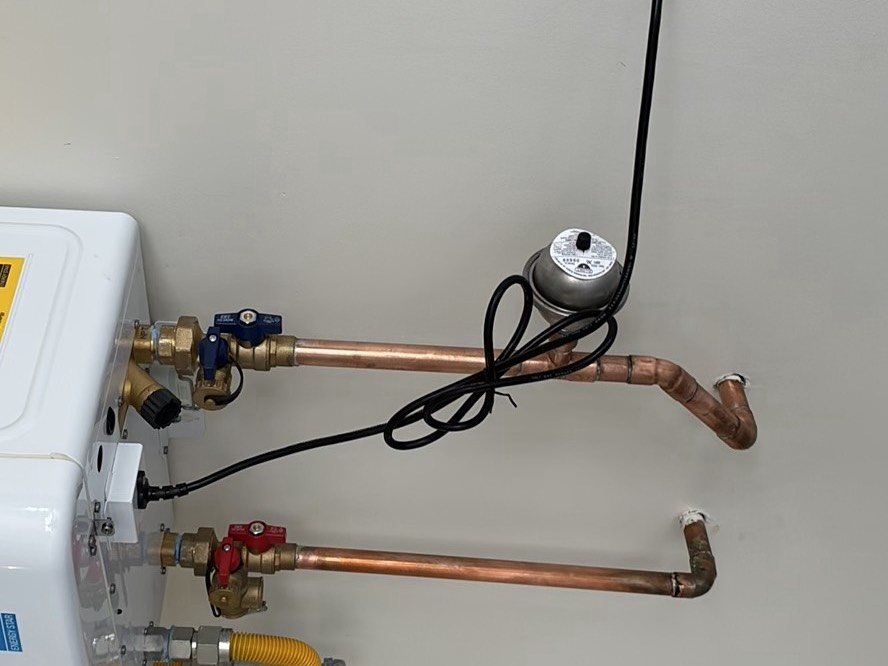
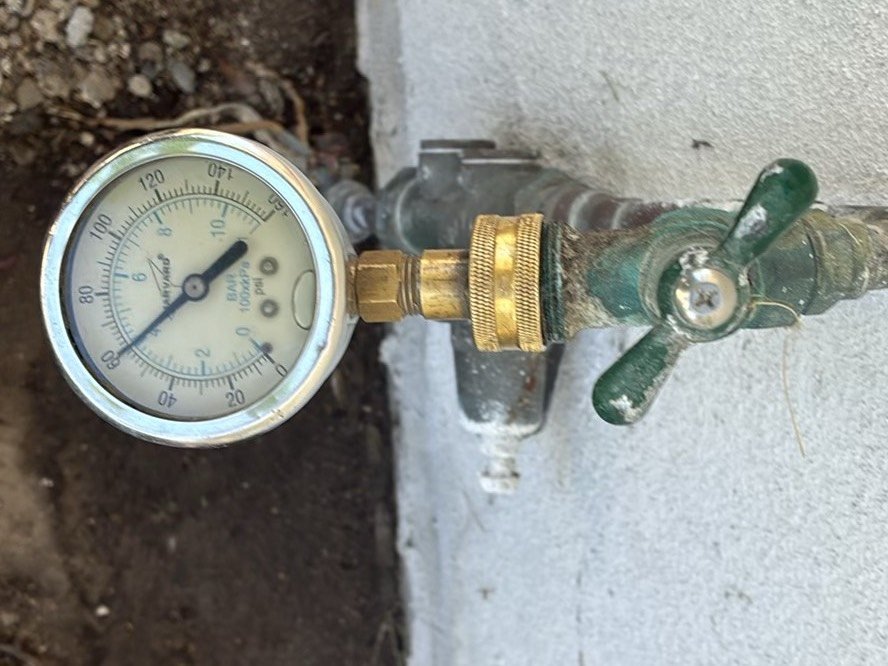
Sewer scope documentation from recent San Diego County inspections.
More inspections in San Ysidro
- SB 721 balcony inspection in San Ysidro
- SB 326 balcony inspection in San Ysidro
- SB 721 exemption letter in San Ysidro
- Seller inspection in San Ysidro
- Home inspection in San Ysidro
Nearby and countywide
Were You Happy With Your Inspection?
We are proud of our 4.9-star rating across 100+ Google reviews. If Joseph and the team did right by you, a quick Google review helps other San Diego County buyers and sellers find us.