
Why your water heater may need an expansion tank
Inspection blog, 2025-09-25
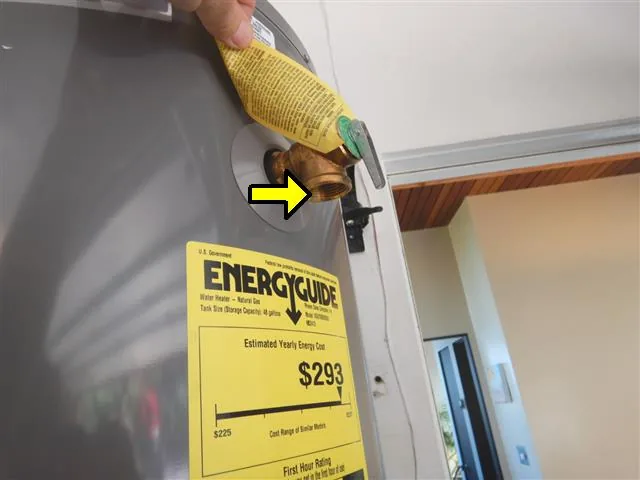
Water expands when you heat it, by roughly two percent going from cold to 140 degrees. In a 50 gallon heater that is about a gallon of extra volume that has to go somewhere.
Open and closed systems
For a long time that extra volume simply pushed back into the city main. That is an open system and it needs no expansion tank.
Then check valves and pressure regulators became standard. Both are one way devices, so once you have either on the incoming line the house is a closed system and expansion has nowhere to go. Pressure spikes instead, sometimes to 150 psi or more during a heating cycle.
Most San Diego houses now have a pressure regulator, since the street pressure runs high in a lot of the county. So most houses here need a thermal expansion tank, and plenty of them do not have one.
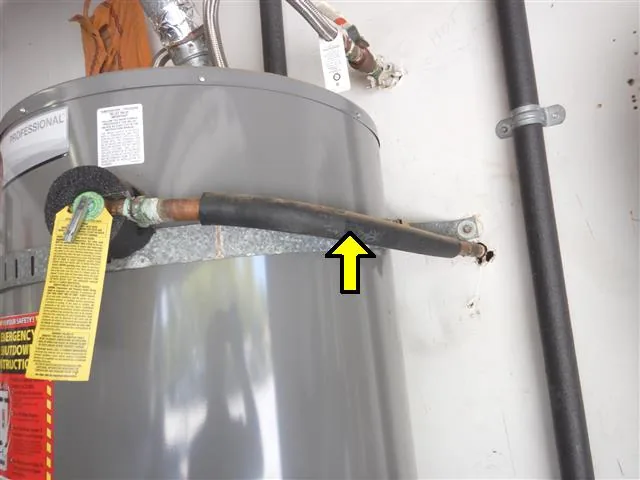
What the symptoms look like
The temperature and pressure relief valve on the heater dripping or discharging periodically, usually an hour or two after a big hot water draw. People treat this as a bad relief valve and replace it. The new one does the same thing, because it is doing its job.
Toilet fill valves that start weeping. Faucet cartridges failing early. Banging in the pipes at the end of a heating cycle. Flexible supply connectors bulging.
The quiet damage is to the heater itself. Repeated pressure cycling works the glass lining and the welds, and a tank on a closed system without expansion control will not reach the age it should.
The tank
It is a small steel tank, usually two to five gallons, with a rubber diaphragm and an air charge on one side. It mounts on the cold inlet near the heater and it needs support, because a full one is heavy and hanging it on the pipe alone stresses the connection.
The air charge must match the house's static water pressure, which is why installing one without checking pressure with a gauge does not work properly. Charge is set at the schrader valve with a bicycle pump, with the tank isolated.
They fail after roughly five to ten years, and the failure mode is the diaphragm tearing so the tank fills with water. A quick test is tapping it: the top should sound hollow and the bottom solid. A tank that is heavy and sounds solid throughout is waterlogged and doing nothing.
What else we check at the heater
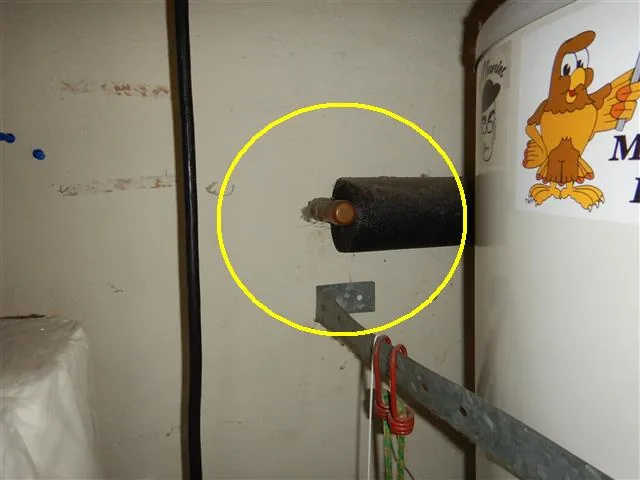
Seismic strapping at the upper and lower thirds, which California requires. A relief valve with a discharge pipe running down to within six inches of the floor, not capped and not turned upward. Combustion air and a proper flue. A drip pan with a drain where the heater sits above living space. Age off the serial number, since tanks run eight to twelve years and most fail by leaking.
More from the field

Your home is a major investment.
Protect it with San Diego's certified, 5-star-rated inspectors.