
The dishwasher problems we find, and the one part everyone removes
Inspection blog, 2024-01-18
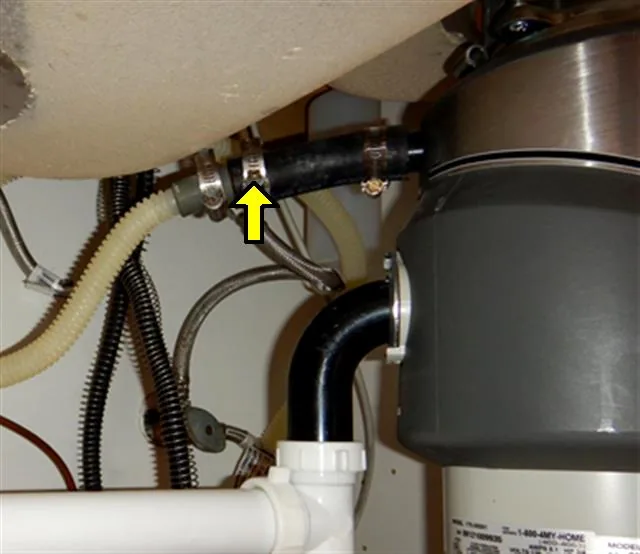
We run the dishwasher through a cycle on every inspection and look underneath while it is going. It is a short list of problems and almost all of them are installation rather than the machine.
The drain loop
A dishwasher drains into the sink drain or the disposal. If that hose runs flat or downhill the whole way, dirty sink water can siphon back into the dishwasher.
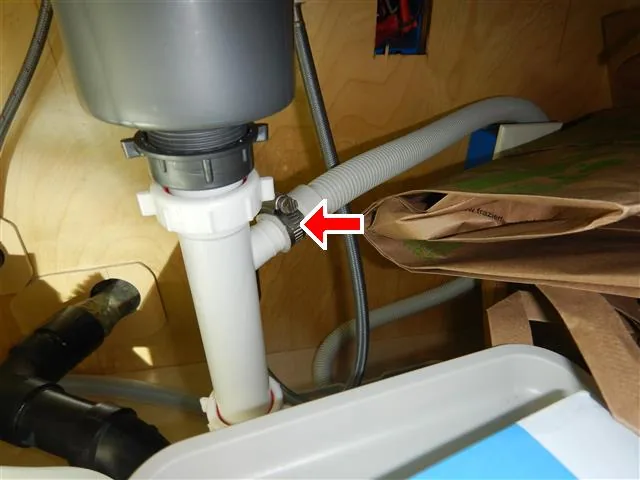
Two accepted ways to stop that. An air gap, the small chrome cylinder on the counter next to the faucet, which breaks the siphon with an open vent. Or a high loop, where the drain hose is strapped up under the counter above the level of the sink before it comes back down.
California plumbing code calls for the air gap. What we find is that people dislike the chrome fitting, remove it during a counter replacement, and cap the hole, sometimes without adding a high loop to replace it. Then the hose runs flat across the cabinet floor and there is nothing preventing backflow.
If the air gap sputters water onto the counter when the dishwasher drains, the line between the air gap and the disposal is clogged, or the disposal's knockout plug was never removed when the dishwasher was connected. That plug is the single most common new-install fault we see.
Leaks
We look for staining on the cabinet floor beside the unit, at the base of the door, and at the supply connection under the sink. Slow leaks under a dishwasher take a long time to show up in the kitchen because they run under the unit and out toward the subfloor.
The door gasket is a wear item. So is the soap dispenser flap. A door that has to be slammed to latch usually means the machine is not level or the feet have been adjusted unevenly.
Mounting and power
The dishwasher should be screwed to the underside of the countertop or to the side cabinets so it cannot tip forward when the loaded door is open. Under a stone counter, side brackets are the correct method, and they are frequently left off because you cannot screw into granite from below.
Power should be through a dedicated circuit, and the cable needs a proper connector at the junction box rather than the cable simply pushed through a hole in the sheet metal.
Age
Ten to twelve years is a normal service life. We read the serial number and record it. Past about twelve years, a repair that costs more than a few hundred dollars is usually not worth it.
More from the field

Your home is a major investment.
Protect it with San Diego's certified, 5-star-rated inspectors.